In brief: Meta faces allegations that it failed to protect children from inappropriate adult activity on its virtual reality platform. Whistleblowers say the company may have covered up the risks to avoid scrutiny and protect billions of dollars already invested in the project.

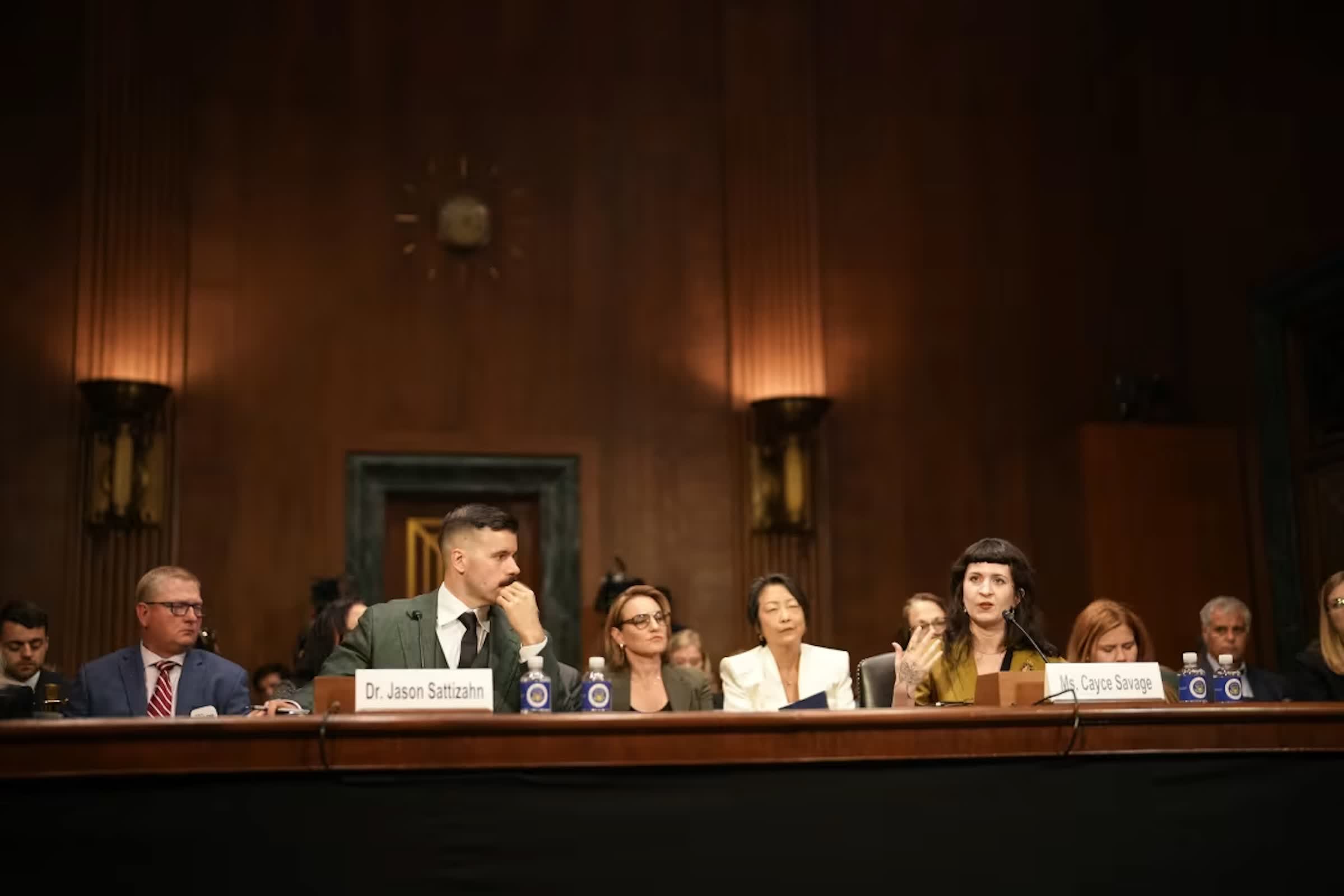
Two former Meta employees allege that the company ignored child safety in its multibillion-dollar metaverse investment and erased evidence instead of addressing the problem. They testified about these claims this week before the US Senate Judiciary Subcommittee on Privacy and Technology.
Jason Sattizahn and Cayce Savage, researchers who studied virtual reality's effects on underage users at Meta, testified under oath that minors routinely encounter graphic content and inappropriate behavior on the company's VR platforms. They said Meta leadership blocked their attempts to measure or prevent the problem.
Savage, who left Meta in 2023, said that children on the company's VR platforms faced serious risks, including being propositioned for nude photos, exposed to pornography, or invited into virtual environments modeled on adult spaces like strip clubs. She claims the company blocked her from studying how widespread the situation was.
"I wish I could tell you the percentage of children in VR experiencing these harms, but Meta would not allow me to conduct this research," she told Congress during the Tuesday hearing.
Sattizahn described separate incidents in which children could hear explicit audio of adults masturbating in VR. He told senators that company leadership fired him after he raised concerns internally.
"The audio that's transmitted isn't just solicitation," he explained. "There will also be instances where you can hear people sexually pleasuring themselves, transmitted spatially as you are surrounded and harassed."
Meta disputed the claims, saying they relied on selective disclosures meant to mislead. Company spokesperson Andy Stone called the allegations "nonsense," saying the company never suppressed internal research and denied deleting child safety evidence. He pointed to European and US privacy rules, which require companies to erase information on children under 13 unless a parent provides consent. Stone added that Meta has commissioned roughly three dozen studies on youth-related social issues since 2022, along with hundreds more on broader topics.
The testimony comes amid years of scrutiny over how Meta treats minors across its platforms, from Facebook and Instagram to its artificial-intelligence chatbots. Lawmakers, state attorneys general, and class-action attorneys have pursued the company over allegations that it fosters addiction among young users and fails to protect children from predators.
The VR allegations add to a record of criticism that includes earlier whistleblower testimony from former employees such as Frances Haugen in 2021 and Sarah Wynn-Williams this year. Savage and Sattizahn said that instead of prioritizing user safety, Meta focused on containing bad publicity and instructing researchers to draft reports that minimized risk to the company.
Sattizahn added that one of the most serious cases his team documented involved a group of users pressuring underage girls in Germany to perform sexual acts. He alleged that Meta managers ordered the deletion of evidence related to that incident.
Senators from both parties reacted sharply to the testimony. Subcommittee Chair Marsha Blackburn said the witnesses were hired to safeguard minors but revealed a company that "knew their products were unsafe and they just did not care." Senator Amy Klobuchar echoed that sentiment, accusing Meta of deliberately hiding findings showing that underage children were using its virtual reality systems and facing substantial harm.
Several lawmakers renewed calls for legislation imposing stricter accountability on major tech companies. Last year, the Senate approved bills to establish a "duty of care" protecting children online, but the proposals stalled in the House. Senator Josh Hawley urged broader rights for children and parents to sue over alleged harms.
"We need to open the courtroom doors and allow victims to have their day in court," he said at the hearing.
Meta has invested billions in virtual and augmented reality since acquiring Oculus in 2014 for $2 billion and rebranding as Meta Quest in 2021 to signal that future. Despite the massive investments, Savage and Sattizahn said the company devoted little to protecting underage users.
Image credit: NBC News
Whistleblowers tell US Senate that Meta ignored child safety in virtual reality


