
In a nutshell: Archive.today, also known as Archive.is and Archive.ph, has gained notoriety in recent years as a useful tool for archiving web pages and bypassing paywalls. However, the site's CAPTCHA page currently weaponizes visitor traffic in a DDoS campaign against a blogger who attempted to unmask Archive.today's mysterious operator(s). The behavior has prompted Wikipedia editors to debate whether to ban the archive site, which might be living on borrowed time and underpins hundreds of thousands of Wikipedia citations.
Update (Feb 20): Wikipedia has decided to ban Archive.today, removing 659,000 citation links after it was discovered that the archive altered some of its screenshots to include the name of a blogger with whom its webmaster is engaged in a feud.
Wikipedia relies heavily on Archive.today because it is more effective than conventional alternatives, such as the Internet Archive. However, the properties that have made Archive.today so useful have also drawn the attention of the FBI, likely because the site circumvents the paywalls of numerous prominent media outlets.
In contrast with the Internet Archive, which is legally sanctioned and complies with takedown requests, Archive.today follows no such rules, and its creator remains anonymous. Its advanced scraping methods and free-wheeling nature have turned it into a repository for sources that are likely available nowhere else. If the site were to enter Wikipedia's blacklist, which occurred once from 2013 to 2016, nearly 700,000 citation links would become useless, and many would likely never be repaired.
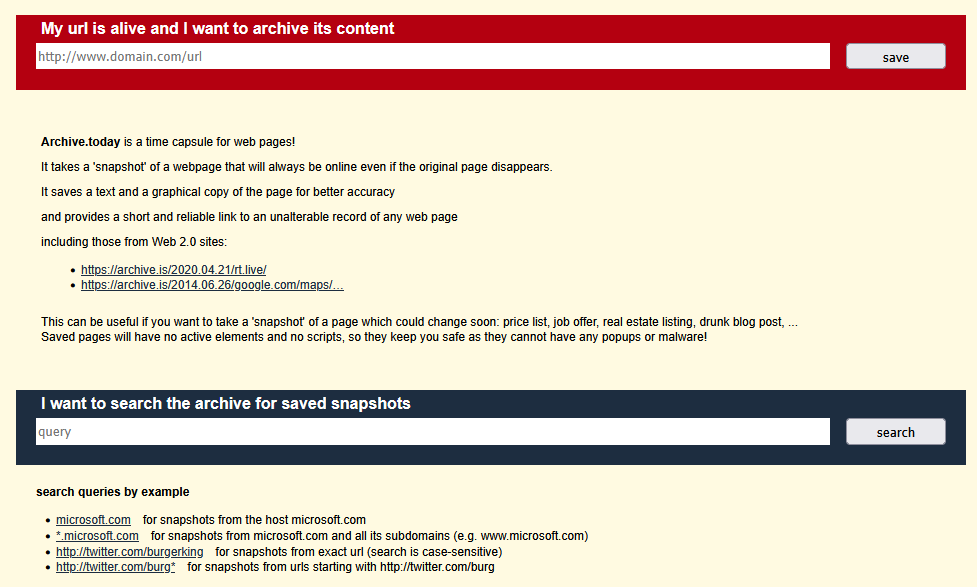
The discussion arose after Archive.today used its CAPTCHA page to direct DDoS traffic toward blogger Jani Patokallio, who posted an inconclusive investigation into the site's origins in 2023. However, the blog did not draw much attention until 2025, when various outlets cited it while reporting on the FBI's investigation into Archive.today.
The CAPTCHA page currently contains code (pictured below) that drives requests to the search function of Patokallio's blog, meaning that every Wikipedia citation leading to Archive.today could potentially contribute to the DDoS attack. However, Patokallio claims that the attack has caused no real harm. Visiting the page with uBlock Origin installed also seems to neutralize the offending code.
Archive.today's creator also threatened to connect Patokallio's name to AI porn, vibe code a gay dating app bearing the name, and uncover the supposed Nazi past of the blogger's family. The webmaster accused Patokallio of deliberately drawing investigators toward Archive.today with "Black-tar propaganda."

In a series of blog posts, the site's founder claimed that Patokallio's grandfather changed his name in 1944, and that the family is connected to an influential network that includes former diplomat Pasi Patokallio. In 2024, Pasi Patokallio co-authored an initiative that led Finland to withdraw from an anti-landmine treaty to fortify its border with Russia.
Wikipedia is currently weighing three options to address the issue: retaining the status quo, removing all links, or discouraging future citations while keeping existing links. Some also argue that pivoting away from Archive.today is prudent regardless of the current dispute due to the site's inherently precarious existence. In 2021, Archive.today's creator admitted that it is "doomed to die at any moment."
Wikipedia may remove nearly 700,000 links after Archive.today DDoS fallout


