YouTube copyright fight: Rick Beato warns UMG claims over short music clips could end his channel

Skye Jacobs

Posts: 1,907   +58
Staff
WTF?! Recent copyright actions, often targeting content that has been online for years, have brought renewed attention to the enforcement practices of major digital platforms. The ongoing dispute involving music educator Rick Beato has prompted broader examination of whether current systems fairly protect both creators and copyright holders, while also meeting the demands of those producing commentary, educational material, and artistic work online.

Beato, a well-known voice in music education on YouTube, has come under fire from Universal Music Group, which recently issued a wave of copyright claims against his channel. The escalation of these claims quickly drew public attention after Slashdot reported his case. This spotlight has intensified discussions about how aggressive copyright enforcement by major labels is affecting creators who use brief music excerpts for commentary and educational purposes.

Beato reported in August that three short videos – each under a minute – were flagged by UMG for alleged copyright infringement. According to Beato, these claims, if upheld, carry the threat of his channel being permanently removed from the platform due to YouTube's three-strikes policy. "If you don't fight these things, those three strikes would actually remove my channel from YouTube," he explained in a recent video addressing the situation.
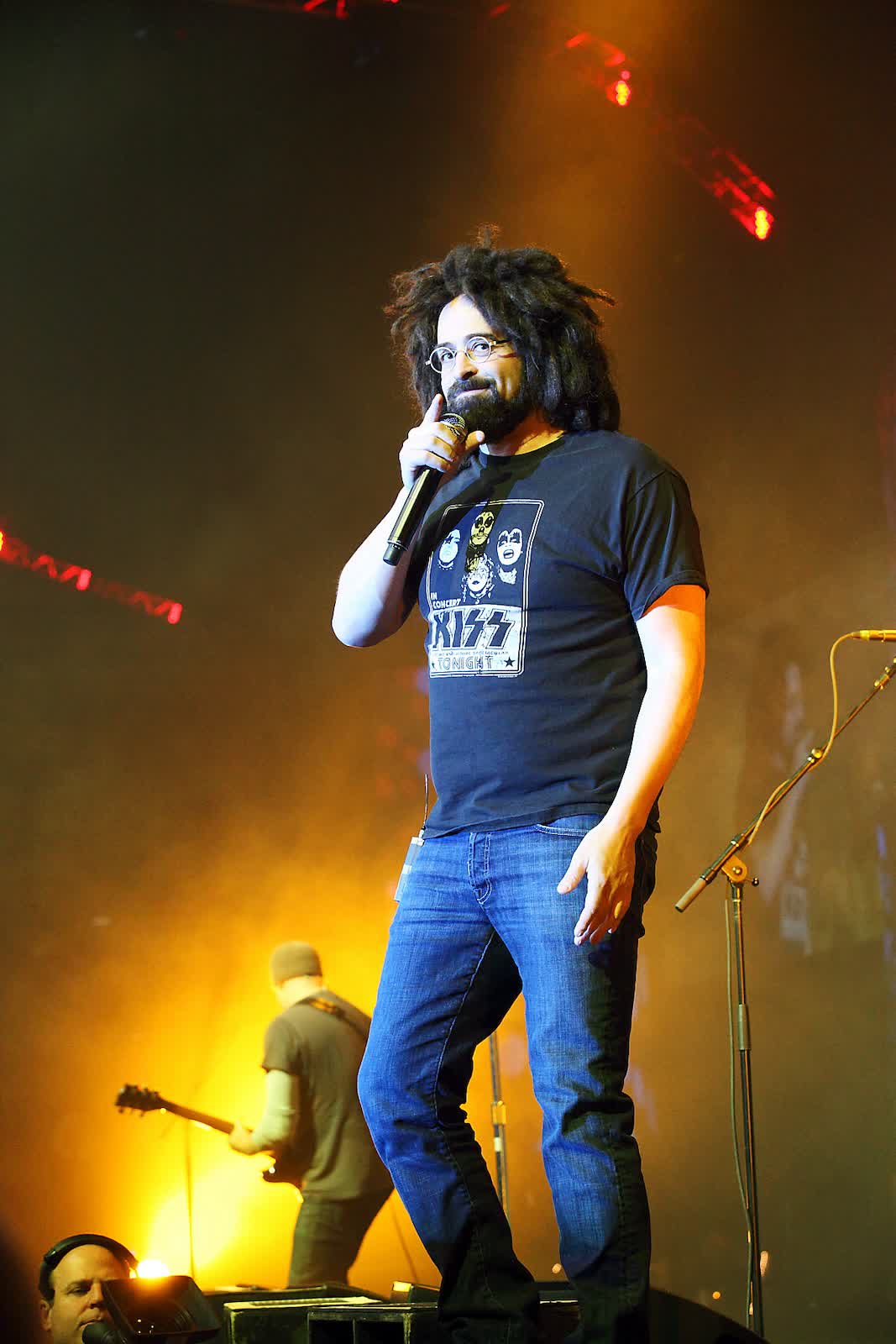
One of the clips involved an interview snippet with Counting Crows' Adam Duritz, featuring a brief segment of "Sixth Avenue Heartache" as Duritz discussed the song's creation. Despite the video amassing over 250,000 views, Beato noted that his share of ad revenue amounted to just $36.52 before UMG asserted their copyright over the content. "So they're gonna take my channel down over less than a hundred bucks – for using a small segment from an interview with him, on a song he sang on... That video is 55 seconds long," Beato said.

Other flagged content included a short featuring a few seconds of an Olivia Rodrigo song and another centered on the "Crimson Tide" soundtrack by Hans Zimmer. All three complaints originated from UMG, which owns the rights to the sound recordings in question.

The conflict is not isolated. Beato explained that over the past nine years he has faced roughly 4,000 copyright claims – many pertaining to interviews with artists or industry producers, where brief music segments are interwoven with commentary. He credits hiring a full-time lawyer with successfully disputing thousands of such claims, but notes the cost and time commitment has been significant: "What he's done is he fought every single claim... We have successfully fought thousands of these now. But it literally costs me so much money to do this. Since we've been fighting these things – and never lost one – they still keep coming in."

YouTube's automated Content ID system, designed to detect copyrighted material, often sweeps up content containing even a few seconds of recognizable music. Beato and his supporters argue that this falls clearly under fair use provisions, especially when the material is used for educational, analytical, or critical commentary. "You need to play people's music to talk about it. That is the definition of fair use. These are interviews with the people about their careers," Beato said.
Beato is not alone in facing automated copyright enforcement. Other music analysts, including the creators of "Professor of Rock," have reported similar copyright challenges. Professional musicians such as drummer Anthony Edwards, guitarist Justin Hawkins, and bassist Scot Lade have released videos supporting Beato.

The scale and seemingly indiscriminate targeting of music-focused content led Slashdot reader MrBrklyn to argue that video bloggers are "being hounded by copyright pirates like UMG," describing the recent groundswell of support for Beato as a rebellion taking root across digital music communities.

Long-running industry observers, such as Saving Country Music, have described the use of automated takedowns as counterproductive for the music business itself, writing that music podcasts and educational channels are "impossible to feature music on" without risking the entire channel's existence. According to the site, "Music labels have been leaving major opportunities to promote their catalogs and performers on the table with punitive copyright claims that make it impossible to feature music on music podcasts and other platforms."

Automated systems are central to the current dispute, as they handle the majority of copyright policing and often overlook contextual factors. Saving Country Music pointed out that with minimal human oversight, these automated claims may actually undermine the interests of rights holders like Universal Music Group.

Beato himself questioned why label-controlled copyrights should prevent promotion of artists – many of whom participate directly in his interviews – and questioned the long-term value of such enforcement strategies for rights holders. "Why are these record labels wanting to take down content about artists that have records on their label? What sense does that make?"

Permalink to story:

 
Luffy and Captain Jack Sparrow had better not hear about this or there'll be trouble.

Recently, copyright strikes were also abused to target a video of GN's on GPU smuggling.
 
Youtube is absolutely terrible for dealing with copyrights and privacy issues.
The initial copyright infringement claims do not get checked. Anyone can file a copyright or privacy claim and it automatically effects the other user's video without even having been reviewed. They do this to force an immediate pause to the content they don't like. However, if the person targeted decides to fight the strike, it may be lifted after a review. This is especially aggravating if the flag or strike is invalid. There should always be a grace period where someone is allowed to review and remove content that may be offensive or unfairly targeted.

And then you get to issues of using copyrights to bully people or shut them up. It happened with many movie reviewers and it's currently happening to Gamer Nexus exposing GPU smuggling. Youtube is complicit. I will continue to earn my money from Youtube as long as I can, but I foresee that they'll eventually have major legal problems and class action lawsuits or government intervention.
 
Youtube are just dumb. People have been doing this for years. Example live music videos. They are not owned by the uploader but yet they are allowed to run. Youtube is about money, nothing more, nothing less. They even said they will demonetize content that has been generated by AI. In a sense I agree as I only use AI for web dev for content when the client gave me 1 sentence but to stop channels from using AI when AI is this big is just stupid.

I actually finished a website similar to twitch early in the morning. Took some time as a solo web dev. Difference is, unlike youtube/twitch etc, he does not take a cut from the streams. My client charge x amount for 1,6 or 12 months subscription. Viewers also has a subscription of 14-days or 30 months and can have it recuring. This may sound less than youtube etc as they charge x% based of video if I remember correct to stream. It is only South Africa based at the moment. May sound less that other streaming companies but he get 30/40 streams and viewers, he gonna make his money and they are allowed to us AI....
 
Part of the problem is the way the DMCA is written. Platforms can be liable for user-uploaded content if they don't act, and when a claim is made, there is a burden to respond to it by the user, and it must be done quickly (generally within 2 days or less). Additionally, if a user files a counter-notice, there's a waiting period before the platform is allowed to restore content, so it is written to give the copyright holders the benefit of the doubt - upside down of "innocent until proven guilty".

YouTube isn't innocent in how it handles these, but there needs to be a fundamental change in the law for this process. Of course, what that change needs to look like depends very much on if you are copyright holder and have lots of money to buy legislators, or if you are content creator who is typically a victim of this mess - until AI scoops up their stuff.
 
If he wasn't popular it wouldn't matter. I have watched him a few times and while he knows more than I do his range is limited but I am glad he can buy all those geetars
 
We've been hearing about YouTube's DMCA woes for, what, 15 years now? Why do all these people refuse to use other platforms instead? If all these creators with these issues moved to, say, nebula or dailymotion or some other type of platform, or banded together and made their own, their audiences would follow them.
 
Meanwhile mega corps illegally download all content they can get their hands on and it's found 'fair use'.

I feel it's my obligation to keep using an adblocker at this point. I'd feel bad if I didn't.
 
Similarly, Gamers Nexus was harmed by Bloomberg for copyright claims on fair use content (about a minute long recording of the president with an audio voiceover) on a 3.5 hour investigation movie they recorded and produced:
 
No kidding, I got into alot of trouble and even 1 strike cus of 3 sec music clips (or even just the music for other random gaming videos lol)

Welcome to YouTube, this is not new, and it's just getting worse. On the bright side, now that even more popular people are suffering, maybe we will get some kind of solution?

I almost stop adding music to ALL my videos. It's really risky and while it makes the videos worse... its not worth the deletion of my channel lol. Been uploading stuff for like 15 years, all of it being gone just cus of a 3 sec song... noooope. NOPE!
 
If buying isn't owning then piracy isn't stealing.

Somebody pointed out a long time ago that it's similar to cloning a car with a futuristic device. It doesn't affect the original car or its ownership.

Building on that, stealing comes down to non-consensual transfer of ownership. In piracy, an artefact's representation is read and applied to a different, new artefact so that both representations match. Anti-piracy laws prohibit the second step: creating a matching representation.

In a world decoupled from arbitrary human laws, that doesn't seem criminal. But they are designed to prop up a system where the creator of an artefact charges money for the privilege of reading copies of the artefact. Piracy boils down to breaking this part.
 
Last edited:
As always this is about control, not copyright. Google is a tyrannical company that is exerting control over all media we see. They remove websites from search results and censor the internet, which is why them having a monopoly on search is a threat to society as a whole.
 
Meanwhile, AI companies openly use all the media available around for their training, without any issue with copyrights. But those are huge corporations, they can steal safely, while small youtubers have to pay for every second of a crap...
 
No kidding, I got into alot of trouble and even 1 strike cus of 3 sec music clips (or even just the music for other random gaming videos lol)

Welcome to YouTube, this is not new, and it's just getting worse. On the bright side, now that even more popular people are suffering, maybe we will get some kind of solution?

I almost stop adding music to ALL my videos. It's really risky and while it makes the videos worse... its not worth the deletion of my channel lol. Been uploading stuff for like 15 years, all of it being gone just cus of a 3 sec song... noooope. NOPE!
This is why I started generating my own AI songs and using them for my video background sounds. Labels might soon start begging or paying content makers to use their songs. Until then I am doing all my videos with my own AI made instrumental or song if needed. Why even wasting time including artists song to end up losing your channel! Embrace AI Music and earn 100% of your earnings per video!
 
Back