Why it matters: The ocean is Earth's largest climate regulator, but its vast size makes it notoriously difficult (and expensive) to study. Biohybrid technology, which merges living organisms with electronics, could transform how scientists explore and monitor it. As climate change accelerates warming and acidification, researchers are racing to develop new ways to track these shifts.
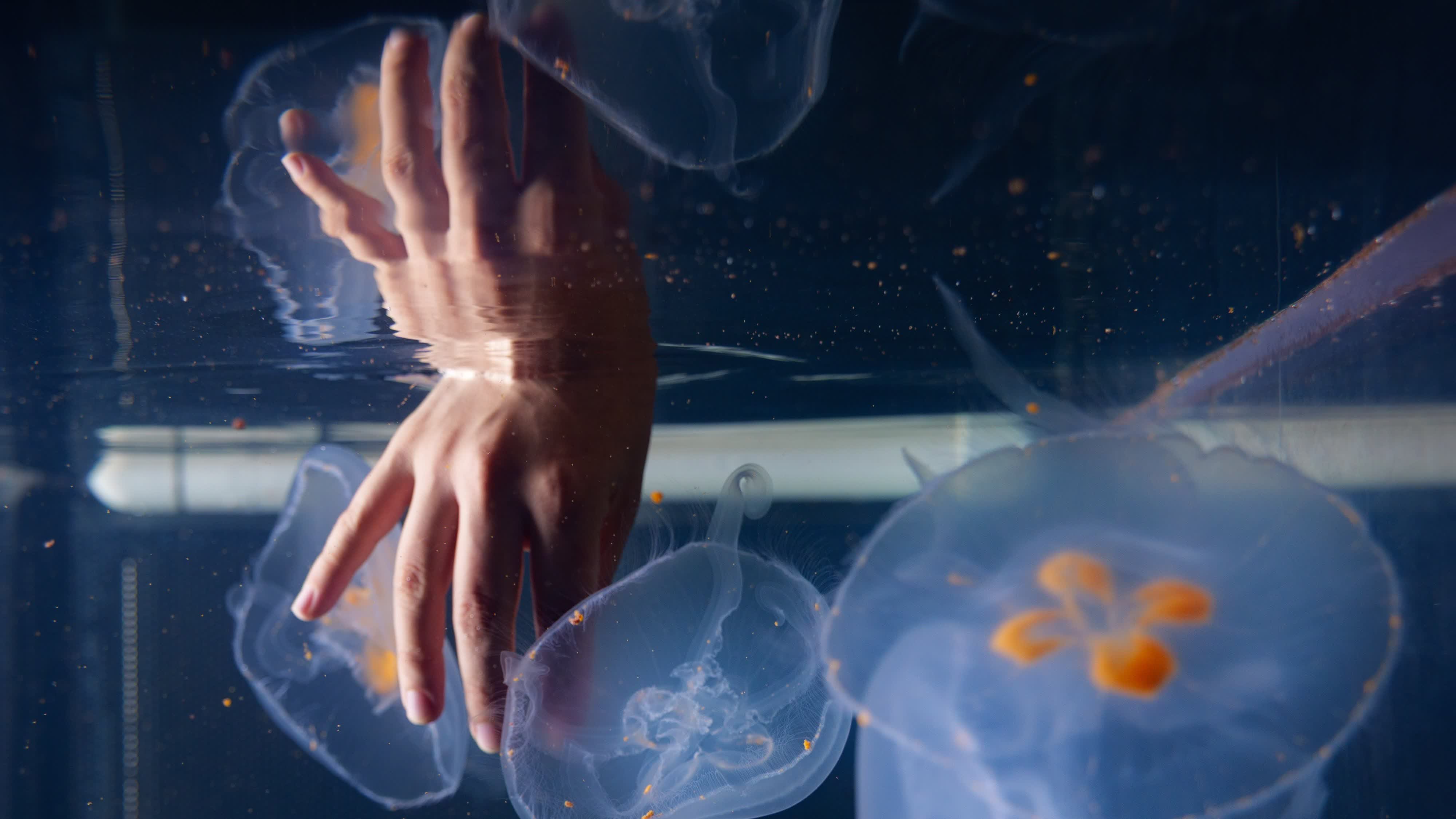
Researchers from the University of Colorado Boulder recently began experimenting with controlling modified moon jellyfish to explore the ocean depths. The creatures can help monitor the impact of climate change without polluting the ocean, but more research is needed regarding the ethics of invertebrate cybernetics.
Engineer Nicole Xu has spent the past five years experimenting with microelectronic devices that control the direction in which jellyfish swim. Xu compares the device to a pacemaker: it guides the jellyfish by stimulating their muscles to contract. She plans to eventually equip the animals with sensors capable of monitoring ocean temperature and pH levels, both of which are being rapidly altered by climate change.
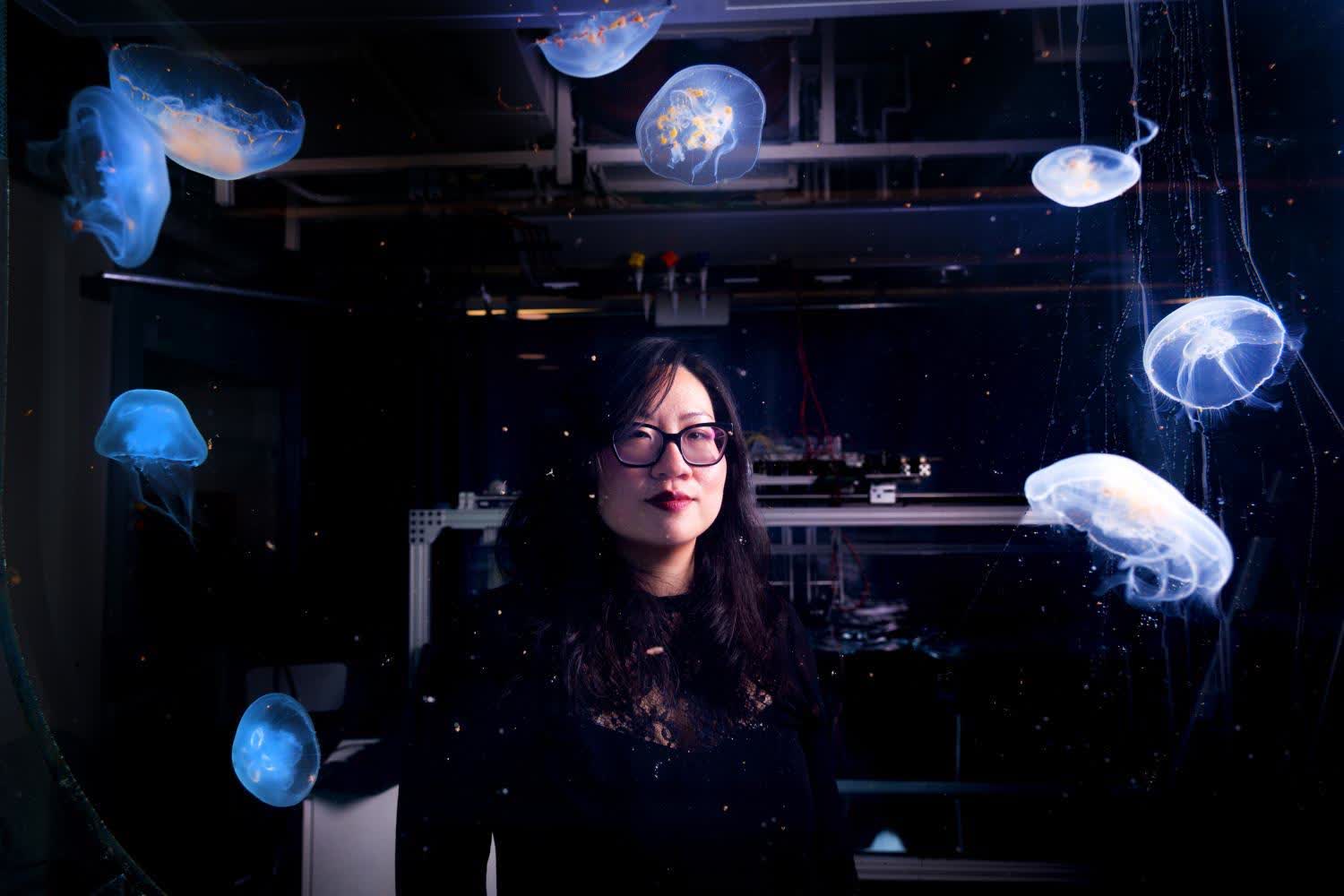
Moon jellyfish are well-suited to this role because they are among Earth's most versatile and energy-efficient animals. Although they often hunt for food near coastlines, they can be found worldwide – even at extreme depths, such as tens of thousands of feet below sea level in the Mariana Trench.
While using jellyfish may be less expensive than sending humans or deploying robotic equipment, Xu is also investigating the ethical questions surrounding this work, since invertebrate cognition remains poorly understood.
Conducting experiments on invertebrates has traditionally been considered more ethical than on mammals, but recent studies have begun to question this assumption. Like many invertebrates, jellyfish lack brains and spinal cords. Although they possess networks of overlapping nerves, they do not have pain receptors.
So far, the jellyfish in Xu's experiments have not displayed any signs of stress, such as secreting extra mucus or halting reproduction. Still, Xu recommends that future studies involving invertebrates include clear ethical guidelines.
CU Boulder's research into sustainable ocean observation also explores new methods of monitoring water flow. To understand how moon jellyfish navigate the ocean so efficiently, Xu and her colleagues projected a laser through biodegradable particles such as cornstarch – an approach less intrusive than traditional methods like hot-wire anemometry or laser Doppler velocimetry.
Biohybrid technology itself is not new. In 2018, University of Tokyo scientists built a prototype robot powered by muscle tissue from rats. More recently, in February, researchers at Shinshu University unveiled a drone capable of navigating by detecting scents using antennae extracted from silkworms.