
Editor's take: Microsoft will end official mainstream support for Windows 10 in October, yet many users continue to stick with the old, reliable rather than upgrade to the Copilot-heavy Windows 11 experience. The OS's stubborn popularity underscores user resistance to Microsoft's push for its latest platform.
The latest Statcounter data on Windows market shares offers some surprising insight. Windows 10 is still growing in popularity while Windows 11 continues to struggle, even though the older operating system is just weeks away from losing support for most PC users.
Data from August show Windows 10 regained nearly 3 percent of its user base, rising from 42.88 percent in July to 45.53 percent market share. Meanwhile, Windows 11 fell from 53.51 percent to 49 percent of the Windows market. Even Windows 7, dating back to 2009, saw a slight rebound, climbing from 2 percent to 3.59 percent.
Statcounter says its tracking code runs on more than 1.5 million websites worldwide. The service collects data from 5.3 billion page views, including 1 billion in the US alone. That provides a substantial dataset for a reliable snapshot of how Windows users are navigating their PCs in today's internet-focused economy.
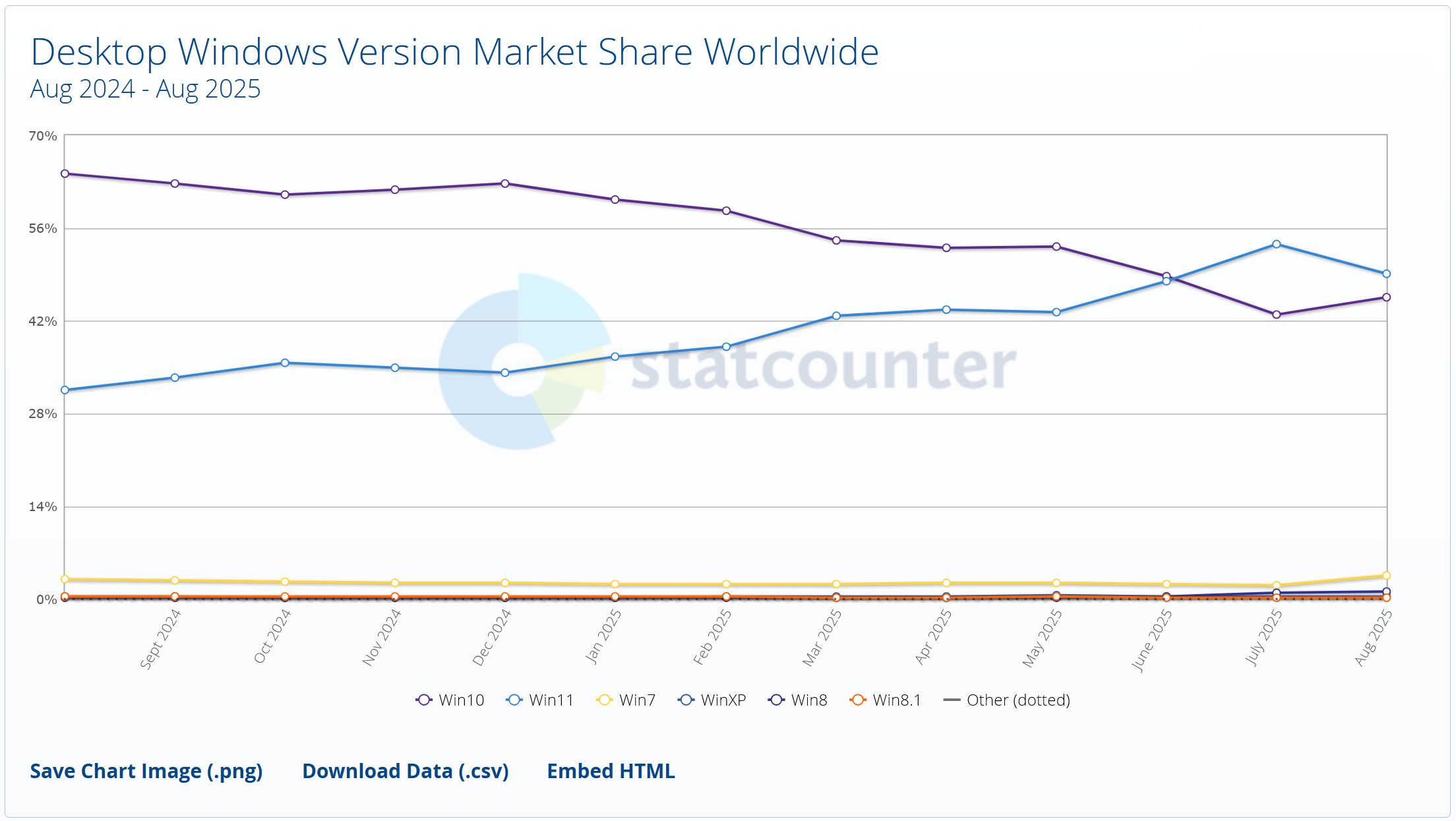
Windows 11 only surpassed Windows 10 in global market share a couple of months ago, nearly four years after launch. Its adoption has lagged due to strict hardware requirements and Microsoft's decision to cut off support for older CPUs. Many users had to either upgrade their computers or stick with Windows 10 – most chose the latter.
People aren't happy about Microsoft ending official support for Windows 10. Someone has even filed a lawsuit to keep the OS alive. Users and organizations that need a modern, supported PC platform now have few options if they want to continue using Windows 10.
Microsoft offers a paid Extended Security Updates (ESU) plan for professionals and enterprise organizations, while third-party service 0patch promises to protect the OS against critical flaws for at least five more years after October 2025. These are stopgap measures at best.