Looking ahead: OpenAI is pushing ahead with some of the largest infrastructure projects ever attempted in the technology industry, unveiling plans for a trillion-dollar network of data centers designed to power AI models on a scale that dwarfs most industrial build-outs in recent memory. OpenAI is presenting the nationwide build-out as a way to revive US manufacturing while supporting tens of thousands of jobs. In January, the company joined President Trump at the White House to announce a $500 billion initiative known as Stargate, billed as a turning point for large-scale reindustrialization.
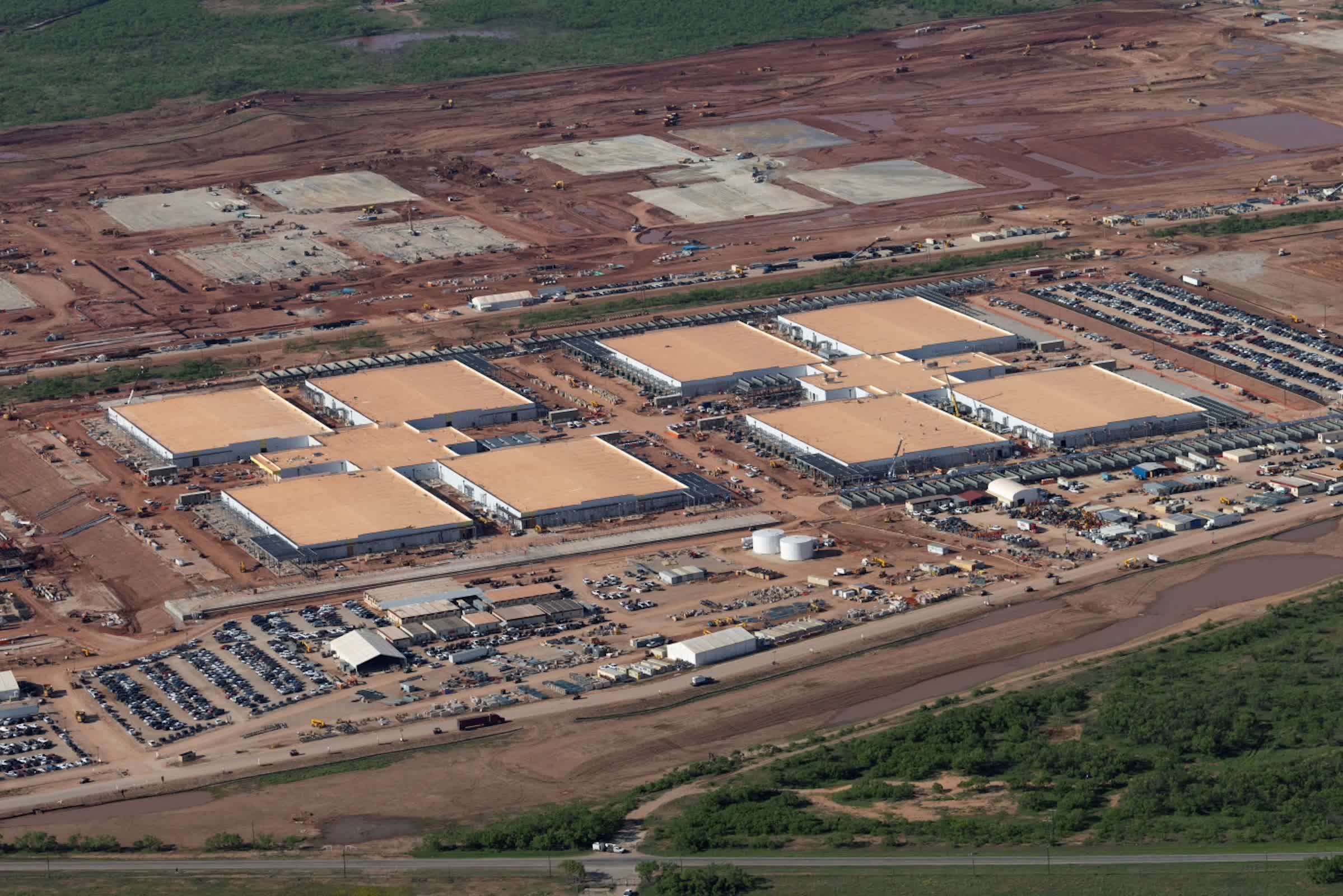
This week, company executives gave reporters a tour of a massive site near Abilene, Texas, about 180 miles west of Dallas. They said the facility represents the first of many planned locations. Once empty brushland, the 1,100-acre development now contains eight massive data centers with a combined capacity of roughly 900 megawatts.
More than 6,000 workers are currently deployed at the site, working in rotating 10-hour shifts, seven days a week. Gas turbines have been installed to provide backup power, while rows of steel towers rise from the former ranchland.
Oracle, which is building and operating the facilities alongside OpenAI, described the project as the largest AI supercomputing cluster in the world. Standing at the site in the 100-degree heat, Anuj Saharan of OpenAI's computing team highlighted the rapid progress. "There was literally nothing here a year ago," he told reporters.
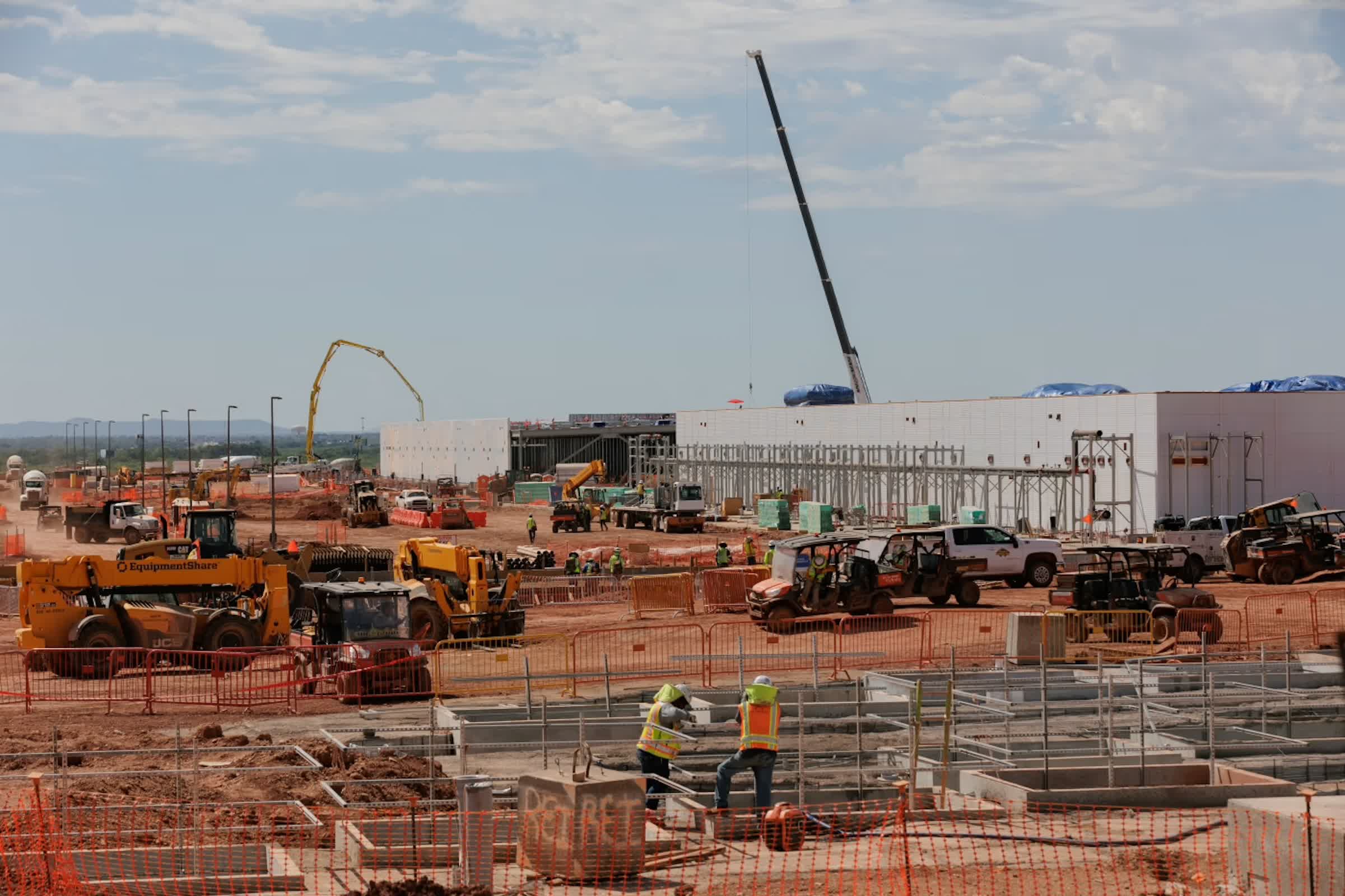
The first completed building on the campus, painted stark white against the red dirt landscape, is larger than two Walmart Supercenters combined. Inside, tightly packed rows of servers house Nvidia's GB200 chips, with each cluster containing 72 processors. Industry analysts estimate that each unit costs about the same as a base-model Tesla Model 3, though Nvidia does not publicly disclose pricing. The servers are heavily secured: alarms sound if access doors are left open, and cameras monitor each rack to prevent unauthorized entry.
The Abilene campus is only the start. OpenAI said it is developing five additional US sites that are expected to add nearly seven gigawatts of power capacity to its network, built in collaboration with Oracle and SoftBank.
Three of these – an expansion of the Abilene project, another complex in New Mexico north of El Paso, and a location in the Midwest that has not yet been disclosed – are planned to deliver 5.5 gigawatts over the next several years. Two smaller sites near Austin, Texas, and in Lordstown, Ohio, are expected to generate 1.5 gigawatts between them.
With weekly usage of its ChatGPT application now surpassing 700 million, demand has surged far beyond OpenAI's current computing resources. It estimates that it will ultimately need at least 20 gigawatts of capacity to support global demand, equal to about 20 conventional nuclear power plants.
At an estimated $50 billion per gigawatt, this translates to a minimum of one trillion dollars in infrastructure investment. One executive suggested that demand could eventually reach 100 gigawatts, which would push total costs beyond five trillion dollars – a figure larger than the annual GDP of Germany or Japan.
"I don't think we've figured out yet the final form of what financing for compute looks like," OpenAI Chief Executive Sam Altman told The Wall Street Journal. "But I assume, like in many other technological revolutions, figuring out the right answer to that will unlock a huge amount of value delivered to society."
The company's announcement followed on the heels of a $100 billion deal this week with Nvidia that helped address questions about OpenAI's balance sheet. The momentum comes as SoftBank, once viewed as a central financing partner to OpenAI's data-center expansion, has scaled back ambitions. Of the five new sites, three will be developed with Oracle while SoftBank's involvement will be limited to the Austin- and Ohio-based facilities.
On the ground in Abilene, however, enthusiasm remains tempered. Mayor Weldon W. Hurt acknowledged that residents had raised questions about the site's power and water demands, though he said many of those concerns had since been addressed.
Oracle executives said the complex would support about 1,700 permanent positions once construction finishes, a relatively small number compared to the thousands of temporary construction jobs currently tied to the project. Even so, Hurt described the city as willing to embrace what the project will bring. "We are a railroad town," he said Tuesday. "We have Western heritage, but we are open to progress, always."
Image credit: The Wall Street Journal