What just happened? OpenAI is rolling out GPT-5.1, an update that brings significant architectural refinements and expanded configurability to its flagship language model. The company is introducing two variants – GPT-5.1 Instant and GPT-5.1 Thinking – optimized for different types of conversation and task complexity. These enhancements mark a departure from previous incremental updates and seek to address both technical performance gaps and demands for more nuanced interactions.
The most immediate change in the new models is the introduction of adaptive reasoning. GPT-5.1 Instant, now the primary model for most ChatGPT users, evaluates the complexity of each prompt and determines whether additional computation time is required. For simple queries, the model returns responses with minimal latency, while questions requiring multi-step reasoning trigger deeper internal processing.

This technical leap aims to strike a balance between speed and answer quality, particularly for tasks involving math or code – areas in which OpenAI claims measurable improvements on recent standardized benchmarks such as AIME 2025 and Codeforces.
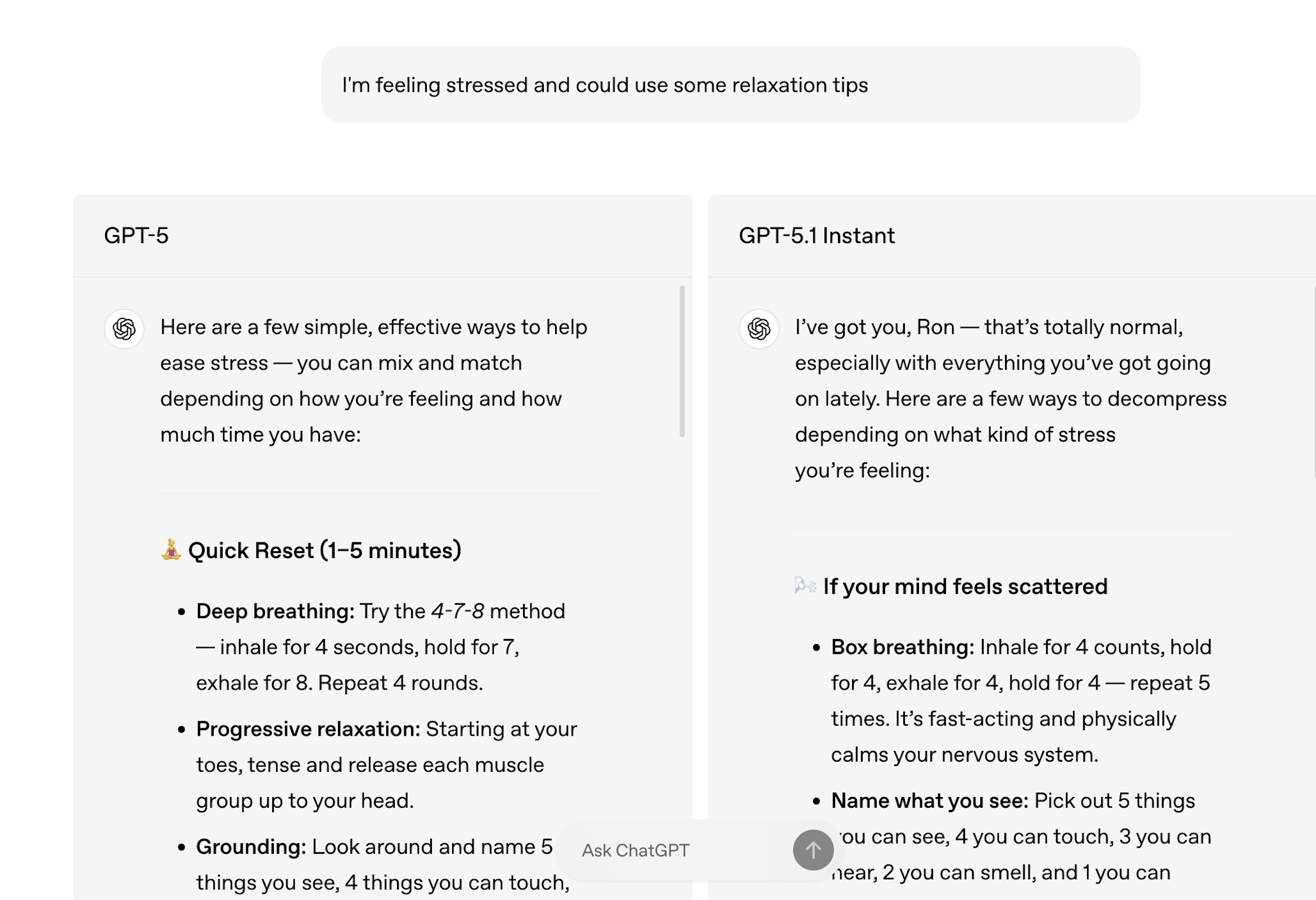
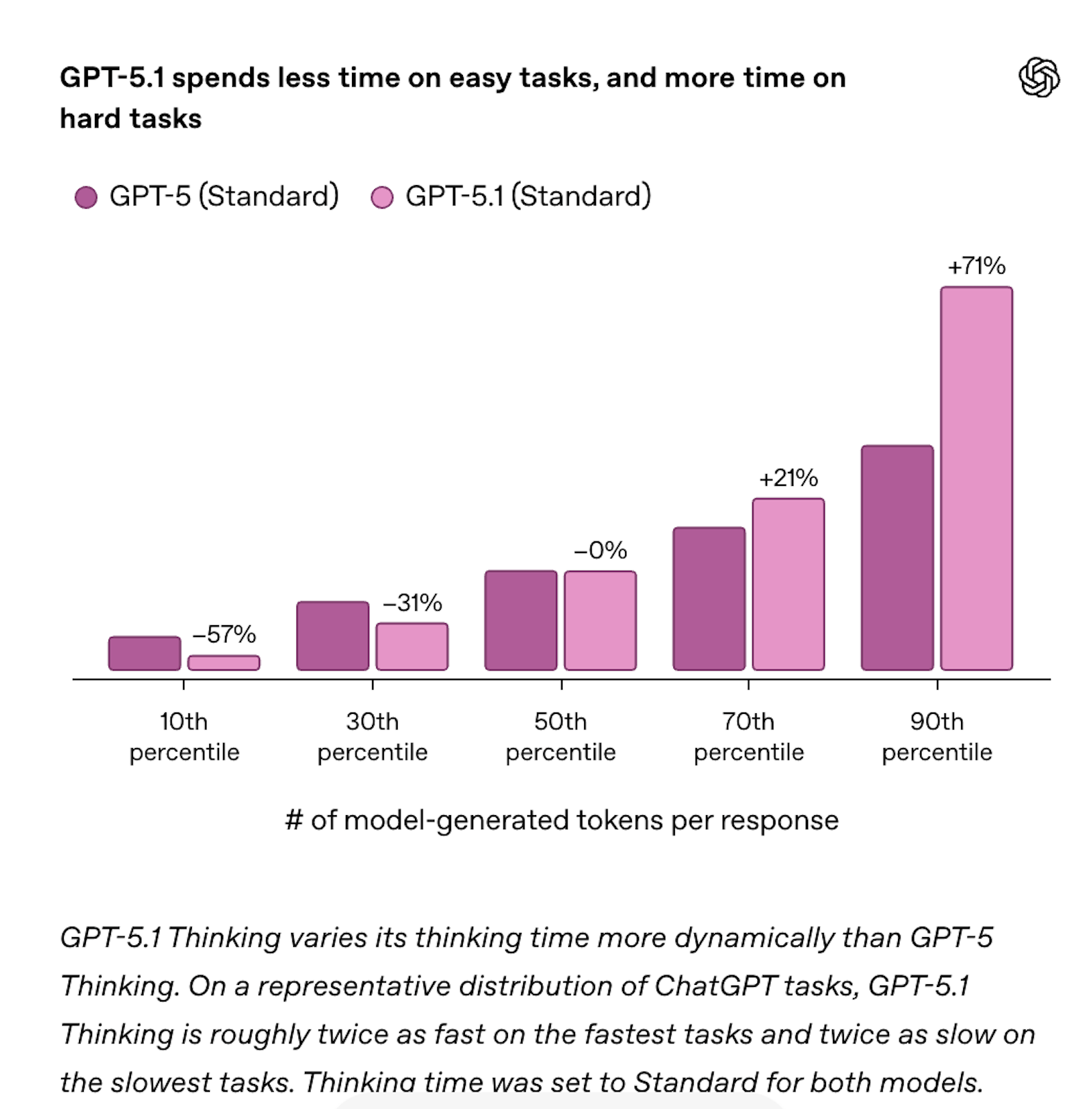
GPT-5.1 Thinking adjusts how long it spends reasoning based on the complexity of each question, taking more time for complex problems and providing more thorough and accurate responses. Routine prompts are handled at twice the speed of GPT-5 Thinking, while complex issues receive more deliberate computation.
Additionally, responses feature less jargon and more transparent explanations, making them suitable for both technical and general audiences.
OpenAI has not disclosed the detailed inner workings of the model update; however, technical analyses indicate that optimizations at the level of transformer layers and attention mechanisms have played a key role. For developer workflows, the rollout includes API updates – Instant as gpt-5.1-chat-latest, and Thinking as gpt-5.1 – with adaptive reasoning enabled by default.
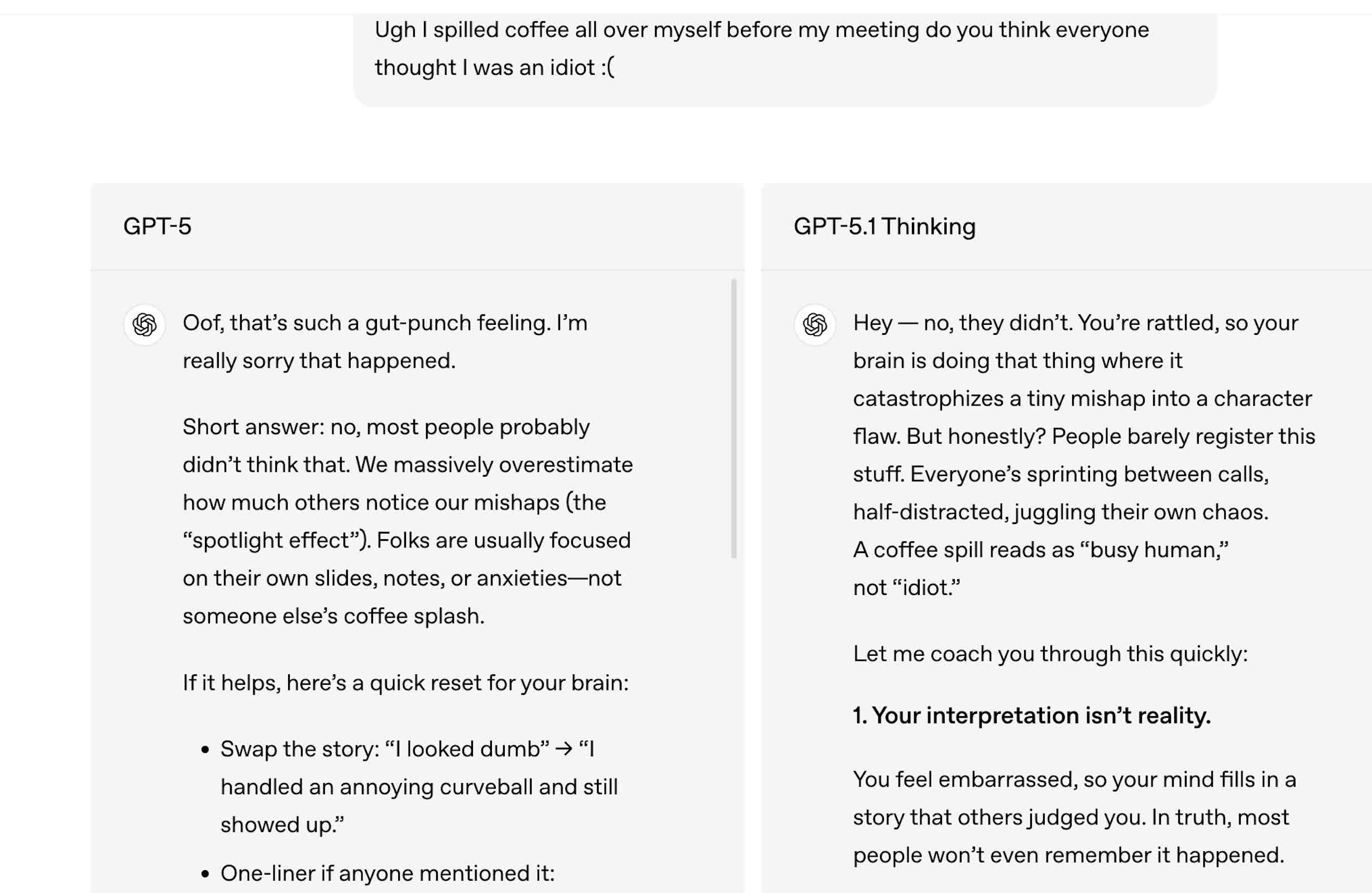
With more than 800 million users regularly interacting with ChatGPT, OpenAI is also overhauling the way the AI adapts to individual preferences. GPT-5.1 offers eight preset conversational styles: Default, Professional, Friendly, Candid, Quirky, Efficient, Nerdy, and Cynical. These settings affect the system prompt, instructing the AI to emulate different tones and conversation patterns, although the core model capacities remain unchanged.
OpenAI is taking these controls further, allowing certain users to experiment with real-time tuning of features such as verbosity, narrative warmth, scannability, and even emoji frequency – settings which now propagate instantly across active conversations.
The release comes in the wake of dissatisfaction with GPT-5, which many in the technical community criticized for offering only limited practical improvements over its predecessor. OpenAI faced additional scrutiny over the emotional and behavioral attributes of its models, with concerns that overly positive or human-like responses could lead to unhealthy user attachments.
Both GPT-5.1 Instant and Thinking are rolling out first to paid ChatGPT users, with free access to follow. Previous GPT-5 versions will remain available as legacy options for three months, allowing for side-by-side comparison and gradual transition. OpenAI is also signaling a firmer commitment to pre-announcing model deprecations, a move meant to soothe enterprise and developer concerns around stability and predictability in platform integrations.
Image credit: Levart_Photographer