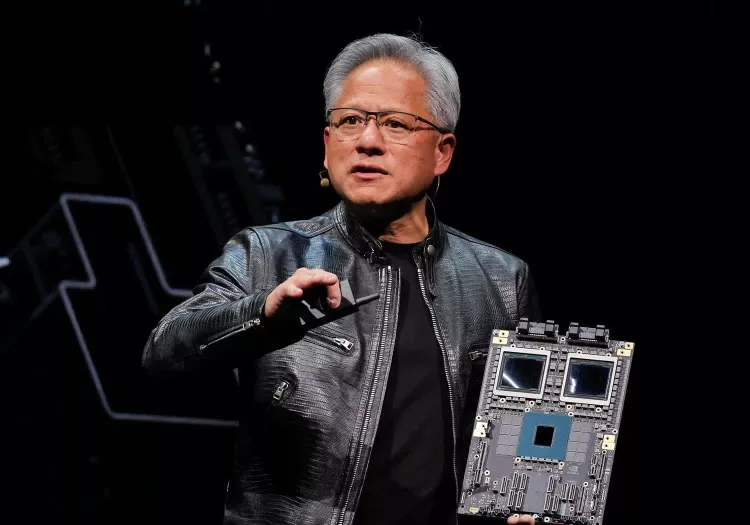
Big quote: Jensen Huang just spent a week watching his company's valuation get hit by the threat of a Chinese open-weight model. His response was to go on the record defending it. Speaking to Axios in Fort Worth, Texas, at the opening of a new phase of the Wistron plant that builds Nvidia's AI infrastructure, the Nvidia CEO said American companies should "absolutely" be free to run Chinese models. "These Chinese models are excellent," he said. "Open-source models that are excellent should be used." Asked whether China could displace American labs, he was blunt: "Zero possibility."
PDFs are structurally hostile to large language models
Looking ahead: Three decades after Adobe introduced the Portable Document Format – a design intended to preserve the appearance of printed pages across devices – PDFs are facing pressure from a completely different kind of reader: artificial intelligence. The same fixed layouts that made PDFs indispensable to human users now make them difficult for large language models to interpret. Unlike web pages or plain-text files, columns, embedded graphics, and hidden metadata in PDFs often confuse machine parsing systems trained to process linear text.
Any lingering hope for affordable gaming GPUs just took another hit
Editor's take: AMD and Meta have joined the growing circus of reciprocal dealsBig Tech is using to bootstrap what it hopes will become a self-sustaining "AI economy." Under a new multi-year agreement, the two companies will closely align their technology roadmaps – though AMD's role comes with strings attached, including hitting specific performance targets in the stock market.
The assistant can browse the web, handle files, and even use your credit card
In brief: A new local AI assistant first popularized under the name "Clawdbot" is experiencing a surge in popularity because it fulfills many of the promises made by prior smart assistants and AI agents. However, its impressive range of capabilities requires full access to the user's device, files, and login credentials – and security researchers have found gaping vulnerabilities.