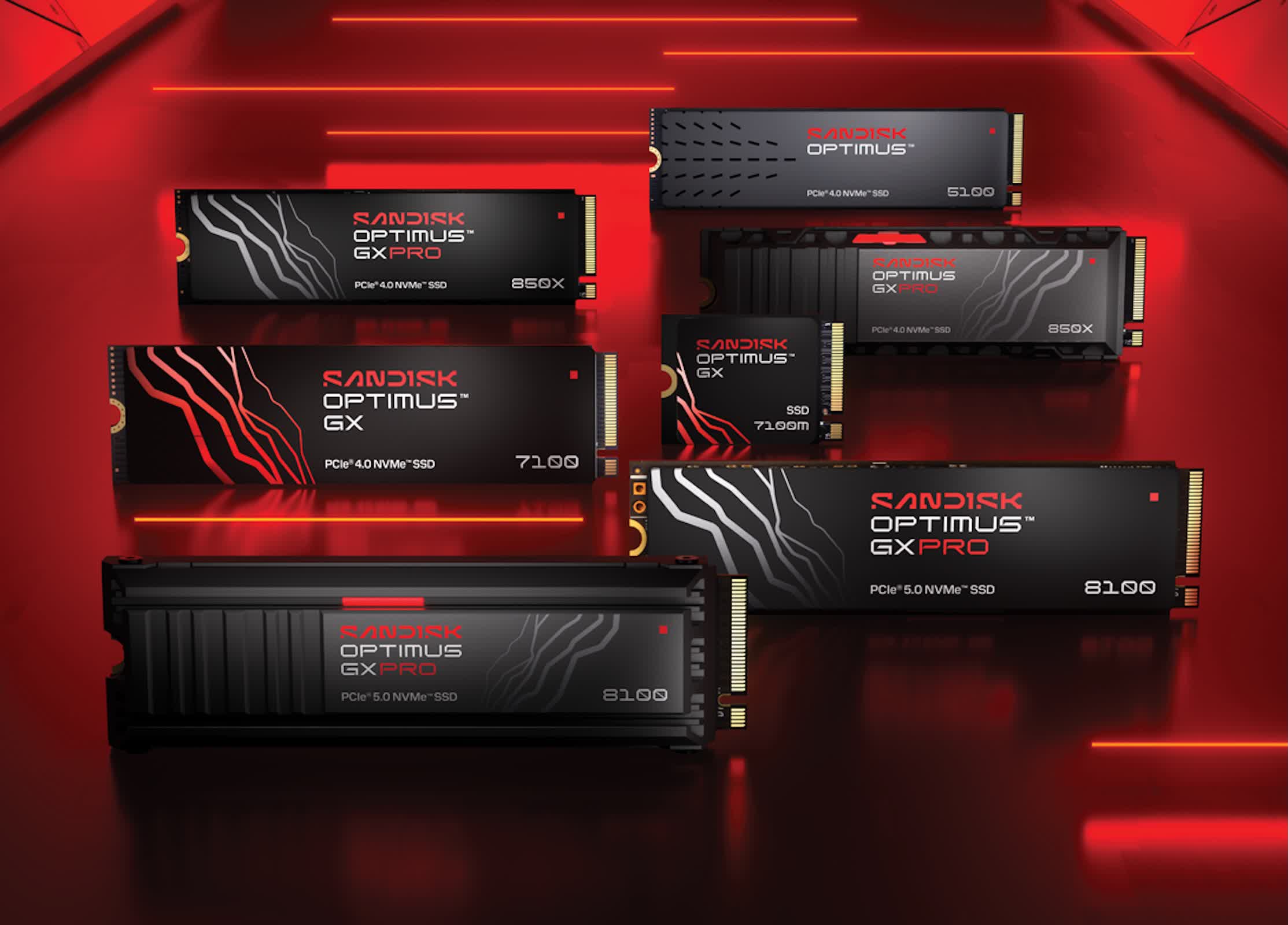
In context: SanDisk is phasing out Western Digital's familiar Blue and WD Black SSD lines, marking the first major product reshuffle since Western Digital's storage business split into two companies. The move consolidates the company's solid-state offerings under the SanDisk name, while Western Digital narrows its focus to hard drives, particularly for NAS and data center markets.
The transition marks the unspooling of the 2015 merger between the two firms, when Western Digital paid $19 billion for SanDisk to combine hard drive and flash memory technologies under one roof. The 2023 corporate separation effectively undoes that union, dividing the business along technological lines: Western Digital for spinning disks, SanDisk for flash-based storage.
In its announcement, SanDisk outlined a complete replacement of the WD Blue and WD Black SSD brands with new SanDisk Optimus models. The mainstream WD Blue SN5100 becomes the SanDisk Optimus 5100, while the mid-tier WD Black SN7100 transforms into the Optimus GX 7100. The high-performance WD Black SN850X and SN8100 drives re-emerge as the SanDisk Optimus GX Pro 850X and GX Pro 8100.
The branding strategy is at least internally consistent: the longer the name, the higher the performance tier. The GX and GX Pro suffixes draw a clearer line between product classes than the old blanket WD Black label ever did. Yet even with new names, the hardware itself remains essentially unchanged.
All of the new SanDisk Optimus drives use the NVMe interface, though the underlying flash memory and performance architecture differ by tier. The entry-level Optimus 5100 employs quad-level cell (QLC) NAND, which packs four bits per cell and prioritizes capacity over endurance or sustained write speed.
The midrange Optimus GX 7100 uses triple-level cell (TLC) NAND, balancing performance and durability in much the same way its WD Black predecessor did.
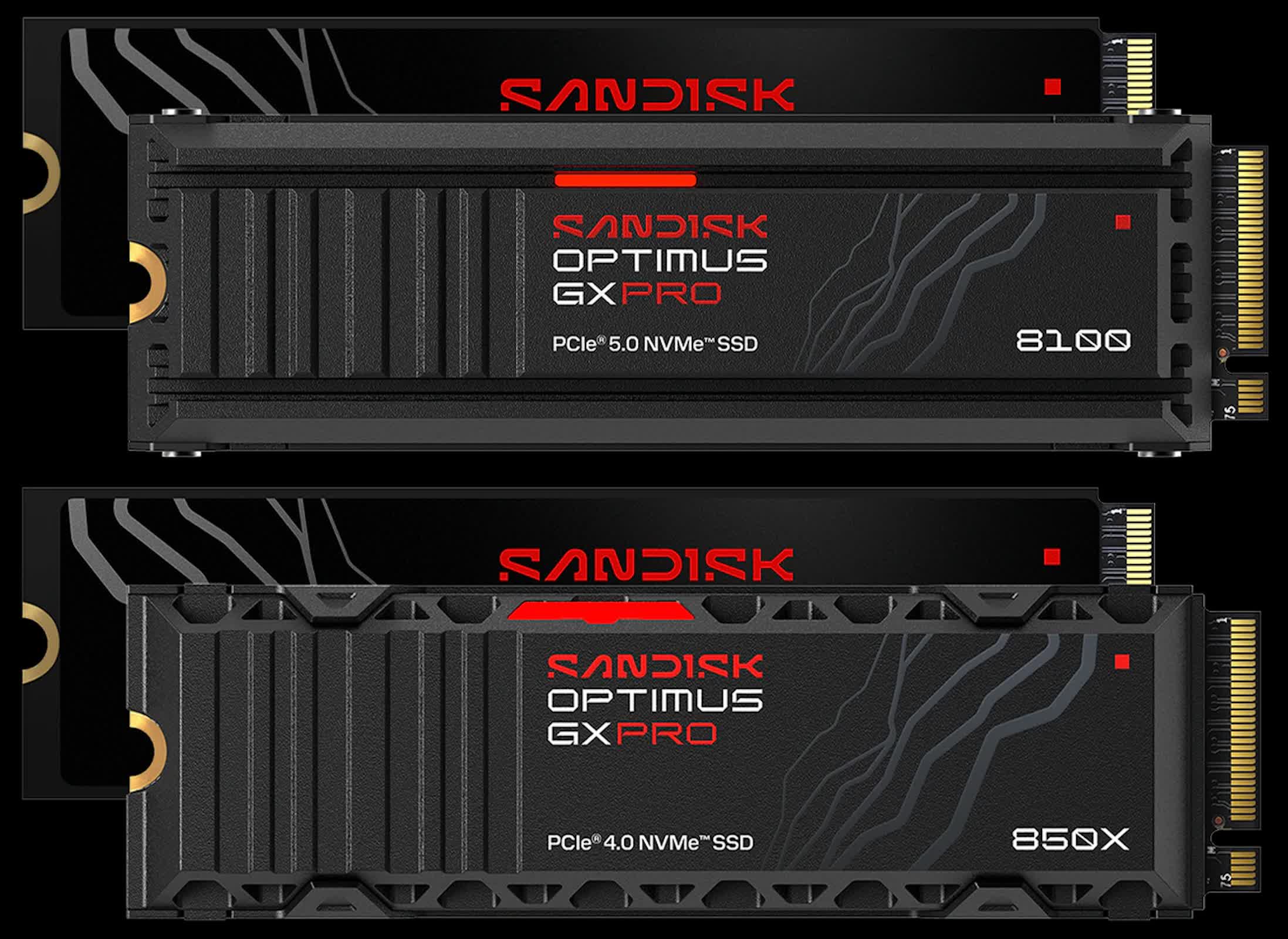
At the high end, the GX Pro 8100 distinguishes itself by adopting the PCIe 5.0 interface – offering significantly higher throughput than the PCIe 4.0 standard used by the other models – and includes a dedicated DRAM cache for faster operations.
The slightly older GX Pro 850X retains a DRAM cache but remains limited to PCIe 4.0 speeds.
Lower-tier models, by contrast, rely on a feature known as Host Memory Buffer, which allocates a small portion of system RAM to handle caching functions in place of discrete DRAM.
Consumers will now manage SanDisk Optimus drives through the SanDisk Dashboard application, which handles firmware updates and diagnostics. Western Digital formally discontinued its equivalent WD Dashboard software in 2025, completing the handover of SSD support infrastructure to SanDisk.
The company did not comment on the future of WD Green or WD Red SSDs, which target budget and NAS users, respectively.