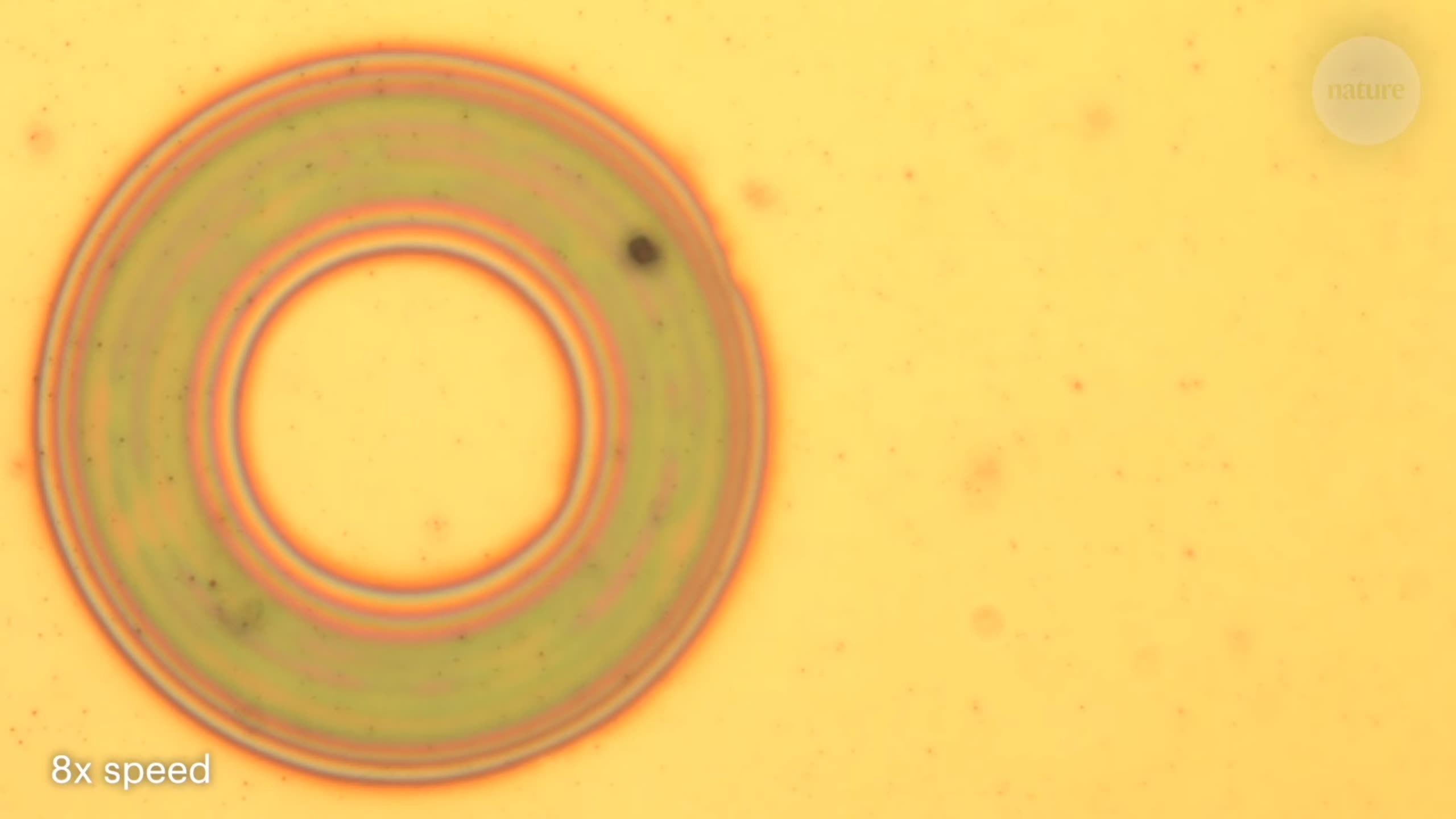
Forward-looking: While examining polymer nanostructures with a scanning electron microscope, researchers at Stanford University discovered that the new material can easily change its color and surface texture. They now hope to apply this discovery to create artificial skins, robots that can "feel," and other advanced technologies.
The Stanford team created a metasurface from a polymer previously used in solar panels and printable electronics. They found that the material swells when it comes into contact with water, but it can also revert to its original state when exposed to other liquids, such as solvents.
According to a newly published paper, this metasurface is the first polymer capable of changing both its color and texture on demand. This behavior is similar to that observed in many octopus specimens and other cephalopods, which can "tweak" their skin for camouflage, communicate complex messages, and more.
The researchers essentially developed the material by chance, using a patterning technique from semiconductor manufacturing known as electron-beam lithography. Stanford engineers noticed that the electron beam altered the polymer's ability to absorb liquids. When they examined the nanostructures on the polymer film with a scanning electron microscope, they observed that the material could also display different colors and surface textures.
According to Siddharth Doshi, a Stanford doctoral student in materials science and engineering and the study's first author, the team "realized that we could use these electron beams to control topography at very fine scales."
The researchers further developed this "serendipitous" discovery by creating microscopic textures designed to scatter light in specific ways when water is added to the surface. This allowed them to produce surfaces with both glossy and matte effects. The material can reportedly achieve a more realistic appearance than today's smartphones and computer monitors, and it can always return to its original state when water is removed using an alcohol-based solvent.
However, the material is not intended to replace digital displays just yet. The researchers hope to apply their work to robotics, artificial skin, wearable devices, bioengineering, and camouflage applications. They are also exploring the development of a neural network – powered AI system that can compare the polymeric skin with its surroundings and automatically modulate it in real time, with no human intervention.