In brief: Something happened in the mobile space last year that we've never seen before: globally, consumers spent more money on non-gaming apps than games – and it was driven by the growth in generative AI assistants.
Sensor Tower's annual State of Mobile report shows that global consumers spent around $167 billion on apps in 2025. The new record figure marks a 10.6% year-on-year increase.
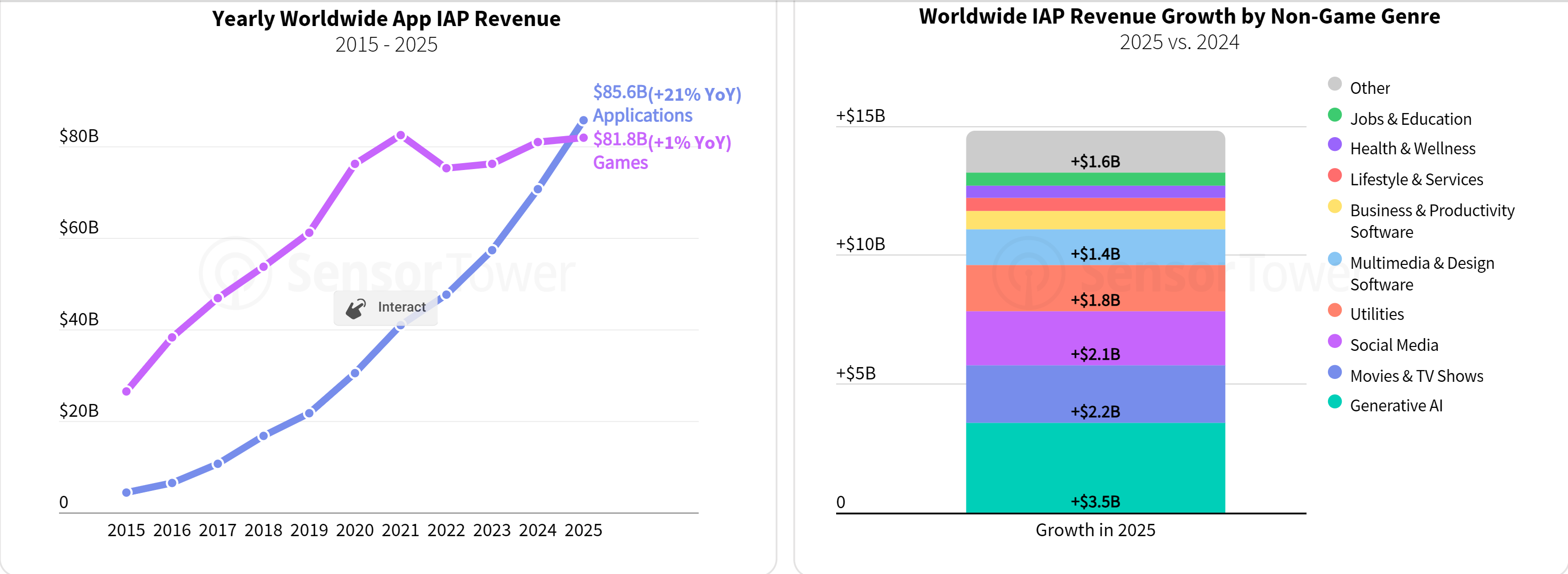
The big takeaway was non-game-app spending surpassing that of mobile gaming: $85.5 billion (up 21% YoY) vs. $81.8 billion (up 1% YoY), respectively. While this has happened in the US before, it's the first instance that the trend has been seen worldwide across 12 months.
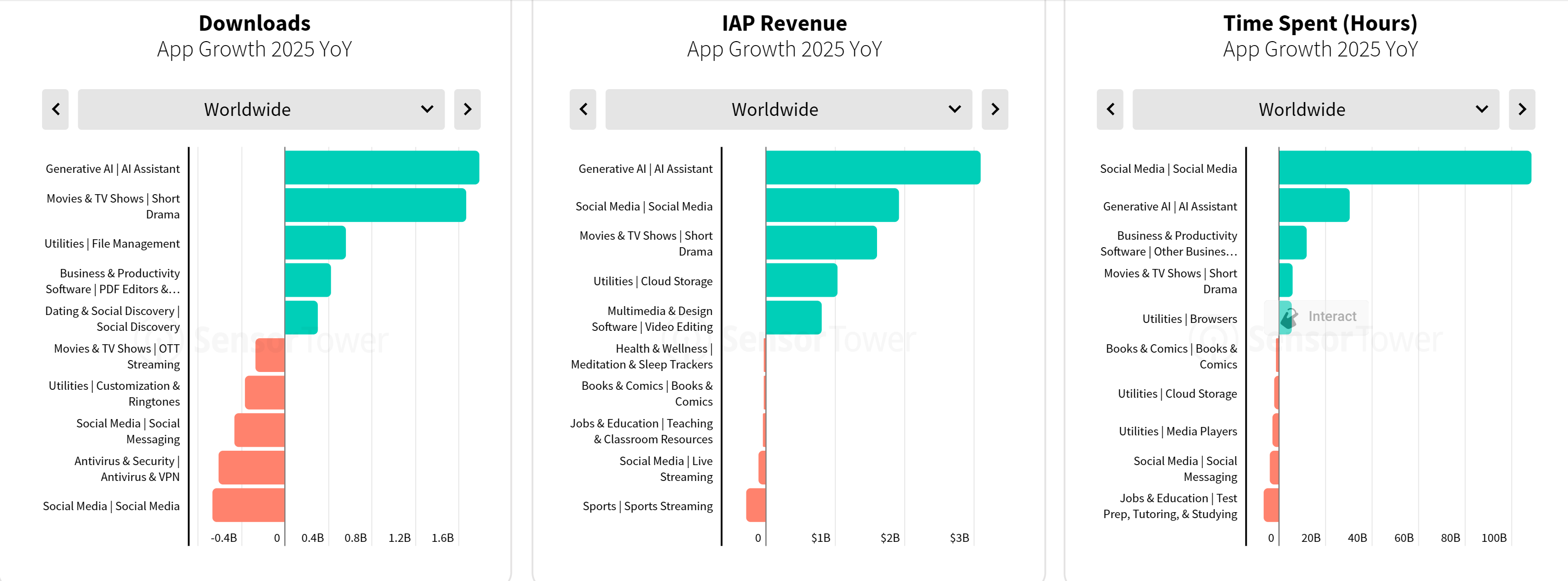
Generative AI played a huge part in the revenue growth of non-gaming apps – ChatGPT generated $3.4 billion in global in-app purchase (IAP) revenue alone.
In-app purchases within the AI sector exceeded $5 billion last year, triple its 2024 total and the highest of any category. It was followed by social media, which generated just under $2 billion, and movies & TV shows/short dramas (around $1.5 billion).
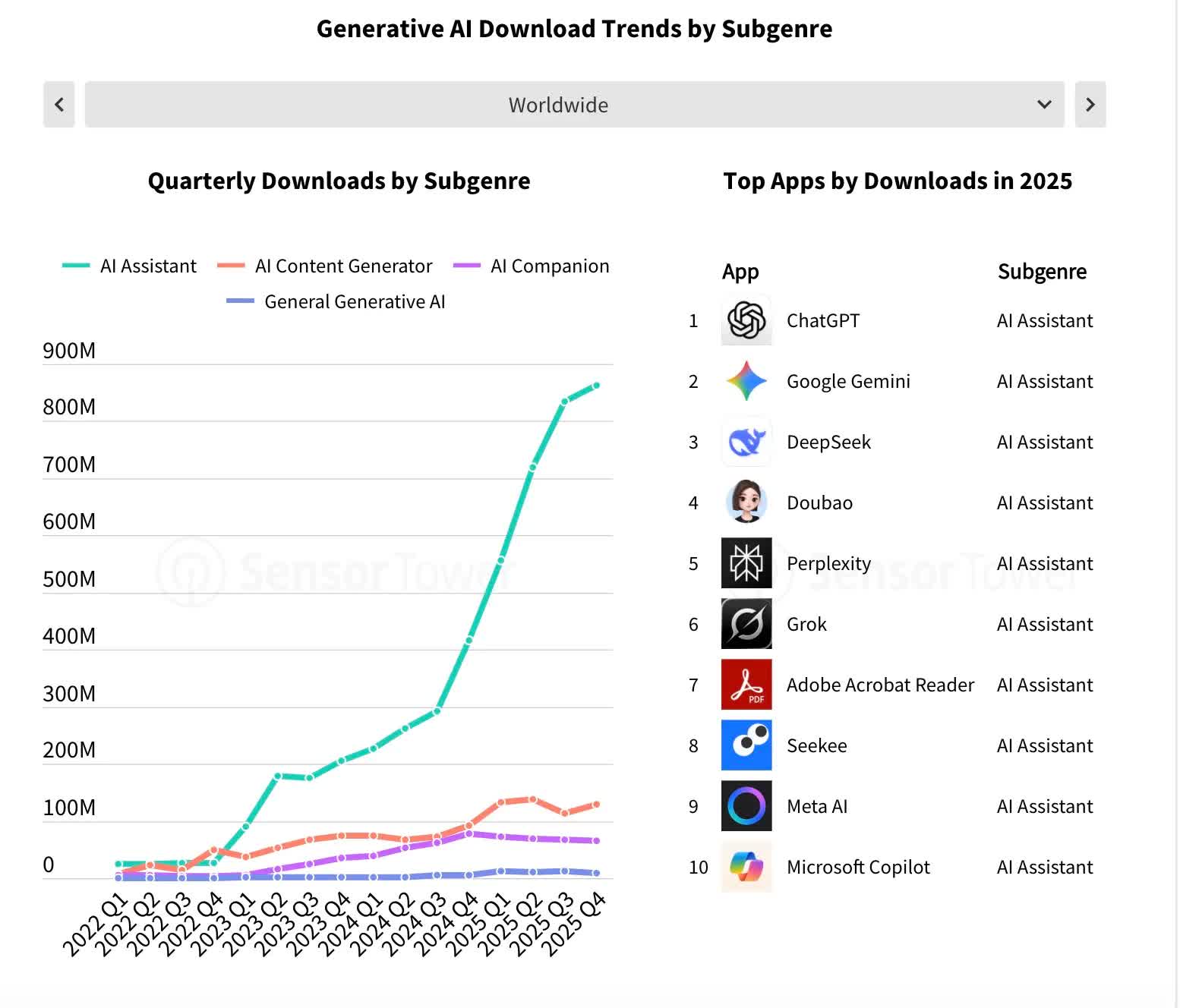
Despite the increasing pushback against generative AI, ChatGPT was the most-downloaded iPhone app of 2025. Google Gemini also made the list.
ChatGPT also tops Sensor Tower's list of most downloaded AI apps of the year – among the top AI publishers, OpenAI and DeepSeek accounted for nearly 50% of global downloads.
Consumers spent 48 billion hours in generative AI apps in 2025, 3.6x the time spent in them during 2024 and 10x 2023's level. It's also noted that the number of times users opened and engaged with an app was more than 1 trillion. As this figure is growing faster than downloads, it suggests that current users are interacting with these apps more.
Other data from the report shows that total time spent across mobile apps was up 3.8% to 5.3 trillion hours in 2025. Users spent an average of 3.6 hours per day on mobile apps and used 34 apps per month.
While games still account for a massive share of consumer outlay, their growth has slowed markedly compared to the rapid expansion seen during the pandemic years. Non-gaming categories, by contrast, are benefiting from higher subscription prices, more aggressive monetization strategies, and users' willingness to pay for tools they perceive as productivity enhancers rather than entertainment.
If these trends hold, 2025 may be remembered as the year mobile stopped being primarily a games-first economy for the world's users.
Image credit: Solen Feyissa