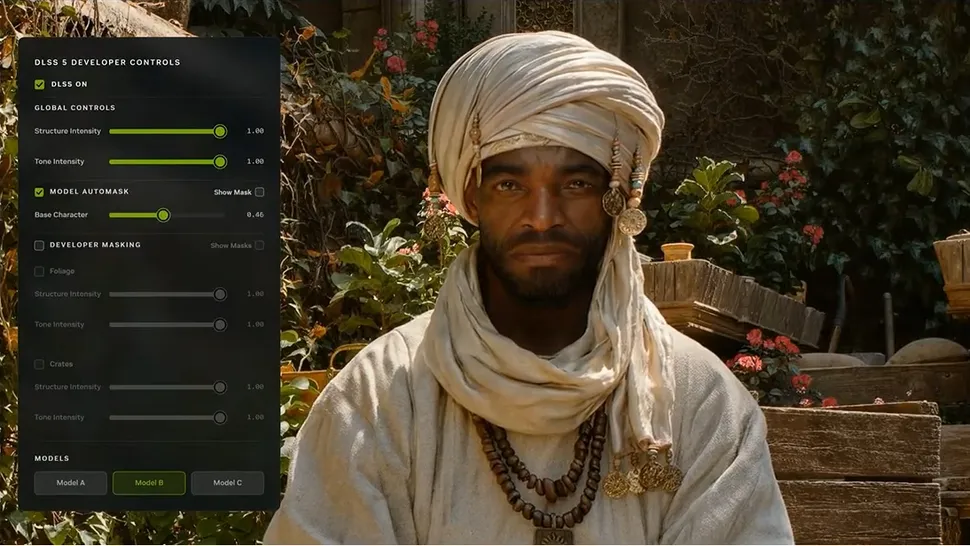
What just happened? Nvidia has revealed more details about DLSS 5, which has possibly become its most hated product ever because many consider it little more than an AI filter. The company has now explained more about the latest iteration of its rendering technology, including the (just) two sliders developers can use to alter the intensity.
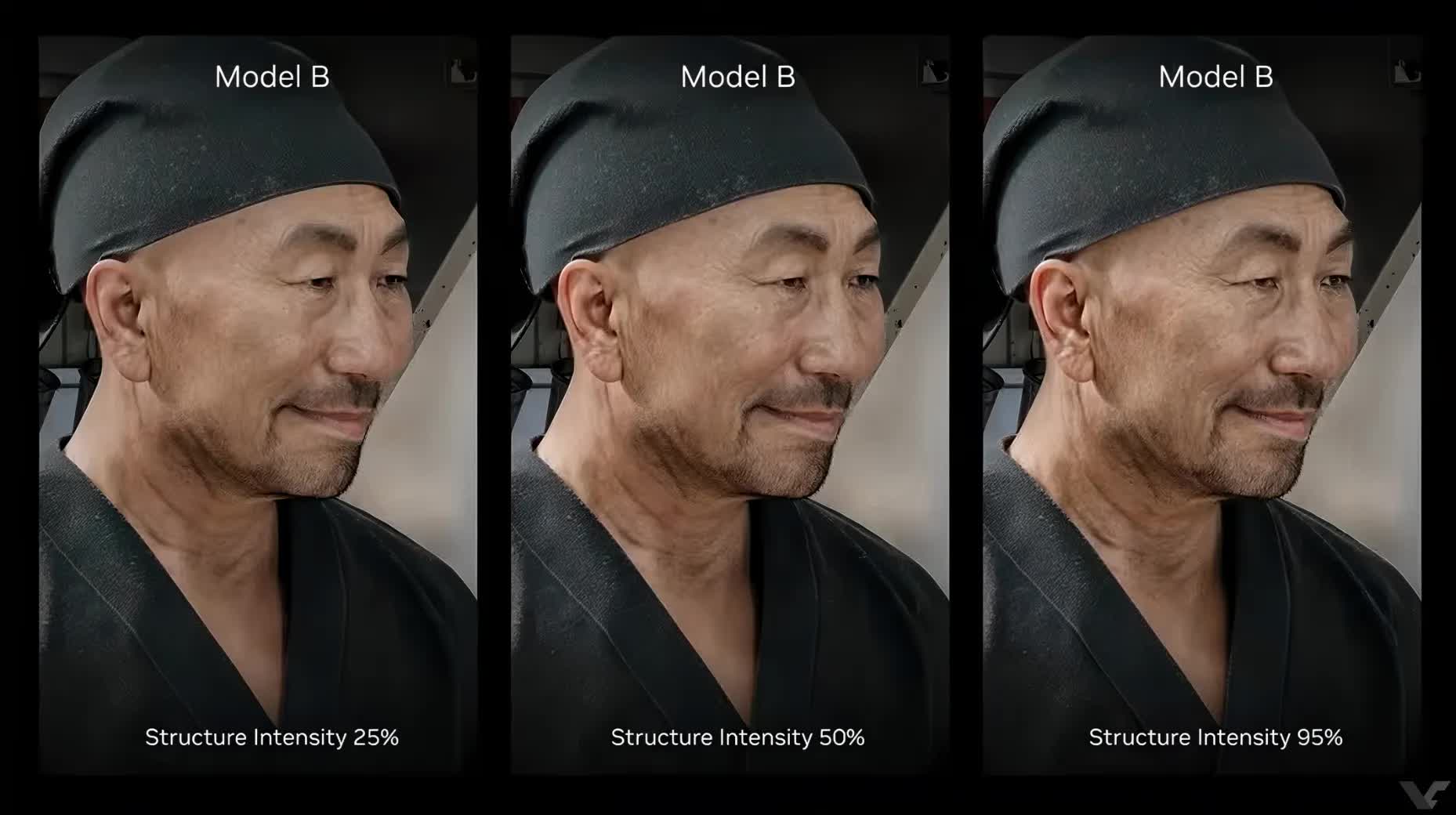
Nvidia used its SIGGRAPH 2026 keynote to demonstrate the controls that developers will receive when DLSS 5 launches this fall. The two main global sliders are Structure Intensity and Tone Intensity, which essentially determines how enthusiastically the AI repaints a frame.
Structure Intensity controls high-frequency details, including ambient occlusion, reflections, contact shadows, and subsurface scattering. Turning it up can improve how light passes through skin, hair, foliage, and translucent materials. Tone Intensity handles lower-frequency elements such as lighting, colors, and the broader mood of a scene.
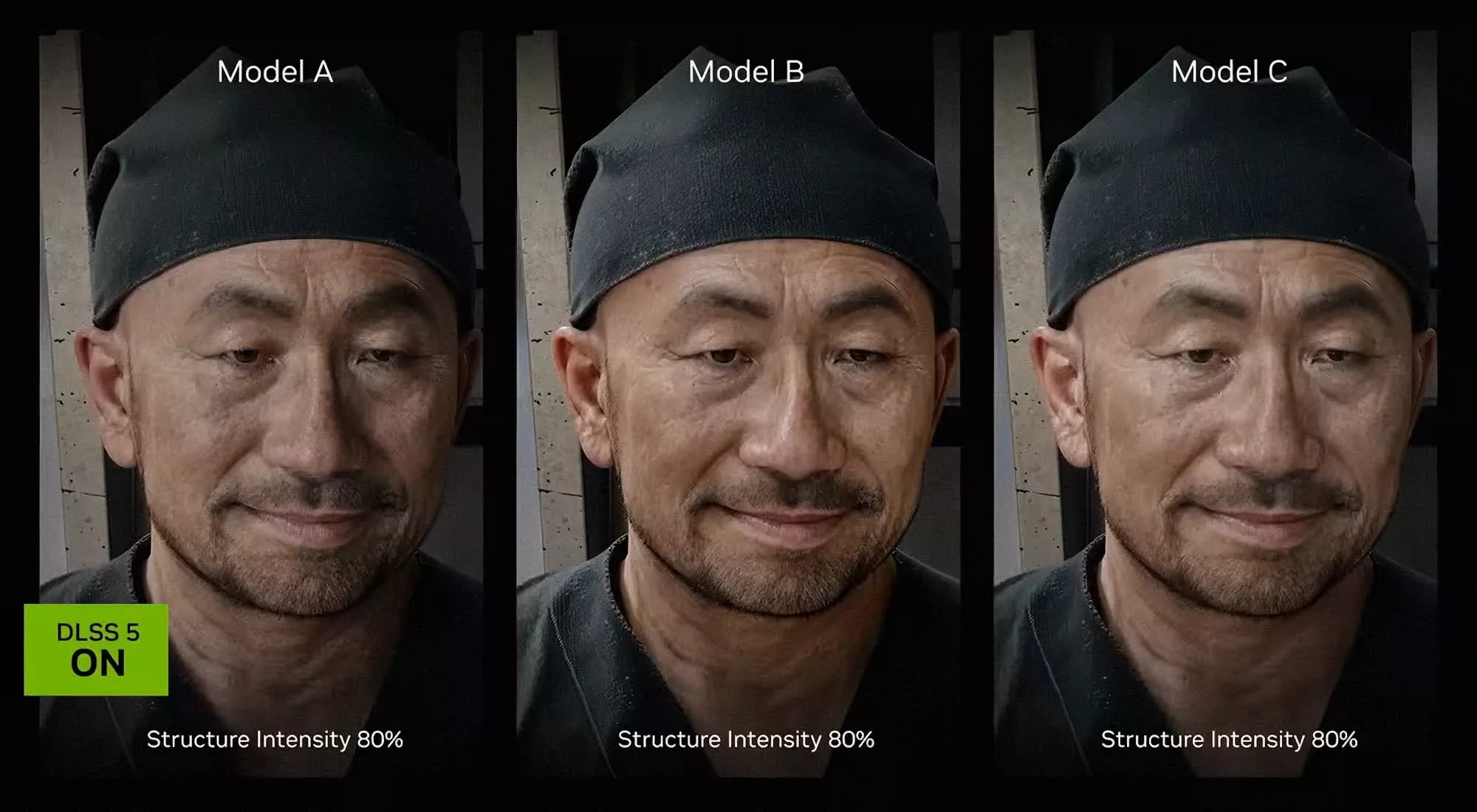
These aren't the only controls, despite the attention-grabbing total of only two sliders. DLSS 5 currently offers three separately trained models, labeled A, B, and C, each producing a different interpretation of the same rendered image.
Developers are not locked into one model for an entire game and can swap them between scenes, environments, and cutscenes.
The system can also automatically identify and mask a character, allowing artists to apply DLSS 5 only to that person or leave them untouched while enhancing the environment. Developers can create their own engine-side masks for individual objects or groups of props, with independent Structure and Tone settings for each. Nvidia demonstrated separate controls for bottles, grapes, a pitcher, and other scene elements.
That granular masking could potentially ease some concerns about DLSS 5 turning every character into the same uncannily smooth AI creation. As reported following the technology's March unveiling, its alterations to Resident Evil Requiem's Grace Ashcroft and Leon Kennedy led to accusations of it being AI slop. Jensen Huang responded that critics were "completely wrong" and insisted developers would retain full artistic control.

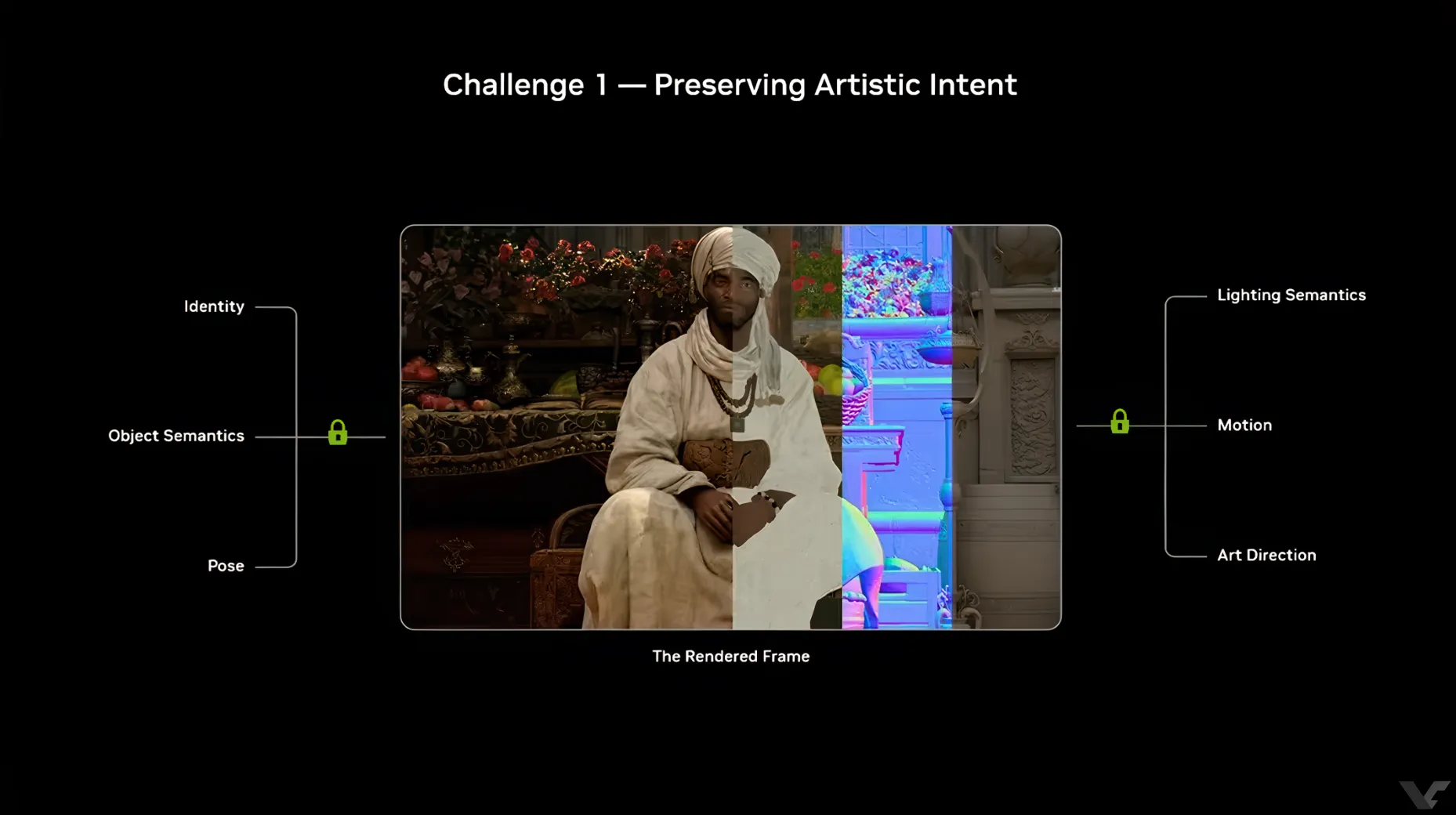
Nvidia says DLSS 5 begins with the conventionally rendered frame and then adds a learned generative stage to enrich its appearance. It added that Internal buffers containing information such as albedo, surface normals, and lighting help anchor the result to the artists' intentions. Motion vectors allow the model to process frames causally – one frame in and one frame out – without looking ahead, which Nvidia says prevents shimmering, drifting, and swimming.
The company says it has distilled knowledge from much larger generative systems into a compact, one-step pixel-space diffusion transformer designed solely to improve rendered game frames. Nvidia reiterated that the finished technology is intended to run on a single GPU, although it still has not revealed performance or VRAM requirements.
Early hands-on coverage claimed that DLSS 5 was more nuanced than a simple face filter, but questions remain. Nvidia previously "confirmed" that its primary input is a 2D frame plus motion vectors, and the system can still infer details incorrectly when objects become obscured.
Nvidia says more developer controls are being built based on partner feedback. We'll find out whether the three models, object masks, and two main sliders are enough to win over gamers when DLSS 5 arrives this fall.