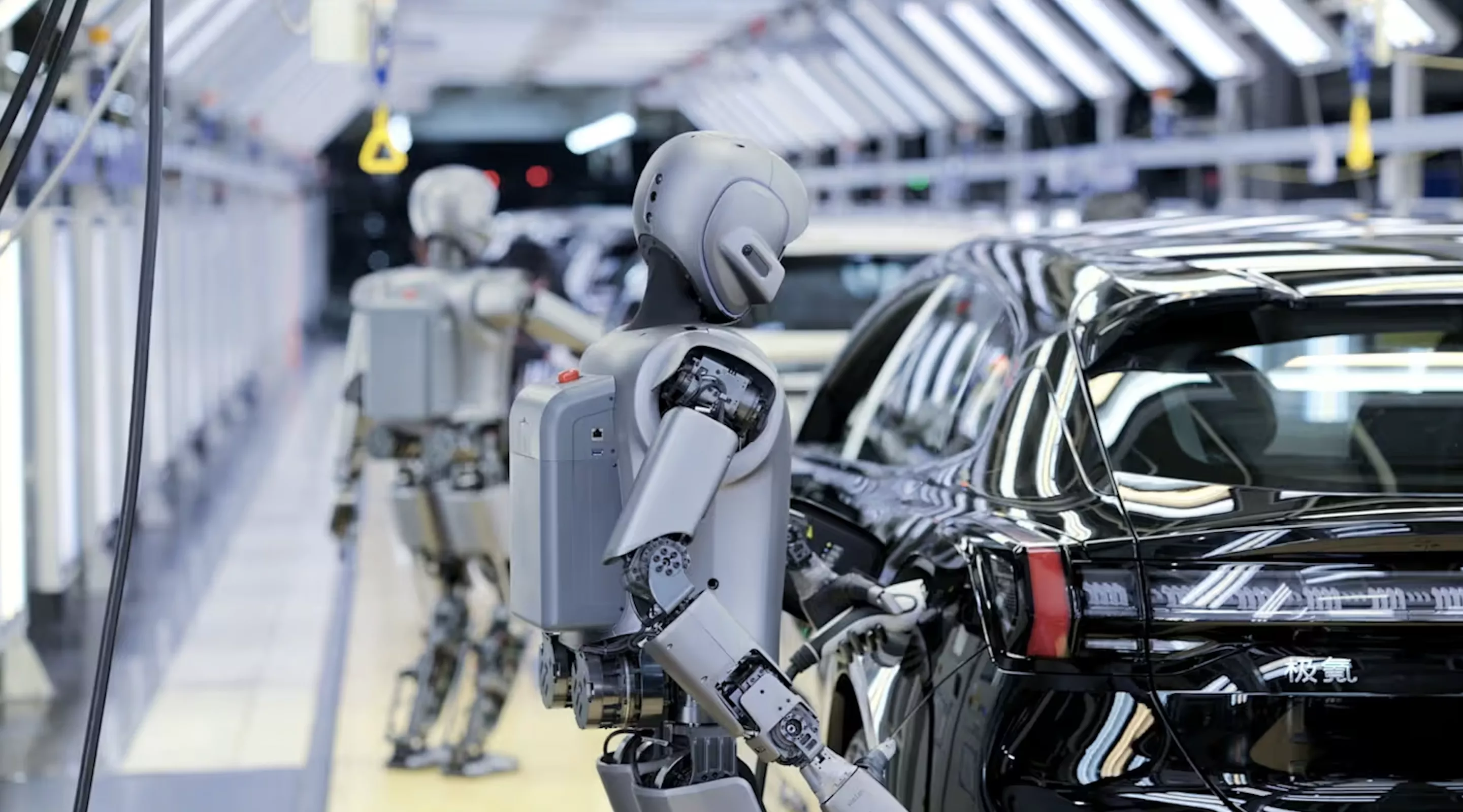
In a nutshell: China's ambitious drive to automate its factories is running up against the physical and computational limits of current humanoid robots. Shenzhen-based UBTech Robotics, one of the country's leading developers in the sector, admits that its latest Walker S2 humanoids achieve only 30 to 50 percent of a human worker's productivity – a stark reminder of how far the technology still must advance before it can reliably replace people on industrial production lines.
Even with those limitations, orders for the machines are accelerating. Manufacturers such as BYD and Foxconn, both partners with UBTech, are experimenting with humanoids to offset labor shortages and remain competitive in automation.
"You can imagine … if Tesla has the advantage of deploying their own human robots into the manufacturing line, that means maybe BYD, they are staying behind," UBTech's chief brand officer, Michael Tam, told The Financial Times.
The Walker S2 is optimized for controlled, repetitive tasks: moving parts between stations, stacking boxes, or performing visual inspections for defects. Unlike traditional industrial arms which make up the majority of China's global robot installations, the Walker S2 is designed to walk between assembly lines, potentially allowing manufacturers to repurpose it across multiple applications. That flexibility is the central selling point for humanoids as a new class of general-purpose labor.
However, current hardware limitations highlight how challenging that goal remains. The Walker S2 still requires appendage swaps for different tasks, meaning a human operator must exchange hands or tools. Engineering teams are now developing a multi-functional hand that would allow the robot to manipulate a variety of components without human intervention.
Power autonomy also remains a hurdle. While UBTech's demo robots can swap their own batteries, real factory use will demand stronger power management and more durable joints for continuous operation.
The Chinese government has made humanoid robotics a strategic priority, promoting AI-driven automation as essential to sustaining manufacturing growth. Yet even policymakers acknowledge that the field is still in its infancy.
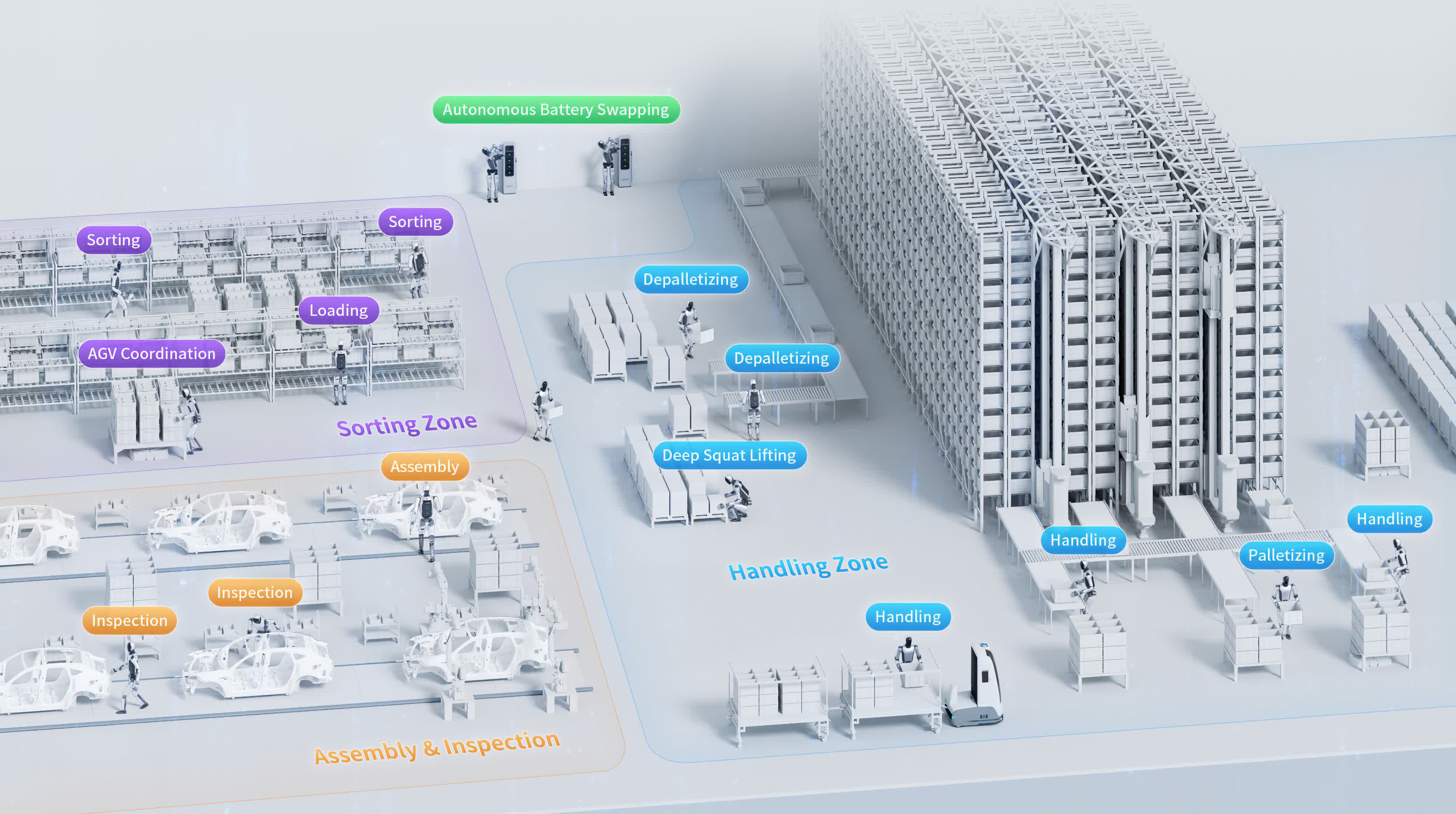
Most humanoid deployments in China remain limited to state-funded pilot projects and concept tests. Many are still proof-of-concept demos, said Marco Wang, a Shanghai-based analyst with Interact Analysis, noting that commercial viability is still some distance away.
UBTech has taken steps to expand its industrial footprint beyond China. It recently announced a concept-stage collaboration with Airbus and, last year, signed a partnership with Texas Instruments. Airbus described the project as "very early testing," suggesting that broad deployment remains speculative.
Still, UBTech aims to produce 10,000 humanoid units in 2026, up from 500 delivered in 2025, as it chases scale and data-driven refinement. Tam said each deployed robot contributes valuable field data to improve algorithms and mechanics. "The more human robots that could be deployed into the real world, the more real data could be collected. And then, like a circle, it … [will] help human robots grow," he explained.
Despite mounting research costs, UBTech's financials show gradual improvement. The company narrowed its first-half 2025 losses to 440 million yuan (about $62 million), down from 540 million yuan a year earlier, while revenue climbed 28 percent to 621 million yuan.
Roughly a third of that income funds research and development, much of it derived from consumer and educational product lines that serve as testbeds for advanced robotics.
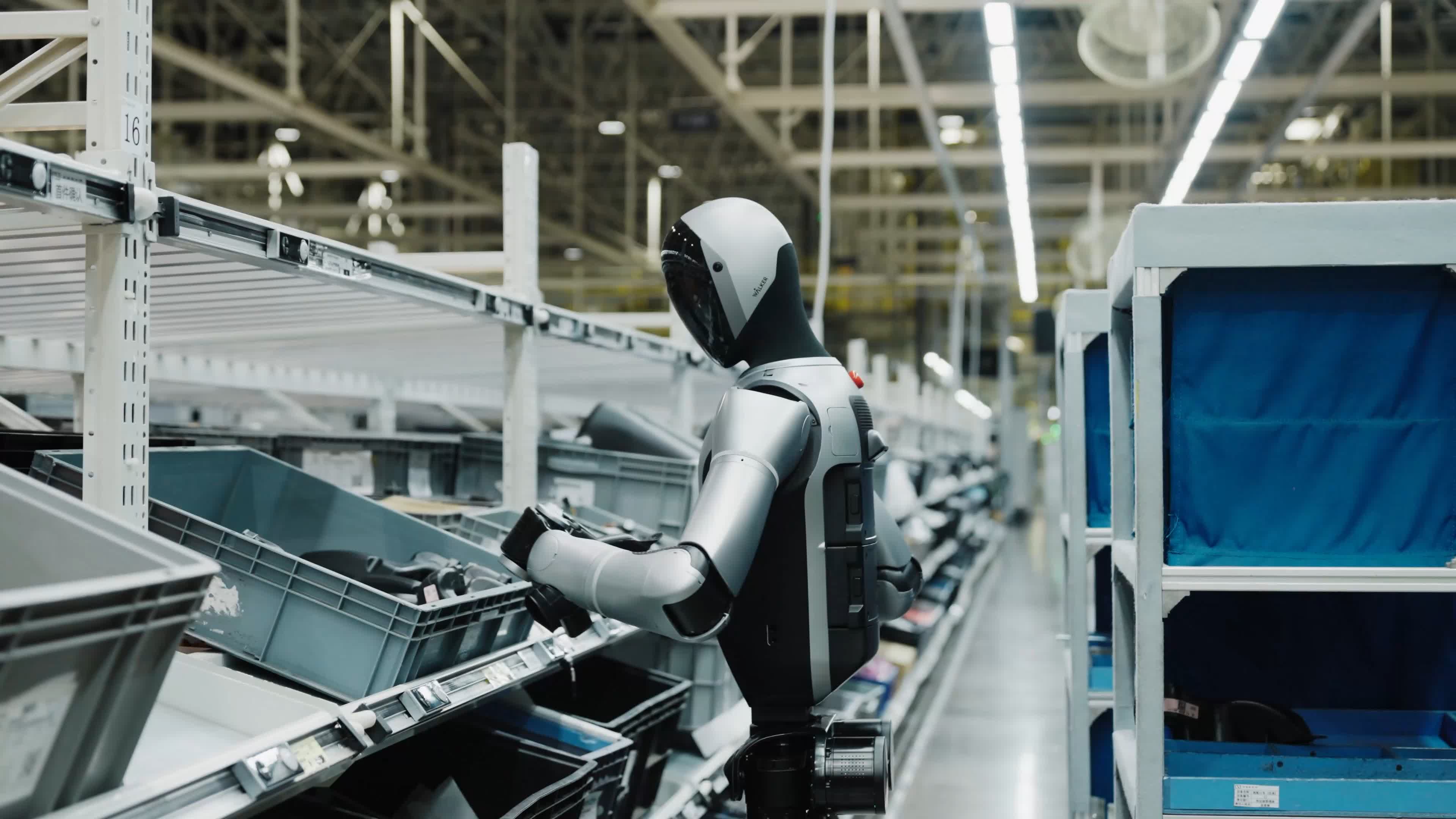
Daiwa Capital Markets analyst Kelvin Lau argued that while UBTech's goal of reaching 80 percent of human efficiency by 2027 is ambitious, it is not unrealistic. "It should be gradually improving," he said, noting that 80 percent of human efficiency could suffice for factories, since robots do not require breaks or holidays.
UBTech is competing alongside a growing group of domestic developers, including Dobot Robotics, Unitree Robotics, and X-Humanoid, all vying to define what a "factory humanoid" should be. Tesla's Optimus project has also raised expectations worldwide, even as it grapples with the same mechanical and computational constraints.
For now, the humanoid revolution remains more vision than transformation. UBTech's robots may still fall short of human dexterity and stamina, but their gradual climb in productivity demonstrates how China's manufacturing ambitions are translating into an incremental, data-driven evolution in applied robotics – one learning cycle at a time.
Image credit: The Financial Times