
Rumor mill: Apple's next silicon generation may have quietly surfaced before it's even announced. References to two unannounced system-on-chip designs, apparently part of the company's upcoming M5 family, have been found within the iOS 26.3 release candidate, a developer-facing build rarely known for revealing major hardware clues.
The discovery, made by software researcher Nicolás Alvarez and shared with MacRumors, points to two chip identifiers: T6051 and T6052. Each is tied to platform codes H17C and H17D, which align with Apple's internal numbering for its M-series processors. Within this scheme, 17 denotes the M5 generation, and the trailing letters suggest where each variant fits in the hierarchy.
Apple's chip naming has followed a fairly consistent internal structure since the first Apple Silicon Macs arrived. The base chips end with G, the Pro tier with S, the Max variants with C, and the Ultra line with D.
Applying that reading here, the H17C code likely belongs to the M5 Max, while H17D identifies an even larger M5 Ultra configuration.
Curiously missing from the iOS 26.3 code is any sign of H17S – the designation expected for an M5 Pro. That absence raises questions about Apple's next move. The company is rumored to be preparing refreshed MacBook Pro models featuring M5 Pro and M5 Max chips, yet the current software evidence supports only the latter, plus an Ultra version typically used in desktop systems like the Mac Studio.

Apple's internal identifiers have historically mirrored its hardware tiers with surprising accuracy. For instance, previous Max chips – the M1 Max (H13C), M2 Max (H14C), M3 Max (H15C/H15M), and M4 Max (H16C) – all followed the "C" naming rule. Ultra chips, including the M1 Ultra (H13D), M2 Ultra (H14D), and M3 Ultra (H15D), consistently use D.
An M4 Ultra never appeared, suggesting that Apple sometimes skips an iteration when the architectural timing doesn't align across product lines.
The re-emergence of a D-class platform in H17D strongly suggests that Apple's largest desktop chip configuration is returning with the M5 generation. That could be intended for a future Mac Studio, which analysts believe is in development, though there have been no credible reports of an imminent launch.
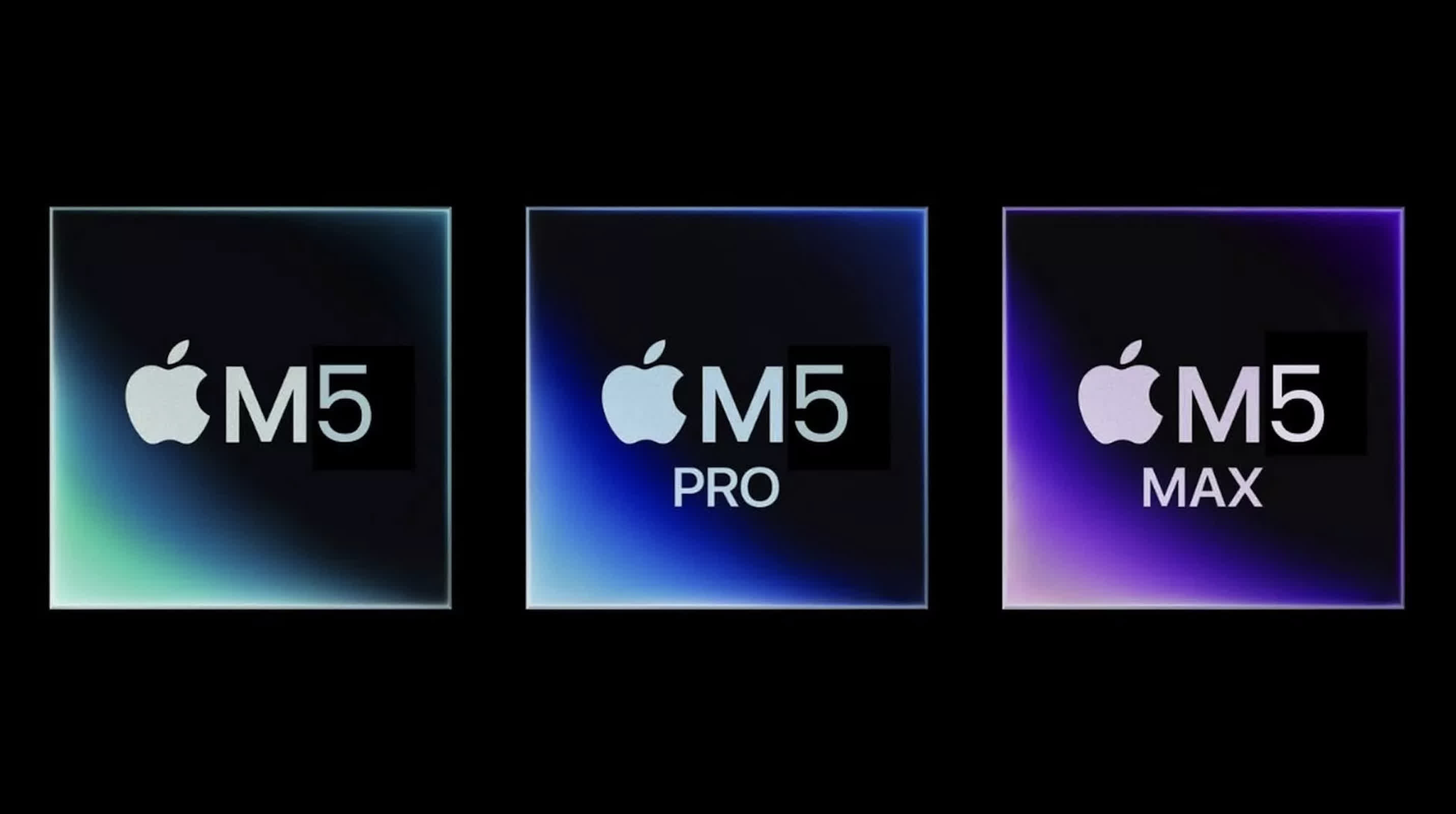
Meanwhile, the discovery of an M5 Max suggests that Apple is progressing quickly toward rolling out higher-end silicon for its professional notebooks – perhaps earlier than expected.
It's unclear whether Apple has altered its internal numbering or simply hasn't integrated the M5 Pro into iOS yet. If previous patterns hold, the M5 Pro will sit between the M5 and the M5 Max, balancing efficiency cores with higher-performance clusters.