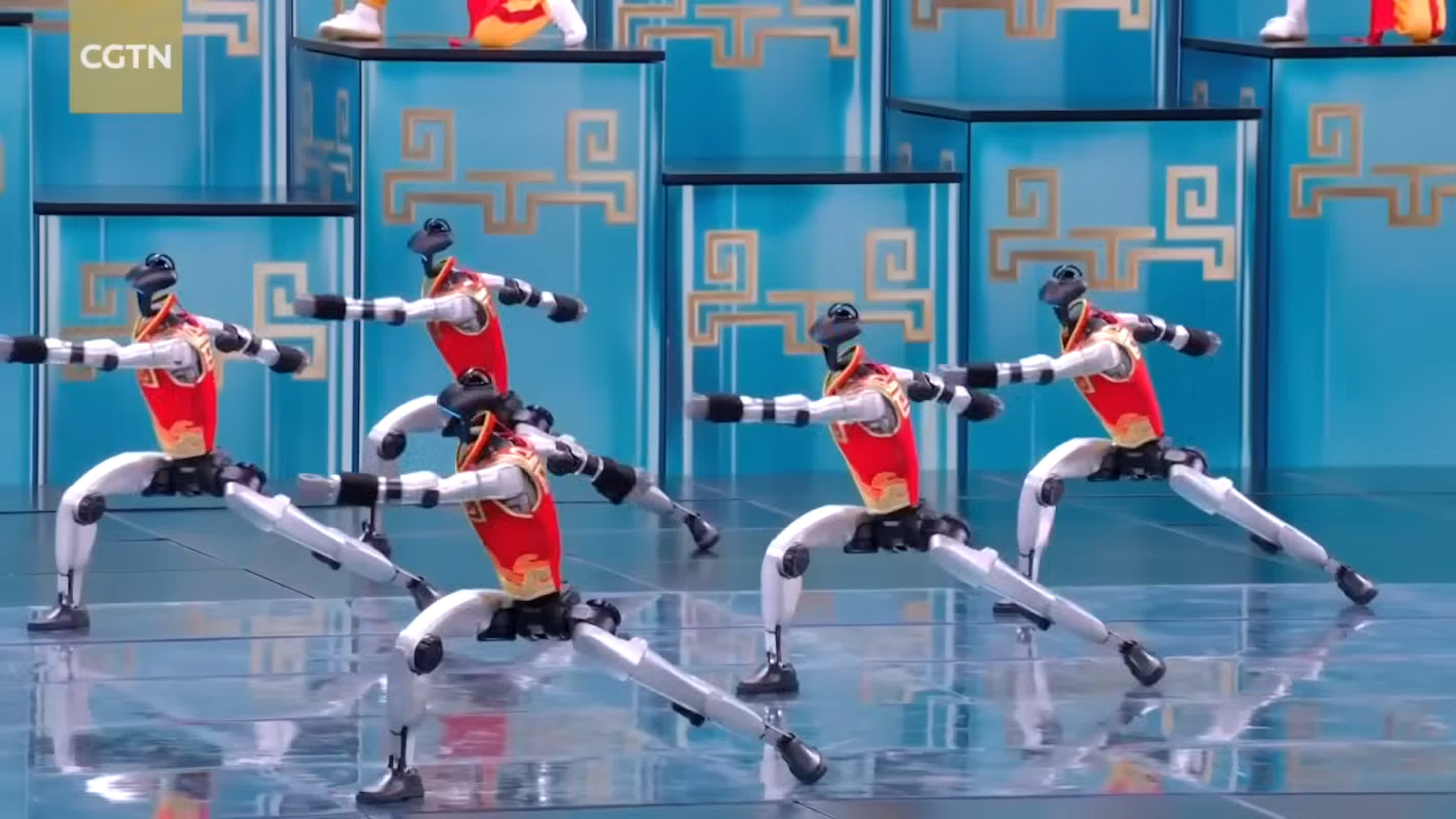
What just happened? Beijing's most-watched television event this week, the Spring Festival Gala, served less as an entertainment spectacle and more as a live showcase of the nation's industrial priorities. Before a national audience, humanoid robots sparred, somersaulted, and moved in synchronized routines that fused martial arts with machine learning. For four emerging robotics firms – Unitree Robotics, Galbot, Noetix, and MagicLab – the appearance was part publicity coup, part policy endorsement.
The gala has long reflected the state's ambitions in aerospace, 5G, and semiconductor research. This year, humanoid robots took center stage. More than a dozen of Unitree's robots, each equipped with articulated limbs and vision systems calibrated for real-time balance correction, performed a fluid martial arts routine.
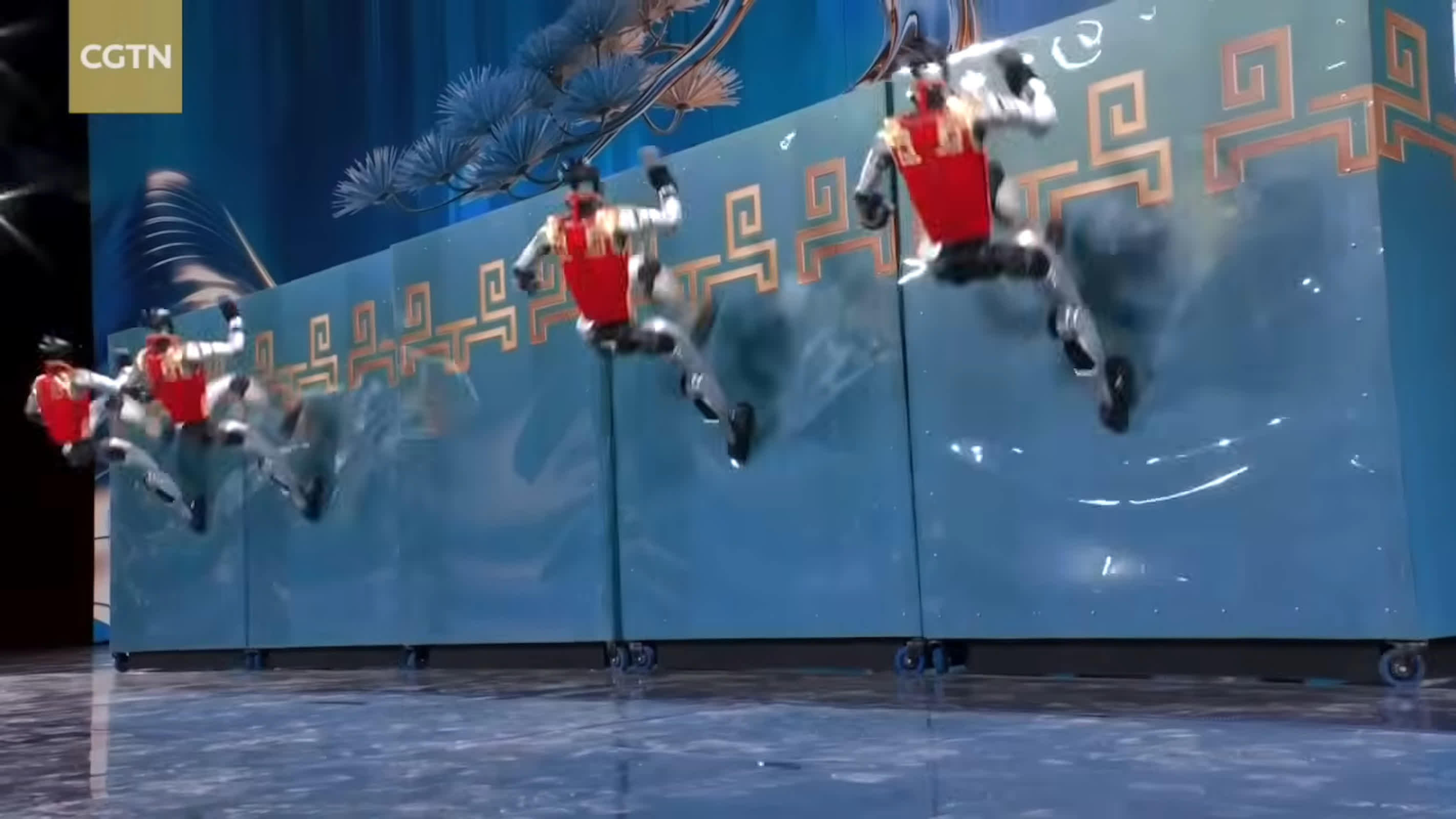
The act included not only choreographed nunchuck combat but also a technically demanding "wall flip" and a sequence replicating the controlled instability of traditional "drunken boxing."
These exhibitions are more than spectacle. They signal Beijing's evolving manufacturing doctrine: AI-driven automation as a solution to an aging workforce and rising labor costs. The country's "AI+ manufacturing" strategy positions humanoid robots as both a symbol and a testing ground for the broader integration of artificial intelligence and mechanical engineering.
"Humanoids bundle a lot of China's strengths into one narrative: AI capability, hardware supply chain, and manufacturing ambition. They are also the most 'legible' form factor for the public and officials," said Beijing-based analyst Poe Zhao in remarks to Reuters. Visibility, Zhao argued, is capital in an early market where investor sentiment and policy attention move faster than adoption curves.
That visibility carries tangible rewards. As technology consultant Georg Stieler noted, the gala functions as a pipeline from industrial policy to public spectacle. Television exposure often translates into research grants, procurement deals, and enhanced brand recognition.
Two of the evening's most prominent performers, Unitree and AgiBot, are preparing for initial public offerings later this year. Their timing aligns with a surge in domestic AI announcements around the Lunar New Year, when China's technology sector frequently unveils milestones aimed at investors.
China now produces an estimated 90 percent of the world's humanoid robots. Around 13,000 units shipped last year alone, according to Omdia. Market projections suggest that figure will double to roughly 28,000 in 2026, outpacing American and European rivals.
The prominence of these robots – steel-framed, sensor-rich, and highly programmed for synchronized movement – reflects China's focus on physical AI, often described as "embodied intelligence."
Tesla's humanoid project, Optimus, remains one of the few Western efforts with comparable scale. Yet even Elon Musk acknowledged in a January investor call that the fiercest competition will likely come from China, citing its unmatched manufacturing capacity and rapid iteration cycles. He noted that most international observers underestimate how quickly the country translates AI research into production hardware.
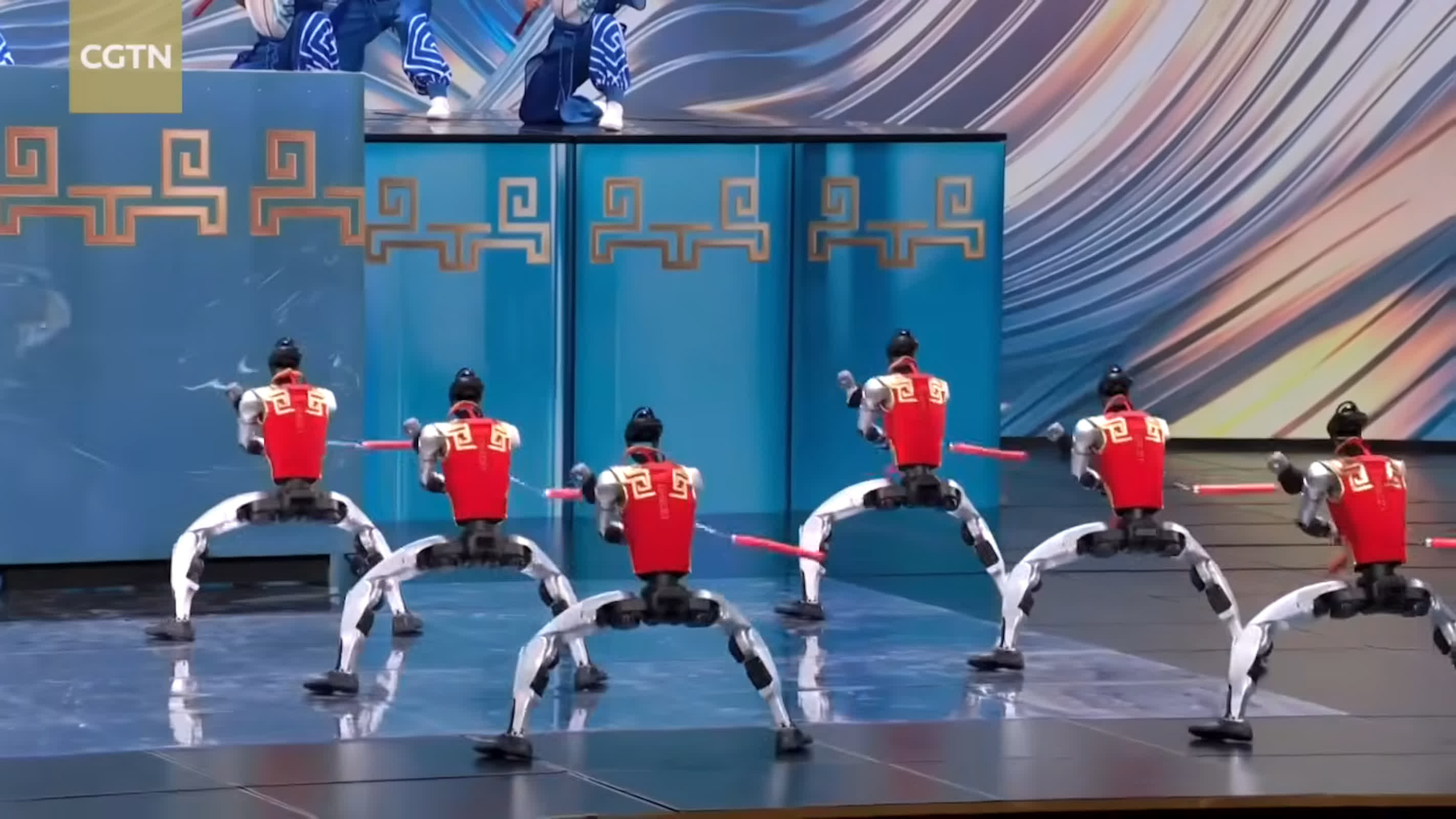
Despite their advances, the frontier of practical usefulness remains elusive. The same robotics companies capable of training machines to flip off walls still struggle to get them to fold laundry or load dishwashers reliably. The choreography on television – dazzling as it is – occurs within controlled environments, not the unpredictable physics of everyday life.
Yet the image of robots moving in perfect harmony alongside human performers conveys a larger truth: in China, automation is no longer confined to laboratories and factories. It has become a matter of national identity – performed live, before hundreds of millions.