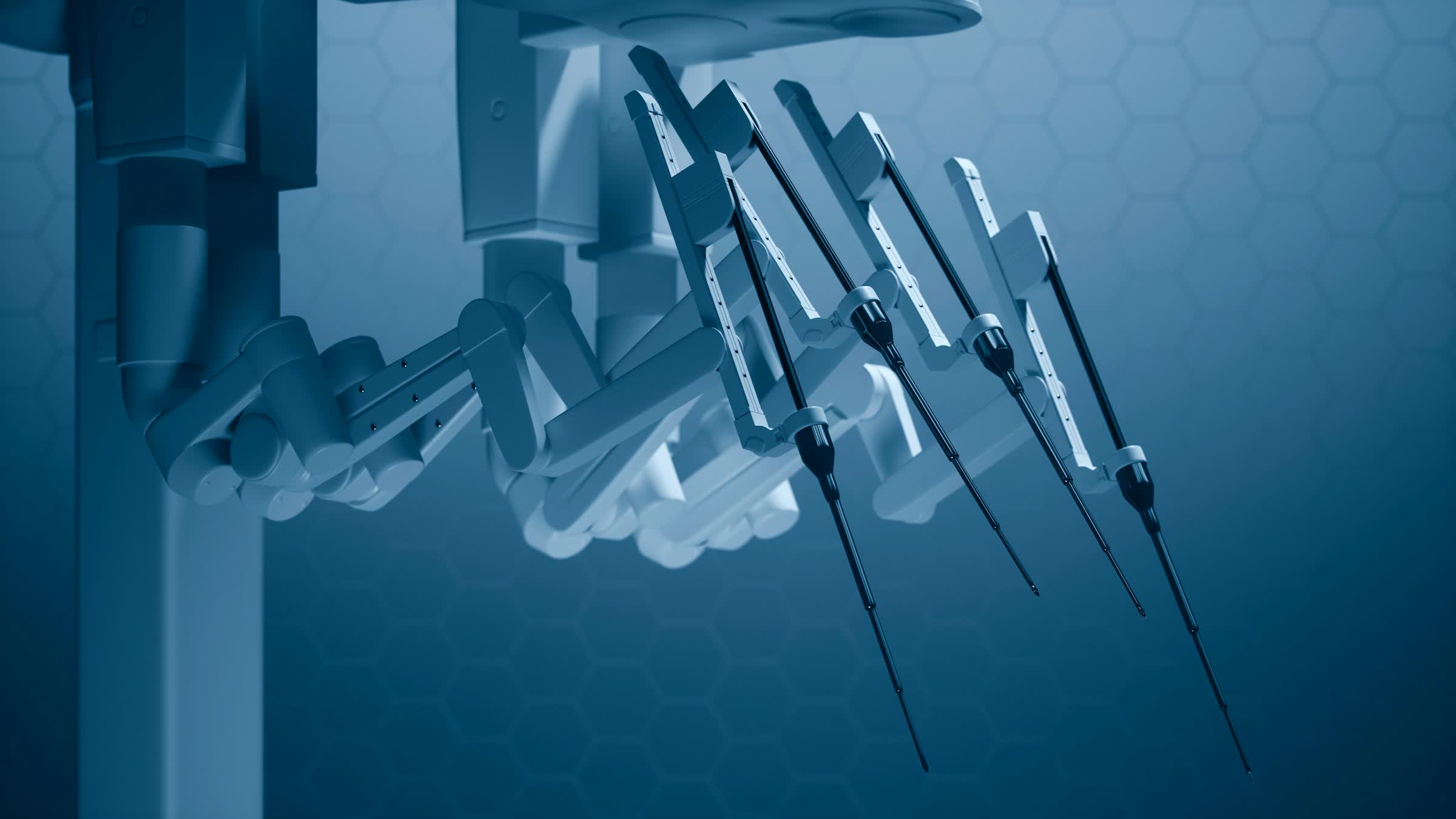
What just happened? A surgeon in London has carried out what sounds like something straight from a sci-fi movie: remotely guiding a robot 1,500 miles away in Gibraltar to remove a man's cancerous prostate. The proceude means The London Clinic has become the first hospital in the UK to successfully conduct remote robot-assisted telesurgery on a patient.
The milestone procedure saw Professor Prokar Dasgupta, based at The London Clinic's robotic center in Harley Street, operate on 62-year-old patient Paul Buxton, who was in St Bernard's Hospital in Gibraltar, a British overseas territory in southern Spain.
Using the Toumai robotic surgical system, Dasgupta controlled four robotic arms and a 3D HD camera from a console in the UK, with just 60 milliseconds of latency between his movements and the robot's response.
That delay is small enough to make the surgery feel close to real-time, which is important when carrying out delicate cancer operations – as opposed to remotely piloting a drone or playing a cloud-streamed game.
A local team in Gibraltar was on standby in case the connection dropped, but the prostatectomy reportedly went off without a hitch.
For Buxton, who moved to Gibraltar 40 years ago, the appeal was obvious. Instead of traveling to London or Madrid for a complex procedure and potentially spending weeks away from home, he was able to have the operation locally. According to reports, he said he felt "fantastic" within days.
The operation is being described as a first for the UK, but it is not the first time remote robotic surgery has crossed borders. The most famous early example remains 2001's "Lindbergh Operation," when surgeons in New York remotely removed a patient's gallbladder in Strasbourg, France.
More recently, remote robotic prostate surgery has also been carried out in other countries, including a 2024 transcontinental procedure linking Rome and Beijing, and additional long-distance prostate operations using the same Toumai platform in Africa.
That broader context matters because it shows this is less a one-off stunt and more a sign that telesurgery is edging toward practical use. If the technology proves reliable enough, it could eventually allow specialists to operate on patients in remote regions without forcing them to travel long distances or sit on waitlists for limited local expertise.
Of course, there are still plenty of caveats. Surgery over fiber optic links and backup 5G connections raises obvious questions about infrastructure, fail-safes, regulation, and cost. Hospitals are not going to start handing out long-distance robotic operations like routine checkups any time soon.