
The big picture: A new generation of cooling technology is beginning to move from lab testing into early real-world trials, as researchers and startups look for ways to cool buildings without relying on traditional refrigerants. The push comes as demand for air conditioning accelerates in Europe, where rising temperatures are exposing the limits of both existing systems and the buildings they are meant to cool.
Several of these new approaches are now being tested. Some rely on metals that cool when stretched and released. Others use semiconductors, magnetic fields, or pressure-sensitive materials to move heat without the chemical refrigerants used in conventional air conditioning. Most are still in early stages, but the activity reflects a growing effort to rethink how cooling works at a fundamental level.
The urgency reflects how quickly climate conditions are shifting beyond what much of Europe's infrastructure can handle. In late June, temperatures exceeded 40 degrees Celsius in parts of the region, triggering a surge in demand for cooling equipment. In France, shoppers forced their way into stores to grab portable air conditioners and fans before supplies ran out. The International Energy Agency estimates that by 2050, two-thirds of households worldwide could have air conditioning.
Europe remains behind other markets, with about 20% of households using air conditioning, compared with roughly 90% in the United States. In the UK, adoption is closer to 4%. But that gap is expected to shrink as heat waves become more frequent, ..particularly in countries where air conditioning has not historically been a priority.
Cooling is no longer just about comfort. It affects productivity, sleep, and public health, especially during prolonged periods of extreme heat. Research has linked access to air conditioning with lower mortality rates during heat events, including an estimate that nearly 200,000 premature deaths among people over 65 were avoided globally in 2019.
At the same time, scaling conventional air conditioning presents its own set of challenges. Most systems still rely on refrigerants that cycle between liquid and gas to transfer heat. While effective, they are energy-intensive and carry environmental risks. Cooling already accounts for about 3% of global greenhouse gas emissions, and demand for electricity used in cooling is expected to more than triple by 2050.
The refrigerants themselves are under increasing scrutiny. Fluorinated gases, widely used today, can have a global warming impact thousands of times greater than carbon dioxide if they leak. The European Union moved in 2024 to phase them out. "In the next few years, air conditioners and heat pumps using these gases won't even be able to be sold here," Fabian Voswinkel, an energy-efficiency policy analyst at the IEA, told Wired. Alternatives such as propane and ammonia are available but introduce trade-offs, including flammability and toxicity.
Those limits are pushing researchers toward solid-state cooling, a category of technologies that eliminates the need for refrigerants altogether. Instead, these systems rely on materials that change temperature when exposed to external forces such as mechanical stress, electrical current, or magnetic fields.

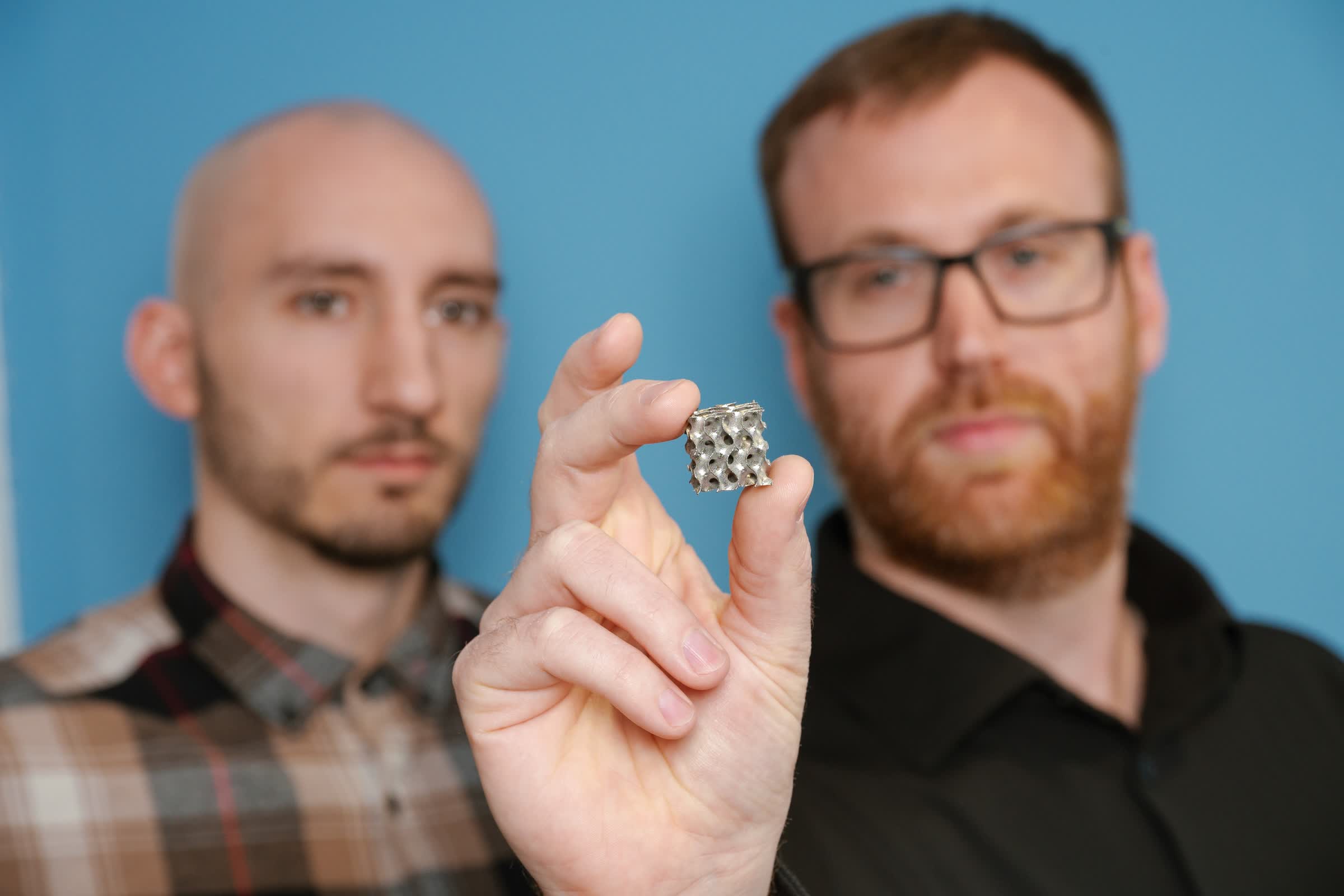
At Saarland University in Germany, researchers are testing nickel-titanium alloys that generate a cooling effect when stretched and released, a process known as elastocaloric cooling. Early results suggest the approach could lower indoor temperatures by 5 to 10 degrees Celsius and operate more efficiently than conventional systems.
The team, led by Paul Motzki, is working with Irish company Exergyn to develop refrigerant-free heat pumps and expects initial deployment in new buildings within the next few years. Motzki said the technology "could lead to disruption, even a paradigm shift, because the technology is so different from established cooling systems."
Other companies are testing different approaches. Mimic Systems is testing a semiconductor-based heat pump that uses electrical currents to move heat, with a prototype installed in an apartment in Vancouver. Germany-based Magnotherm is developing cooling systems that rely on magnetic fields and plans to test them in a German supermarket chain before expanding into air conditioning. In the UK, Cambridge spinout Barocal is working with plastic crystals that release heat when compressed and has raised $10 million in seed funding.

For now, most of these systems remain unproven at scale. Lindsay Rasmussen, who works with climate-tech startups at Third Derivative, said the technologies are "promising, but unproven at scale," adding that "the space can move quickly if the right capital and partnerships are in place." Their path to market may depend on whether large manufacturers adopt and scale them.
Even with new technologies, rising cooling demand cannot be addressed through equipment alone. Much of Europe's building stock was designed to retain heat, and dense urban areas tend to trap it. Researchers and policymakers are increasingly calling for a "cooling hierarchy" that prioritizes reducing heat buildup through design measures such as shading, ventilation, and reflective materials before turning to mechanical systems.
Some cities are already experimenting with broader infrastructure solutions. Paris has expanded its district cooling network, which circulates chilled river water through underground pipes to cool public buildings. Voswinkel said such efforts reflect a growing recognition that adapting to rising temperatures will require more coordinated planning.