
Bottom line: The Hayabusa2 spacecraft returned its samples of asteroid 162173 Ryugu in 2020, and scientists have been studying the material ever since. A newly published paper confirms that the space rock carried the most fundamental elements of life as we know it – all of them.
Researchers are still studying samples of Ryugu collected by the Japanese Aerospace Exploration Agency from its Hayabusa2 mission. After the first papers focused on the composition of the recovered material, a Japanese team has now found a "complete" set of genetic bases belonging to both DNA and RNA.
The recently published study explains that asteroids are already known for their "seeding" role in the emergence of life throughout the universe. Organic molecules delivered by these extraterrestrial bodies have played a key role in bringing the building blocks of life to Earth, and Ryugu is once again suggesting that the so-called panspermia hypothesis may be true.
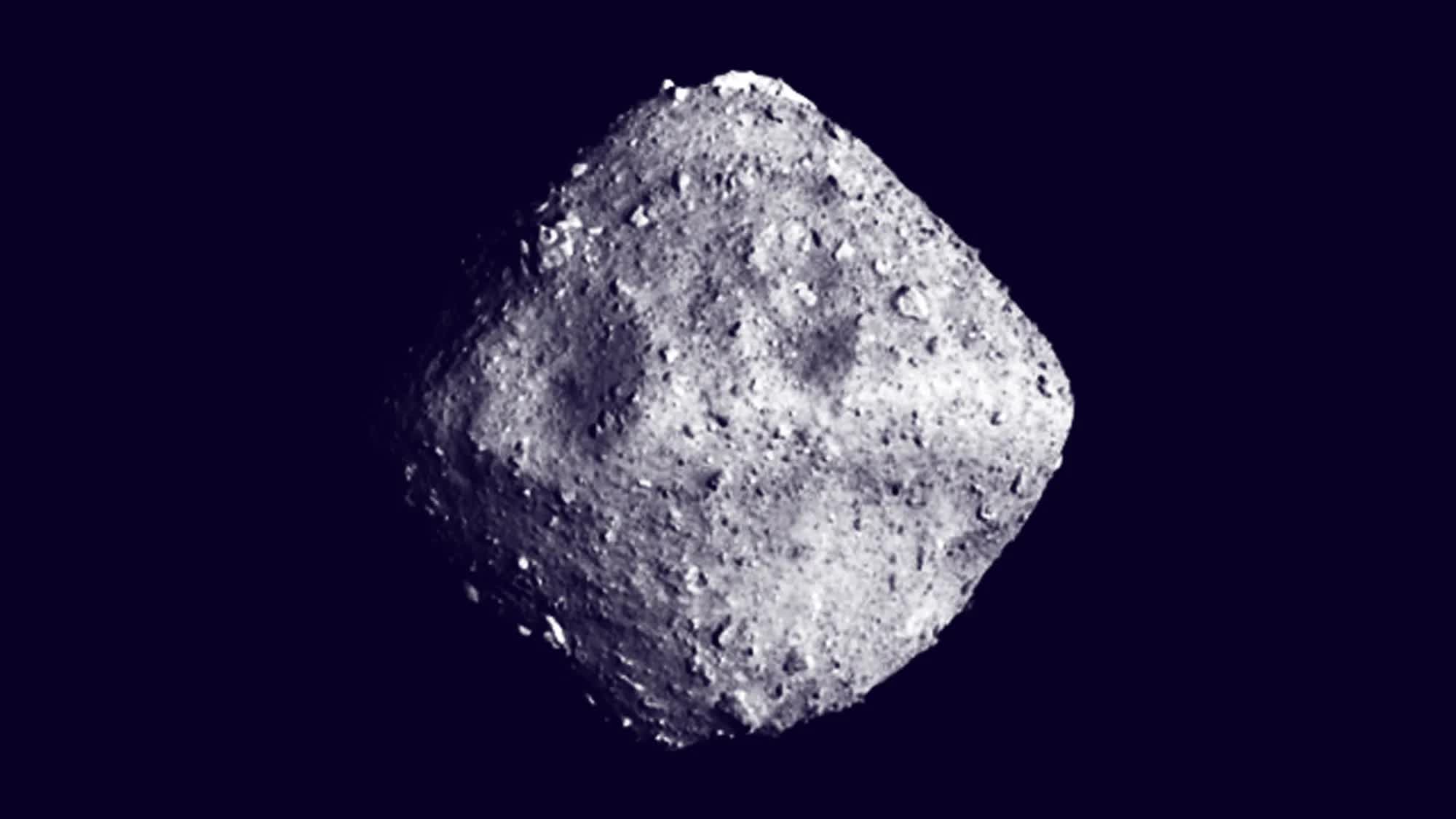
The researchers have discovered all five "canonical" nucleotides in Ryugu samples: adenine, guanine, cytosine, and thymine for DNA, uracil for RNA. Traces of RNA bases were already discovered in 2023.
Both DNA and RNA play crucial roles in Earth's lifeforms, storing the instructions for their development while functioning and acting as messengers for turning these instructions into actual protein production inside cells.

The Japanese team compared their results to other asteroid samples collected by different organizations. In 2025, NASA discovered that asteroid Bennu contained all five nucleobases required for life to function. The same is true for Orgueil and Murchison, two historically significant meteorites that fell on Earth in 1864 (France) and in 1969 (Australia), respectively.
The new study confirms that carbonaceous (C-Type) asteroids played an important part in changing Earth's prebiotic chemical soup that gave rise to life on Earth. C-type asteroids are the most common type (75%) of flying rocks scattered throughout the Solar System, with most of them lying at the outer edge of the asteroid belt.
However, as Spanish astrobiologist Cesar Menor Salvan highlighted after reading the study, the new Ryugu analysis does not prove that life actually originated in space before coming to Earth. The Japanese team confirmed that these organic materials can form under prebiotic conditions anywhere in the universe.
The researchers also made an interesting discovery about ammonia, another important chemical compound involved in the development of life. The correlation between ammonia and the nucleobases detected in Ryugu samples could provide important clues about how the genetic molecules actually came to be in this primordial environment.