
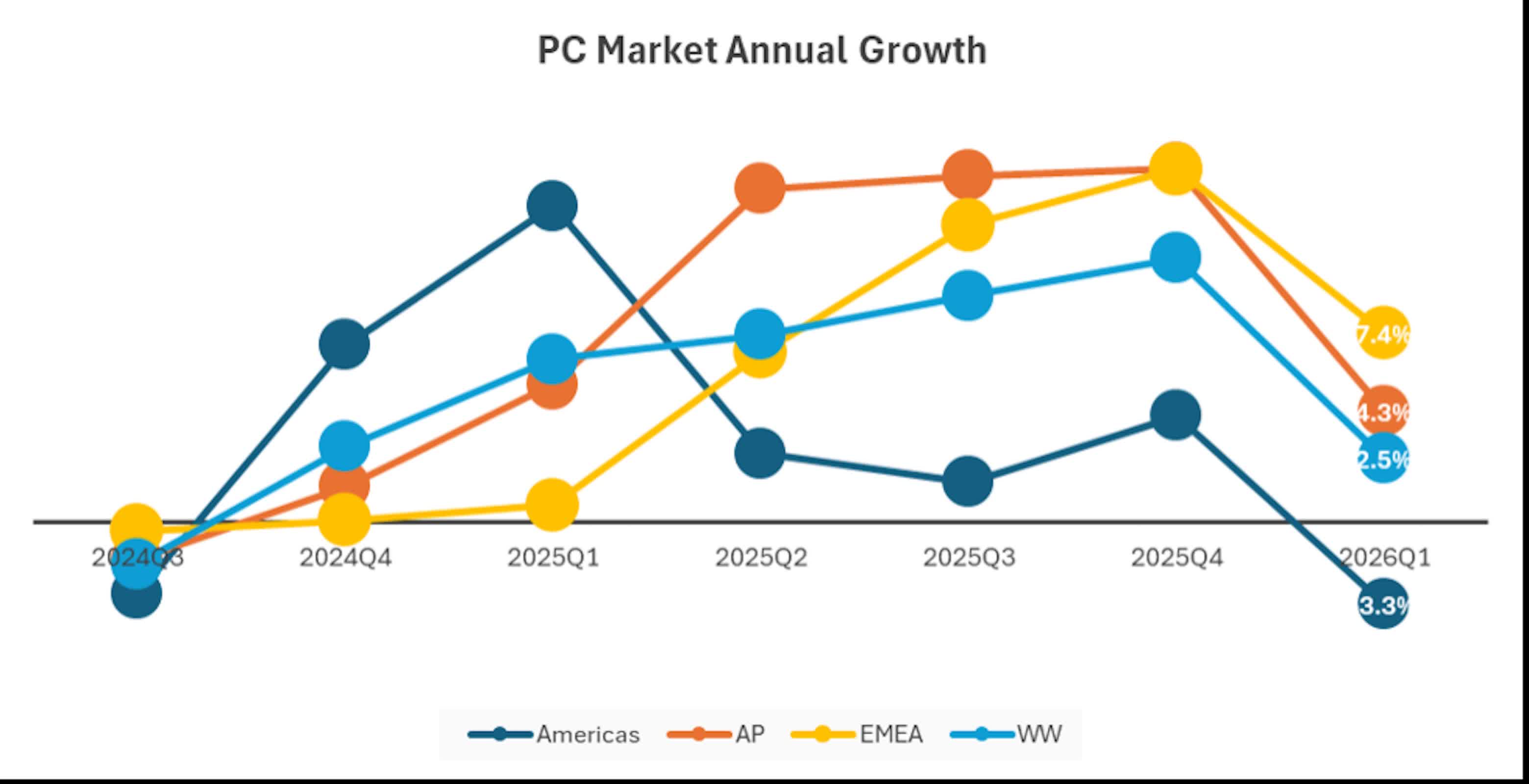
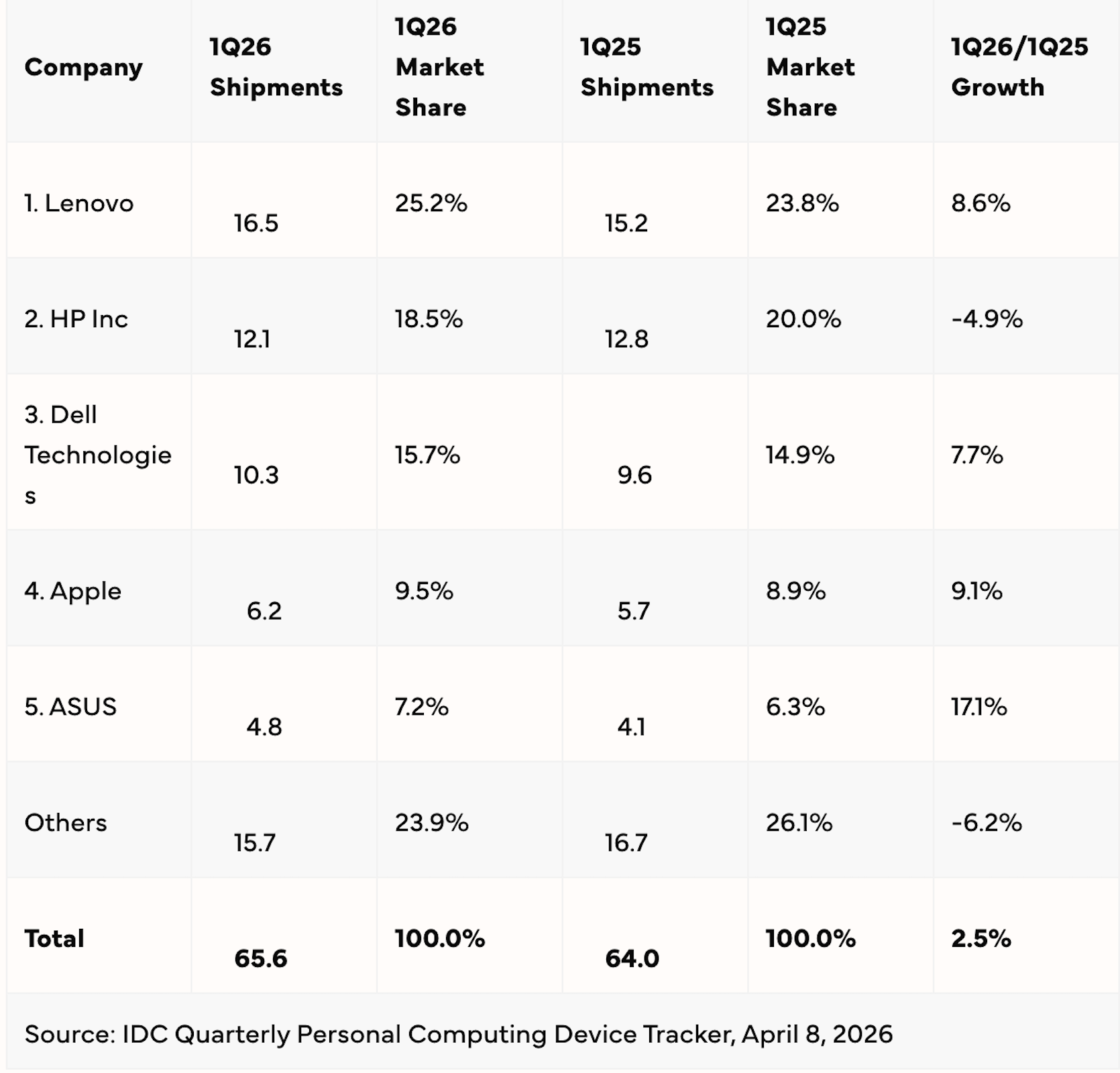
Bottom line: The global PC market entered 2026 with modest growth, even as deteriorating macroeconomic conditions and memory shortages put fresh pressure on the supply chain. According to preliminary data from IDC, worldwide shipments reached 65.6 million units in the first quarter of the year – a 2.5% increase from the same period in 2025.
The growth came despite a convergence of headwinds, including weakening economic indicators and a persistent memory shortage that has reverberated across the tech supply chain. IDC's latest analysis attributes the uptick partly to pre-emptive purchasing by vendors and customers ahead of expected memory price hikes, as well as continued upgrades driven by lingering migration from Windows 10 and a wave of new device launches.
Jean Philippe Bouchard, research vice president with IDC's Worldwide Mobile Device Trackers, noted that the coming months will expose differences in vendors' operational resilience. He said 2026 will likely be marked by shifting market share as manufacturers with stronger access to memory resources and broader product portfolios gain an edge over competitors struggling with supply constraints.
"IDC believes that demand will be met by PC vendors who have best secured access to memory and with a device portfolio capable of addressing all price tiers of the market," Bouchard said. The firm expects vendors that maintain tight control over sourcing and inventory to capture greater share as commodity components become more difficult to obtain.
While the first quarter registered positive growth, IDC cautions that the underlying trend is slowing rapidly. The report indicates that each major region has started to show signs of weakening demand as device prices rise and macroeconomic conditions soften. The slowdown could intensify through the rest of the year if manufacturing and logistics costs continue to climb.
The ongoing Middle East conflict has further complicated an already fragile logistics environment. Isaac Ngatia, senior research analyst with IDC Devices Research, said that disruptions in shipping routes between Asia and EMEA have intersected with higher fuel costs and volatile freight markets. "The Middle East conflict has injected a fresh layer of volatility into a fragile computing devices market, straining global logistics through a double-edged sword of rising energy costs and freight spikes," Ngatia said.
Ngatia explained that manufacturers facing sea-route instability have increasingly turned to air freight to meet delivery deadlines. However, that alternative has pushed costs higher still, filtering through the supply chain and ultimately raising prices for consumers and enterprise buyers alike.
IDC expects these conditions to keep pressure on PC shipments through the remainder of 2026 and suggests that vendors with stronger supply chains and memory access are best positioned to cope.