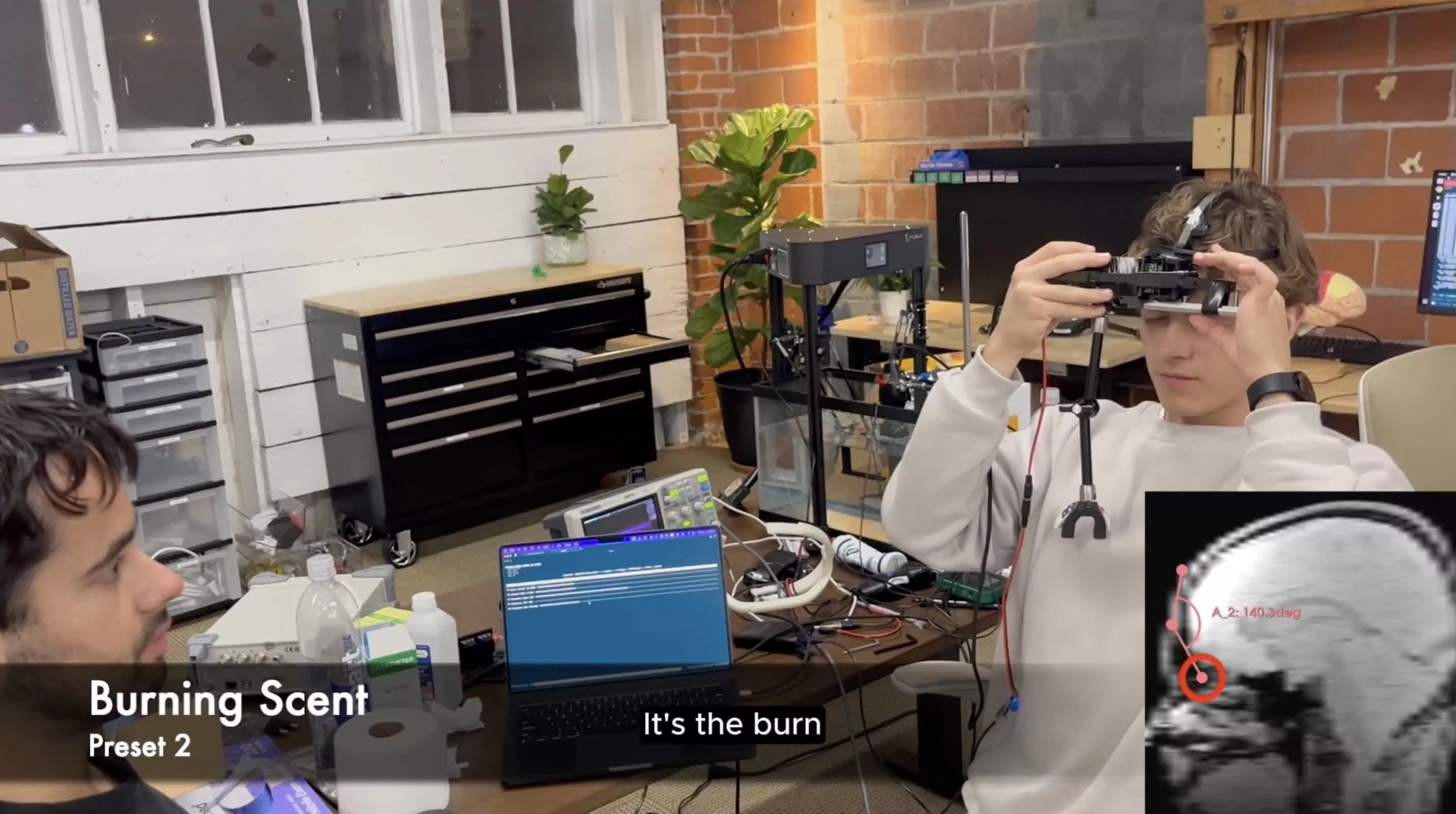
Forward-looking: A small group of independent researchers is exploring a different path for immersive computing, one that bypasses the nose and stimulates the brain directly. Their prototype uses focused ultrasound to target the olfactory bulb, the region responsible for processing smell. It does not rely on chemicals, cartridges, or airborne compounds. If it proves viable beyond early testing, it could address one of the most persistent gaps in virtual and augmented reality.
Current systems emphasize sight and sound, with some progress in haptics. Smell remains largely absent, despite its unusually strong connection to memory and emotion.
Part of the limitation is biological. Olfactory signals feed directly into the limbic system, including the hippocampus, without first passing through higher-level processing centers. That pathway helps explain why smells can trigger immediate, vivid memories, an effect today's VR systems cannot replicate.
The team, Lev Chizhov, Albert Yan-Huang, Thomas Ribeiro, and Aayush Gupta, opted to target the brain rather than attempt to simulate scent in the air. Their system sends ultrasound through the skull to stimulate the olfactory bulb. They say this form of direct stimulation has not been demonstrated before, even in animal studies.
The olfactory bulb sits behind the upper nasal cavity, making it difficult to access from outside the head. Ultrasound also travels poorly through air. To compensate, the researchers positioned the transducer on the forehead, using what they describe as a "solid, jello-like pad for stability and general comfort," and angled the signal downward toward the target.
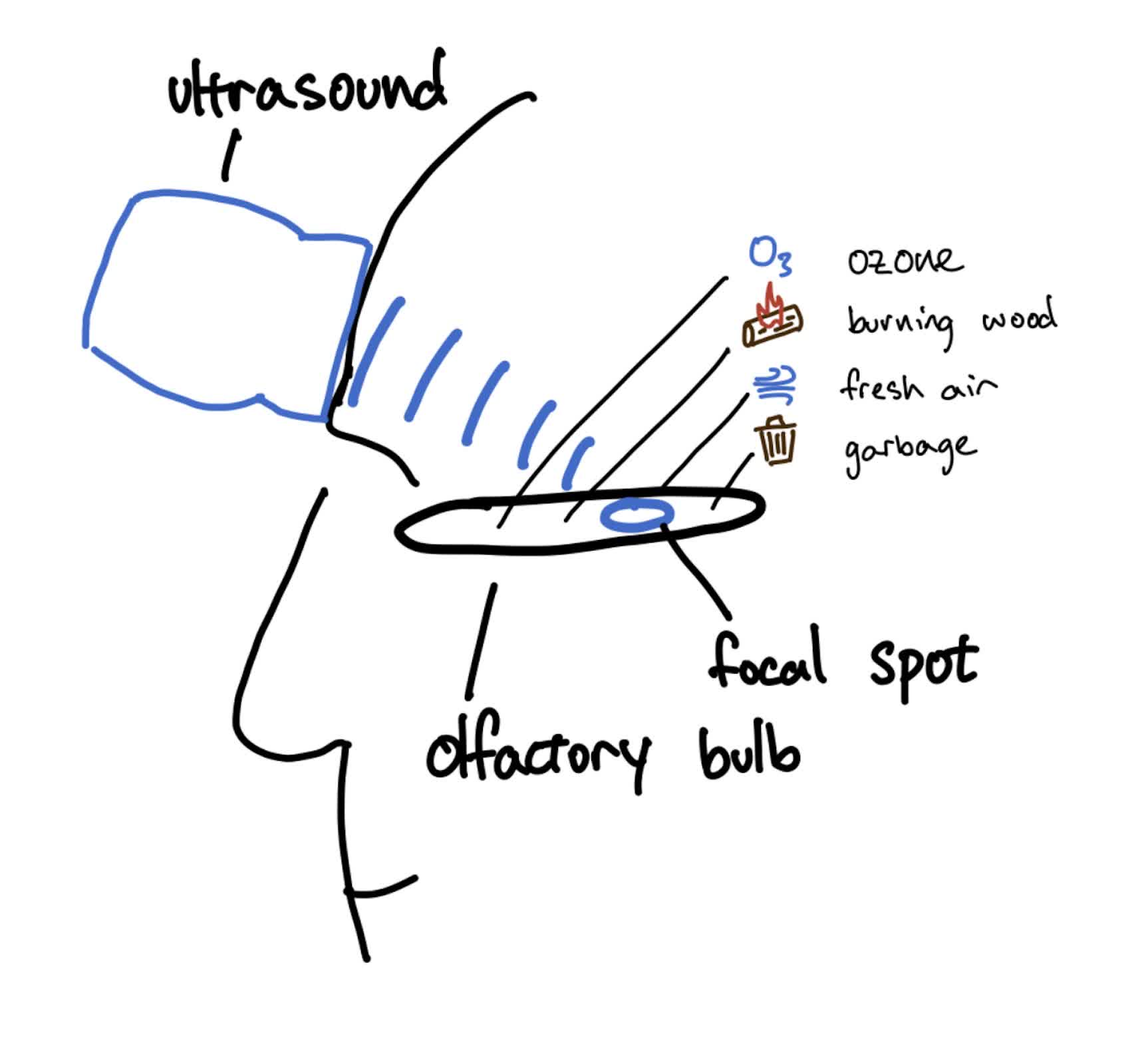
They used MRI data from one of the researchers to estimate where to aim and how deep the signal needed to go. From there, they adjusted frequency and timing to get consistent results. The setup uses low-frequency ultrasound that can pass through the skull while concentrating energy at the target depth.
During testing, participants reported a mix of clear smells and less-defined sensations. These included fresh air, ozone, burning wood, and decaying organic material.
The team observed a consistent difference between the two. Smells were sharper and seemed to come from a specific point, almost as if they could be located by sniffing. Sensations were weaker and slower to appear, often described as faint impressions rather than distinct odors. Some participants also noted mild physical effects, such as a slight tingling on the face.
Breathing influenced how the effects were perceived. Light inhalation tended to strengthen them, so participants were instructed to gently sniff while holding the device against their forehead. In some cases, the sensation built gradually over several breaths; in others, it appeared abruptly. One participant reacted to a garbage-like smell as though it were present in the surrounding environment.
The device remains an early prototype. It is technically head-mounted but must be held in place by hand. For practical use, it would need to be miniaturized and integrated into a wearable.
The work also gestures toward a broader possibility: non-invasive systems that can write signals into the brain, not just read them. That remains speculative, but the same approach could, in theory, extend beyond smell.
In the near term, immersive media is the clearest application. A headset capable of producing scent without consumables would remove a long-standing constraint in simulation design. Cost and engineering challenges remain, particularly for consumer hardware, though enterprise use could arrive sooner.
More fundamentally, the approach reframes how digital scent might be delivered. Instead of recreating smells in the air, it aims to trigger perception directly.