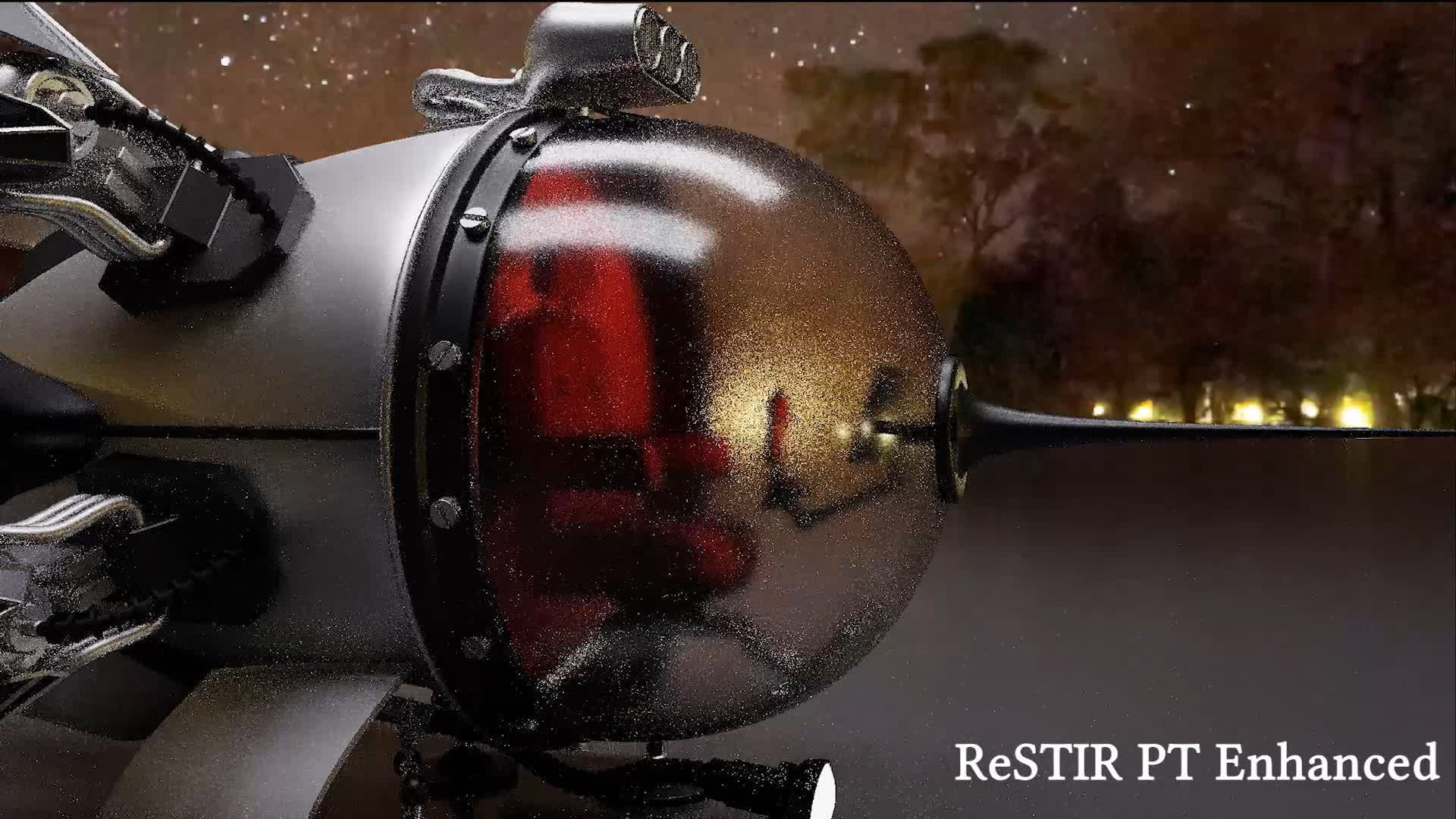
Why it matters: Path tracing has dramatically enhanced the presentation of light, shadow, and reflections in titles such as Cyberpunk 2077, Alan Wake 2, Resident Evil Requiem, and Pragmata. However, its extreme computational cost limits the feature to the latest high-end Nvidia graphics cards. But new research from the company outlines how the performance impact of path tracing might be reduced by at least half while improving image quality.
A new research paper from Nvidia describes how an in-development update to ReSTIR (Reservoir Spatiotemporal Importance Resampling) path tracing addresses several of its flaws. While the technology is not quite ready for implementation in commercial games, it could enhance path tracing performance by 100% to 200%.
Nvidia introduced ReSTIR in 2020 to make the then-nascent path tracing more efficient. To calculate lighting for each pixel, the technology saves time by reusing information from neighboring pixels and prior frames. Games such as Black Myth: Wukong and Nvidia's Portal RTX project used ReSTIR for global illumination and shadows.
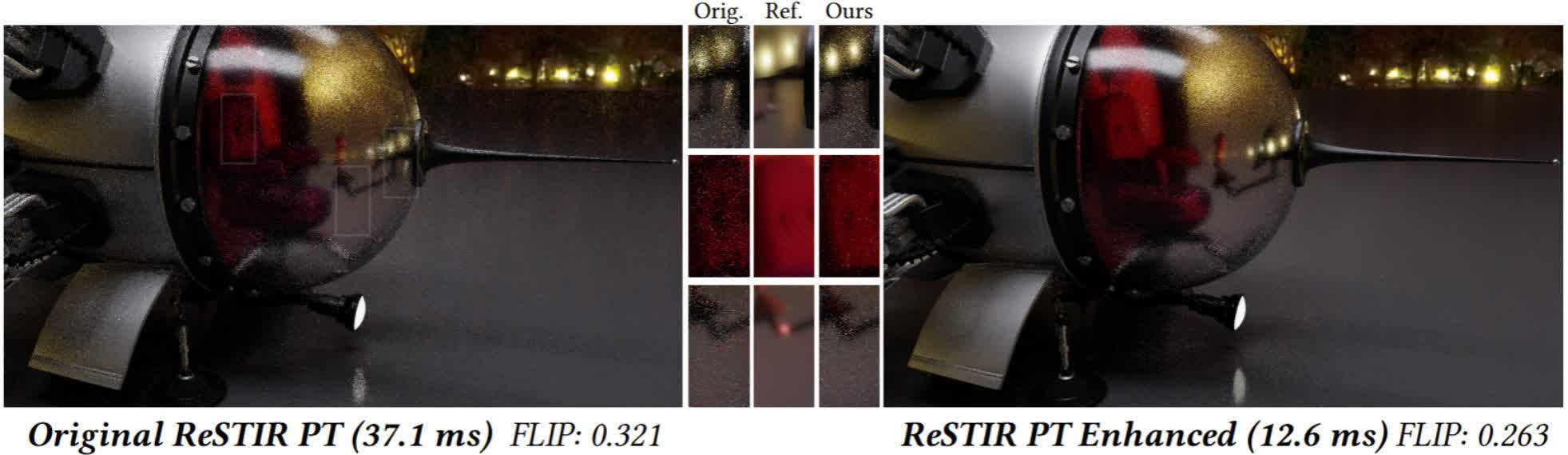
The updated version uses several optimizations to enhance accuracy while completing calculations in a fraction of the time. These include unifying calculations for direct and indirect illumination, reducing divergence when neighboring light paths contact different material types, reducing noise, and much more.
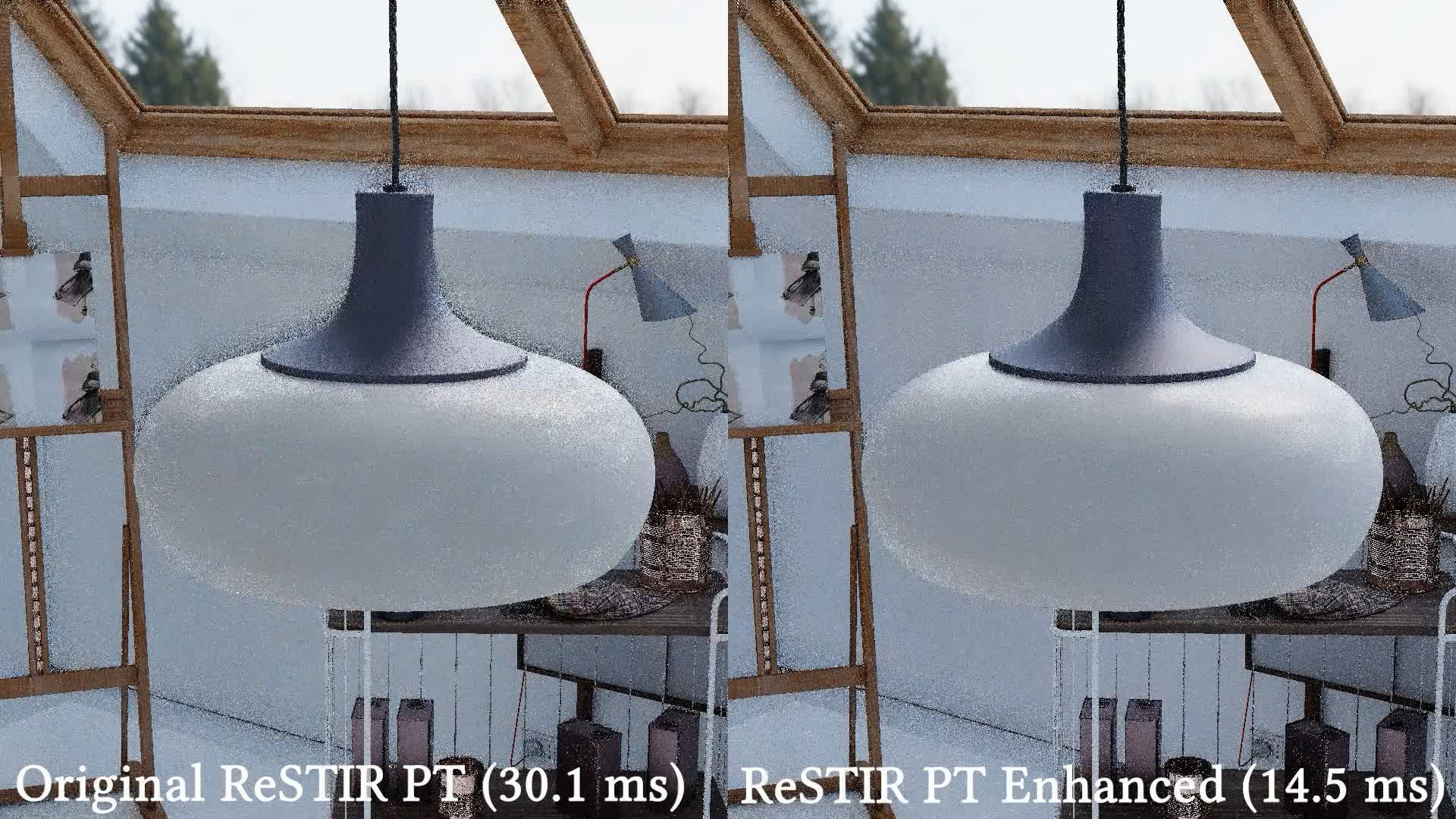
Multiple comparison shots in the attached video show that the update resolves some visual flaws while rendering the scene in half the time or sometimes just over a third. At 1080p, on a system using an RTX 5880 Ada Lovelace workstation GPU and an AMD Ryzen Threadripper Pro 3975WX CPU, average frame times fell from around 35 to 15 milliseconds. The best result cut the render time from 50 to just over 16.1ms, creating a more accurate path-traced image three times as quickly.
ReSTIR improvements are among several changes that Nvidia and Microsoft are introducing to make path tracing less demanding. For example, the latest versions of DirectX and Shader Model standardize Shader Execution Reordering to further reduce divergence. SER has already improved performance by approximately 24% in Indiana Jones and the Great Circle and an incredible 370% in Wukong, and its inclusion in DirectX will help bring the feature to more games and non-Nvidia GPUs.
Meanwhile, Opacity Micromaps enhances performance when shading vegetation and other transparent objects, while improvements to RTX Mega Geometry enable path tracing to interact with large-scale micropolygon scenes. Remedy Entertainment and CD Projekt Red aim to use the enhancements in Control Resonant and The Witcher 4, respectively.