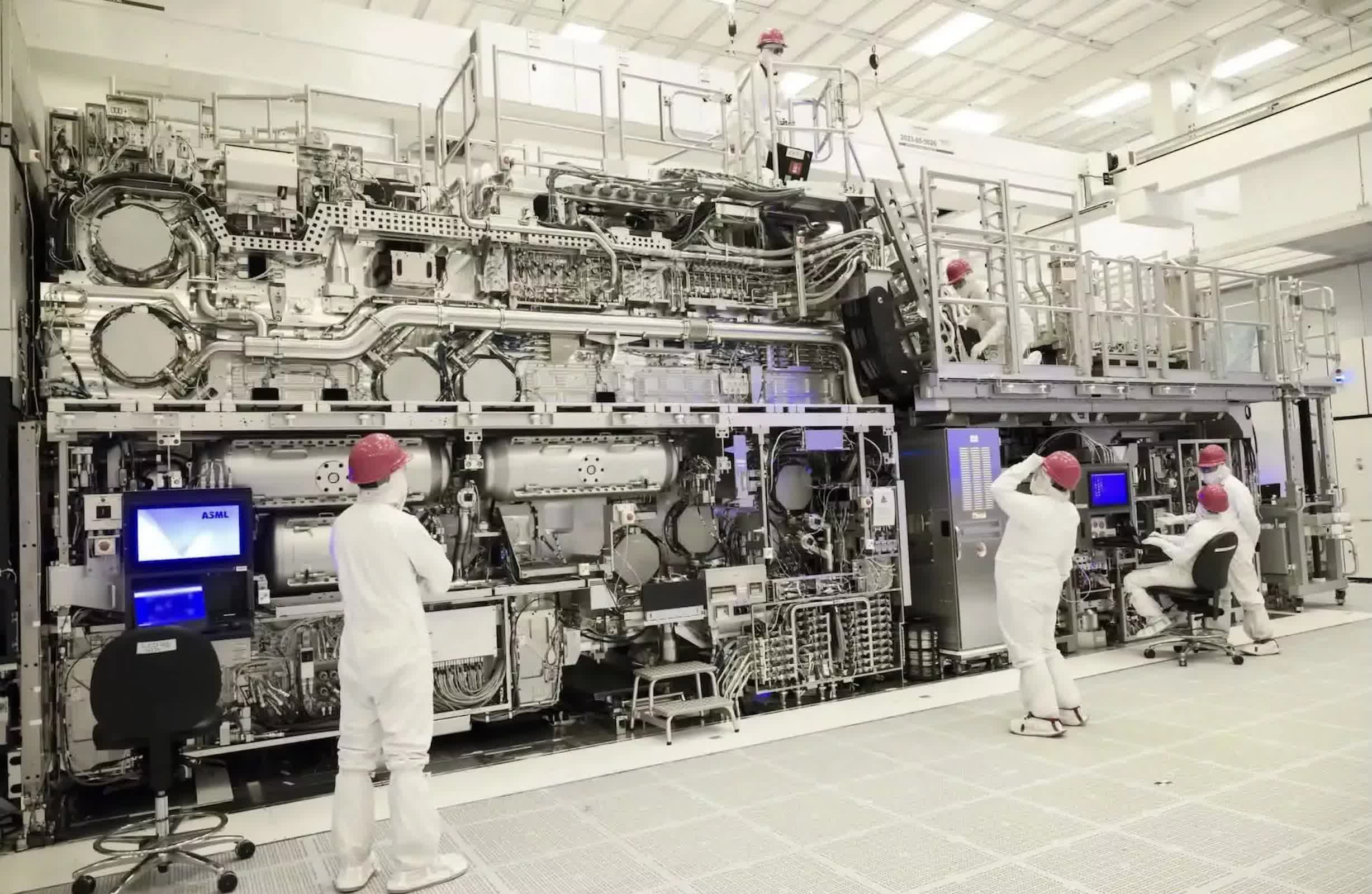
The big picture: ASML is expanding production at a pace rarely seen in the semiconductor equipment industry, as demand for advanced lithography systems accelerates alongside global investment in artificial intelligence infrastructure. The Dutch company is increasing the output of its extreme ultraviolet systems. It is also reconfiguring facilities, expanding cleanroom capacity, and committing billions in capital spending to meet demand.
ASML expects to produce at least 60 EUV systems this year, up sharply from 2025, with capacity rising to at least 80 systems annually in the next phase. At the same time, the firm is working to improve throughput, including upgrades that allow some machines to process more wafers per hour.
ASML is also dealing with the limits of manufacturing systems that rank among the most complex machines in production. Each EUV unit takes months to assemble and relies on components from a large supplier network. The machines use lasers to turn molten tin into extreme ultraviolet light, which is used to print tiny circuit patterns onto silicon wafers. Even a small particle of dust can disrupt the process, limiting how quickly production can scale.
To ease those constraints, ASML has expanded cleanroom capacity in the US, Germany, and South Korea, and plans to begin construction of a new campus near its Dutch headquarters.
Spending is increasing as well. ASML expects to invest about $2.2 billion this year in property, equipment, and infrastructure, up from last year. It is also spending more on hiring and training engineers, though labor shortages remain a challenge in the Netherlands.
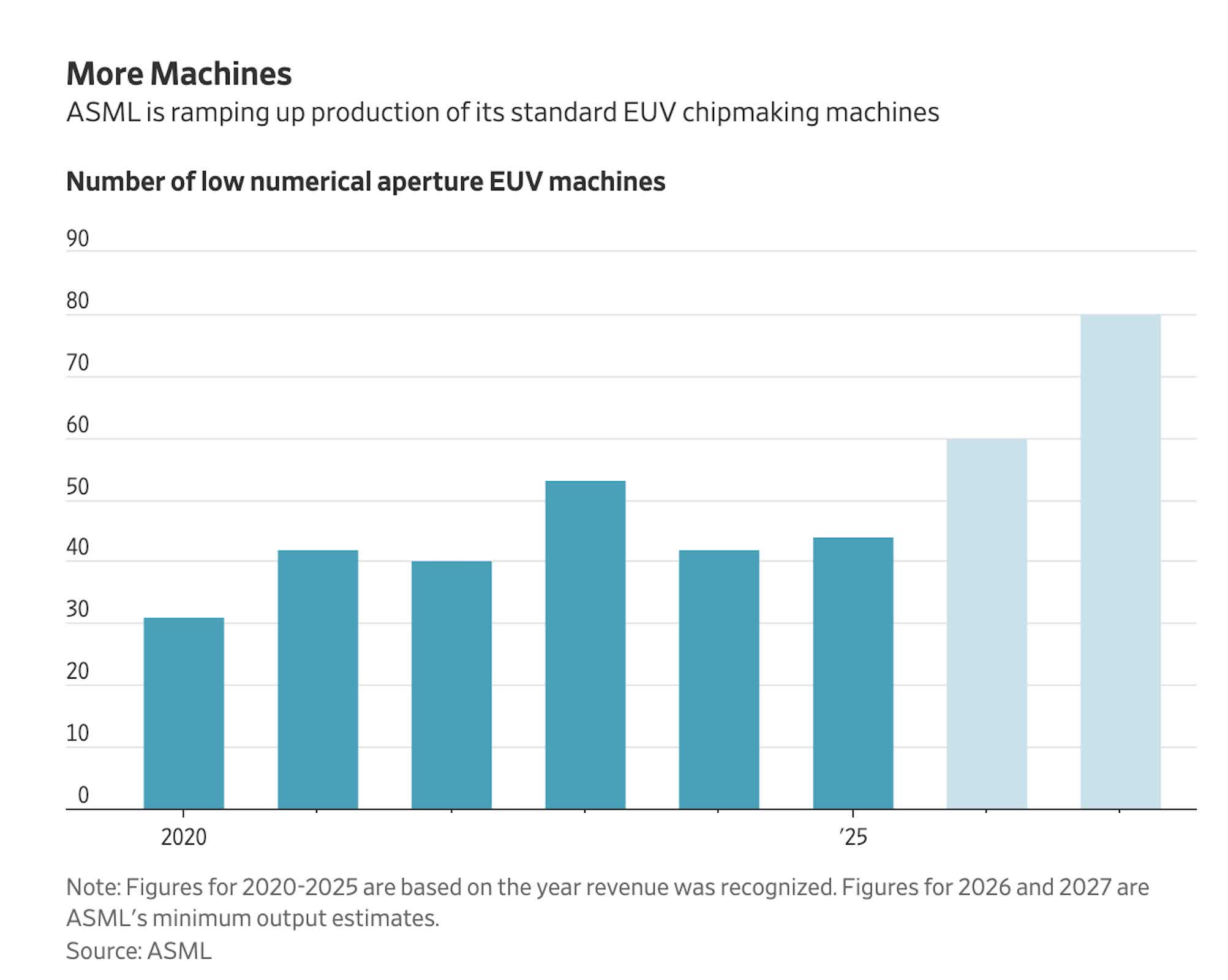
Credit: The Wall Street Journal
ASML is working more closely with its suppliers, too. Senior leadership now oversees supplier coordination, with regular check-ins to keep capacity expansion on track. The aim is to prevent delays, since a single missing component can stall final assembly.
While demand for standard EUV tools is strong, adoption of next-generation high-numerical-aperture systems is less certain. These advanced machines promise higher resolution and productivity but come with significantly higher costs, leading some chipmakers to delay adoption in favor of maximizing existing EUV platforms. In response, ASML is offering upgrades to installed systems to extend their performance and output.
Over the longer term, ASML is working on stronger light sources that could further increase throughput. These improvements will take years to fully deploy but are key as chip designs continue to shrink.
After previously warning of a possible slowdown, ASML now expects annual sales of $42 billion to $47 billion. The increase reflects heavy spending by major tech companies and broader expansion across the semiconductor industry.
Even with these efforts, some factors affecting growth are outside ASML's control. Customers still need to build sufficient cleanroom space and secure the power needed to run the machines, both of which take time and require significant investment. Nevertheless, demand is expected to remain strong for several years, and ASML is trying to scale production, suppliers, and technology development to keep up.