
In a nutshell: Apple and Samsung dominated the global smartphone market in the first quarter of 2026, claiming nine of the top 10 best-selling devices worldwide. Counterpoint Research data shows Xiaomi was the sole outsider to break through, securing the tenth spot – every other position belonged to either an iPhone or a Galaxy.
The iPhone 17 was the best-selling smartphone in the first quarter, accounting for six percent of global sales. Apple's iPhone 17 Pro Max ranked second, followed by the standard iPhone 17 Pro. Samsung grabbed fourth and fifth place with the Galaxy A07 G4 and Galaxy A17 5G, respectively.
Apple launched the iPhone 17 series in September 2025. The handset was more of an incremental update than a generational change, but that has not slowed sales. For the fiscal second quarter that ended March 28, the iPhone category generated $56.99 billion – slightly lower than estimates, but far from bad.
CEO Tim Cook said demand was not the issue, instead pointing to the supply chain. "The demand was off the charts. And there's just a little less flexibility in the supply chain at the moment for getting more parts," he recently told Reuters.
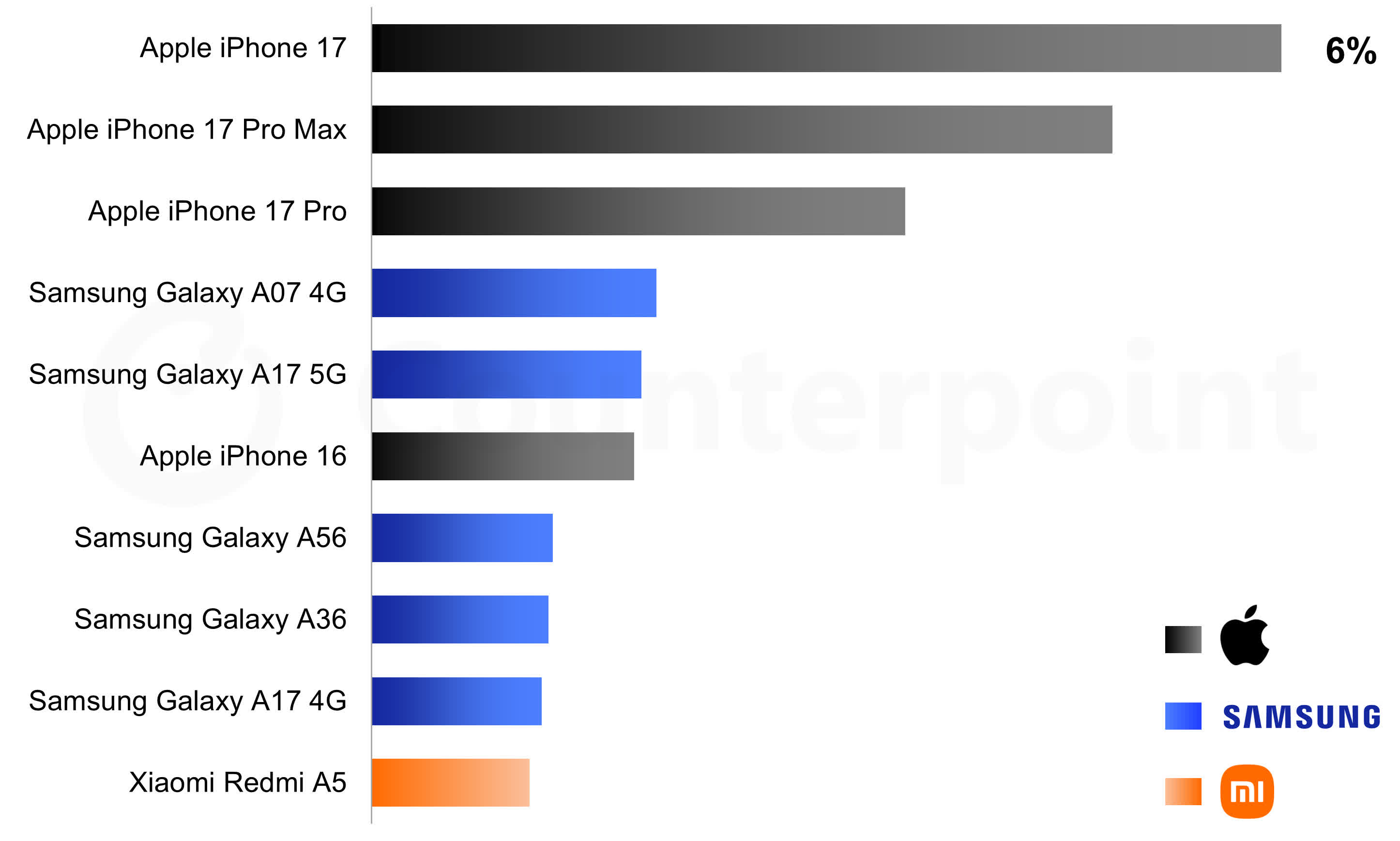
Xiaomi was the only company not named Apple or Samsung to make it into the top 10, capturing the last spot with its Redmi A5 smartphone. It was the most affordable offering on the list, Counterpoint noted.
Speaking on Apple's performance, Counterpoint Senior Analyst Harshit Rastogi said the iPhone 17 continues to outperform its predecessor, owing to key upgrades like camera resolution, higher base storage, and an improved display refresh rate that brings the base model closer to the Pro variants and providing better overall value.
As for Samsung, the Galaxy A series was the company's clear frontrunner. The Galaxy A07 4G was not only Samsung's best-selling phone of the quarter, but also the top Android phone worldwide. The entry-level handset features a 6.7-inch display, a 50-megapixel rear-facing camera, and a 5,000mAh battery – all for less than $100.
Looking ahead to the rest of the year, Counterpoint expects high-end smartphones to continue to gain share despite an overall market decline.