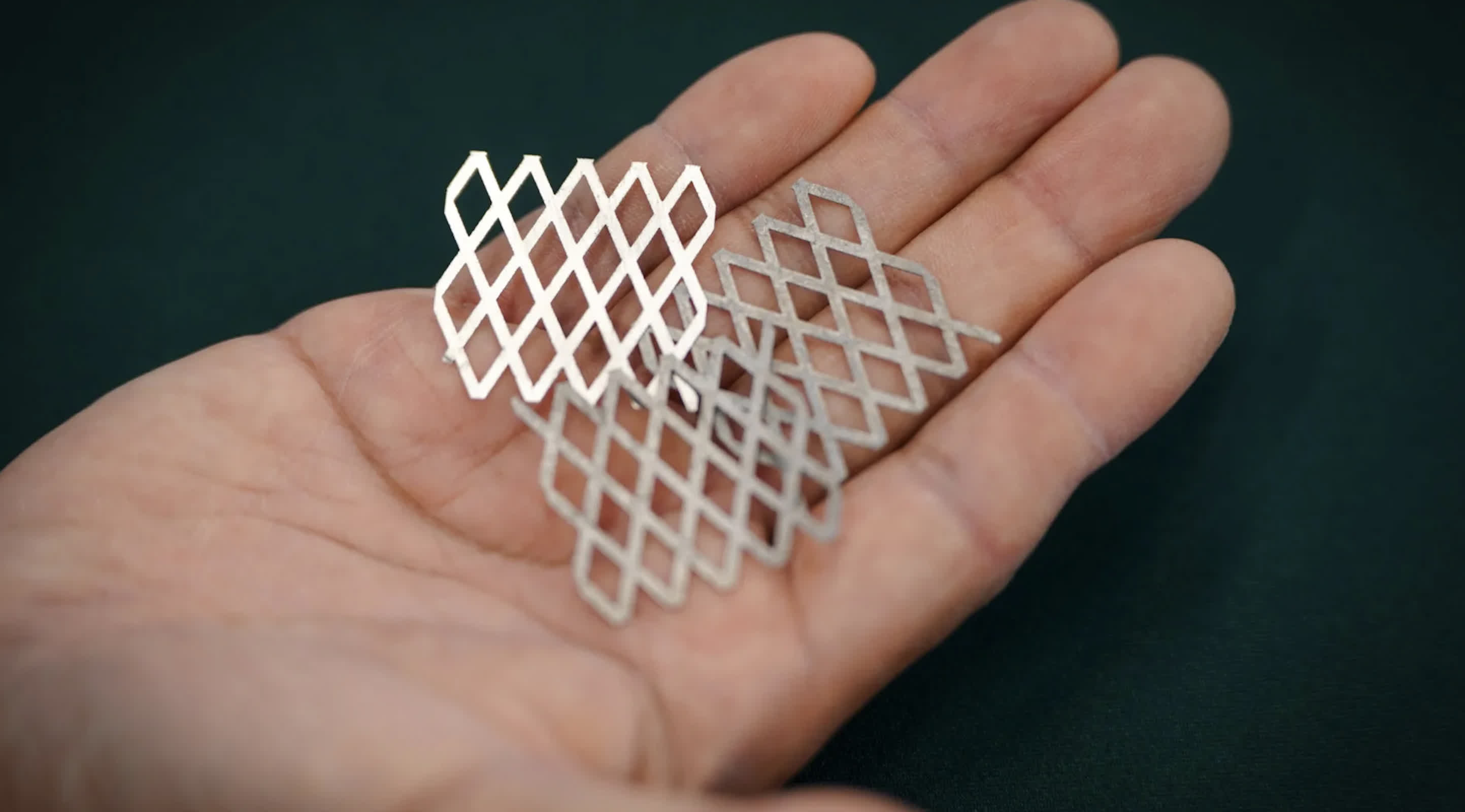
The takeaway: A key obstacle in scaling green hydrogen production has little to do with energy supply and more to do with materials. Electrolyzers, especially those designed to run on seawater, operate in conditions that quickly degrade most metals. The result is a reliance on expensive components that drive up system costs and limit broader deployment. But researchers at the University of Hong Kong are working on an alternative. A team led by Professor Mingxin Huang has developed a stainless steel alloy that can withstand the high-voltage, corrosive environment inside hydrogen-producing electrolyzers, including those that use seawater directly.
The material, known as SS-H2, is designed to remain stable where conventional stainless steel fails. The work, published in Materials Today, builds on Huang's long-running Super Steel research program, which has previously produced ultra-strong alloys and antimicrobial stainless steel.
The problem the researchers are trying to address is how stainless steel behaves at high electrical potential. Its corrosion resistance typically comes from chromium, which forms a thin oxide layer that protects the surface. This mechanism works well in many industrial settings, including marine environments. But inside an electrolyzer, the voltage required to split water pushes the material beyond its limits.
At around 1,000 mV (versus a saturated calomel electrode), the protective chromium oxide layer begins to break down, forming soluble species that lead to corrosion. This happens well below the roughly 1,600 mV needed for efficient water oxidation. Even high-end alloys such as 254SMO, designed for aggressive seawater conditions, cannot remain stable at these voltages.
Because of this, current systems often rely on titanium components coated with precious metals like platinum or gold. These materials perform reliably but come at a high cost, particularly when scaled to industrial systems.
SS-H2 takes a different approach by changing how the metal protects itself. Instead of relying only on the standard chromium oxide layer, the alloy forms a second protective layer during operation. After the initial chromium-based film develops, a manganese-based layer forms on top at higher potentials, around 720 mV. This second layer helps stabilize the material up to about 1,700 mV, allowing it to operate within the voltage range required for water splitting.

The use of manganese is unexpected. It is generally thought to reduce corrosion resistance in stainless steel, not improve it. "Initially, we did not believe it because the prevailing view is that Mn impairs the corrosion resistance of stainless steel," said Dr. Kaiping Yu, the study's first author. "Mn-based passivation is a counter-intuitive discovery, which cannot be explained by current knowledge in corrosion science. However, when numerous atomic-level results were presented, we were convinced."
If the material performs as expected outside the lab, it could significantly reduce costs. In a 10-megawatt PEM electrolysis system, structural materials account for a large share of total expense – estimated at about HK$17.8 million in the study, with up to 53% tied to those components. The team estimates that replacing titanium-based materials with SS-H2 could cut structural material costs by roughly 40 times.
The work also reflects a shift in how corrosion-resistant materials are designed. "Different from the current corrosion community, which mainly focuses on the resistance at natural potentials, we specialize in developing high-potential-resistant alloys," Professor Huang said. "Our strategy overcame the fundamental limitation of conventional stainless steel and established a paradigm for alloy development applicable at high potentials."
The research has moved beyond early experiments. Patents have been filed in multiple countries, with two already approved at the time of the announcement. The team has also begun producing SS-H2 wire in partnership with a factory in mainland China. However, turning the material into practical components such as meshes or foams for electrolyzers will require additional engineering work.
Interest in seawater electrolysis continues to grow, but the same issues persist across the field: corrosion, side reactions involving chlorine, catalyst degradation, and limited system lifespan. Other research efforts have focused on coatings and surface treatments to improve durability, often using stainless steel as a base material.
SS-H2 addresses the issue at a different level. Instead of adding protective layers after the fact, it alters the alloy so that it forms its own protective layer under operating conditions. That distinction could matter if the goal is to build systems that are both durable and affordable.
The material is still in the early stages of adoption, and its long-term performance in real-world systems remains to be proven. But the approach highlights a broader shift in hydrogen technology: solving cost and durability challenges may depend as much on rethinking basic materials as on improving system design.