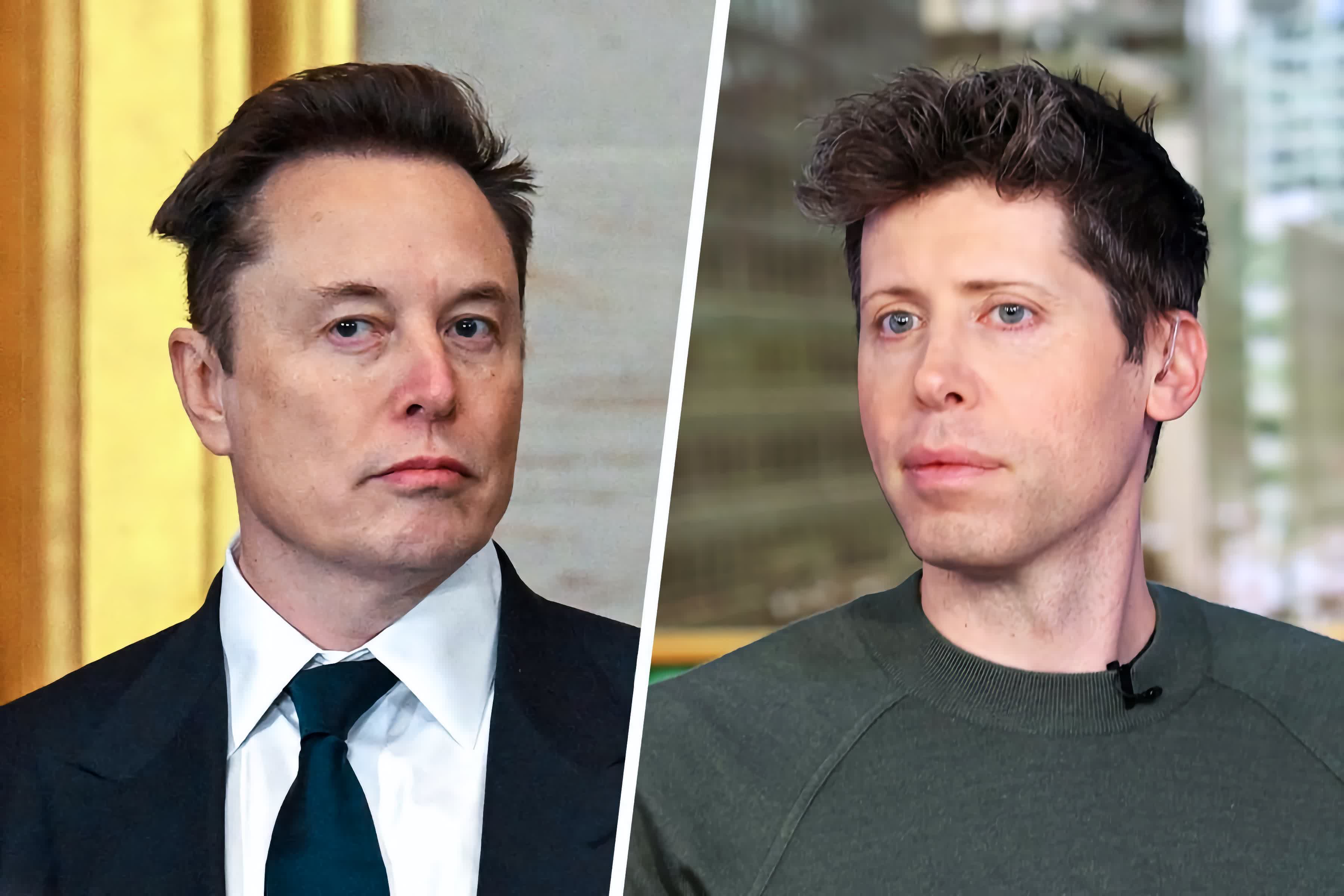
What just happened? Elon Musk isn't accustomed to losing, but the world's richest man just felt the sting of defeat in his trial against OpenAI, CEO Sam Altman, and President Greg Brockman. A federal jury said that Musk had waited too long to file his suit, which accused the defendants of violating an agreement to keep OpenAI as a charitable non-profit organization.
Musk was one of the co-founders, backers, and initial board members of OpenAI. He claims that when he was approached by Altman and Brockman to help fund the startup in 2015, he was promised that it would be an open-source, not-for-profit company focused on safely creating artificial general intelligence (AGI) and countering the competitive threat from Google.
Musk's 2024 lawsuit alleged that Altman and Brockman turned OpenAI into a profit-driven, closed-source AI firm whose relationship with Microsoft helped enrich its executives and partners. Musk was seeking damages and wanted Altman and Brockman removed from OpenAI. As the lawsuit stated:
"OpenAI, Inc. has been transformed into a closed-source de facto subsidiary of the largest technology company in the world: Microsoft."
– Elon Musk (@elonmusk) March 6, 2024
The jury, which had been serving in an "advisory" capacity, took less than two hours to rule against Musk after a three-week trial in Oakland. US District Judge Yvonne Gonzalez Rogers agreed with the verdict and dismissed Musk's claims of breach of charitable trust and unjust enrichment as untimely.
Musk's problem was the three-year statute of limitations. The jury didn't have to decide whether OpenAI really abandoned its founding mission, but only whether Musk knew enough about the company's move toward a for-profit structure more than three years before he sued in 2024. Jurors decided he did. Microsoft also emphasized the timing issue after the verdict.
"The timeline in this case has long been clear," the company said, welcoming the decision to dismiss Musk's claims as "untimely."
That timing problem was especially damaging because Musk left OpenAI in 2018, the company created its capped-profit arm in 2019, and Microsoft's multibillion-dollar relationship with the ChatGPT maker was hardly a secret by the time he filed.
– Elon Musk (@elonmusk) May 18, 2026
Musk is not taking the loss quietly, of course. Writing on X, he said the judge and jury "never actually ruled on the merits of the case," calling the decision "a calendar technicality." He added that he would appeal.
OpenAI has long argued that Musk's claims are baseless and part of a campaign against the company after he launched his rival AI startup, xAI. The ruling removes a legal headache for Altman's firm, though Musk's reputation for holding a grudge means this feud is unlikely to disappear soon.