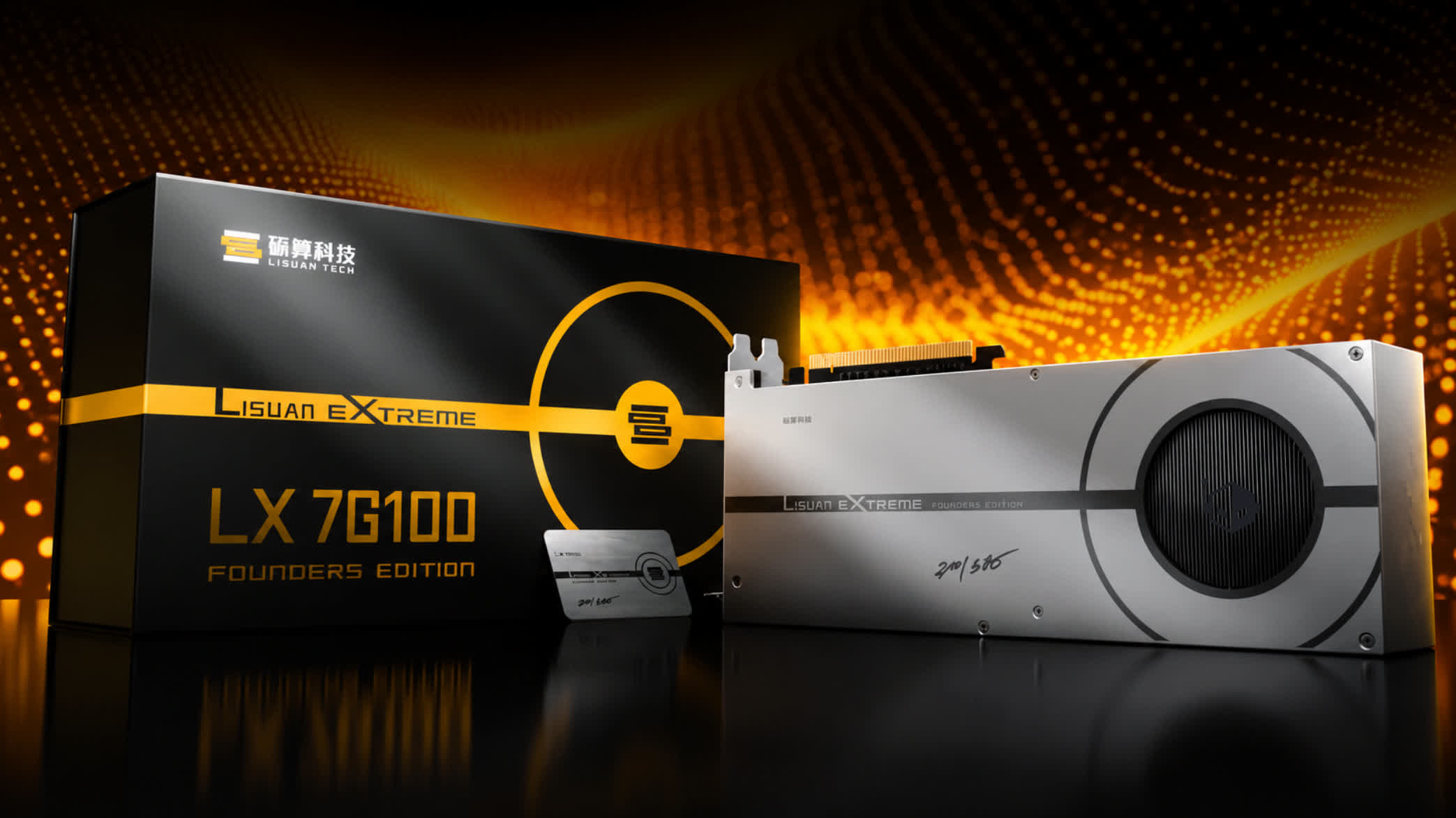
Why it matters: China's push to create a homegrown gaming GPU that can challenge Nvidia, AMD, and Intel has taken another step forward – with some caveats. A retail version of Lisuan Technology's LX 7G100 has now been tested, and while it's a lot more convincing than previous early samples, the card's price makes it a hard sell.
A review of the Founder Edition model on BiliBili shows the 12GB card running a range of modern titles, which is an achievement in itself for a new GPU vendor using its own hardware, architecture, drivers, and software stack. The problem is that while it can run these games, the card can't compete with similarly priced GPUs from other companies.
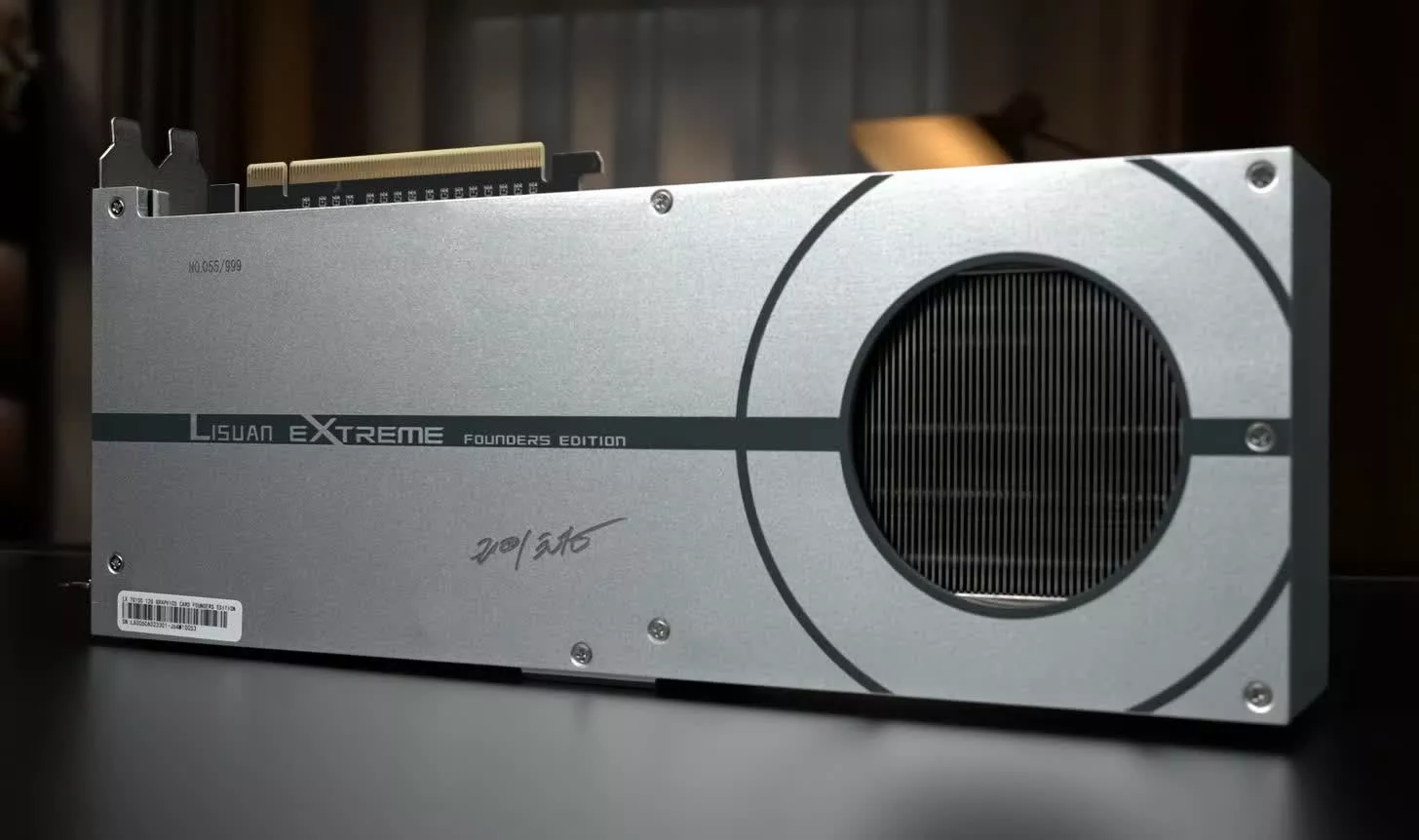
The LX 7G100 reportedly sells for around 3,300 RMB, or about $480, in China. That puts it close to far more powerful mainstream cards from established vendors, such as the RTX 5060 Ti.
Lisuan's card does have some modern specs on paper, including 12GB of GDDR6, four DisplayPort 1.4a outputs, support for up to 8K60 HDR output, and API support covering DirectX 12, Vulkan 1.3, OpenGL 4.6, and OpenCL 3.0.
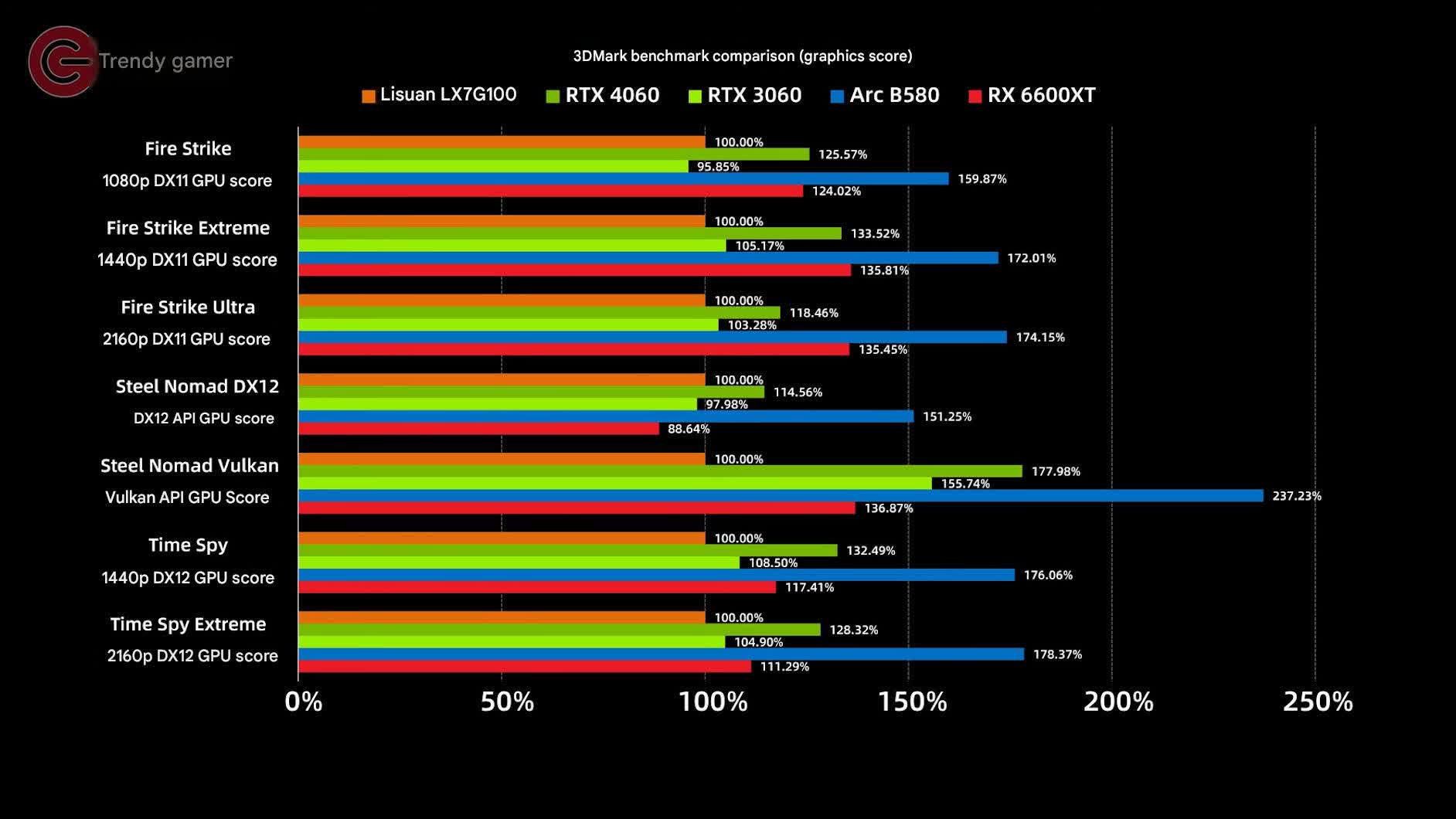
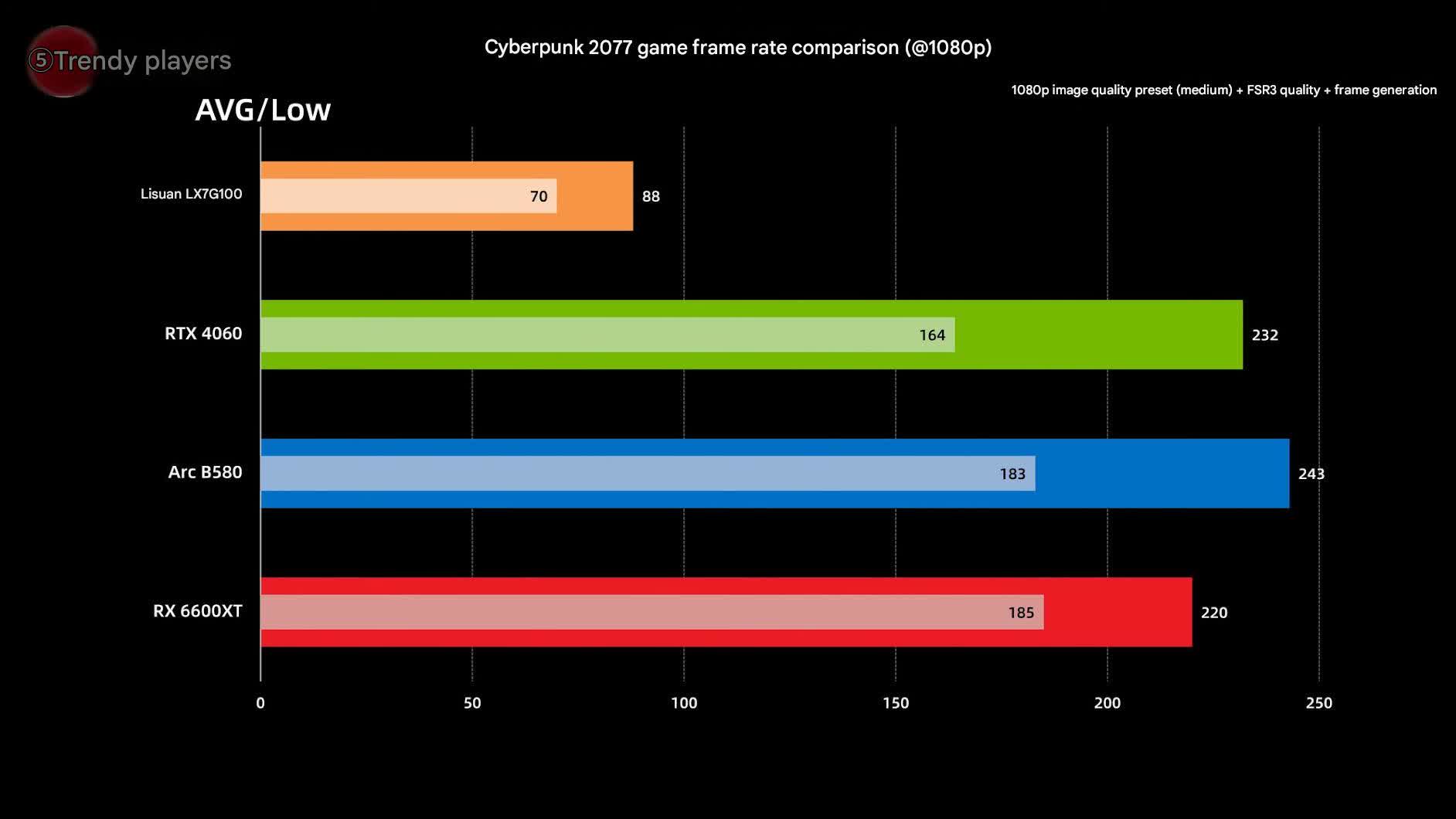
In 3DMark, the LX 7G100 often lands around or above the five-year-old RTX 3060 territory depending on the test. Games are much less flattering. Cyberpunk 2077 at 1080p with FSR3 Quality and frame generation averaged 88 fps on the Lisuan card, compared with 232 fps on an RTX 4060 and 243 fps on Intel's Arc B580. Black Myth: Wukong reached 56 fps, while Forza Horizon 5 managed just 48 fps on the Low preset.
The reviewer found that many modern games actually launched and ran, and there were reportedly few major crashes. That alone makes the LX 7G100 a much stronger debut than some earlier Chinese GPU efforts, especially Moore Threads' MTT S80, which required a long series of driver updates before game compatibility improved.
But the software side clearly needs work. The driver panel is basic, overclocking behavior appears inconsistent, monitoring support is limited, and there's no hardware ray tracing. Lisuan reportedly told the reviewer that ray tracing is planned for its second-generation GPUs.
The result is a card that's more impressive as a milestone than as something gamers should buy. When an early Lisuan G100 listing appeared last year, it appeared to perform like a 13-year-old GeForce GTX 660 Ti. The LX 7G100 is a huge leap beyond that. Unfortunately for Lisuan, it's priced like a proper competitor before performing like one.