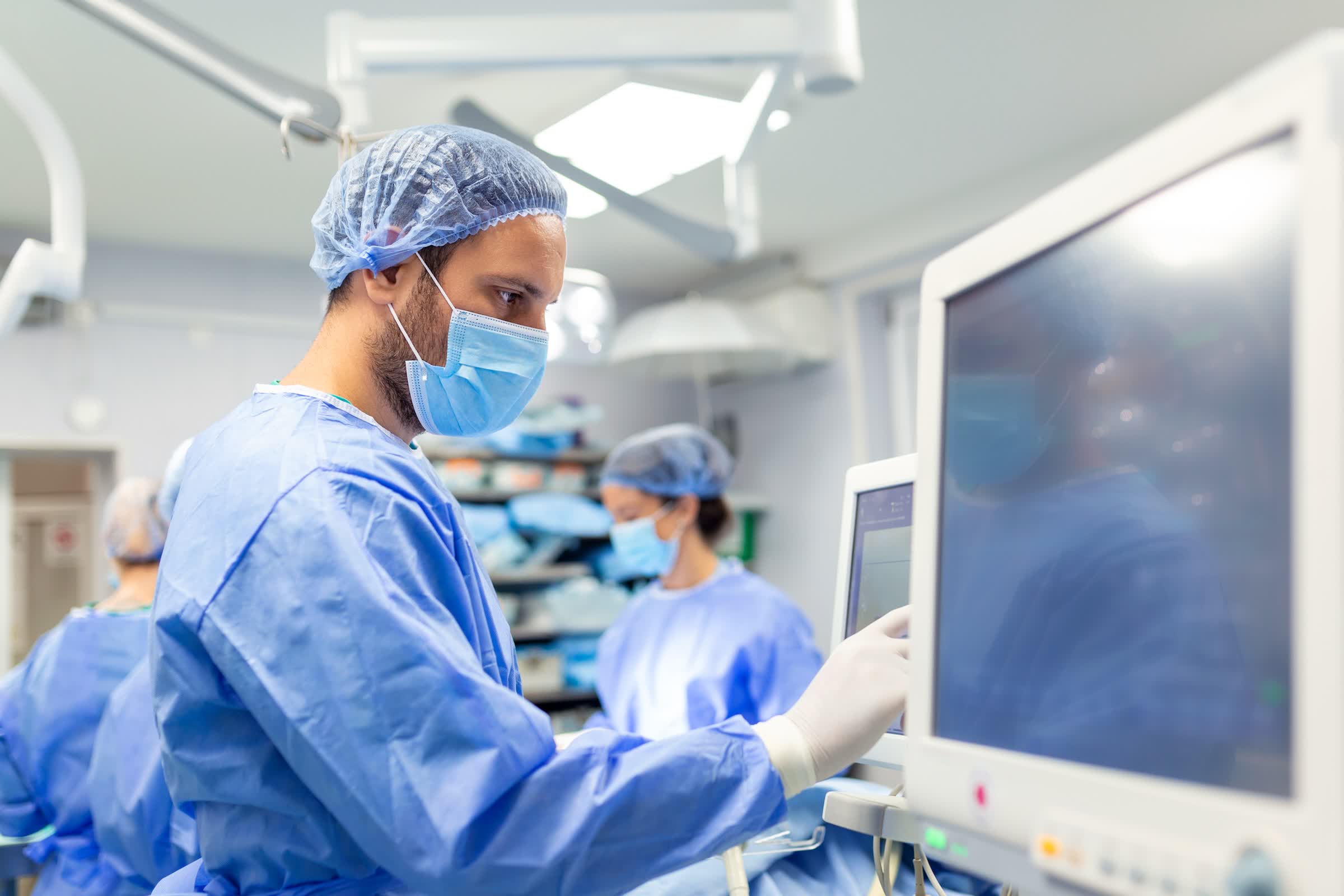
What just happened? Surgeons at a London hospital used artificial intelligence to help remove a brain tumor from a 48-year-old man facing the risk of losing his sight. The system analyzed live video during the operation, flagging nerves and blood vessels for the surgical team as it worked around the tumor.
The operation took place in May at the National Hospital for Neurology and Neurosurgery, part of University College London Hospitals NHS Foundation Trust. Health officials said it was the first successful AI-assisted operation to remove a brain tumor. Details were not released until Thursday while the patient, Rhys Hibbert, recovered.
Hibbert had an 11mm tumor on his pituitary gland. The area is close to the nerves that control vision and major blood vessels, leaving little room for error. Health officials said a mistake of even a millimeter can cause blindness, stroke, or death.
The system color-coded parts of the surgical field to help doctors identify anatomy that needed to be protected. It had previously been used at the hospital for research but not during an operation on a patient.
Hibbert, who lives in Bedfordshire, was diagnosed in 2024. Doctors initially managed his condition without surgery, but he later developed a severe hormone imbalance and worsening vision problems. Officials said he could have gone blind without the operation.
"When I came round... I could see everything in the room clearly," Hibbert told The Guardian.
He was able to walk without glasses or a walking stick within a week and has returned to work as a customer service manager. "It feels like I've got a 360-degree panoramic view of everything around me," he said.
Dr. Sophia Bano, an associate professor in robotics and AI at UCL, led the technical development of the system. She said the software had learned from hundreds of surgical videos, giving it exposure to a broad range of cases.
Bano also noted that the system is built to identify important anatomy, surgical instruments, and tissue interactions as an operation unfolds, giving surgeons added support during highly delicate procedures.
The National Institute for Health and Care Research funded the operation as part of a clinical trial. Mike Lewis, the institute's scientific director for innovation, said the procedure showed how advanced AI could support surgeons and improve patient care.
Hibbert noted that the hospital has a long history in neurosurgery. "The NHNN was founded in 1859... and was the world's first dedicated neurosurgical hospital. So to me, it seems very fitting that the same hospital should also be the world's first to carry out an AI-assisted neurosurgery."