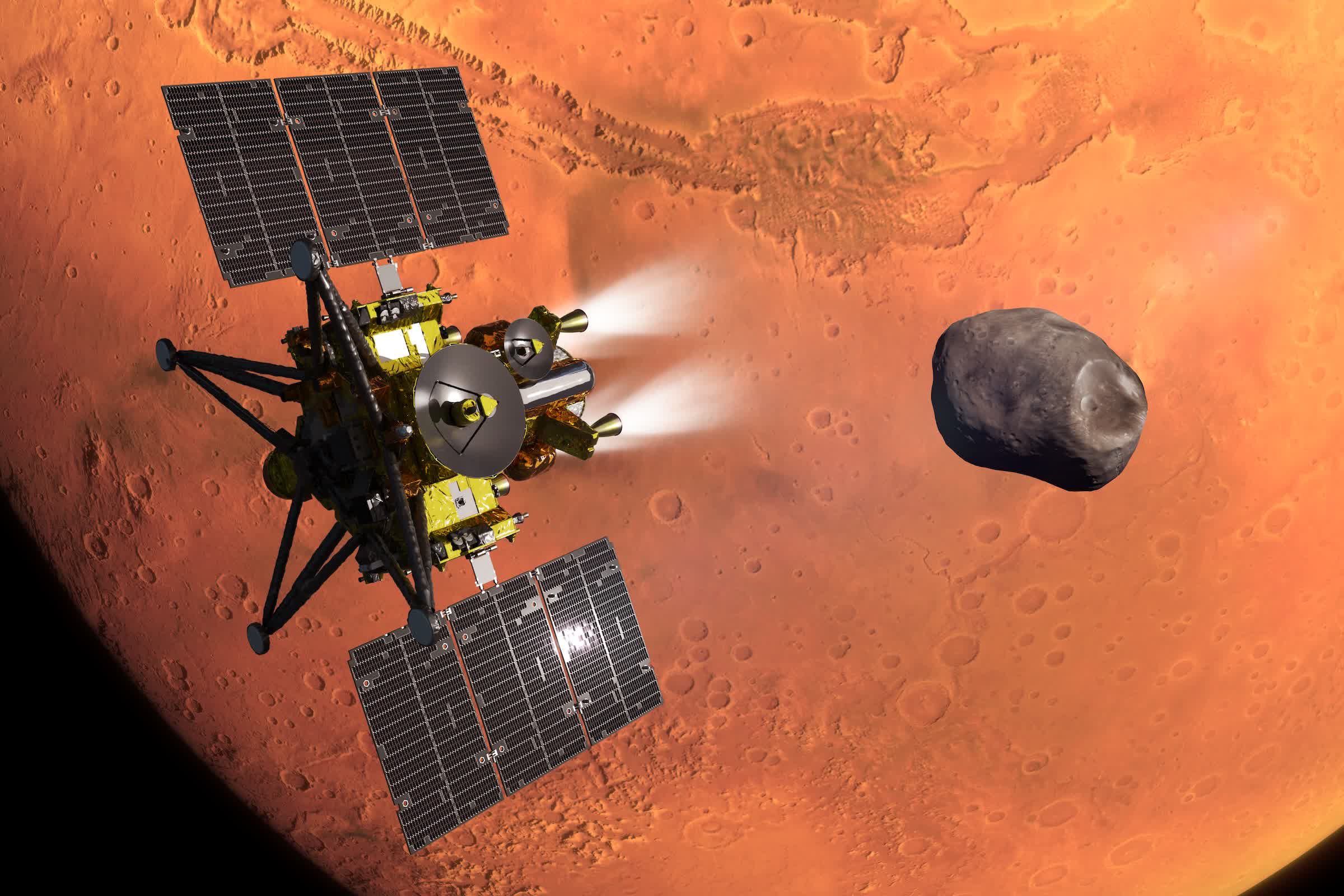
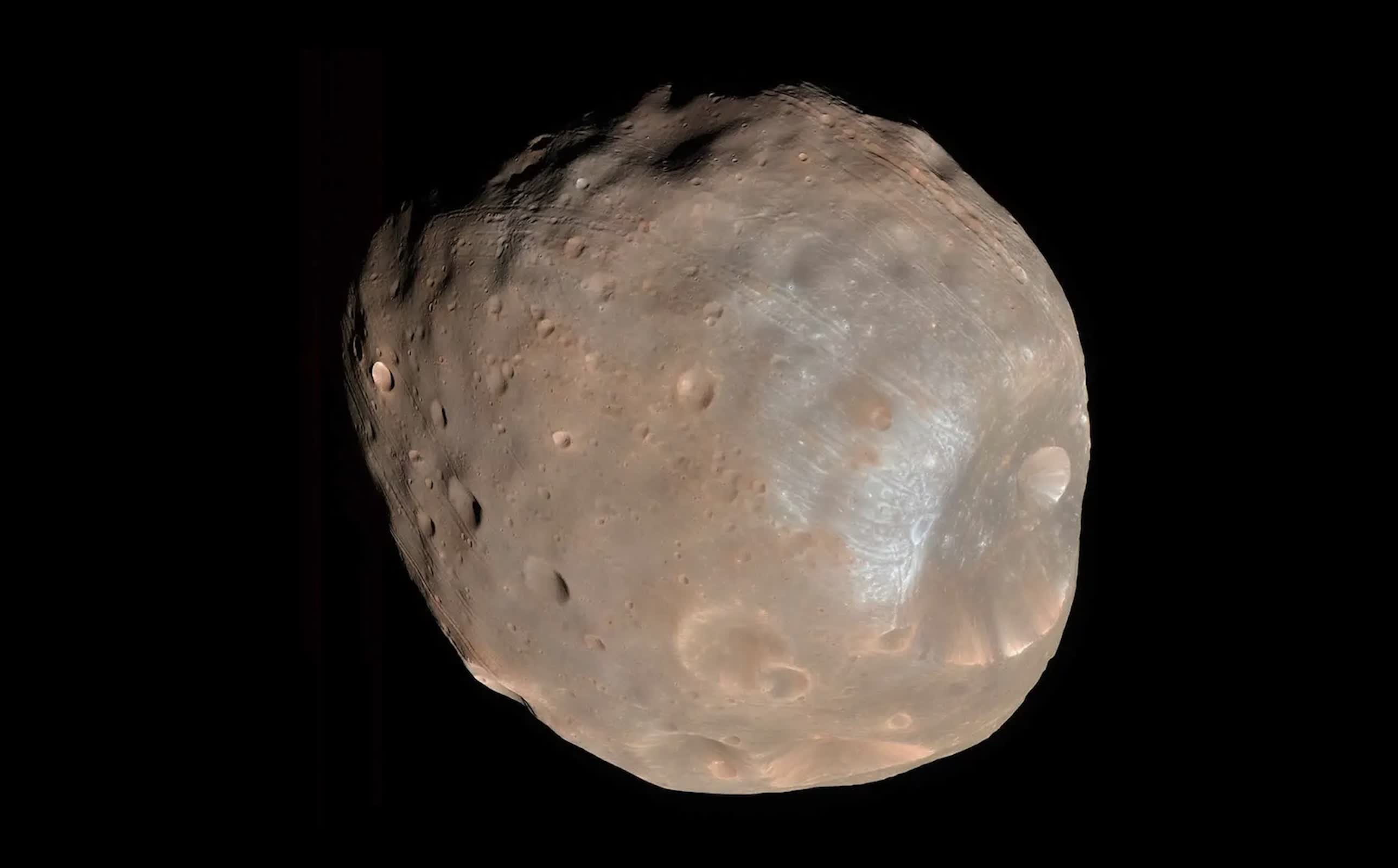
Something to look forward to: Japan plans to send a spacecraft to Phobos in 2026 to collect material from the small Martian moon and return it to Earth. The Japan Aerospace Exploration Agency's Martian Moons eXploration mission, or MMX, is scheduled to launch from Tanegashima Space Center on Oct. 20, 2026. If the mission succeeds, the spacecraft will bring back at least 10 grams of material from Phobos, making it the first mission to return samples from a moon orbiting Mars.
MMX is expected to take about a year to reach Mars. It will then spend three years operating around the planet and its moons before beginning a roughly one-year trip back to Earth. The sample return is expected in 2031.
Landing on Phobos will be one of the mission's biggest challenges. The moon is small, with a radius of about 11 kilometers, but its gravity is still much stronger than that of asteroid Ryugu, where JAXA previously landed a spacecraft. At the same time, Phobos has far less gravity than Earth's moon.
That leaves MMX operating in a difficult middle ground. The spacecraft cannot use a long hover-and-touchdown approach like the one used at Ryugu because it would burn too much fuel. But it also cannot rely on landing techniques designed for the Moon.
Instead, the probe will make key decisions on its own. Communications between Earth and the spacecraft could be delayed by as much as 20 minutes, making real-time control impossible during descent and landing.
As it approaches Phobos, MMX will compare the surface below it with existing crater and terrain maps. The spacecraft will use that information to adjust its position and guide itself toward the landing area. Below 300 meters, it will also look for unexpected elevation changes that could make a site unsafe. If it detects a problem, MMX can shift to another location, abandon the attempt, and climb away.
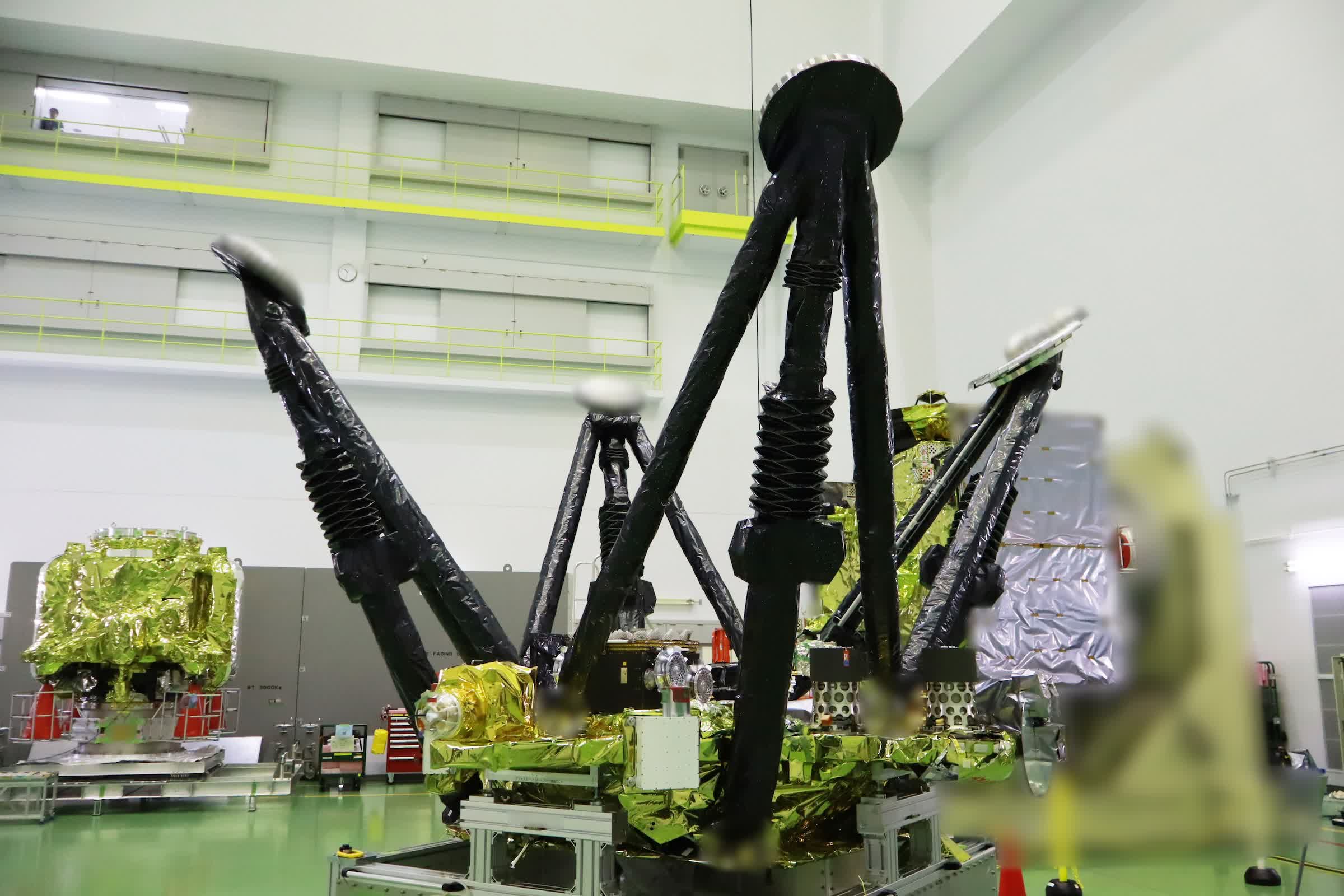
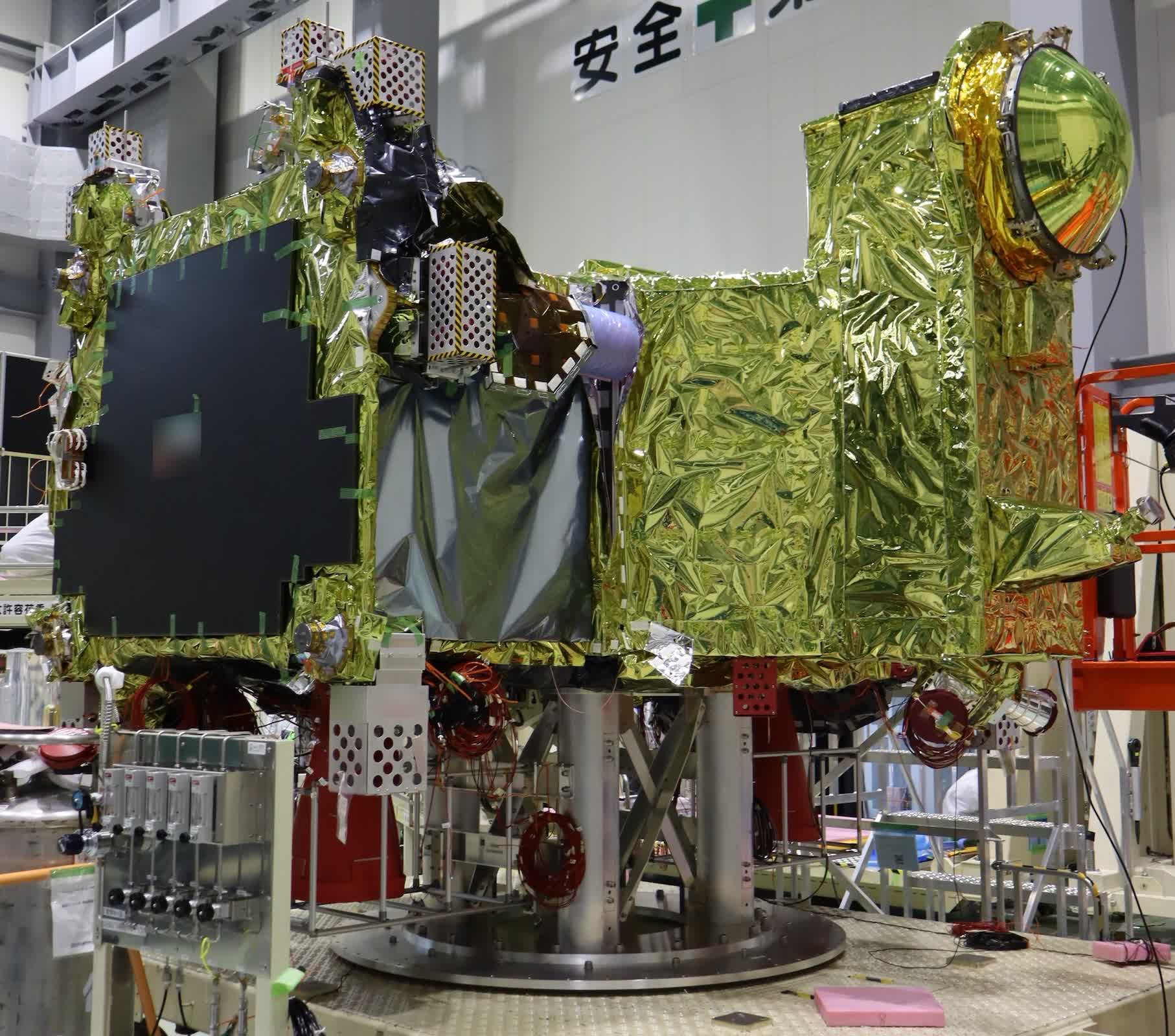
Mitsubishi Electric designed the main spacecraft. It will launch with a mass of 4,480 kilograms (9,877 pounds), with more than half of that weight made up of fuel. The spacecraft carries separate fuel reserves for its trip to Mars, its operations near the planet, and its return to Earth.
After reaching the Mars system, MMX will discard its outbound module after using its propellant. It will later fly by Deimos, Mars' other moon, before jettisoning the exploration module.
A small rover called IDEFIX will be deployed before MMX makes its main landing attempt. The French and German space agencies developed the rover, which is expected to explore Phobos for about 100 days. Its work is intended to help assess surface conditions before the larger spacecraft begins sampling.
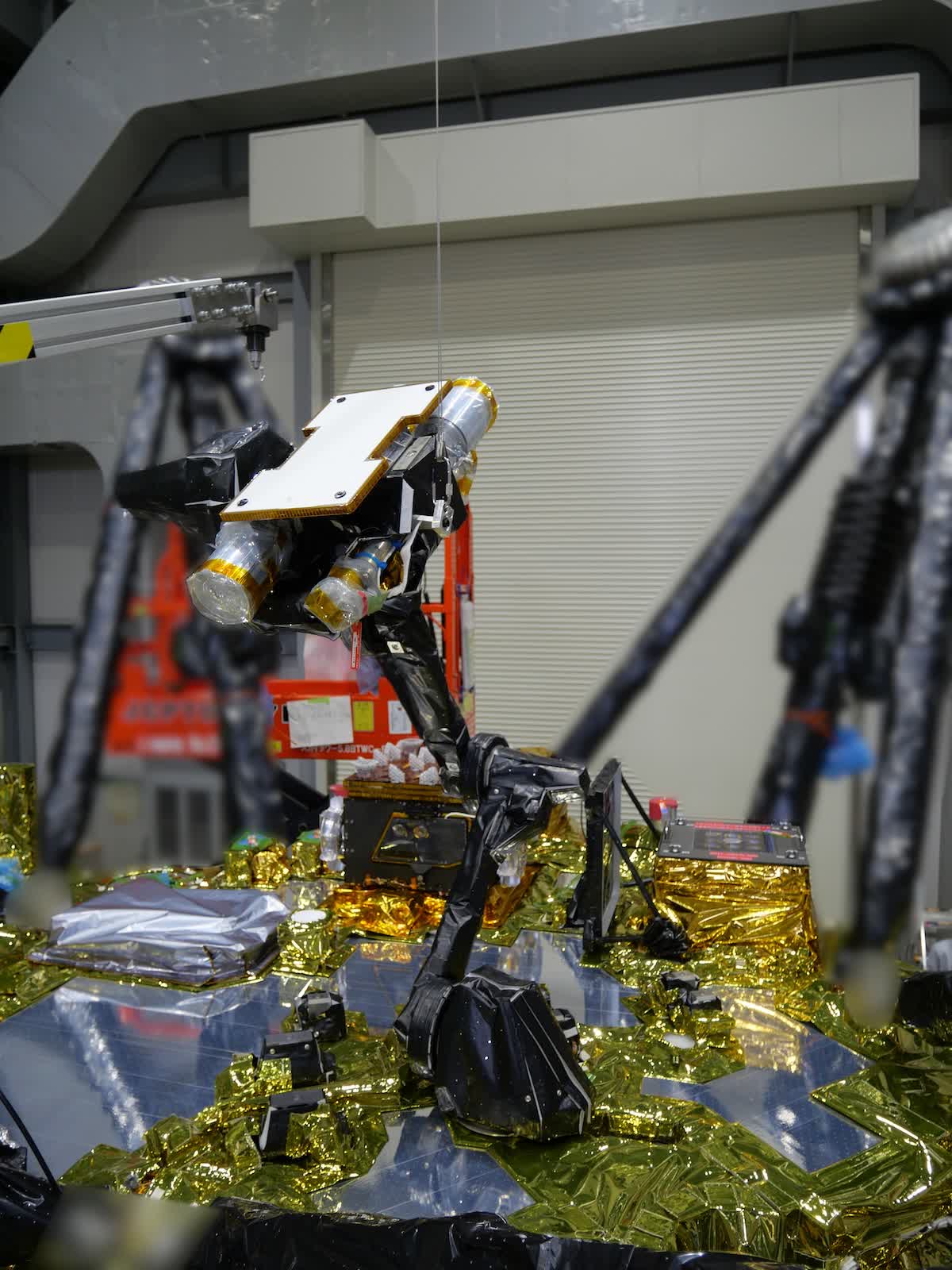
MMX will use a robotic arm to drill into the surface and collect material in cylindrical tubes. It also carries a nitrogen-gas sampling device originally developed by NASA. That system is intended to collect fine dust from the surface.
The samples could help scientists determine how Phobos and Deimos formed. One theory is that the moons formed from debris ejected after a major collision with Mars. Another is that they were asteroids from the outer solar system that Mars captured.
The moons have dark surfaces that resemble water- and carbon-rich asteroids. But their nearly circular orbits, which follow Mars' equatorial plane and move in the same direction as the planet's rotation, are more consistent with the impact-debris theory.
Scientists also expect Phobos to hold traces of Mars. Impacts have blasted Martian material into space over time, and some of that debris is believed to have settled on the moons. Researchers estimate that about 0.1% of the material collected by MMX could have originated on the Red Planet.
The mission is expected to cost about $345 million and will be Japan's first Mars probe launch in 28 years. In addition to the scientific goal, MMX will test autonomous navigation, landing, and sample-return systems that could support later Mars missions.