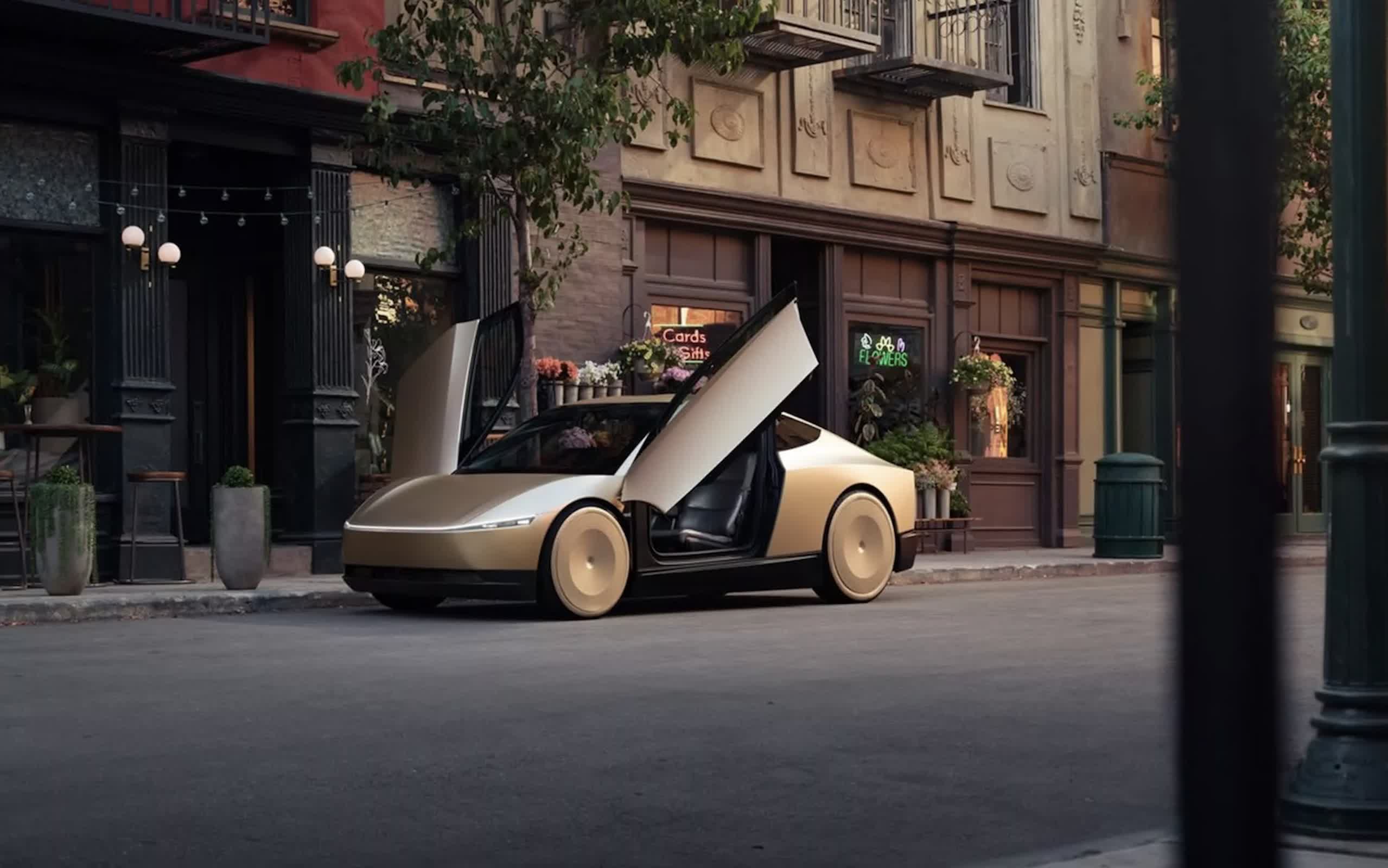
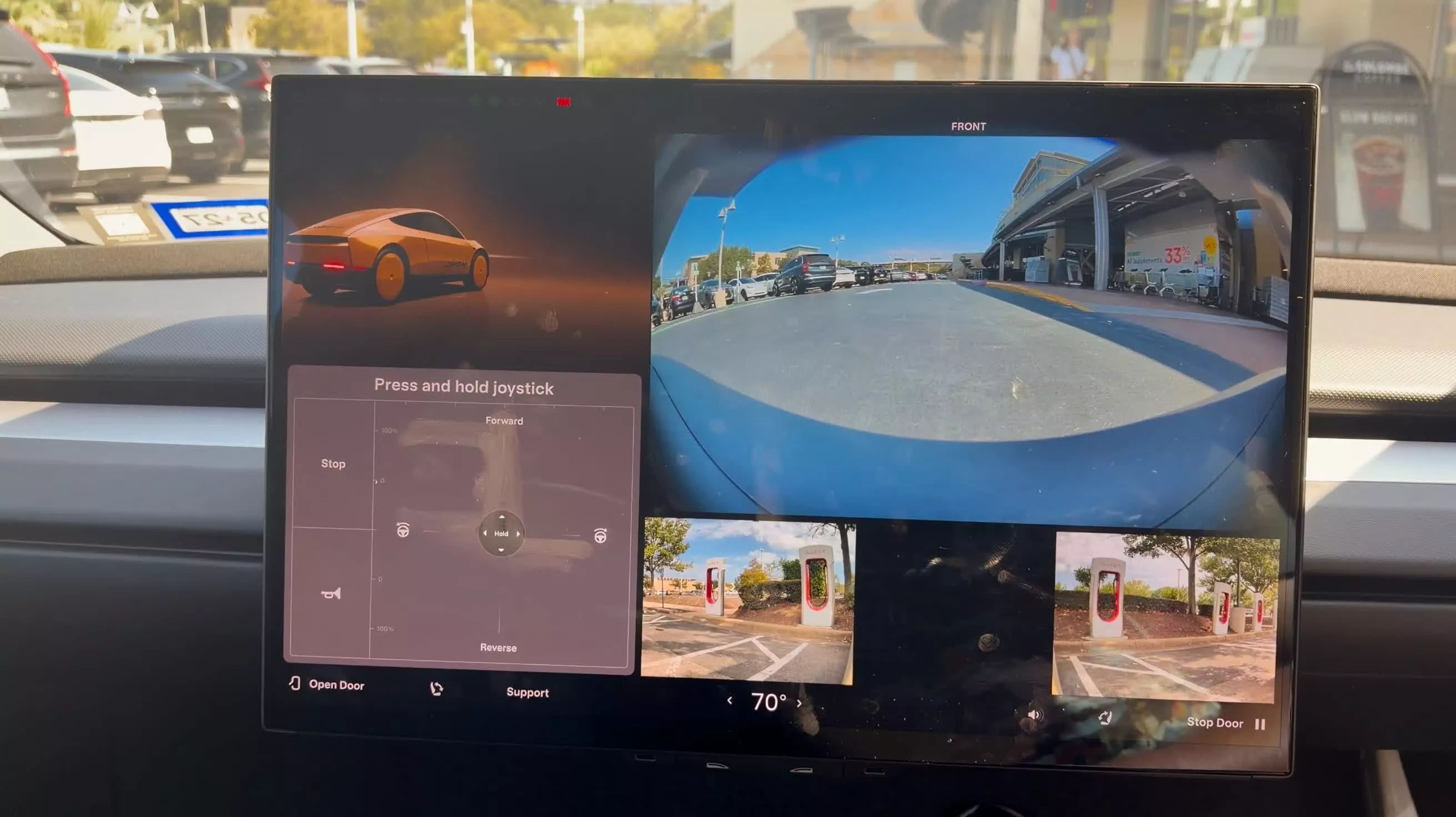
Connecting the dots: Tesla's Cybercab may not have a steering wheel or pedals, but there may still be a way to drive it manually. A video posted on X shows an unusual in-car display setup: the touchscreen showing a virtual joystick that lets someone drive the robotaxi by dragging a finger across the screen. "When I got in the vehicle, the display was in a different configuration with a virtual joystick for manual driving," a rider wrote, adding that he had "a feeling I wasn't supposed to see this" before trying the feature out anyway.
The Cybercab runs on a single central touchscreen. In the video (below), it's split in two: a control panel on the left, the vehicle's camera view on the right. The left side includes the joystick, a prompt to "Close cabin doors," door controls, and a button to call support.
The right side shows the car's surround-camera feed while parked in what looks like a lot, but not all of the imagery appears to be live. The side-camera views seem to show a previous location near a Supercharger rather than wherever the car is actually sitting.
– Matthew Skrzypczak (@MatthewSkrzypc1) September 7, 2026
Tesla hasn't publicly shown or discussed this manual-driving screen. Still, the feature addresses a basic problem with a vehicle built without conventional controls: even a robotaxi occasionally needs to be moved by a person, whether that's at a depot, in a lot, or when it's simply blocked in. The on-screen joystick appears to be Tesla's answer – rather than adding a steering wheel and pedals, the company built a touch-based control option straight into the software.
Tesla has positioned the Cybercab as a purpose-built autonomous vehicle, stripping out the equipment normally reserved for a human driver – steering wheel, accelerator, brake pedal. The joystick interface suggests the company has kept a limited way to take control when needed after all.
The feature surfaced just days after Tesla launched the Cybercab in Austin on September 3. That same day, the NHTSA opened an audit into how Tesla certified the vehicle without a steering wheel, pedals, or mirrors. The audit covers roughly 1,000 Cybercabs, and NHTSA is examining whether Tesla was correct to determine that certain federal safety standards simply don't apply to a driverless vehicle.
Tesla's argument rests on the idea that a fully autonomous vehicle doesn't need equipment built for a human driver. The joystick screen doesn't necessarily undercut that case – it may be meant only for limited manual repositioning rather than everyday driving.
Still, it's a reminder that the Cybercab isn't entirely beyond human control.
Tesla chair Robyn Denholm has hinted as much before. "If we have to have a steering wheel, it can have a steering wheel and pedals," she said.