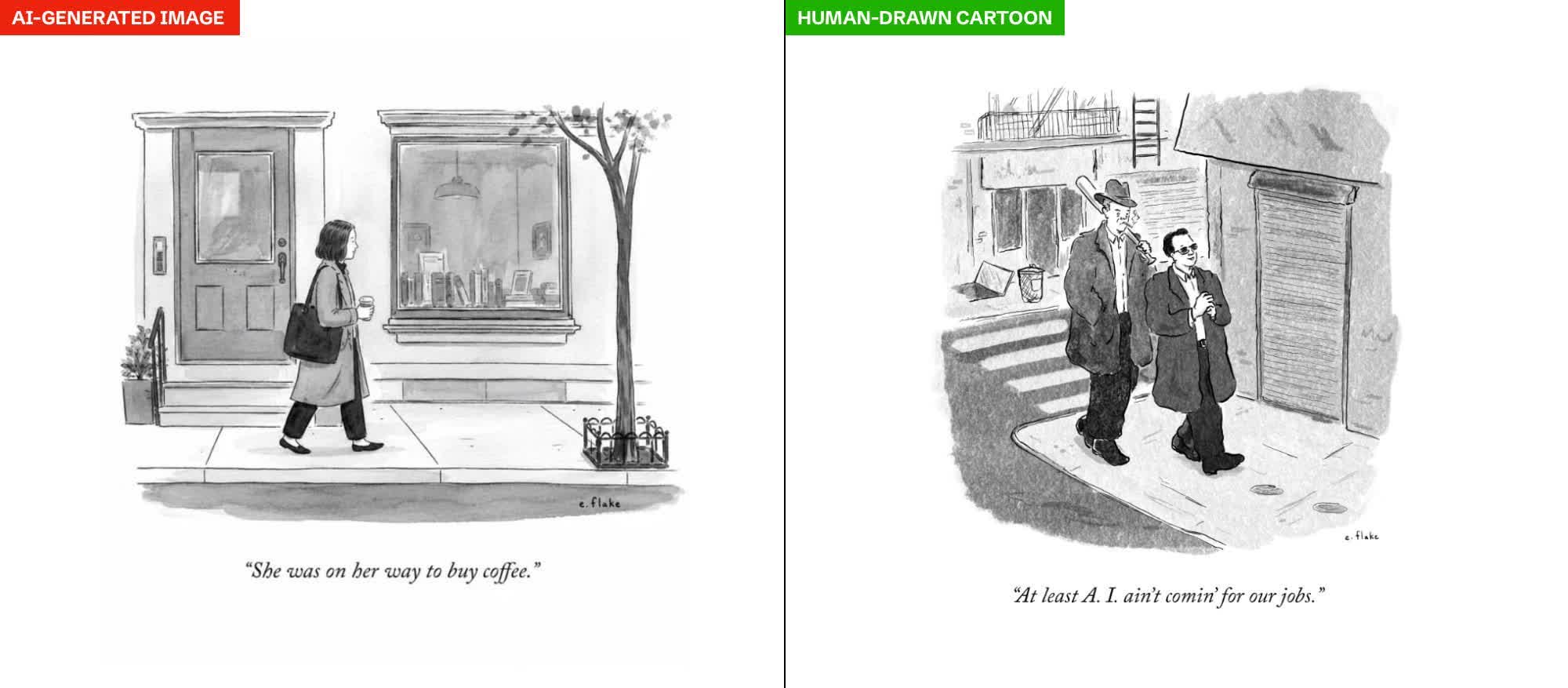
WTF?! AI companies have long faced accusations from artists, authors, and researchers that they scrape copyrighted material without permission to train their models. A more recent investigation has found that ChatGPT has not only been generating cartoons that mimic The New Yorker's signature style, but also adding the real signatures of the magazine's cartoonists to the AI-generated work.
According to Nieman Lab, ChatGPT has been producing artwork suspiciously similar in style and content to cartoons previously published in The New Yorker. More troubling, the investigation found that the chatbot added forged signatures from several real cartoonists, which led some viewers to assume humans had drawn the images.
The issue drew wider attention after the death of country music legend Dolly Parton in August, when an AI-generated cartoon of the singer went viral, racking up tens of thousands of likes, shares, and comments. The image shows Parton entering heaven arm-in-arm with British actor Tim Curry, who also died that month.
The cartoon carried the pen name "BLOPER," the signature New Yorker cartoonist Brendan Loper uses on his work. Loper told Nieman Lab he did not draw it. The image was generated by ChatGPT and first posted to Facebook by a Dolly Parton fan who had asked for "a New Yorker-style cartoon."
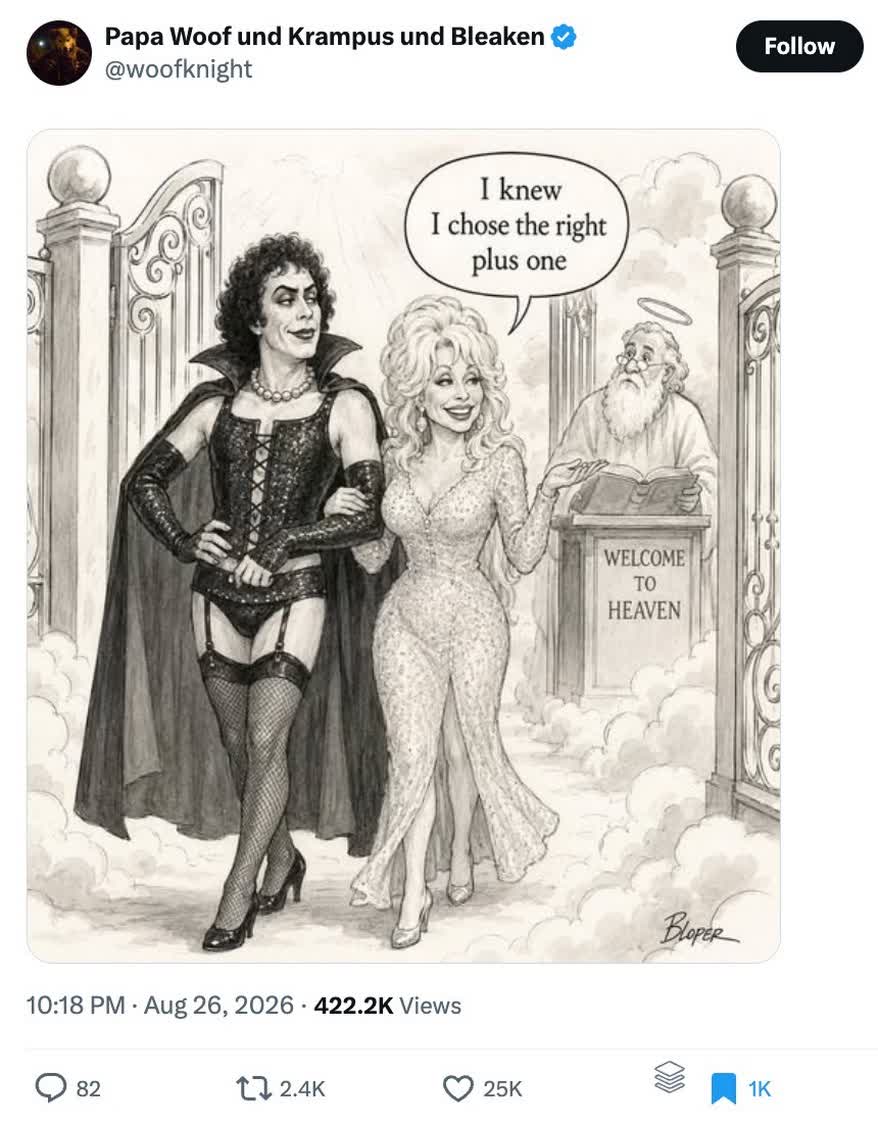
"I had people writing to me about this cartoon, asking if it was mine," Loper told the publication. "It was very surreal." The first message came from his twin brother, after a friend of his saw the image on social media. Emails and DMs from strangers followed, many asking whether the cartoon was really his.
It wasn't the first time ChatGPT had reproduced Loper's signature, according to Nieman Lab. In May, a stranger contacted him on Instagram to warn that his pen name had appeared on an image generated by the chatbot. Over the summer, Loper found multiple other examples on a ChatGPT-focused Reddit forum.
Loper isn't the only New Yorker cartoonist affected. The chatbot has also reportedly reproduced the styles and signatures of Harry Bliss, Emily Flake, Joe Dator, Pat Byrnes, Peter Vey, and Jason Adam Katzenstein, among others. Nieman Lab documented more than 15 in all.
The findings are awkward for OpenAI given its ties to the magazine's parent company. In 2024, Condé Nast signed a multi-year licensing deal with OpenAI covering much of its content, though the terms aren't public. A New Yorker spokesperson told Nieman Lab the company has never granted any LLM developer permission to train models on its cartoons, and that the magazine's standard freelance contracts don't allow licensing for AI training.
OpenAI declined to explain how its models may have ingested the signatures, although the answer to that is obvious.
In its own tests, Nieman Lab confirmed that ChatGPT readily produced New Yorker-style cartoons when prompted. After the publication notified OpenAI, ChatGPT began displaying a guardrails warning for such requests. As of publication, however, the chatbot was still signing some of its generic cartoons with the names of real New Yorker cartoonists.