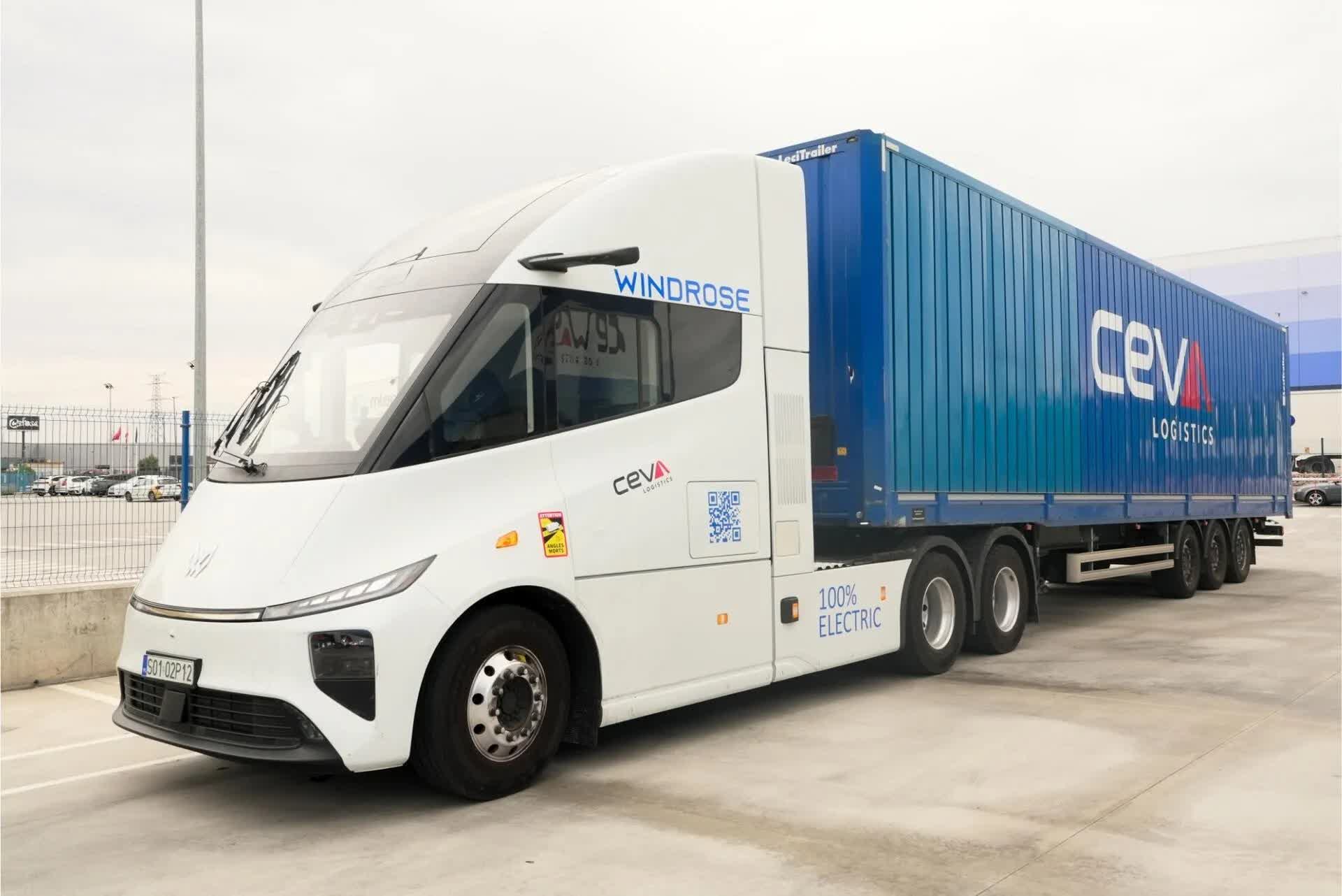
Forward-looking: Having to stop to recharge is an obvious headache for electric trucks that earn their money by staying on the road. Honda wants to reduce that downtime by putting charging equipment beneath the road, allowing suitably equipped vehicles to collect power while driving.
Honda's research subsidiary is working with construction company Taisei and road builder Taisei Rotec on the charging system. The partners plan to join the Tateyama Project on Japan's Tateyama Expressway in Chiba from fiscal 2027 onward, which begins April 1, 2027.
Honda initially intends to put the technology to work in logistics and transportation.
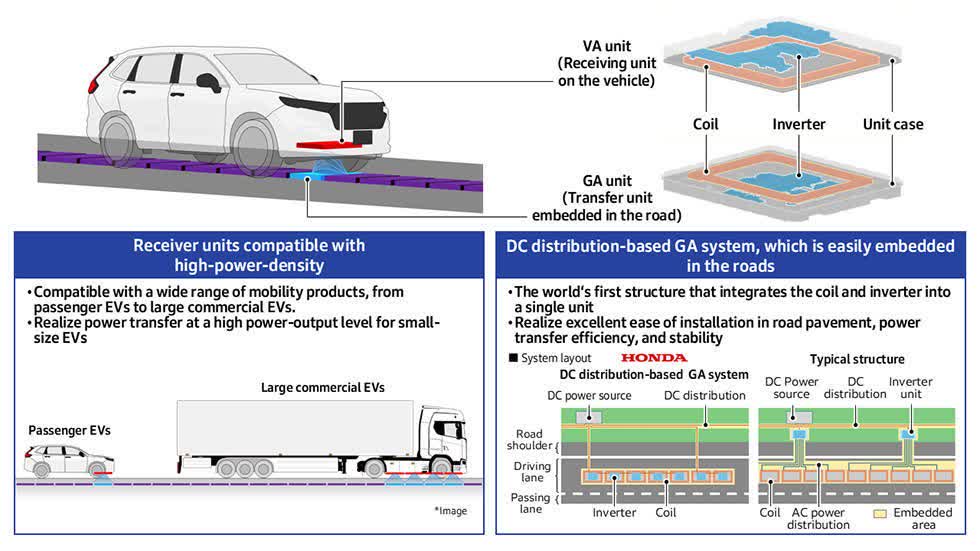
The method uses magnetic coupling to transfer energy between transmitters buried in the road and a receiver fitted to the vehicle. Coils beneath the road produce a magnetic field, which the receiving coil uses to supply energy to the battery.
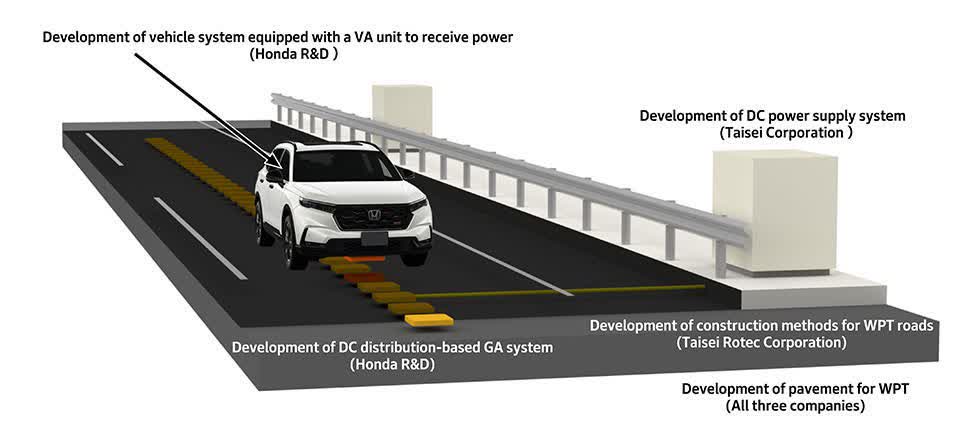
Honda's design connects the buried transmitters through a DC distribution system. Each road unit combines an inverter and coil, a setup Honda says simplifies wiring and reduces the components and installation work required.
The units are designed to fit into sections cut into the existing road surface, making installation possible without building an entirely new road.
Surviving the massive weight of truck traffic is another requirement. The partners have developed road structures and charging units designed to withstand traffic from vehicles weighing around 20 tons.
A further test roadway, with construction starting in late 2026, will support durability testing equivalent to one million wheel loads at 49 kN per wheel, alongside checks of charging performance and electromagnetic field leakage.
Later verification will examine power delivery up to 150 kW and reliability at high speeds. Those are testing objectives, rather than confirmed performance figures from the planned highway demonstration.
The idea has already appeared in several US projects. Florida has plans for a roughly three-quarter-mile charging section on State Road 516, designed to deliver up to 200 kW to compatible vehicles. There's also Electreon's earlier Detroit proposal, which used buried coils and vehicle-mounted receivers.
Reuters reports that a Honda engineer declined to compare the system's cost with a conventional fast-charging network, saying its economic viability still needed assessment. Reducing charging stops would be useful, but installing and maintaining electrical equipment beneath busy roads has to justify its cost.
While driving an electric vehicle on a road that automatically charges it sounds great, there's still the major limitation that ordinary EVs need additional hardware to make this vision a reality.