
First look: Anthropic has replaced Git in its main code repository as AI-generated changes outpaced the infrastructure built to manage them. The new system, called "Scion," moves most source-control operations to servers, reducing the amount of data that agents and automated jobs must download.
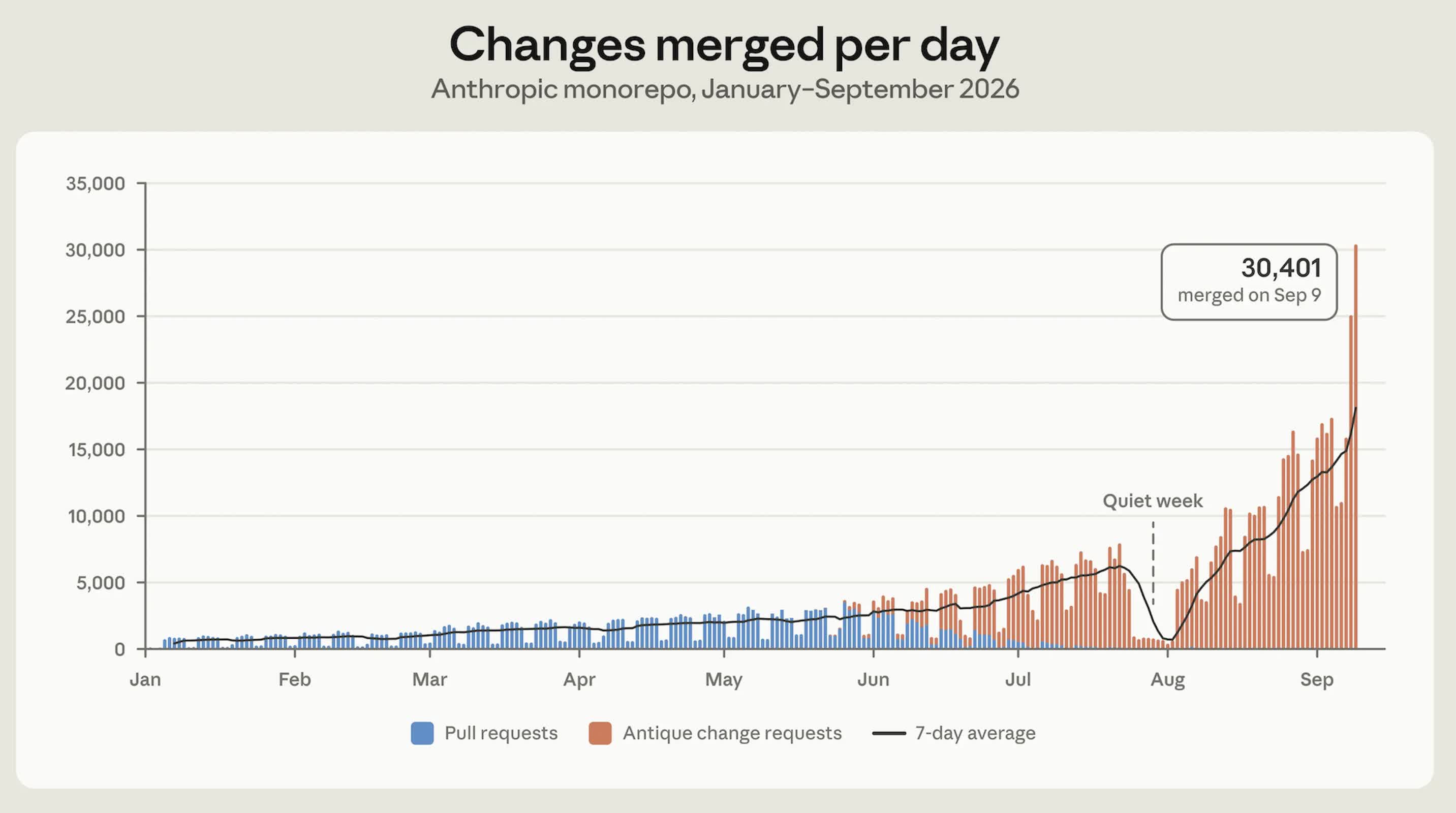
Anthropic detailed the system in a recent engineering post, reporting that it averaged about 2,500 merged code changes a day in May. By September, that figure exceeded 30,000.
Anthropic says Scion uses just one two-hundredth as much CPU power and memory as the Git mirror infrastructure it replaced. Code checkouts for continuous integration (CI) and research jobs now take seconds instead of minutes. Anthropic says the change freed up 25% of the CPU capacity used by its CI infrastructure. A seven-person team built Scion and its supporting tools and completed the migration in five months.
Scion puts commits, merges, rebases and file-history queries on the server. The client tracks local edits, manages files and keeps a limited cache. It does not need to hold enough repository data to perform those operations independently.
That approach suits Anthropic's workload. Most clients are agents and automated jobs that stay online, so Git's offline support offers little benefit. Centralizing the work reduces local storage and synchronization, though it makes server performance and availability more important.
Jobs that need files can download selected directories through sparse checkouts or use virtualized checkouts, which retrieve files as they are read. Both approaches avoid fetching code a job will never use.
The size of Anthropic's repository helps explain the change. Its main-branch history approaches 100 GB, and a compressed working copy exceeds 25 GB. CI alone performs about 25 million checkouts each day, excluding developer environments, agent sandboxes and research jobs.
Downloading a full compressed copy for every CI checkout would generate more than 600 petabytes of daily traffic, according to the company. That estimate reflects what a naive implementation would require, not actual traffic.
Anthropic had already tried shallow clones, sparse checkouts, promisor remotes, snapshots in blob storage and internal mirrors. At one point, the company operated several hundred Git mirrors. The arrangement bought time but became harder to maintain as more changes entered the repository.
Scion records each change as a changeset in a write-ahead log. Each changeset lists files modified relative to its first parent and points to their compressed contents in blob storage. A Git commit instead points to a repository tree. Creating a changeset therefore takes resources proportional to the change, not the whole repository.
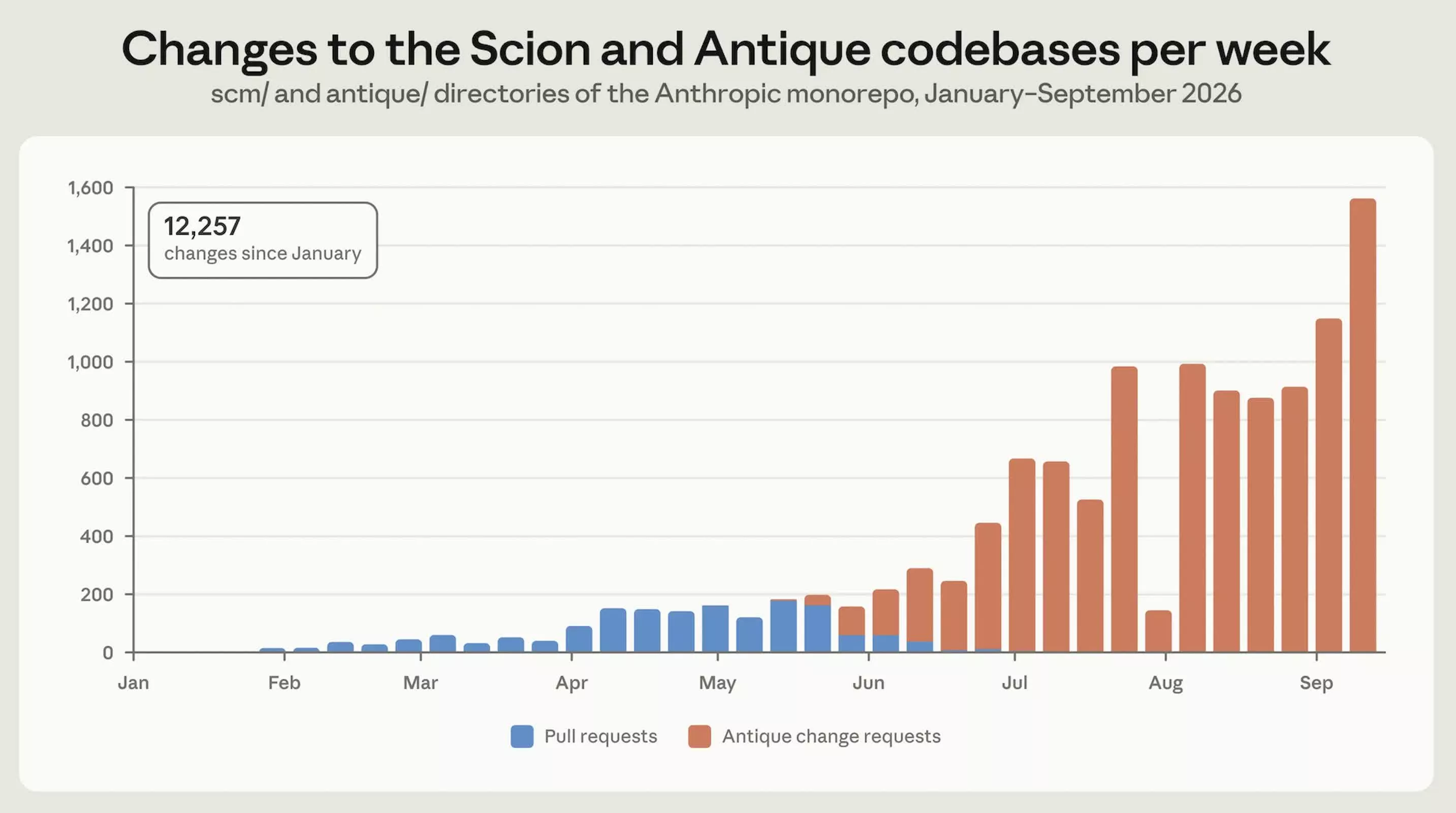
Higher merge volume has also forced Anthropic to rethink testing. The company says it could not effectively use a merge queue with a global repository lock at this scale. Hundreds or thousands of changes can merge while tests are still running.
Anthropic now relies more on automated testing after merges and before deployment. Conflicts still occur, and the company says Claude usually fixes them quickly. That puts more weight on catching problems after changes merge but before they are deployed.
Claude also helped build Scion. An early internal version of Claude Mythos Preview rewrote a Git-to-Scion ingestion pipeline. Anthropic says the replacement ran four times faster and used one-twentieth the memory. Engineers still set the system's constraints and rejected shortcuts, including attempts to scan commit logs when an agent should have queried the code review service.
Anthropic says that Scion would be difficult for other organizations to adopt because it requires custom review, search and CI tools, and that Git remains suitable for most repositories. But it sees room for existing platforms to adopt parts of the design, particularly server-side APIs that let agents work without repeatedly fetching a local copy of the code.