
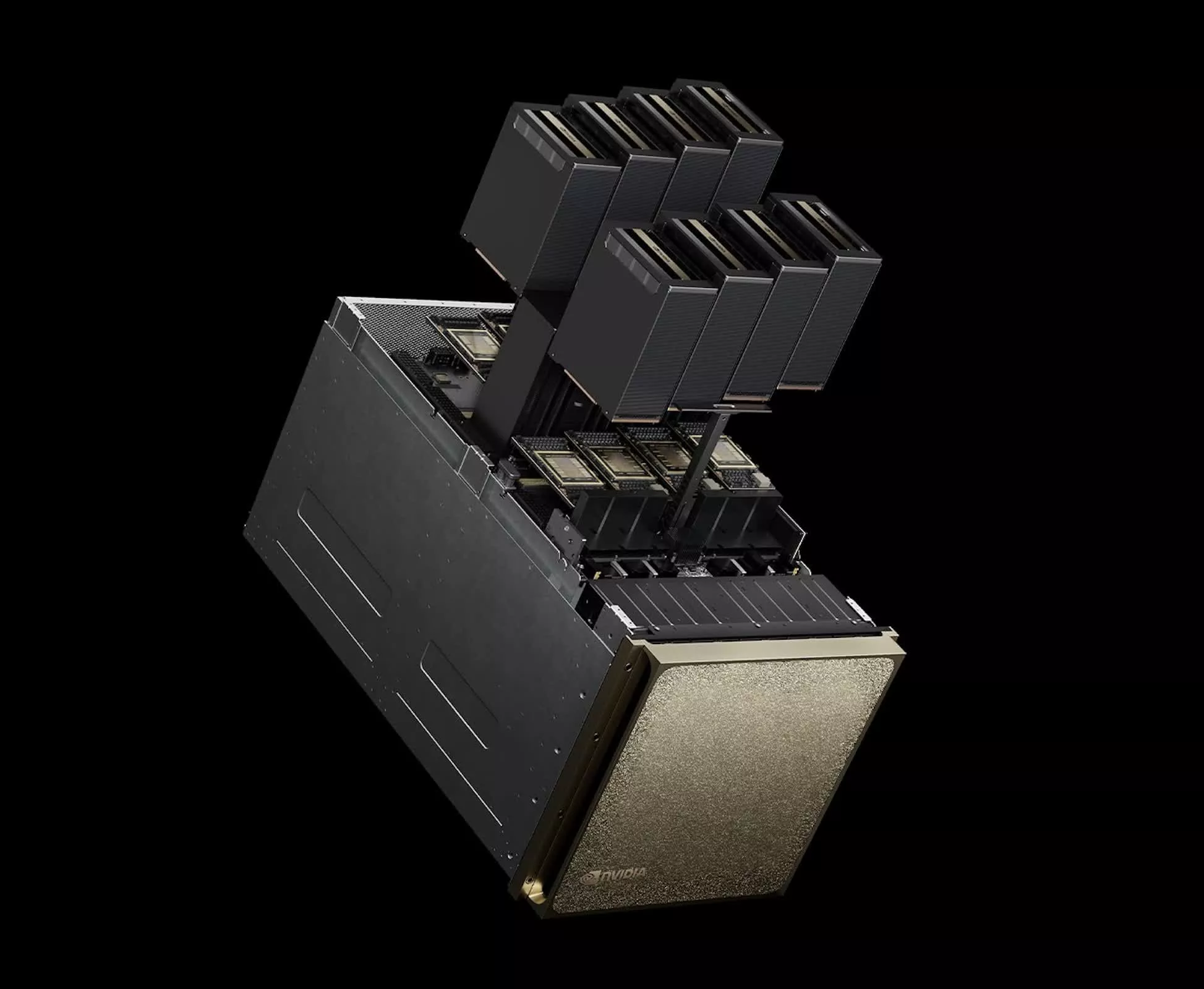
Why it matters: US export controls on advanced AI chips have mostly focused on where the hardware ends up. Now, a new Commerce Department rule dictates who gets to use it. Under the rule, companies must get a license to ship chips from Nvidia and other US suppliers to Malaysia, Thailand, Indonesia, Singapore and Brazil, a move meant to stop Chinese customers from tapping data-center capacity in those countries over the network.
The gap the rule addresses is simple. A Chinese company that can't legally buy a cutting-edge Nvidia processor can still rent time on one, as long as the chip sits in a server rack outside China. The silicon never crosses the Chinese border, but the computing power does.
Firms such as Megaspeed International have built a business on that arrangement. They used billions of dollars' worth of Nvidia chips to build data centers across Southeast Asia, then sold the computing capacity to Chinese tech giants trying to catch up in artificial intelligence. Shutting down that channel is the main goal of the new rule.
"The rule is designed to ensure that existing restrictions on access to sensitive American technology cannot be circumvented through remote computing arrangements involving data centers in third countries," the Commerce Department's Bureau of Industry and Security said in a release.
The rule reaches beyond the five named countries, making it harder for data-center operators anywhere in the world to give Chinese companies remote access to AI chips. It also tightens a separate point in the supply chain by making it more difficult for Chinese chip designers to work with TSMC.
US tech companies could get exceptions to the licensing requirement. The rule took effect immediately, and companies have 60 days to submit comments.
Megaspeed's role has put the rule at the center of a scandal involving Nvidia's top ranks. Alice Huang, a former senior executive at Megaspeed and a suspected Chinese intelligence asset, was having an affair with Jensen Huang, who has stepped down as Nvidia's chief executive. Before he left, Jensen Huang had lobbied President Trump to let Nvidia ship some chips directly to China and to keep export controls loose. His argument was that US companies competing abroad would help push back against Chinese rivals.
How the rule was written has drawn nearly as much attention as what it says. Normally, the Bureau of Industry and Security drafts chip-export rules and then sends them to the State and Treasury departments and the National Security Council for feedback. This time, the order was reversed. The release said the rule was "written by and at the direction of the Department of Treasury and the National Security Council."
Export-control analysts called that an unusual step. Chris McGuire, a senior fellow at the Council on Foreign Relations who previously worked on tech and security issues at the State Department, said it signaled a fight inside the administration.
"It is unprecedented for a Commerce Department rule to be written by the National Security Council and the Treasury Department," McGuire told The Wall Street Journal. "The fact that the Commerce Department press release says this shows that Commerce resisted publishing this rule to the bitter end, and was forced to do so by the White House."
Treasury Secretary Scott Bessent and other officials had accused Commerce of moving too slowly to close export-control loopholes. Bessent said last week that Treasury and other agencies had pushed for months for action on Megaspeed and chip exports, and that Commerce stood in the way. National security adviser Marco Rubio, who is also secretary of state, has joined Bessent in pushing for tighter controls.
Both men were among the officials frustrated when Megaspeed and other companies suspected of chip diversion were considered for the Entity List, a trade blacklist, and Commerce didn't move forward. Administration officials have said the agency is wary of upsetting China during trade talks. Commerce Secretary Howard Lutnick has taken much of the blame inside the administration. The Commerce Department didn't respond to a request for comment on the dynamics between agencies.
Trump defended Lutnick this week. He said the commerce secretary has done a good job and that delaying action on Megaspeed made sense, even though hawkish advisers objected.
"He was doing it because if you didn't delay it, you could have a blowup with China," Trump said. "We're having a very good relationship with China right now."