And now, for some context
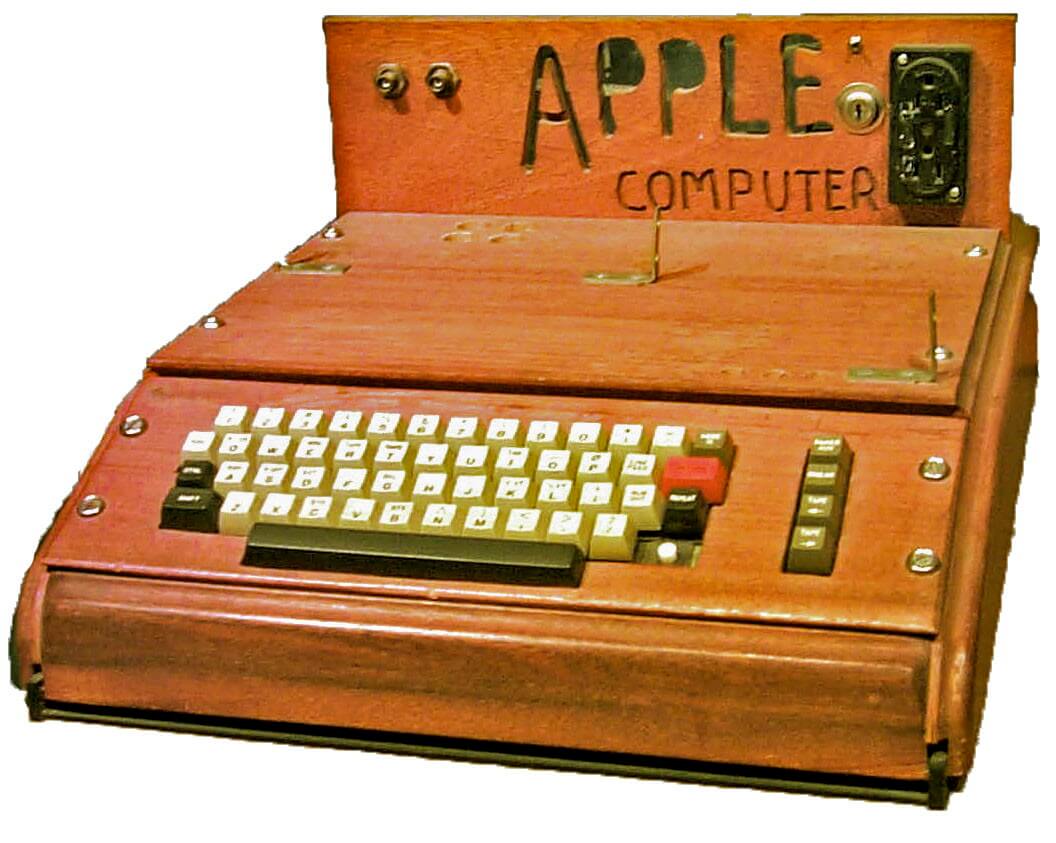
Although Steve Wozniak had helped create blue boxes, design computer components, and develop Atari's Breakout, it was his prized HP-65 programmable calculator that he sold to help finance the Apple-1. Wozniak valued it at $500, though he later recalled that the buyer paid only half. Jobs, meanwhile, sold his Volkswagen van for several hundred dollars, leaving a bicycle as his fallback transportation.
The pair needed the money to order their first professionally manufactured circuit boards. Their biggest early break came when Paul Terrell, owner of the Byte Shop in Mountain View, agreed to buy 50 Apple-1 boards for $500 each, provided they arrived fully assembled rather than as kits that customers had to solder together themselves.
The Apple-1 went on sale for $666.66. The unusual price was one-third above the $500 wholesale figure, and Wozniak also happened to like repeating digits.
Despite Apple's famous garage origin story, Wozniak says the Apple-1 was designed, tested, and debugged in his Cupertino apartment and at his Hewlett-Packard cubicle. The Jobs family garage played a role later, when friends helped insert chips, test completed boards, and prepare them for delivery. In July 1976, the Apple-1 was shown at the Homebrew Computer Club in Palo Alto, California.
For $666.66, buyers received an assembled motherboard built around a MOS Technology 6502 processor running at roughly 1MHz, with 4KB of RAM and circuitry capable of displaying 40 columns by 24 lines of text on a composite monitor. A keyboard, power supply, display, case, and storage were not included. An optional cassette interface could be used to load programs, including Wozniak's BASIC interpreter.
Only about 200 Apple-1 boards were produced before Apple turned its attention to the more polished Apple II. Surviving examples now routinely command six-figure prices, while historically significant boards can sell for considerably more.
In early 2026, during Apple's 50th-anniversary year, an exceptionally early Apple-1 prototype board sold for $2.75 million, a remarkable return on an idea initially financed with a calculator and a Volkswagen van.