Here's the story behind it
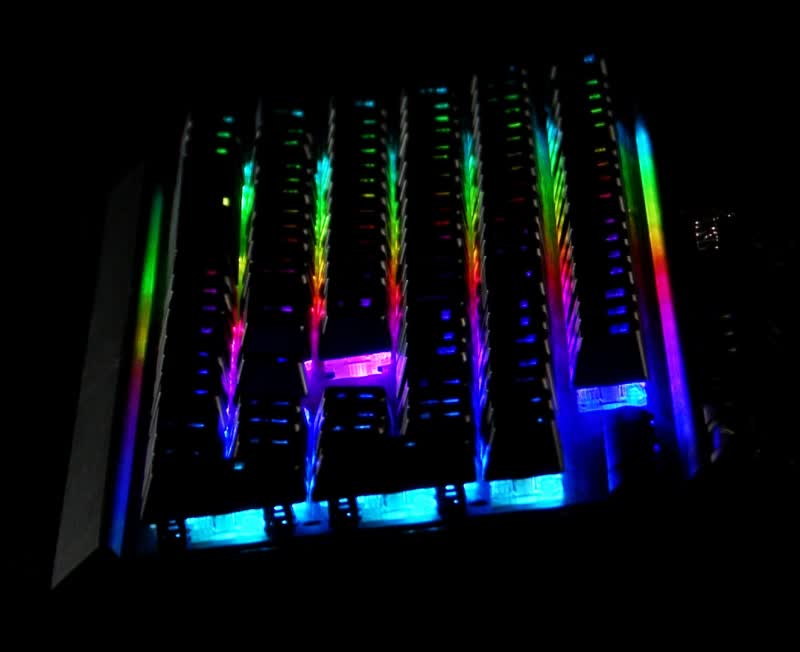
If you've built a gaming PC in the last decade, RGB lighting is so common it's practically a meme. But wind the clock back and the story of "who actually did RGB first" is way messier than it seems.
Early case modders were strapping multicolor LEDs and cold-cathode tubes into beige boxes back in the early 2000s, and generic RGB case fans quietly existed well before the big brands caught on. They often used simple cycling patterns, driven by basic controllers or fixed LED arrangements. Those parts, however, were mostly unbranded OEM gear with poor documentation – good luck pinning down a specific model and date.
When we talk about mainstream, branded RGB, the first widely recognized answer is the Corsair K70 RGB mechanical keyboard, announced in 2014 (alongside its sibling, the K95 RGB). Working with Cherry's then-new MX RGB switches, Corsair delivered per-key 16.8 million – color lighting, driven by PC software rather than hard-wired patterns. For the first time, you could open an app and script ridiculous rainbow waves, reactive typing effects, or game-specific lighting profiles.
That combo – major gaming brand, individually addressable LEDs, full RGB control from software – marks the moment RGB stopped being a case-mod niche and became a product category. From there, every vendor seemed to launch its own ecosystem: iCUE, Aura, Mystic Light, Synapse, Polaris… and suddenly "does it sync with my other RGB?" became a valid buying criterion.
There are a few plausible "but wasn't it…" alternatives. An RGB motherboard, like MSI's X99A Godlike Gaming (2015), is often cited as the first RGB-lit motherboard. RGB RAM, such as GeIL's EVO X DDR4 kits (around 2016), sticks in people's memories because glowing DIMMs look so dramatic in photos. And an RGB graphics card feels like an obvious guess, but those actually arrived a bit later in the wave.