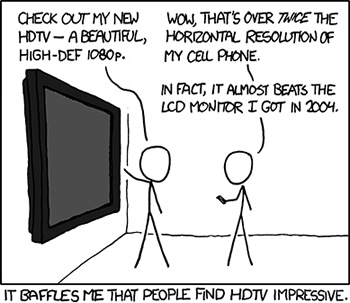
Linus Torvalds – famous for Linux and his outspoken candor – took to Google+ to voice an industry request: give all laptops resolutions of 2560x1600. Apple may have been the first to deliver such high resolutions to consumer laptop displays with its ultra-pricey 13 and 15-inch Retina Macbook Pros, but tablets have proven to be the true battleground for high pixel density displays. This point is well-illustrated by the following xkcd comic.
2560x1600 or WQXGA is the same resolution found on higher-end displays, typically ones that measure 27-inches or larger. For many though, the thought of a 13.3-inch WQXGA screen elicits visions of long nights filled with squinting and inevitable eye strain, but as tablets (and Retina-equipped Macbooks) have shown us, super high resolutions don't have to equal tiny text. And the benefit? High PPI displays are gorgeous – sufficiently-pixeled images take on an incredibly smooth, almost surreal look while text becomes sharp and clear. Take a look at some higher-end phones, tablets or the Retina Macbook Pro and the difference is stark.
So with even a $399 tablet doing 2560x1600 pixel displays, can we please just make that the new standard laptop resolution? Even at 11"? Please. Stop with the "retina" crap, just call it "reasonable resolution". The fact that laptops stagnated ten years ago (and even regressed, in many cases) at around half that in both directions is just sad.
Source: Linus Torvalds' Google+ page
Torvalds mentions that laptops have "even regressed, in many cases" – a thought which surely some readers can relate to. While the change from "square" screens with an aspect ratio of roughly 4:3 to modern widescreens (16:9ish) is certainly to blame for the reduction of valuable vertical pixels, the HDTV marketing blitz has truly done nothing but encourage PC display manufacturers to rest on their laurels. Companies appear to be content pushing 720p laptop screens and – perhaps most disappointingly – 27-inch 1920x1080 displays seemingly until the Universe slithers into heat death.
The one drawback for high PPI displays has traditionally been price. With more and more devices introducing pixel-dense panels in larger sizes though, those prices are poised to drop though. A senior NPD DisplaySearch analyst estimated that equipping Apple's 15-inch Macbook Pro with a Retina display costs the company about $100 more per unit -- an extra cost I'd gladly cover. How about you?