License plate cameras are scanning 20 billion vehicles a month, cities are starting to push back

Skye Jacobs

Posts: 2,012   +59
Staff
In a nutshell: Cities are collecting vast amounts of vehicle data through AI-powered camera networks, giving police the ability to track a car's movements across jurisdictions in seconds. The same systems are also fueling a growing debate over how much surveillance is too much.
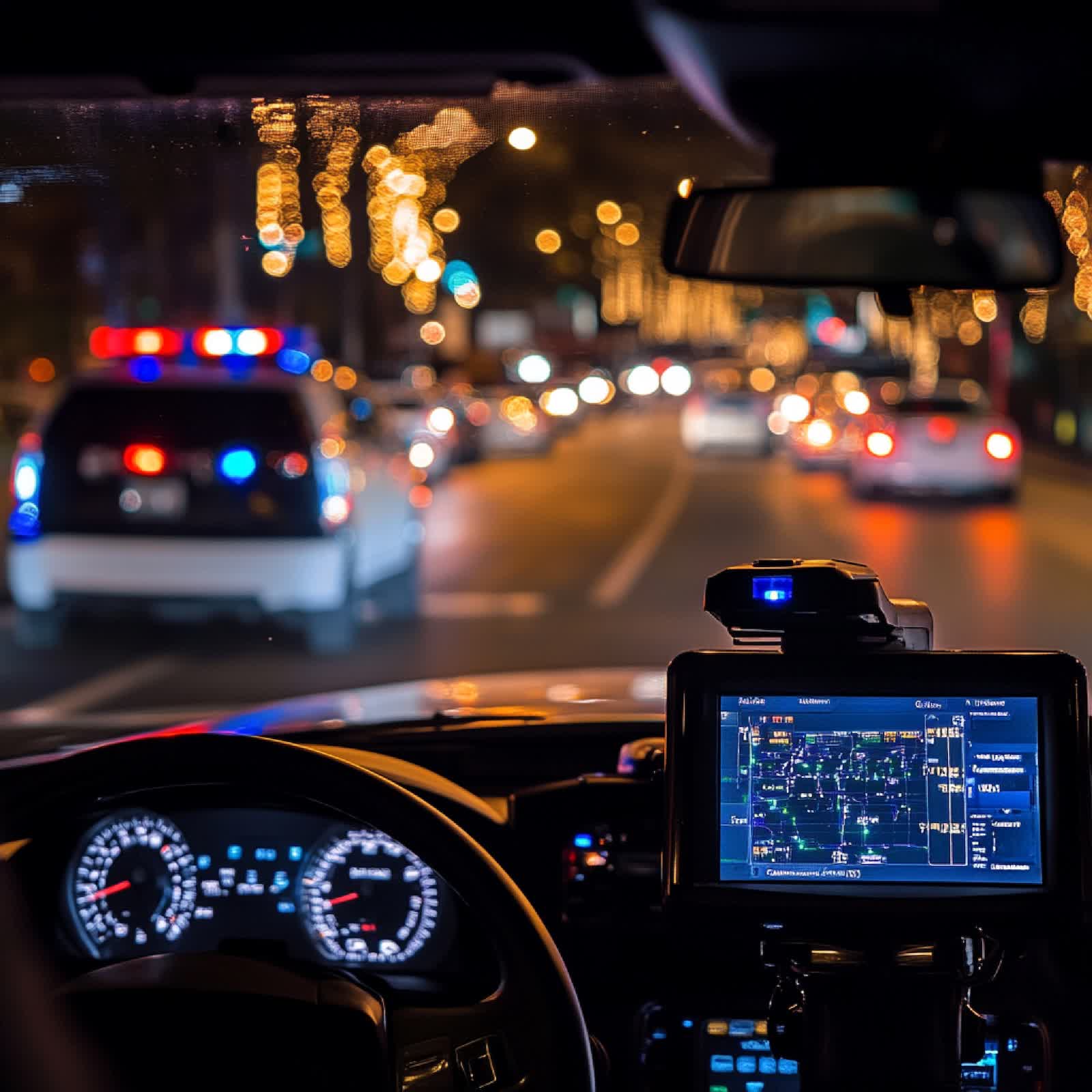
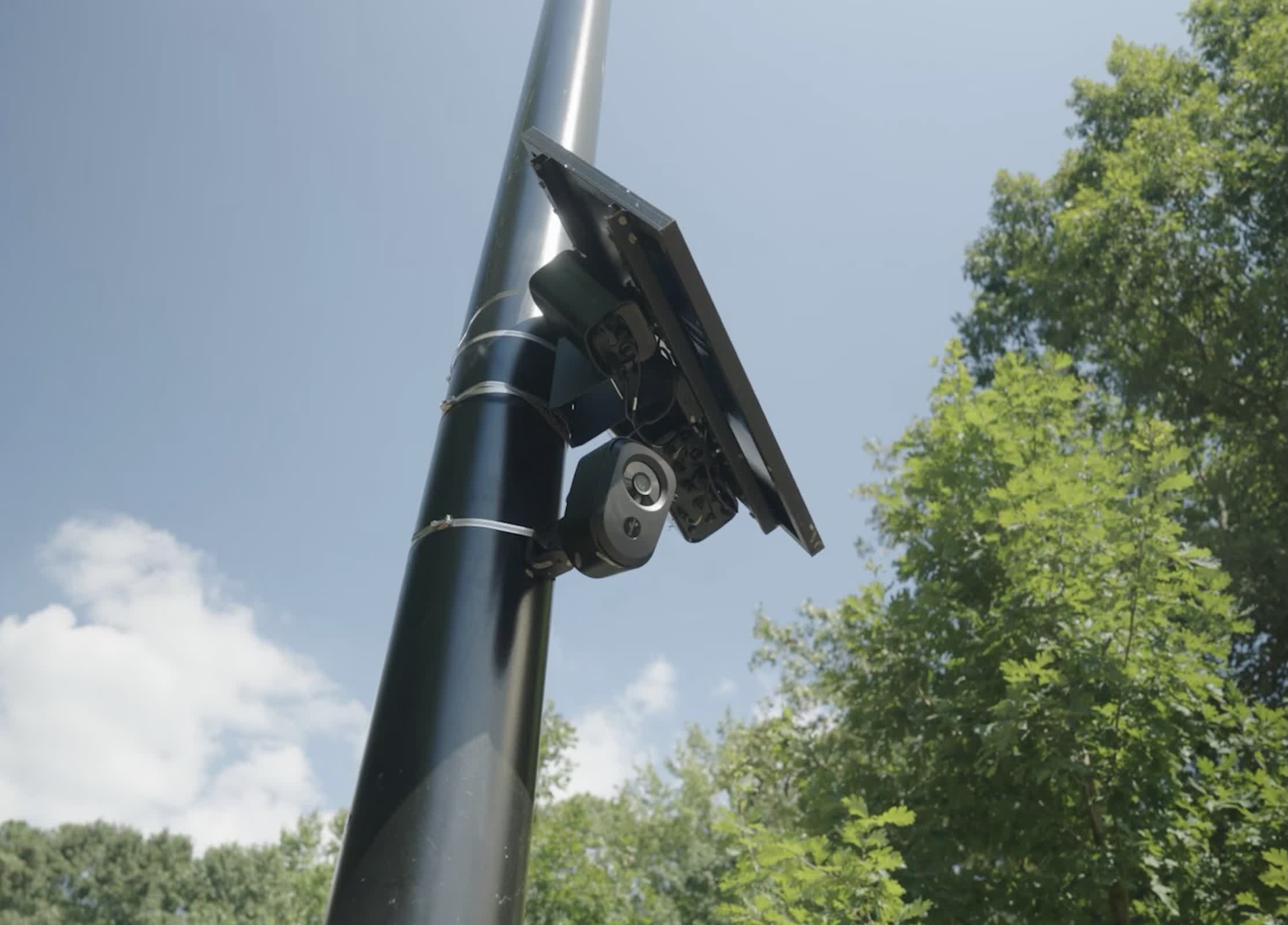
Flock Safety is squarely at the center of that debate. The Atlanta-based company has rapidly expanded by selling automated license plate readers to police departments, neighborhood groups, and private organizations. Its cameras, often mounted inconspicuously on poles, capture images of passing vehicles and convert them into searchable data points. The company says its system logs about 20 billion license plate scans each month.

The technology goes well beyond simply logging plate numbers. Each scan can include details such as a vehicle's color, make, model, and distinguishing features, including bumper stickers or gun racks. That information is stored in a cloud-based system, where law enforcement agencies can run searches using full or partial license plate numbers or even descriptive terms.

In practice, the system functions as a pattern-matching tool. Officers can reconstruct a vehicle's recent movements, set alerts for cars tied to investigations, and, where policies allow, search data collected by agencies in other jurisdictions. Flock says its cameras do not use facial recognition and that images are deleted after about 30 days by default unless a different retention policy is in place.

Police departments have embraced those capabilities. Flock CEO Garrett Langley said the system played a role in about one million arrests last year. "I don't go a day without meeting a police chief that says this is the most impactful tool they've ever seen in their career," he told The Wall Street Journal.

But the same features that make the platform effective for investigations are also driving concerns among privacy advocates and some residents. Because the cameras capture data on every passing vehicle, critics argue they enable a form of continuous, indiscriminate tracking rather than targeted surveillance.
"We should be using what is essentially a mass surveillance technology only for the worst possible crimes," said Chad Marlow, senior policy counsel with the American Civil Liberties Union.

The debate has taken on particular intensity in places like Troy, New York, where a network of 26 cameras has sparked public backlash. At a city council meeting that stretched past midnight, residents accused officials of enabling a "dystopian hellscape."

One speaker said, "As a Troy resident, I am appalled that our own mayor, our own administration, can essentially write off the rights of a significant portion of people who pay their salaries."

Mayor Carmella Mantello pushed back, pointing to cases in which the cameras helped solve crimes and locate missing people. "Guess what?" she said during the meeting. "Your iPhone is more of a surveillance camera than the license plate readers." The remark drew audible frustration from the crowd.

The conflict in Troy is part of a broader national trend. Since early last year, about 50 cities and counties have either canceled their Flock contracts or deactivated the cameras. The pushback cuts across political lines, with opposition coming from both privacy-focused liberals and conservatives wary of government data collection.

In Dayton, Ohio, officials suspended use of their cameras after discovering that outside agencies had accessed local data thousands of times for immigration-related searches. The incident illustrated how data-sharing features, one of the system's key selling points, can also create governance challenges.

Flock argues that much of the criticism stems from misunderstandings about how the technology works. "People walk by it every day, and they don't understand what it actually does," said Max Weinstein, the company's director of public trust and technology. He acknowledged that a centralized database of vehicle data is "an objectively pretty scary concept," but said the company has built in audit systems and other safeguards.
Even so, concerns about misuse persist. Critics point to reports that officers allegedly used the system to track individuals for personal reasons, as well as the broader question of whether long-term vehicle tracking constitutes a warrantless search.

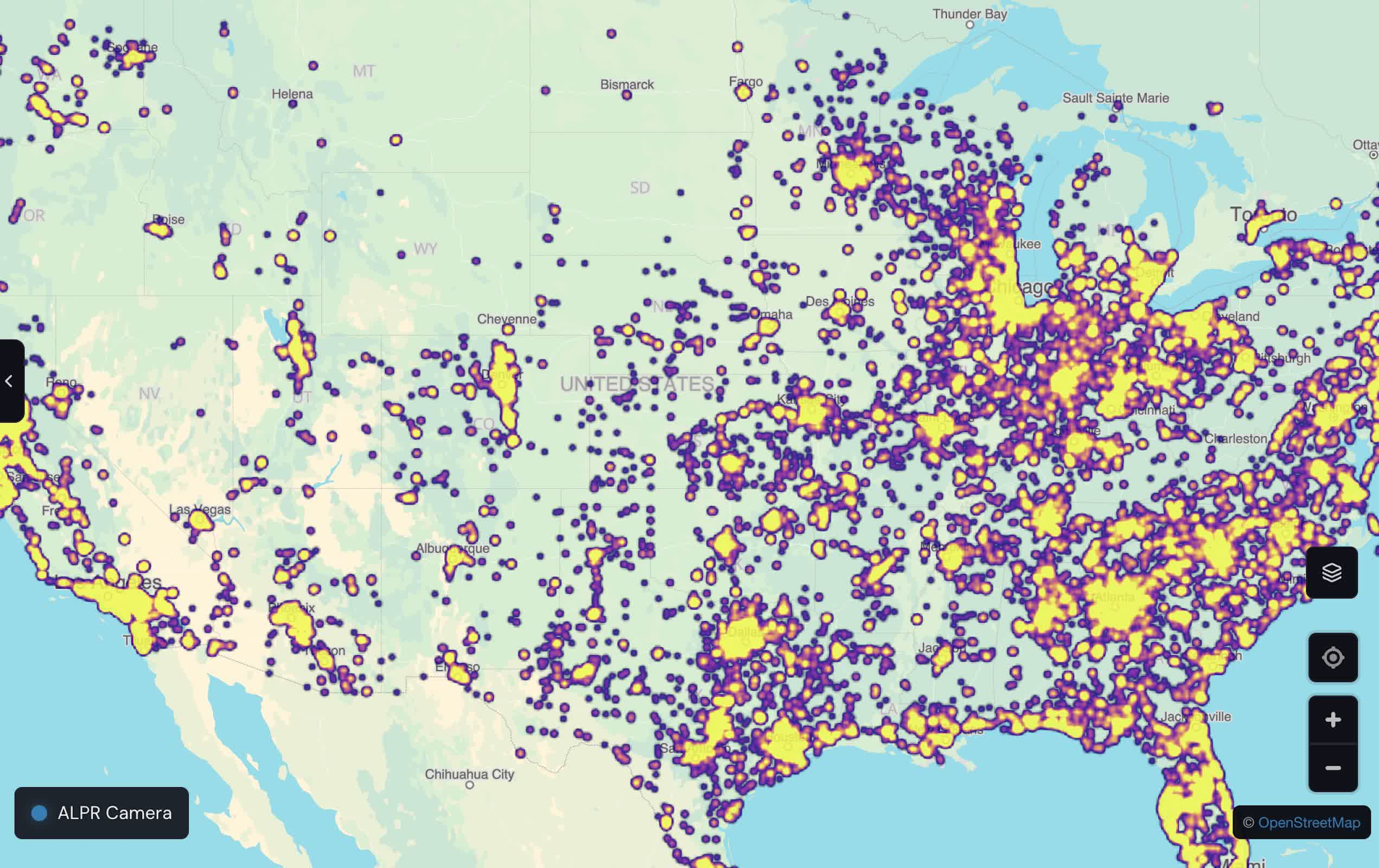
Outside government, some technologists are pushing back in their own way. Software engineer Will Freeman created DeFlock, a crowdsourced map of camera locations that now tracks more than 100,000 devices nationwide. "Overall, I don't think the government should know where we are all the time," he said.

In Troy, the political standoff remains unresolved. After the city council voted to block funding for the cameras, Mantello declared a state of emergency to renew the contract, prompting a lawsuit. Officials have agreed to a 60-day pause to review how the system is being used, and police have suspended data sharing with out-of-state agencies for now.

City Council President Sue Steele said the outcome remains uncertain. "We don't want to deprive law enforcement if this is indeed a helpful tool," she said. "Whether we find a middle ground remains to be seen."

Permalink to story:

 
What is not mentioned here at all is how much license plate readers are used to stop all kinds of trafficking. For example in this case, an Arkansas State Police trooper was able to get a good idea that someone was trafficking drugs based on the route he drove (from New Mexico) when his story was something else, and arrested him later after using a K9 unit to detect drugs. Here's the full video and police report:
ASP said:
On 8/26/24 at approximately 3:33 p.m., I initiated a traffic stop on a gray Jeep Compass for following too closely and improper lane usage near the 78 eastbound mile marker of I-40. As I approached the vehicle, I noticed a large duffle bag in the trunk area and an empty bag similar to that in the back seat.

I approached the driver and told him who I was and the reason for the stop. I asked for his driver’s license, and when he handed it to me, I noticed his hands were shaking. I asked him if the car was a rental, and he told me it was. I asked for the rental agreement. The driver, Anthony Reese, said he had to pull it up on his phone. I asked him where he was headed, and he told me back home. I asked Mr. Reese if he dropped off a tractor-trailer somewhere, and I got no response. He glanced at me and then proceeded to look at his phone. I asked him again if he had dropped off his truck somewhere, and he told me Oklahoma. I asked if he rented the car in Oklahoma because he said he had dropped off a truck there. Then he stated that he didn’t drive a truck to Oklahoma, but he did leave a truck in Oklahoma. He said he was going for a job in Oklahoma but decided against it and left. Mr. Reese’s address on his license showed Midfield, AL. It seemed odd for someone to drive so far to turn down a job. I had him step out of the vehicle while he continued to look for the rental agreement on his phone.

While at my car I asked him how long he stayed in Oklahoma, and he told me not long, just a few days. I asked him what he
had in the bag because it was a large bag stuffed full for a few-day trip to Oklahoma. I ran his vehicle through a License Plate Reader, and it showed his vehicle traveled through New Mexico westbound and back eastbound in New Mexico three days later. I verified that he had the vehicle since August 20, 2024. Mr. Reese did have the vehicle when it went through New Mexico on August 22, 2024, and came back eastbound through New Mexico on August 25, 2024. I asked him if he had just gone to Oklahoma, and he replied “Yes sir.” I asked him if he had gone to New Mexico; I noticed his eyes opened up wide, and his mouth dropped as if he was surprised. He replied he liked to gamble. It seemed odd that he said he went to New Mexico to gamble because Oklahoma has various casinos.

I asked him what was in the bag in the trunk, and he told me just some clothes. Due to his story changing multiple times and not making much sense with his trip, I suspected that there were illegal drugs inside the vehicle. I noticed his demeanor changed and his voice pitch changed when I began to talk about the bag in the back. I asked him if there was anything illegal inside the vehicle. He told me no. I asked if there was any marijuana, and he looked directly at me and shook his head no. I asked if there was meth, and he looked directly at the trunk area, began to giggle, and told me “Nah man.” I asked for consent to search the vehicle, and he told me no. I called for Trooper Tanner Hess to assist with his canine.

Trooper Hess’ canine alerted to the odor of narcotics coming from the vehicle, and we searched the vehicle. In the trunk, there was a large duffle bag and a large blue suitcase. Inside both were bundles of suspected methamphetamine. There were 88 total bundles between the two (Approx. 100.9 lbs.) (Street value of $4,535,900). In the passenger side floorboard, there was a black backpack; inside it were two bundles of suspected fentanyl pills (Approx. 2 lbs.) (Street value $362,800). In the back seat on the floorboard was a zip lock baggie containing suspected marijuana (Approx. 18g) (Street value of $30).
 
Sawzall, the ultimate de-Flocker.
For real though, as much as people complain about these things, much like the red light cameras, nobody does anything about them.

When the red light cameras came to Britain, there were some who put tires around them and lit them on fire.
What is not mentioned here at all is how much license plate readers are used to stop all kinds of trafficking. For example in this case, an Arkansas State Police trooper was able to get a good idea that someone was trafficking drugs based on the route he drove (from New Mexico) when his story was something else, and arrested him later after using a K9 unit to detect drugs. Here's the full video and police report:
Car thefts have decline drastically here since they put the cameras in. Our city voted to continue expanding them instead of disabling them like other cities, citing this, the decline in missing children, and the decline in violent crime because we can actually CATCH the people doing this stuff now.

The privacy issues are a concern but that needs to be addressed by the state passing protections on data and punishments for those who would abuse it, not by disabling the tech entirely.
 
What is not mentioned here at all is how much license plate readers are used to stop all kinds of trafficking. For example in this case, an Arkansas State Police trooper was able to get a good idea that someone was trafficking drugs based on the route he drove (from New Mexico) when his story was something else, and arrested him later after using a K9 unit to detect drugs. Here's the full video and police report:


License Plate camera scanners here in NYC have the cops all over people driving without licenses, registration or insurance like flies on sht. As far as I'm concerned, we need them.
 
You're openly advocating for people to commit felony offenses?

In a civilized society, if we don't what our government is doing, we don't engage in domestic terrorism; we simply vote for people who'll enact a policy against it.
Oh, I remember being a naive high schooler who had just taken his first Civics class. How has that "just vote it out" been going lately? Have we voted out the crime issue in cities? Have corporations been brought to heel; held responsible for abusing our information and selling our entire lives for profit? Have we fixed out economy, brought back jobs, or fixed the immigration crisis?

Sure, to a high schooler taking their first Government Civics class, this seems like the obvious answer. Historically, voting has done nothing to fix this. The bills allowing blatant attacks on our rights have been BIPARTISAN, the patriot act, the upcoming No Fakes act (which tech media has been suspiciously silent on), and so on. As inequality continues to rise and we get further taken advantage of, you are going to see more aggressive and violent responses, because it is the only thing that elicits change.
 
Just another little slice of freedom sold off for that sweet sweet revenue. Everything about this is geared to profit first and safety second. A very familiar tune... Flock gets your money, you get to legally issue more citations with less boots on the ground. If you can ticket enough people, you can afford to keep the cameras. Then we can factor in the selective enforcement of traffic violations for that casino feeling, the lack of self control displayed by your average motorist... It's a nice situation.

How long do you think Flock would last as a company if there were no crimes?

This is why I just set cruise to the speed limit and increase the volume of the music until I can no longer hear everyone behind me screaming that I should be speeding. Too slow? Go vote.
 
Just another little slice of freedom sold off for that sweet sweet revenue. Everything about this is geared to profit first and safety second. A very familiar tune... Flock gets your money, you get to legally issue more citations with less boots on the ground. If you can ticket enough people, you can afford to keep the cameras. Then we can factor in the selective enforcement of traffic violations for that casino feeling, the lack of self control displayed by your average motorist... It's a nice situation.

How long do you think Flock would last as a company if there were no crimes?

This is why I just set cruise to the speed limit and increase the volume of the music until I can no longer hear everyone behind me screaming that I should be speeding. Too slow? Go vote.
I gave an actual example of millions of dollars worth of meth being removed from the streets at just one traffic stop with the help of these kinds of cameras. Those drugs probably would’ve ruined multiple lives if they weren’t confiscated. And if someone steals your car, you report it stolen, and license plate readers allow cops to recover it before long, does that benefit Flock morre or you?

So what I want to know is what freedom is being lost? Are you suggesting your publicly identified vehicle should be able to be driven on the publicly funded and government regulated roads anonymously lol?
 
I gave an actual example of millions of dollars worth of meth being removed from the streets at just one traffic stop with the help of these kinds of cameras. Those drugs probably would’ve ruined multiple lives if they weren’t confiscated. And if someone steals your car, you report it stolen, and license plate readers allow cops to recover it before long, does that benefit Flock morre or you?

So what I want to know is what freedom is being lost? Are you suggesting your publicly identified vehicle should be able to be driven on the publicly funded and government regulated roads anonymously lol?

Do you feel more free or less free with all the cameras tracking your movements?
That information has value. You won't see it.

It's not the end of the world, but it's not nothing. Shrug if you like.
Why can't I follow people and take photos of them while they drive? Because it's weird, right?

Thankfully many local authorities always act with the best of intentions, but the ones that don't make their own publicity. I don't need to cite.
 
Do you feel more free or less free with all the cameras tracking your movements?

Is it free? Hmm 🤔 let me provide a scenario

That information has value. You won't see it.

You dam straight! Haha 😆 you see I'm driving along naked with a hard d#$k and when a camera snaps it goes stealth limp. I feel less free cause I know pornhub probably rips this off the database and ai gens a video of a chic giving me a BJ whilst I'm driving which then gets directed to the local DMV where I get issued a fine in Spanish sent to Australia for driving too soft or hard 🤣 to the right.

Surveillance is a good thing but unfortunately it gets abused far too frequently. That corruption continues to remain unpunished - the clock is ticking, 1 day soon change will be coming!
 
Do you feel more free or less free with all the cameras tracking your movements?
That information has value. You won't see it.

It's not the end of the world, but it's not nothing. Shrug if you like.
Why can't I follow people and take photos of them while they drive? Because it's weird, right?

Thankfully many local authorities always act with the best of intentions, but the ones that don't make their own publicity. I don't need to cite.
You’re comparing a car following another car to fixed license plate readers? One CAN follow your location, and the other can only log that your car passed through at a specific time. It does not follow your location.

Anyways, I checked crowdsourced map https://deflock.org/ and found out of the last 6 routes I would take daily to work (different places I lived and worked), 3 would tell law enforcement if my vehicle went to work that day (but not specifically where I went to work or no information on where I came from), 2 would tell law enforcement both if I entered the freeway and went to work, and one route wasn’t covered by license plate readers at all.

The vast majority of these seem to indicate if you enter or exit a freeway only in cities. In the past, that’s where officers were positioned. You might say officers don’t track every car that goes through and you’re right. But in the past when officers were searching for a vehicle related to a recent crime, officers would be manually checking vehicle descriptions and reading license plates, just like Flock Safety does today.

Today, officers only check data from license plate readers for persons of interest too. The drug bust example I gave shows evidence of that. He has a lengthy conversation with the driver before he even determined he should check if the driver was lying. This was also on a highly traveled trafficking route where these kinds of busts regularly happen.

I think it would be good to have some protections, such as deleting irrelevant data after some period of time. It would also be good to ensure that officers are checking data when it’s related to an ongoing investigation. The good thing is that costs of paying a private business for this metadata will already partially incorporate those practices.
 
Imagine you let the tech Gestapo into every corner of your city then have the audacity to go "Woah, is it legal to track the location of everybody in the city like this... WITHOUT US PROFITING FROM IT?!"
 
License Plate camera scanners here in NYC have the cops all over people driving without licenses, registration or insurance like flies on sht. As far as I'm concerned, we need them.
We have more people driving without a license or insurance than any other place. We have Flock, thats not what they are using them for. They are using them to get around the Terry v. OHIO (1968) requirements for a traffic stop. Im in court daily, observing. They are using it as a bought way of getting around a warrant. I am a retired Federal agent who got fed up with the "Dont have enough for a warrant or you are too lazy?, just buy evidence) kind of investigation. There is evidence for sale for almost any crime imaginable, for almost any person, guilty or not. We had a person that their phone company had provided evidence of a murder. They had two people conspiring, they had them possessing a knife on camera and the same person was flagged for possibly committing armed robbery. We were sent the tip by an FBI system that used Metadata and public cameras and credit card data to use interpolation. The interpolation algorithm said this person was a murderer, a possible armed robber and definitely a conspirator. The possibility numbers were all very high confidence.
The warrant was approved we handed it off to local LEO, and the FBI. They raid the house, the supposed victim answers the door. They go ahead with the raid. The supposed murderer is in a hospital bed, 90+ years old, a hospice patient and the co-conspirator was a 7 year old kid. They were talking about a prank they had pulled on his father, the grandfathers son, when he was the age of the little boy. Worse yet, the Tate's attorney wanted the bed ridden man cuffed and taken in. They were still going through the motions. The FBI backed off and said it was an obvious mistake. The locals wanted the house ripped apart.
 
You’re comparing a car following another car to fixed license plate readers? One CAN follow your location, and the other can only log that your car passed through at a specific time. It does not follow your location.

Anyways, I checked crowdsourced map https://deflock.org/ and found out of the last 6 routes I would take daily to work (different places I lived and worked), 3 would tell law enforcement if my vehicle went to work that day (but not specifically where I went to work or no information on where I came from), 2 would tell law enforcement both if I entered the freeway and went to work, and one route wasn’t covered by license plate readers at all.

The vast majority of these seem to indicate if you enter or exit a freeway only in cities. In the past, that’s where officers were positioned. You might say officers don’t track every car that goes through and you’re right. But in the past when officers were searching for a vehicle related to a recent crime, officers would be manually checking vehicle descriptions and reading license plates, just like Flock Safety does today.

Today, officers only check data from license plate readers for persons of interest too. The drug bust example I gave shows evidence of that. He has a lengthy conversation with the driver before he even determined he should check if the driver was lying. This was also on a highly traveled trafficking route where these kinds of busts regularly happen.

I think it would be good to have some protections, such as deleting irrelevant data after some period of time. It would also be good to ensure that officers are checking data when it’s related to an ongoing investigation. The good thing is that costs of paying a private business for this metadata will already partially incorporate those practices.
When the officers are manually checking each car, writing each mark on the car down, taking video, tracking where it went with other officers and stopping non-involved cars for being in known drug areas and keeping this data forever? Across multiple lifetimes? If not, your argument doesn't hold wTer.
 
Any surveillance for the greater good can be okay.

Measures like plate scanners is fine here in Denmark, but only because of our high trust society and essentially no corruption means there isn't really a downside.

Where there is corruption, abuse of power and the like, surveillance is of course highly problematic. Same thing goes for facial recognition used with cameras, tracking of what library books people lend, tracking phones...
 
What is not mentioned here at all is how much license plate readers are used to stop all kinds of trafficking. For example in this case, an Arkansas State Police trooper was able to get a good idea that someone was trafficking drugs based on the route he drove (from New Mexico) when his story was something else, and arrested him later after using a K9 unit to detect drugs. Here's the full video and police report:

By that argument, law enforcement shouldn't need a warrant, and should know who enters and exits every building in the country, and to track us with our phones or even implanted transponders. It's completely possible for them to do so. Imagine how crime free we could be. But we'd have no freedom. The fact some people commit crimes in no way obligates me to give up my right to privacy and free mobility. Find a better way, but don't start selling off my privacy for your concerns. I could be extremely more forceful in my language and tone to this post, but suffice to say it's ridiculous and insulting.
 
Any surveillance for the greater good can be okay.

Measures like plate scanners is fine here in Denmark, but only because of our high trust society and essentially no corruption means there isn't really a downside.

Where there is corruption, abuse of power and the like, surveillance is of course highly problematic. Same thing goes for facial recognition used with cameras, tracking of what library books people lend, tracking phones...
High trust society. Otherwise known as passively subservient.
 
By that argument, law enforcement shouldn't need a warrant, and should know who enters and exits every building in the country, and to track us with our phones or even implanted transponders. It's completely possible for them to do so. Imagine how crime free we could be. But we'd have no freedom. The fact some people commit crimes in no way obligates me to give up my right to privacy and free mobility. Find a better way, but don't start selling off my privacy for your concerns. I could be extremely more forceful in my language and tone to this post, but suffice to say it's ridiculous and insulting.
Don’t put words in my mouth. All you did was present the extreme opposite of your own opinion and it has nothing to do with me. Here’s what I actually said:
I think it would be good to have some protections, such as deleting irrelevant data after some period of time. It would also be good to ensure that officers are checking data when it’s related to an ongoing investigation. The good thing is that costs of paying a private business for this metadata will already partially incorporate those practices.
That said, you think the existence of license plate readers violates your freedom of privacy? Yout license plate number is already public and mandated by law to be on your vehicle. It’s already public information. And you’re in a public place when driving where a license plate might read your public license plates, right?
 
The stupidity of the privacy crazies never gets old. The people screaming about cameras are the same ones that claim racial bias in policing.

I support more cameras. And less physical policing.

Having visited multiple countries that use no-contact apprehension…

Let the cameras do the work. Break the law, get a non-contestable ticket in the mail. No more cops shooting ***** criminals that threaten them or take off running or driving.
 
Back