A new satellite wants to prove nuclear power can work in space without solar panels

Skye Jacobs

Posts: 2,010   +58
Staff
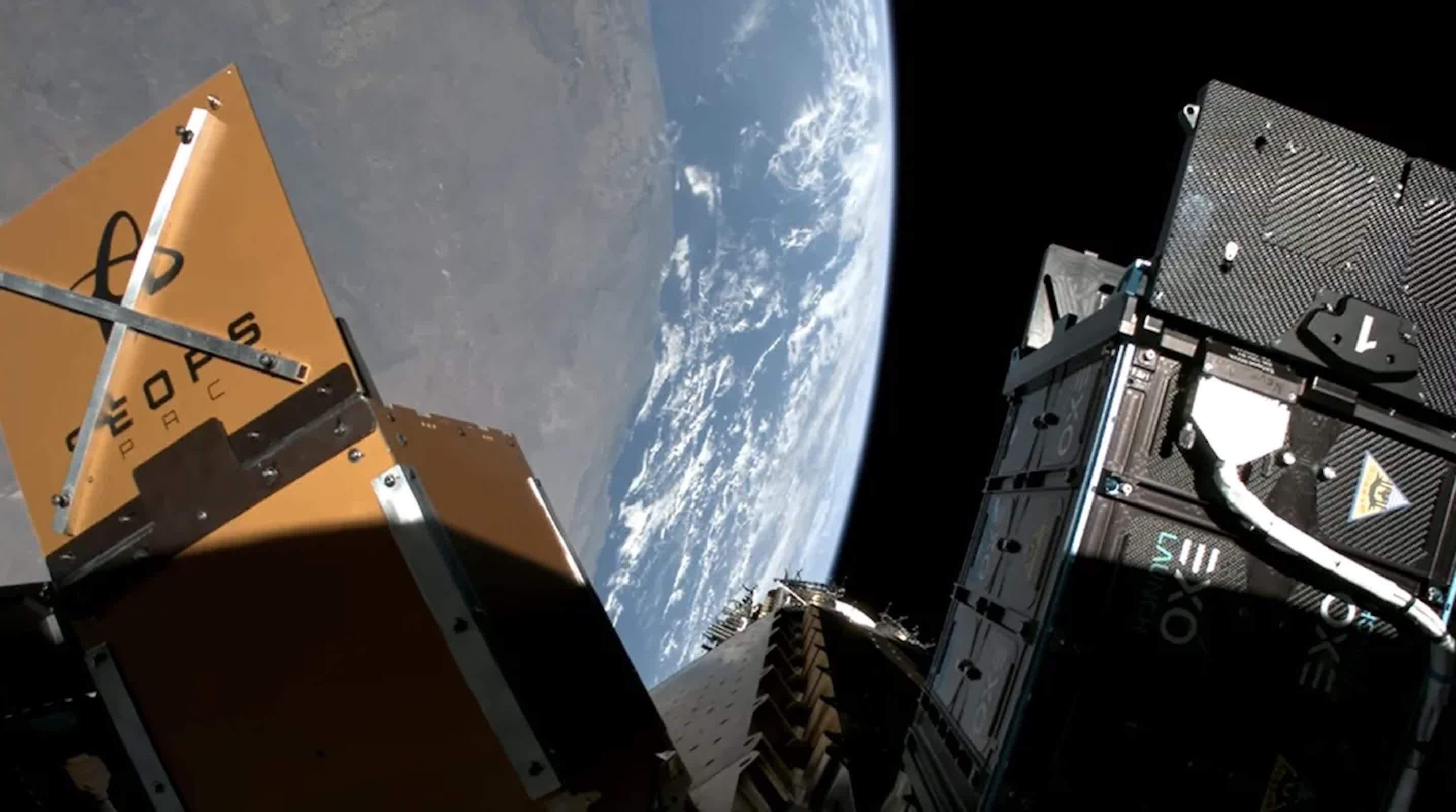
What just happened? A small satellite launched this week is testing a space-based nuclear power system that does not rely entirely on sunlight. The satellite, called BOHR, was developed by Florida-based City Labs and entered orbit on July 7 aboard SpaceX's Transporter-17 rideshare mission from Vandenberg Space Force Base in California. The Falcon 9 rocket carried 81 payloads in total, deploying them roughly 50 minutes after liftoff.
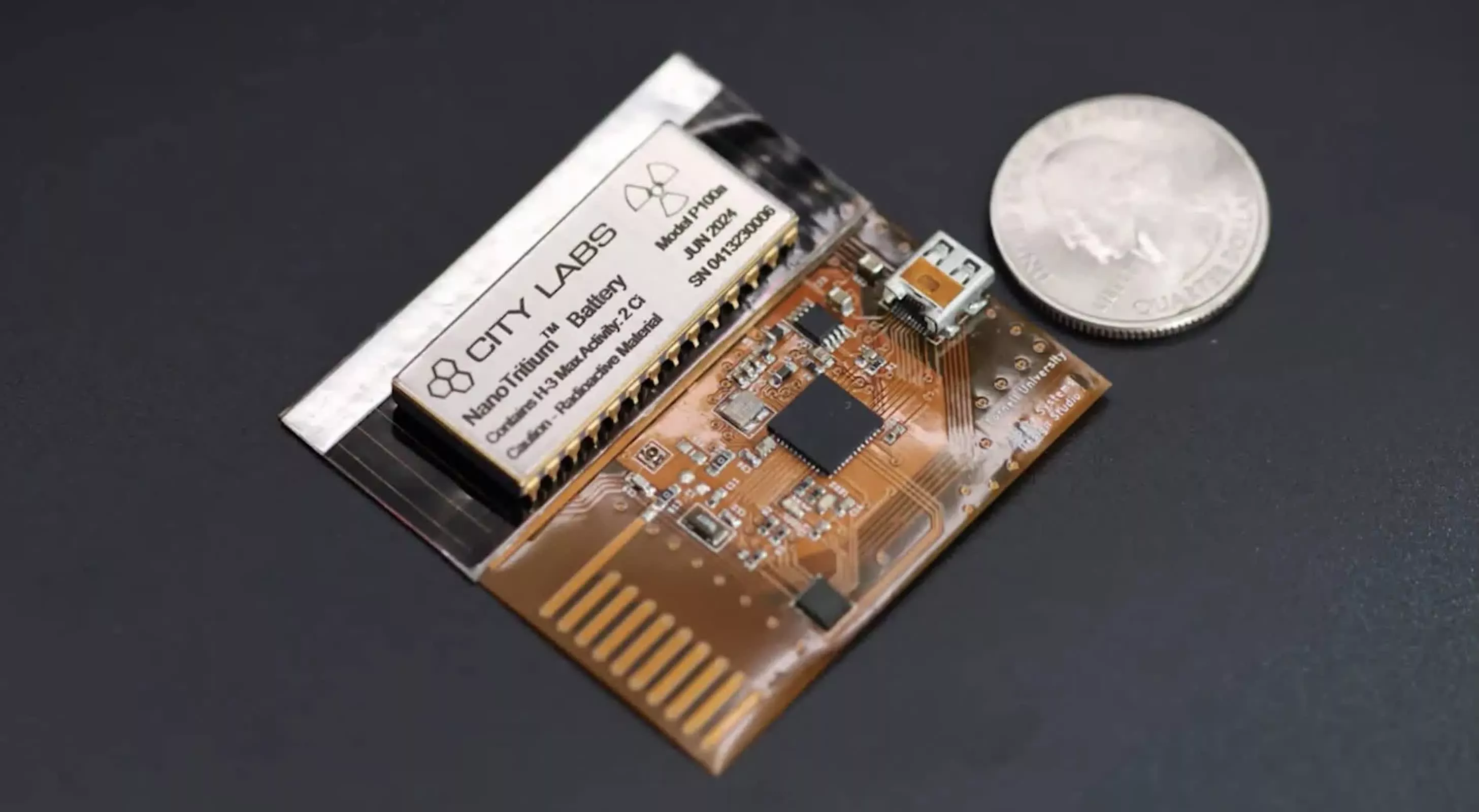
BOHR's primary mission is to test a different kind of power source in orbit. The CubeSat is carrying City Labs' "NanoTritium" system, a betavoltaic power source that converts beta particles from tritium decay directly into electricity using a semiconductor. Unlike traditional nuclear power systems, which first convert radioactive heat into electricity, this design generates power directly from the decay particles.

"This is a historic step for commercial nuclear power in space," said City Labs CEO Peter Cabauy.

The mission is still in its early stages. BOHR relies on solar panels for its primary operations, while the NanoTritium device is being evaluated separately to measure its performance in orbit. The goal is to determine whether the technology can provide a steady, long-lasting power source for future spacecraft.

If it performs as intended, the system could help overcome one of the biggest constraints facing many space missions. Solar power is unreliable in environments with little or no sunlight, such as deep space or permanently shadowed regions of the Moon. Those areas, particularly near the lunar south pole, have become a major focus of NASA's Artemis program because of their potential water-ice deposits.
City Labs sees its technology as a potential fit for those environments. While the current system generates only small amounts of electricity, the company believes it could eventually be scaled up.

One advantage is that tritium emits relatively low levels of radiation compared with many other nuclear materials, making it easier to handle and integrate into spacecraft. "City Labs' tritium-based power systems… are engineered for safe handling, transportation, and integration within standard commercial launch environments," the company stated.

The project also reflects changes in how nuclear-powered missions are approved. BOHR is the first mission authorized under the FAA's nuclear launch review process established by a 2019 White House directive.

Funding for the satellite came through a Department of Defense contract, pointing to potential applications beyond space exploration, including defense systems that require long-lasting, low-maintenance power sources.

For now, BOHR is a test case. But if the technology proves reliable, it could open the door to spacecraft capable of operating for longer periods and in environments where solar power is impractical.

Permalink to story:

 
The typical green glowing nuclear waste in cartoons/tv series etc - Tritium can do that.
Finally it'll be somewhat accurate :P

You may have seen it used in glowsticks or on a watch face, it's pretty.
 
We've been using nuclear power in space since atleast the voyager missions....
Voyager was not solely powered by the RTG. It has solar panels. Once it was a sufficient distance from the sun, most of its functions had to be switched off due to power limitations.

We have never had a solely nuclear powered spacecraft before.
 
Voyager was not solely powered by the RTG. It has solar panels. Once it was a sufficient distance from the sun, most of its functions had to be switched off due to power limitations.

We have never had a solely nuclear powered spacecraft before
voyager 1 and 2 did not have solar panels, solar becomes basically non viable once you get not to far past Mars. It was designed to do most of its science in the outer solar system where you can't use solar. They shut off the cameras decades ago because there was nothing left to photograph and they didn't start shutting down other instruments due to low power until 2007
 
Whoever is making these titles needs to be spoken too...

Nuclear power in space has been a thing for a long long time. The title should be something like: "New Satellite Aims to test a New Kind of Nuclear Power in Space".

The title as is now would be like saying "Experiment aims to do this we already have been doing for decades", but more accurately "Whoever made this title is not well informed".
 
We have never had a solely nuclear powered spacecraft before.
Eh? Pioneer was solely nuclear powered, Galileo and Cassini were solely nuclear powered, and -- as @yRaz has told you, Voyagers I and II were solely nuclear powered.

Whoever is making these titles needs to be spoken too...
Yes, that article first sentence alone wouldn't pass muster in a 7th grade science class assignment.
 
voyager 1 and 2 did not have solar panels, solar becomes basically non viable once you get not to far past Mars. It was designed to do most of its science in the outer solar system where you can't use solar. They shut off the cameras decades ago because there was nothing left to photograph and they didn't start shutting down other instruments due to low power until 2007
It looks like in 2007 NASA studied this and found with some advancements solar power would be viable as far as a little past Saturn at 10 AU (for an Titan/Enceladus cycling orbital mission): https://www.lpi.usra.edu/opag/nov_2007_meeting/presentations/solar_power.pdf

This study is what led NASA to use solar panels on Juno launched in 2011 which now orbits Jupiter: https://en.wikipedia.org/wiki/Juno_(spacecraft)

More recently a number of other missions with solar panels have launched circa-Jupiter (5-6 AU) but none have gone to Saturn's orbit:
https://en.wikipedia.org/wiki/Lucy_(spacecraft)
https://en.wikipedia.org/wiki/Jupiter_Icy_Moons_Explorer
https://en.wikipedia.org/wiki/Europa_Clipper
 
It looks like in 2007 NASA studied this and found with some advancements solar power would be viable as far as a little past Saturn at 10 AU (for an Titan/Enceladus cycling orbital mission): https://www.lpi.usra.edu/opag/nov_2007_meeting/presentations/solar_power.pdf

This study is what led NASA to use solar panels on Juno launched in 2011 which now orbits Jupiter: https://en.wikipedia.org/wiki/Juno_(spacecraft)

More recently a number of other missions with solar panels have launched circa-Jupiter (5-6 AU) but none have gone to Saturn's orbit:
https://en.wikipedia.org/wiki/Lucy_(spacecraft)
https://en.wikipedia.org/wiki/Jupiter_Icy_Moons_Explorer
https://en.wikipedia.org/wiki/Europa_Clipper
Well the other part is we are running out of the nuclear fuel that these missions require so alternatives are required. The problem with solar panels in space is that if they get damaged, you're boned. James Webb had one of its mirrors damaged shortly after launch. Solar might be viable, but its far from ideal
 
Well the other part is we are running out of the nuclear fuel that these missions require so alternatives are required.
Untrue. We had stopped producing 238P for a long while, but production was restarted more than a decade ago, and NASA is now receiving shipments of it from the DOE.
 
Untrue. We had stopped producing 238P for a long while, but production was restarted more than a decade ago, and NASA is now receiving shipments of it from the DOE.
Untrue. most of the 238 they are getting us from decommissioned nukes. Purifying uranium to levels to use in reactors doesn't need to be nearly as pure as it does for weapons grade. Those extra few percentage points are extremely difficult to achieve. Further, if you do get weapons grade uranium, refining that to get p238 out of it and then refining that is something they only do for weapons manufacturing.

Theoretically, we could. The problem is we aren't. They're decommissioning weapons that had decayed far enough that they are no longer useful but still fine for batteries. Even with that, the stock piles will only last about another 30-40 years before they aren't usable for space batteries
 
Untrue. most of the 238 they are getting us from decommissioned nukes.
How is it possible you are so reliably wrong? Nuclear warheads are made from P-239 -- the 238 isotope is non-fissile. You can make a better bomb out of wheat flour than you can P-238

P-238 is actually produced via irradiation of neptunium targets at two specially-built reactors:


Purifying uranium to levels to use in reactors doesn't need to be nearly as pure as it does for weapons grade. Those extra few percentage points are extremely difficult to achieve.
Again the errors. We don't "purify" uranium; we enrich it. And on an effort basis, moving from 60% to 95% HEU is an order-of-magnitude easier than reaching the initial 60% (via centrifugal enrichment, at least ... effort estimates for laser enrichment are classified).

Not that this is even relevant. Weapons-grade uranium has exactly zero connection with P-238 production.

Theoretically, we could. The problem is we aren't. They're decommissioning weapons that had decayed far enough that they are no longer useful but still fine for batteries. Even with that, the stock piles will only last about another 30-40 years before they aren't usable for space batteries
Once again: you're quoting the situation from 15 years ago. The supply chain was rebuilt and restarted.
 
Last edited:
Untrue. most of the 238 they are getting us from decommissioned nukes. Purifying uranium to levels to use in reactors doesn't need to be nearly as pure as it does for weapons grade. Those extra few percentage points are extremely difficult to achieve. Further, if you do get weapons grade uranium, refining that to get p238 out of it and then refining that is something they only do for weapons manufacturing.

Theoretically, we could. The problem is we aren't. They're decommissioning weapons that had decayed far enough that they are no longer useful but still fine for batteries. Even with that, the stock piles will only last about another 30-40 years before they aren't usable for space batteries

Clearly you're unaware of what Uranium even is, or that 235 is the more radioactive and less stable variant. 238 has a half life of 4.5 billion years, making it far MORE stable than 235 at 700 million years.

But this entire article is garbage to begin with, since they're "converting" an electron into electricity with this "battery". Vastly inefficient, since electricity is photon throughput, not electron throughput. These engineers missed the last twenty years of physics and it shows.
 
Clearly you're unaware of what Uranium even is, or that 235 is the more radioactive and less stable variant. 238 has a half life of 4.5 billion years, making it far MORE stable than 235 at 700 million years.

But this entire article is garbage to begin with, since they're "converting" an electron into electricity with this "battery". Vastly inefficient, since electricity is photon throughput, not electron throughput. These engineers missed the last twenty years of physics and it shows.
I said p238, referring to plutonium soooo......
 
Clearly you're unaware of what Uranium even is, or that 235 is the more radioactive and less stable variant. 238 has a half life of 4.5 billion years, making it far MORE stable than 235 at 700 million years.

But this entire article is garbage to begin with, since they're "converting" an electron into electricity with this "battery". Vastly inefficient, since electricity is photon throughput, not electron throughput. These engineers missed the last twenty years of physics and it shows.
At least @yRaz got the element right: these RTGs are never made with uranium. But your post gets worse from there. It hasn't been 20 years, but 100 that we've know that photons are the force carriers for EM (Dirac's QED). But that doesn't mean we can confuse an EM field with an electric current, I.e. the flow of electrons or any other charged particle.

This misconception became popular when Youtuber Derek Muller made a video confusing the law of induction (in which EM waves do carry energy) with electricity itself. The situation is a bit muddy in the case of AC circuits, but in static cases like DC -- or here, where "beta decay" is literally the ejection of an electron -- it's very simple.

As for the inefficiency of a betavoltaic semiconductor, it's a far simpler approach than the only other alternative, which is a full-blown heat engine turbine.
 
Last edited:
Back