A Decade of AMD Ryzen: 10 Years of CPUs Tested

AMD really took off after leaving Global Foundries for TSMC with Ryzen 3000 series. By Ryzen 5000 is was an uppercut to Intels chin and they were knocked out for some years, trying to leave 14nm.

Now Intel has been scambling for a few years and generations, 13th and 14th generations having issues and with Arrow Lake being mostly disappointing. Showcasing that not even top tier TSMC tech could give Intel the lead (Arrow Lake is 3nm TSMC).

Nova Lake is going to really important for Intel, in times where AMD dominate in most areas. Intels most crucial release in decades pretty much.

Can't wait to see the battle between Zen 6 3D vs Nova Lake bLLC.

I hope Intel 14A will be a succes, we need a TSMC competitor badly and no-one else probably will be able to even come close to TSMC besides Intel. Samsung I don't trust, they pretty much lie about nanometer to stay in the talk. Think RTX 3000 series on Samsung 8nm which was a renamed 10nm Samsung node and worse than TSMC 12nm in most areas, cheap but very inefficient with bad clockspeeds. AMD came close to Nvidia in this generation (RTX 3000 vs Radeon 7000) mostly due to Samsung node being trash. With RTX 4000/5000 series, Nvidia went back to TSMC and performance per watt skyrocketed. Vastly higher clockspeeds and watt usage was good. Price did raise tho, because TSMC is just more expensive than Samsung. TSMC is top tier.

Regarding platforms,
AM4 was good, mostly saved by Ryzen 5000 and 5000X3D series (for gamers) but AM5 looks to be absolutely great with a huge selection of top tier CPUs all generations with X3D offerings and with Zen 6 we will get a +50% core bump as well + Zen 7 might come to AM5 as well.

AM5 is going to be the GOAT in terms of platforms.

A chip like 10800X3D with 12C/24T could be the one that replaces my 9800X3D in a few years, unless Zen 7 will be AM5 too as some rumours suggest (due to RAM crisis)

Ryzen 5000 was not meant to be AM4 either, so Zen 7 can easily become AM5 in this market. This is 100% fact, people thought and was 100% sure that Zen 3 / Ryzen 5000 would be AM5 untill AMD confirmed it would come to AM4. Same can very easily happen with Zen 7 this generation.

I highly doubt AMD will go AM6 with DDR6 before 2030 at the ealiest. DDR6 is probably 2028 and enterprise will gobble these modules up in the first few years. Pricing will be bad, very bad. Clockspeeds will be mediocre and timings will be off in the first years too. This is always the case with new memory tech.

If Zen 7 is AM5 then people can probably just re-use their current memory. Especially if you go X3D where RAM speed is less crucial for top tier performance.

AMD re-launches 5800X3D due to RAM crisis too. They are 100% aware and would be stupid to abandon AM5 and DDR5 anytime soon.

I wish Intel good luck, because Nova Lake will launch in the middle of this RAM mess. Luckily many can probably re-use their DDR5 memory.
 
Last edited:
I was a big AMD fan back in the day, especially after my Athlon X2 3800+ (939 socket) that I was able to overclock it from 2.0 to 3.1.

I moved to a 5600+ (AM2), but this CPU didn't overclock well (they can't all be winners) after that and finally to a PII x4 940 (AM2+) and could OC from 3.0 to 3.71.

Then AMD announced the release of Bulldozer. When it released it was only marginally better than the Phenom II series. I was optimistic that Piledriver would give a solid 10-15% boost as suggested over Bulldozer, bringing performance closer to the performance Intel was offering - even though it would still fall behind. However, it got scrapped so I jumped to Intel for my next CPU, i5-4670k and running at stock speeds it just obliterated what my overclocked PII did.

So happy AMD turned things around with Ryzen. Been running my 5900X for over 5 years now and I still have zero reasons to upgrade.
 
Helluva recovery for the company and the stock. Props to those who had the faith to buy it at ~2 USD.
 
We know that current processors are way better than older processors but it would be interesting to do an article comparing the legendary gaming microprocessors over time. Processors like the original 6502 and Z80, then on to the 68000, the Q6600, the Pentium 4 and M, the i5 2500K, the i5 3570K, the i7 4790k, the 3600, the 5800X, the 7800 X3D and any others I've missed.

It might be difficult making meaningful comparisons between old and new processors but I'm sure it's possible by cross referencing comparisons over time until you can make a link to the latest processors. Maybe you could come up with simulated Doom FPS, maybe cinibench multicore and perhaps a raw performance number like a multicore nodes/second for a chess program like Fritz. I'll admit I'm not sure how you'd work out the figures for older processors but it would show how processors have evolved.
 
I don't get it. The FX (8350 or above) was pretty good value (8 core) and was faster if not equal in MT compared to a way more expensive i7. On top of that they OC'ed fantastic, from stock 3.2 ~ 3.4Ghz all the way up to 4.9Ghz. And that would boost the performance for free with 40%.

I owned one for 1.5 year; fantastic things. They where released in a era where ST was more important for the time being. Even today they do hold up (minimum 1080p/60FPS).
 
I don't get it. The FX (8350 or above) was pretty good value (8 core) and was faster if not equal in MT compared to a way more expensive i7.
If my memory's correct, it depended on what you were doing. I believe the problem with the those processors was that they shared functions like their floating point processing between cores which added random delays. There's a lot of floating point calculations in games so these processors didn't do so well in the charts. The individual cores also weren't as effective as the cores in something like an Intel 3570K and overclocking the 8 cores FX gave off a lot of heat.
 
Now you gotta do the same article about intel, “lehman brothers jumping from bridge to the lake: how it all came to crash” style, lol
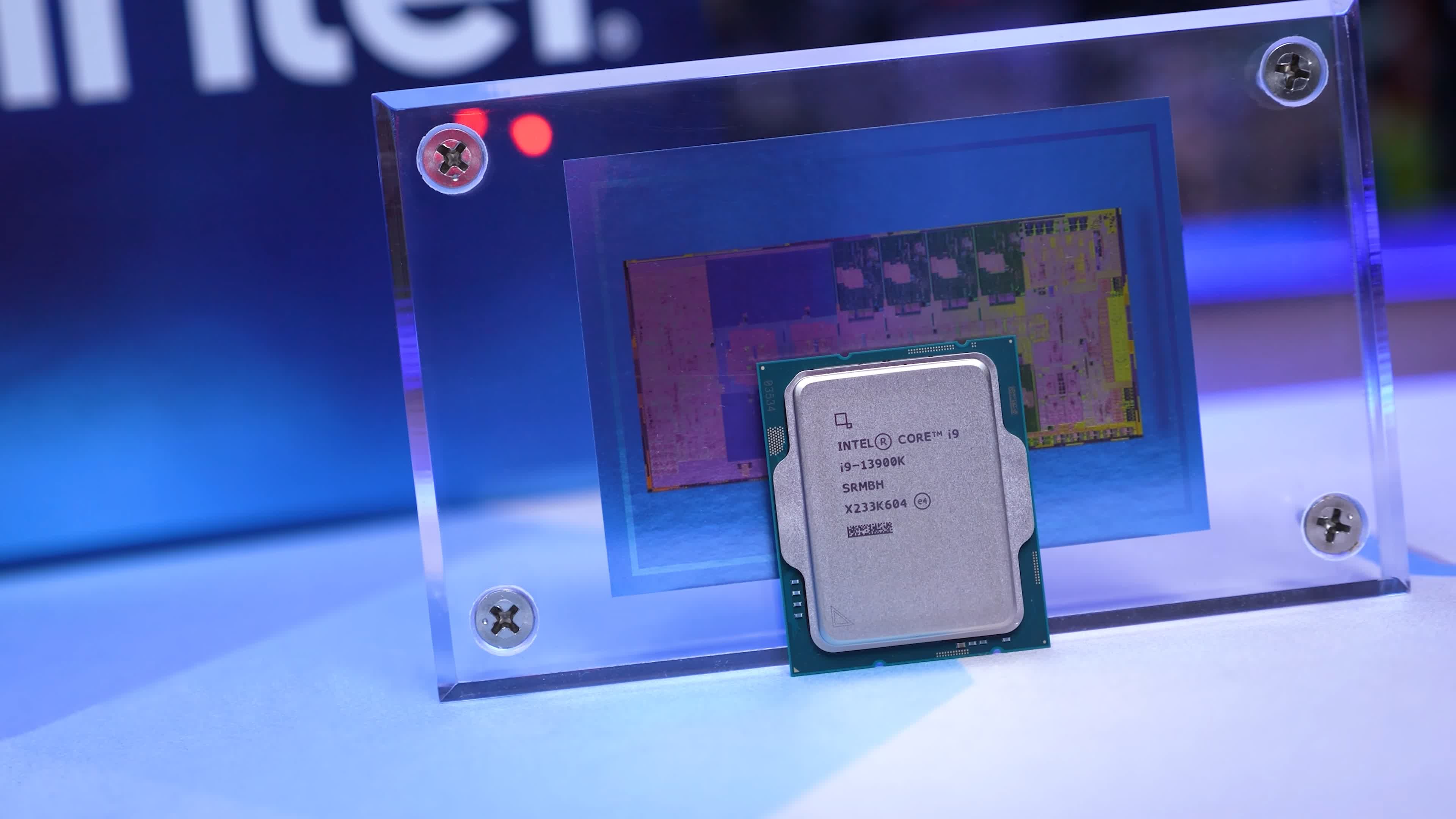
We already did. It wasn't so dramatic, but a cool read nonetheless:
 
9700X has been a huge step up from my 5800X across the board, runs cooler and uses way less power, so stop the game-centric negativity. If you had 7700X sure why would you bother, but that's also trues\ on Intel, who would swap 12700 for 13700 say?

However, when it comes to real work AMD is now in Intel's dust. productivity scores of the 270K are so far beyond the 9700X for less money, it's embarrassing. Unless Zen 6 really can deliver huge productivity improvements and get close to Nova Lake, I'll be switching for sure.
 
I don't understand the results in the first 14 Game Average graph....how did you manage to test with a GeForce RTX 5090 back in 2017?
 
If my memory's correct, it depended on what you were doing. I believe the problem with the those processors was that they shared functions like their floating point processing between cores which added random delays. There's a lot of floating point calculations in games so these processors didn't do so well in the charts. The individual cores also weren't as effective as the cores in something like an Intel 3570K and overclocking the 8 cores FX gave off a lot of heat.

Ofcourse. For any OC'ing of these things you needed a serious beefed up VRM and a cooler that was able to take on 200W up to 250W of heat.

But still, you'd get good value for the money, easy 40% for free. And it did quite well for the 1080p range in regards of games that actually took benefit from multithreading.

That became so much better anyways since the PS4 was released, 8 core jaguar, they really had to start optimizing for multithreading.

The burning VRM's debacle was due to motherboard vendors not keeping up to AMD's spec, which gave AMD a bad reputation.

With ryzen now motherboard vendors HAVE to stick to AMD's recommendations. It means that you can now install a 5950X on the cheapest AM4/AM5 motherboard you can find and it's guaranteed to work.

FX brought me lots of fun; those chips could take a serious beating in regards of voltages. From stock 1.32V up to 1.65V 24/7 lol.

You can't do that now with Ryzens - they would degrade in weeks.
 
I'm sure you were editing for length, but no mention of the 3 and 5 1000 series at all? My first AMD CPU in 7 years of defaulting to Intel was a Ryzen 5 1600x that was pretty impressive compared to the dog Bulldozer was.
 
They tested a 5090 with a CPU that was released from 2017.

Take the 1800X, install it in the necessary MB. Install a 5090 with it and test! Record results and share data points.
Yes, that's what they did and then put the results in the second "14 Game Average [2026 Updated Data]" graph. But the first graph is titled "14 Game Average [2017 Ryzen Review Data]", so these aren't the re-test with the RTX 5090.
 
I'm so old I remember all the old history, you are SPOT on Steven! It was like reading the Gospel of AMD history. hahahaha Great job!

My first AMD CPU was the K6. WAY cheaper than Intel and decent performance. The K6-2 with 3DNOW! (lol) was a great competitor to Intel, those CPU's ran games fine back in the day for a lot less money.
 
Last edited:
AMD really took off after leaving Global Foundries for TSMC with Ryzen 3000 series. By Ryzen 5000 is was an uppercut to Intels chin and they were knocked out for some years, trying to leave 14nm.

Now Intel has been scambling for a few years and generations, 13th and 14th generations having issues and with Arrow Lake being mostly disappointing. Showcasing that not even top tier TSMC tech could give Intel the lead (Arrow Lake is 3nm TSMC).

Nova Lake is going to really important for Intel, in times where AMD dominate in most areas. Intels most crucial release in decades pretty much.

Can't wait to see the battle between Zen 6 3D vs Nova Lake bLLC.

I hope Intel 14A will be a succes, we need a TSMC competitor badly and no-one else probably will be able to even come close to TSMC besides Intel. Samsung I don't trust, they pretty much lie about nanometer to stay in the talk. Think RTX 3000 series on Samsung 8nm which was a renamed 10nm Samsung node and worse than TSMC 12nm in most areas, cheap but very inefficient with bad clockspeeds. AMD came close to Nvidia in this generation (RTX 3000 vs Radeon 7000) mostly due to Samsung node being trash. With RTX 4000/5000 series, Nvidia went back to TSMC and performance per watt skyrocketed. Vastly higher clockspeeds and watt usage was good. Price did raise tho, because TSMC is just more expensive than Samsung. TSMC is top tier.

Regarding platforms,
AM4 was good, mostly saved by Ryzen 5000 and 5000X3D series (for gamers) but AM5 looks to be absolutely great with a huge selection of top tier CPUs all generations with X3D offerings and with Zen 6 we will get a +50% core bump as well + Zen 7 might come to AM5 as well.

AM5 is going to be the GOAT in terms of platforms.

A chip like 10800X3D with 12C/24T could be the one that replaces my 9800X3D in a few years, unless Zen 7 will be AM5 too as some rumours suggest (due to RAM crisis)

Ryzen 5000 was not meant to be AM4 either, so Zen 7 can easily become AM5 in this market. This is 100% fact, people thought and was 100% sure that Zen 3 / Ryzen 5000 would be AM5 untill AMD confirmed it would come to AM4. Same can very easily happen with Zen 7 this generation.

I highly doubt AMD will go AM6 with DDR6 before 2030 at the ealiest. DDR6 is probably 2028 and enterprise will gobble these modules up in the first few years. Pricing will be bad, very bad. Clockspeeds will be mediocre and timings will be off in the first years too. This is always the case with new memory tech.

If Zen 7 is AM5 then people can probably just re-use their current memory. Especially if you go X3D where RAM speed is less crucial for top tier performance.

AMD re-launches 5800X3D due to RAM crisis too. They are 100% aware and would be stupid to abandon AM5 and DDR5 anytime soon.

I wish Intel good luck, because Nova Lake will launch in the middle of this RAM mess. Luckily many can probably re-use their DDR5 memory.

Intel doesn't need ur luck, they're part of the root cause of this mess.
 
I do software development, and before Ryzen, my machine was a 2009 Mac Pro running Linux; initially a Nehalem CPU, upgraded (at what seems to me now to be fabulous expense) to a Westmere. A competent enough computer; the Westmere upgrade was a decent 15? 20? percent improvement, which I thought was a good deal even given the not quite 4 figures I paid for the sucker. Apple had some good people doing cooling at the time, so the machine wasn't held back by anything other than silicon.

After reading about Ryzen in early 2018, I built a 2700X based development box in 2018 for $2500, and some of that (in hindsight) was pissing money away, such as the $483 (!!!!) for 32GB of 3200 MT/s CL14 RAM. (and people moan about DDR5 ramaggedon...) A bargain considering that the Mac Pro had cost me about that much in 2009 when I bought it.

The 2700X was IMO a productivity beast for its time; I got a TON of work out of it. And yet, in 2021, I upgraded the computer to a 5800X (bought on sale!), a slightly fancier mobo and storage, and the same RAM. That machine (and its predecessor) has effortlessly paid the mortgage since its inception. Even now I feel no burning need to upgrade from the 5800X. I beat this computer hard, not just compiling but database testing and benchmarking, and it responds.

Yes, an Intel build today with a Core Ultra Plus (Intel finally got it mostly right) would be more than competitive. That's not the whole point, though; without the 2700X and its successors, I'd be willing to bet that Intel would be offering us a 14 (12?) nm+++++++++++ iteration, at great expense and power consumption, that might not even beat my 5+ year old 5800X.

I'm glad that AMD bet the farm on Ryzen, and I personally am the better for it.

 
I do software development, and before Ryzen, my machine was a 2009 Mac Pro running Linux; initially a Nehalem CPU, upgraded (at what seems to me now to be fabulous expense) to a Westmere. A competent enough computer; the Westmere upgrade was a decent 15? 20? percent improvement, which I thought was a good deal even given the not quite 4 figures I paid for the sucker. Apple had some good people doing cooling at the time, so the machine wasn't held back by anything other than silicon.

After reading about Ryzen in early 2018, I built a 2700X based development box in 2018 for $2500, and some of that (in hindsight) was pissing money away, such as the $483 (!!!!) for 32GB of 3200 MT/s CL14 RAM. (and people moan about DDR5 ramaggedon...) A bargain considering that the Mac Pro had cost me about that much in 2009 when I bought it.

The 2700X was IMO a productivity beast for its time; I got a TON of work out of it. And yet, in 2021, I upgraded the computer to a 5800X (bought on sale!), a slightly fancier mobo and storage, and the same RAM. That machine (and its predecessor) has effortlessly paid the mortgage since its inception. Even now I feel no burning need to upgrade from the 5800X. I beat this computer hard, not just compiling but database testing and benchmarking, and it responds.

Yes, an Intel build today with a Core Ultra Plus (Intel finally got it mostly right) would be more than competitive. That's not the whole point, though; without the 2700X and its successors, I'd be willing to bet that Intel would be offering us a 14 (12?) nm+++++++++++ iteration, at great expense and power consumption, that might not even beat my 5+ year old 5800X.

I'm glad that AMD bet the farm on Ryzen, and I personally am the better for it.
Oh, and lest I forget: the cluster that I use for distributed database work was originally a bunch of 1600X's. A couple of years later I got a deal on a lot of 3500X's, which sped things up by about 30%. The only "bad" thing about the AM4 CPU's was that they had no integrated graphics, other than the G units; the cluster has a bunch of ancient AMD 6450's and nvidia GT710's; and I'm slowly replacing them with 5600G's for roughly the same bottom line throughput and way less hassle with dying GPU's.

(Whinge: there are no discrete GPU's these days that can use passive cooling. I HATE fan noise, and have a collection of fanless GT710's just to run a desktop - all of which are facing oblivion, even in the linux world. AM4 missed the boat on this one, IMO. AM5 got it right with minimal graphics output built in.)

Anyway, the point is that even the 1600X's were willing and able CPU's, with the extra cores making a real difference in my use case.
 
I'm still rocking my 7700X and it is still a fantastic CPU. once the next generation comes out I'll upgrade but for now it still does everything I need it to.
 
Back