After $30 billion in school tech, the laptop classroom experiment may have backfired

Skye Jacobs

Posts: 1,913   +58
Staff
A hot potato: More than two decades after schools began wiring classrooms and handing out laptops, the promise of technology as an educational equalizer is being reconsidered. A generation that grew up swiping, clicking, and typing through lessons is now showing signs of cognitive decline unseen in modern history, according to new scientific testimony and global learning data.
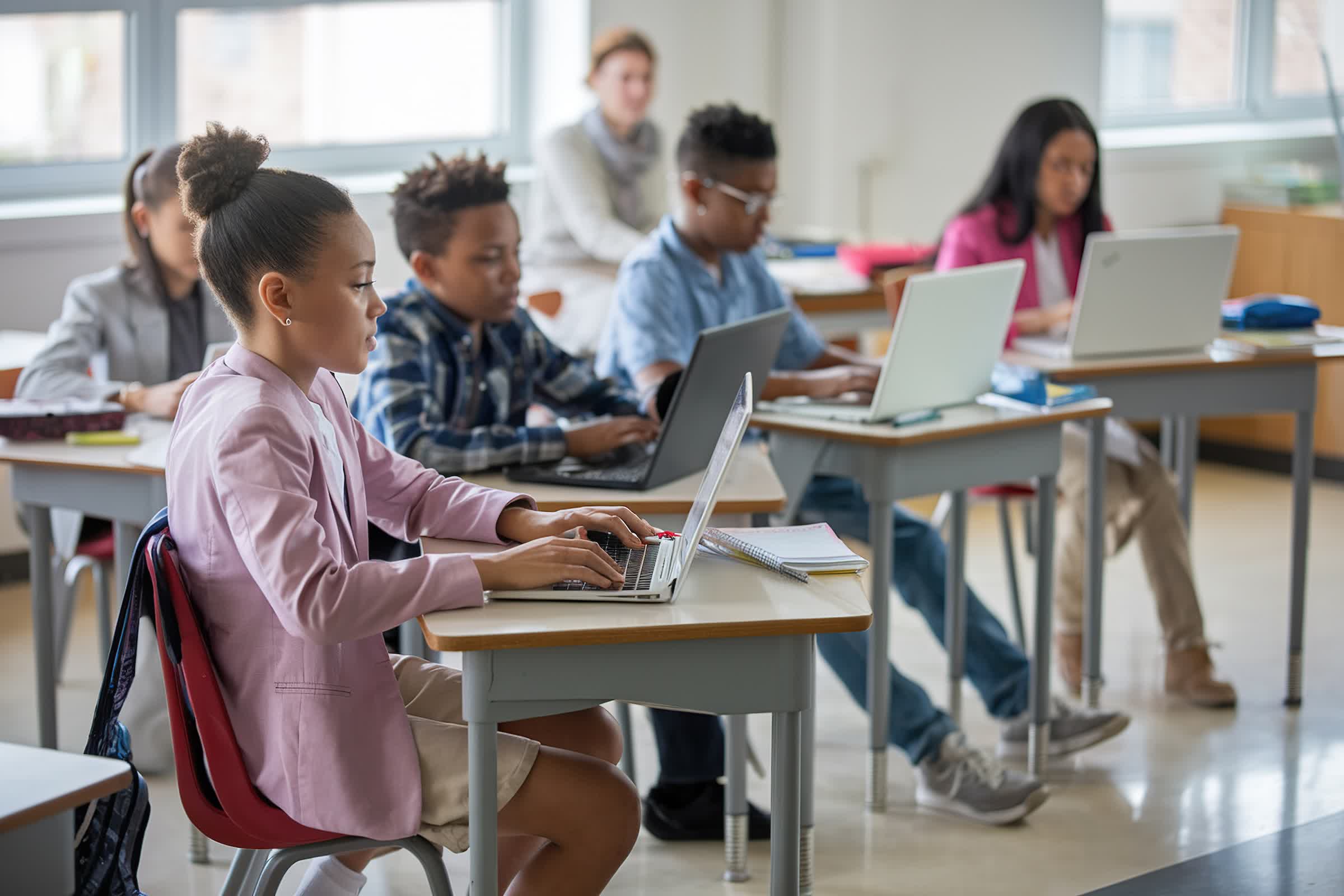
The shift began in Maine in 2002, when then-Governor Angus King launched a program that put Apple laptops in the hands of every middle schooler.

By 2016, that initiative – hailed as a digital revolution in education – had expanded to 66,000 devices. It was a model the rest of the country would come to copy. By 2024, the US had spent more than $30 billion distributing laptops and tablets to students nationwide.

Two decades later, however, educators and neuroscientists are warning that something has gone wrong.

Neuroscientist Jared Horvath points to an inverse relationship between the time students spend on digital devices in school and their academic performance: the more screen exposure, the poorer the results.

In written testimony before the US Senate Committee on Commerce, Science, and Transportation, neuroscientist Jared Cooney Horvath argued that Gen Z is the first modern generation to score lower on standardized tests than the previous one. Those scores, from the OECD's Program for International Student Assessment and other global exams, offer more than a measure of classroom aptitude – they chart a cognitive backslide.
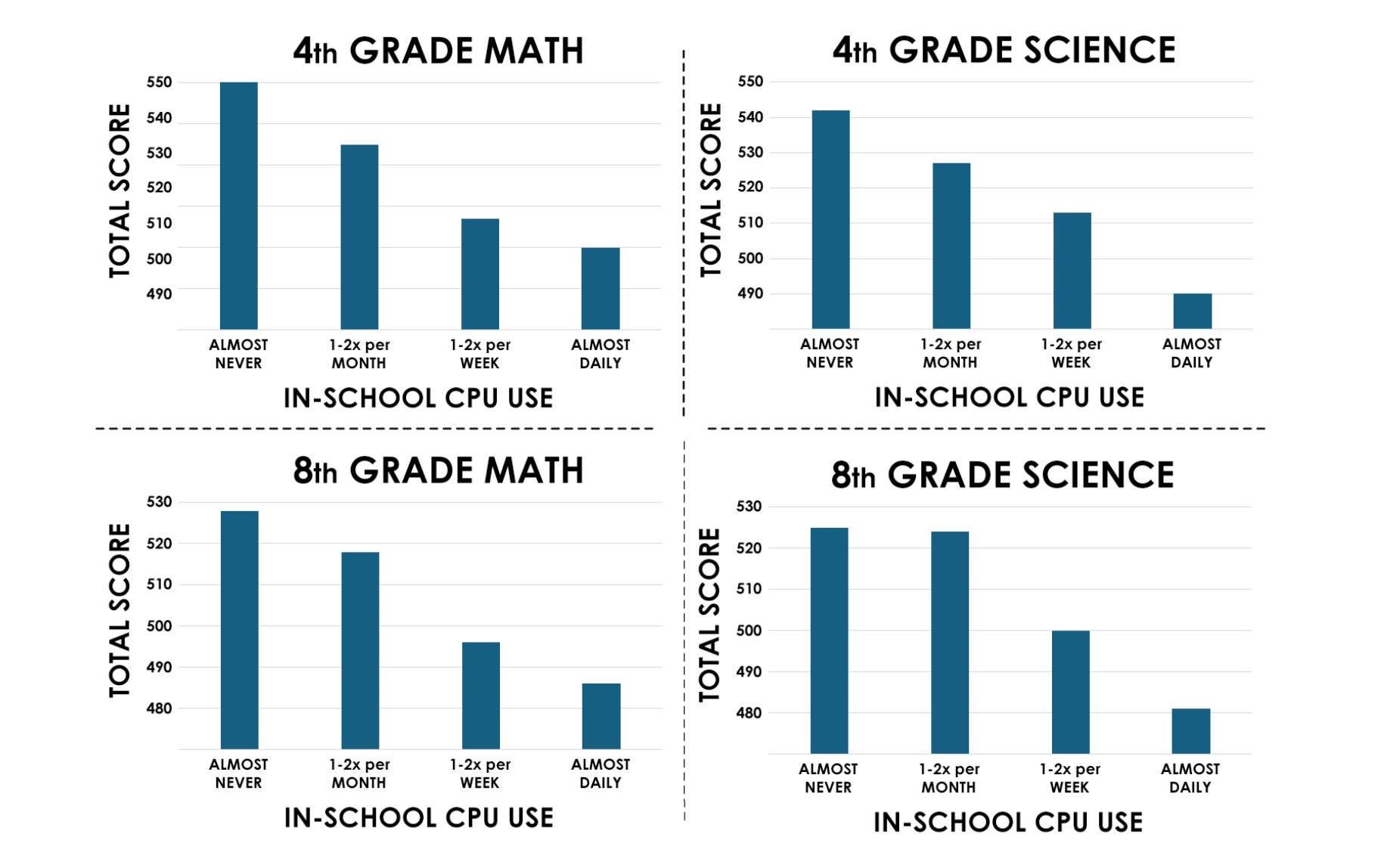
Horvath pointed to an inverse relationship between the time students spend on digital devices in school and their academic performance. The more screen exposure, the poorer the results. While early laptop initiatives aimed to democratize access to information, the constant availability of technology seems to have weakened students' ability to sustain focus and engage in demanding intellectual work.

"This is not a debate about rejecting technology," Horvath wrote in his testimony. "It is a question of aligning educational tools with how human learning actually works. Evidence indicates that indiscriminate digital expansion has weakened learning environments rather than strengthened them."

Evidence of this breakdown surfaced years ago. In 2017, Fortune reported that Maine's public school test scores had stagnated during the 15 years of its laptop program. Then-Governor Paul LePage went so far as to call the initiative a "massive failure," even as state contracts with Apple continued.

The pattern extended beyond Maine. Nationwide, the surge in school-issued devices changed how students worked, and how they didn't. A 2014 behavioral study observing 3,000 university students found that nearly two-thirds of their time on laptops was spent on unrelated activities. The distraction was costly: every interruption, researchers found, delayed refocusing and led to weaker memory formation.

A later survey by the EdWeek Research Center in 2021 found that most K-12 teachers were using educational technology between one and four hours a day, with a quarter reporting five hours or more. The data underscored a paradox: even when digital tools were meant to support learning, they often opened wider paths to distraction.

Horvath is sounding alarms not only about academic outcomes but about humanity's intellectual resilience in the face of complex global challenges. He warns that society cannot afford a generation that struggles to sustain deep attention or wrestle with ambiguity.

"Unfortunately, ease has never been a defining characteristic of learning," Horvath told Fortune. "Learning is effortful, difficult, and oftentimes uncomfortable. But it's the friction that makes learning deep and transferable into the future."

The stakes extend beyond classrooms. A Stanford University study published in 2025 found that generative AI was already reshaping the labor market, disproportionately affecting early-career workers – mostly Gen Z. When education systems fail to cultivate adaptability and higher-order thinking, automation's disruptions hit harder.

Permalink to story:

 
So they were given the tools, didn't complete their work, and this is the fault of the computer? Not the teachers? Not the course designers? Not the undisciplined habits and behavior patterns of said students? It's the presence of the plastics and electronics rotting their brains? May I cite my entire life as evidence to the contrary? Not helpful?
 
Last edited:
Conclusions are meaningless when the data is incomplete…

The average lifespan has gone up in the past 20 years… should we credit those computers?

Stop funding nonsense like this and maybe fund schools/teachers instead?
 
It's not the laptop. It's the teachers and school boards and curriculum

The root problem of the US education system is it's based on rote memorization, rather then application. That's why you see so many flounder coming out of college, since they've never actually "done" anything.

Case in point: Coming out of college (BS in ComSci), the largest program I ever wrote was maybe 1000 lines of code. That's adorable, but not particularly useful. And other majors are much the same way.

The best teacher I ever had in college was my Statistics 1/2 teacher: Every test was open book, and if you got a 90 on every test you were exempt from the final (huge, since Statistics and Math courses had finals the same day). The compromise? The questions were HARD, but based on situations that may arise in reality.

The education system needs to realize in the age of google and AI, if someone doesn't know something they'll just look it up. All the rote memorization does is bore everyone to death, and they check out (like I did at the end of my college career).

Honest question: What will teach students about the American Revolution better: Copying down a bunch of slides, or a 40 minute Oversimplified video? Exactly.
 
Good luck getting the kids that grew up watching CocoMelon on YouTube and endlessly swiping through TikTok the second they get their phone in their hands to pay attention to anything that isn't a 10 second attempt at a serotonin hit.

They researched one factor and drew a conclusion. Betcha it isn't the laptops at fault, or at least not by as much as they make it seem. It's all the brainrot content they consume outside school.
imo if we want things to reverse we need regulations about the type of content kids are allowed to acess. I would say good parenting is the solution but let's face it how are you going to implement that... 80%+ of parents will happily hand their kid a tablet or phone and watch Cocomelon if it means some peace and quiet for themselves.
 
So, big corpos made billions on selling laptops to schools.
In exchange, we got kids educated worse, and not able to think critically, search for sources and so on.

I think corporations won twice, and a new generation of mindless minions is growing nicely. What left is to give them some random, meaningless, but popular sentences to repeat (my commandent! I know at least 2! were there more? ohhh), and they will do well on new cotton fields.
 
So, big corpos made billions on selling laptops to schools.
In exchange, we got kids educated worse..
It isn't the laptops. Go into any school classroom and you won't see students using these laptops -- you'll see them on their smart phones, avidly posting to social media and watching video clips. There are also countless cheat apps available for these students. Point your phone at the test sitting on your desk, snap a photo, and the app will secretly whisper all the answers into your earbud.
 
It isn't the laptops. Go into any school classroom and you won't see students using these laptops -- you'll see them on their smart phones, avidly posting to social media and watching video clips. There are also countless cheat apps available for these students. Point your phone at the test sitting on your desk, snap a photo, and the app will secretly whisper all the answers into your earbud.

Really? That seems odd because most states have enacted regulation to prohibit access to cell phones in classrooms. Maybe the classrooms you hang around in are in Wyoming or South Dakota?
 
Really? That seems odd because most states have enacted regulation to prohibit access to cell phones in classrooms. Maybe the classrooms you hang around in are in Wyoming or South Dakota?
Most states have enacted regulations against violent crimes too. That doesn't prevent it from happening.

Only half the 50 states in the US have full bans on cell phones at school -- and even these states have numerous loopholes, such as allowing students with "special instructional plans" (more than 20% of students in many classrooms) phone usage regardless. Other students get around the ban by bringing a non-functional burner phone to school. They turn in that phone at the start of each school day, keeping their actual phone hidden for use, and communicate with it via smart watch or earbud.
 
Most states have enacted regulations against violent crimes too. That doesn't prevent it from happening.

Only half the 50 states in the US have full bans on cell phones at school -- and even these states have numerous loopholes, such as allowing students with "special instructional plans" (more than 20% of students in many classrooms) phone usage regardless. Other students get around the ban by bringing a non-functional burner phone to school. They turn in that phone at the start of each school day, keeping their actual phone hidden for use, and communicate with it via smart watch or earbud.

Oh. So what you meant is it is more of a hidden thing. Not really as if you go into 'any classroom' and 'see them on their smart phones, avidly posting to social media and watching video clips' then, is it?
 
Pretty much all studies show otherwise, but nevermind.
Studies show that studies are always right.

Meanwhile, we have decades of evidence showing that regardless of funding or tools or organization, we keep getting the same failing results. there is one constant there, teachers, their school boards, and their curriculum.

Hmmmm........
The root problem of the US education system is it's based on rote memorization, rather then application. That's why you see so many flounder coming out of college, since they've never actually "done" anything.

Case in point: Coming out of college (BS in ComSci), the largest program I ever wrote was maybe 1000 lines of code. That's adorable, but not particularly useful. And other majors are much the same way.

The best teacher I ever had in college was my Statistics 1/2 teacher: Every test was open book, and if you got a 90 on every test you were exempt from the final (huge, since Statistics and Math courses had finals the same day). The compromise? The questions were HARD, but based on situations that may arise in reality.

The education system needs to realize in the age of google and AI, if someone doesn't know something they'll just look it up. All the rote memorization does is bore everyone to death, and they check out (like I did at the end of my college career).

Honest question: What will teach students about the American Revolution better: Copying down a bunch of slides, or a 40 minute Oversimplified video? Exactly.
Pretty much this. Nobody knows how to do anything, but boy do they know how to pass standardized tests!

I remember school. I was good at memorization, so most of school was SO. INCREDIBLY. BORING. A gargantuan waste of time. I distinctly remember being in middle school social studies, reading ahead on the world wars and communist revolutions and the fall of the berlin wall, while still answering the teachers random questions because YES, Mrs. whatever your name is, I know who the Cherokee are, we've been over this for 3 years now.

My last two years I went to a skilled trades alternative high school, and had WAY more fun. We had to engage with troubleshooting IT hardware, we had to conduct actual science experiments in chemistry, had to discuss intentions in old texts from different eras in english, and so on. Using your brain as opposed to just memorizing test questions was far more effective, and I've always wondered why TF nobody in the regular school systems does this. I went from middling C grades to straight As, competing in state competitions, and got into a career right out of school with 18 months of an associates degree already done.

Kids need engagement, we are not meant to sit quietly in a school room for 8 hours a day listening to droning old ladies reading from teacher pay teacher PDFs.
 
Pretty much all studies show otherwise, but nevermind.
I have more experience and knowledge than any study done on this. Blame the laptop, blame the firearm, blame the WHATEVER to deflect from the abysmal performance of the American education system and keep the money flowing to the unions.
 
Is there a correlation with other factors? For example, migration.

This reply is a prime example why education has failed many or they have learned nothing.

But how can that be?? After all, the Bible Belt states are passing laws to display the 10 Commandments in every classroom and force the kids to sing the national anthem, that's the essence of great education in the US!! Innit?

Nah, let's blame the laptop instead.
 
How have schools in other countries that also have laptops done education-wise? without a proper comparison this is meaningless. Correlation does not equal causation.
 
Oh. So what you meant is it is more of a hidden thing. Not really as if you go into 'any classroom' and 'see them on their smart phones, avidly posting to social media and watching video clips' then, is it?
No, I meant what I said. The laws you're referring to cover only half the nation, and even in that half, the laws are poorly and unevenly enforced. As one teacher explained it to me, "if I confiscated every phone and wrote up disciplinary slips on every infraction, I'd have zero time left for teaching."
 
Two thirds of university students' laptop time was spent on unrelated activities and researchers treated this as a surprising finding. Every professor, student, and person who has ever sat next to someone in a lecture hall already knew this. We paid researchers to confirm what anyone with eyes could see from three rows back.
 
While Google, Apple, Microsoft, Dell and HP laughed their way to the banks making Billions. this is affecting kids ability to write, coherently, compile sentences or a paragraph. I'm experiencing this daily with my kid.
 
The cruelest irony in this entire story is buried at the end. The generation that was handed devices instead of being taught to think deeply is now the generation getting replaced first by AI. The schools optimized kids for the exact skill set that became obsolete.
 
It's not the laptop. It's the teachers and school boards and curriculum
I concur. I suspect that technology and the Internet has turned teachers into lazy baby sitters who can't think for themselves, are no longer creative in their teaching approach and no longer inspire students. Training of the brain through memorization exercises such as multiplication tables and the names of state capitals is dead. It's too easy to do an Ai search for the answer. But, the kids are well-schooled in how to have safe sex!
 
Last edited:
Back