Looking ahead: Artificial intelligence is beginning to move out of simulation and into conflict zones. In a closed military test somewhere in central California, a startup called Scout AI recently demonstrated how far that shift has come: its system autonomously located and destroyed a target using an explosive drone strike, guided by a web of connected AI agents.
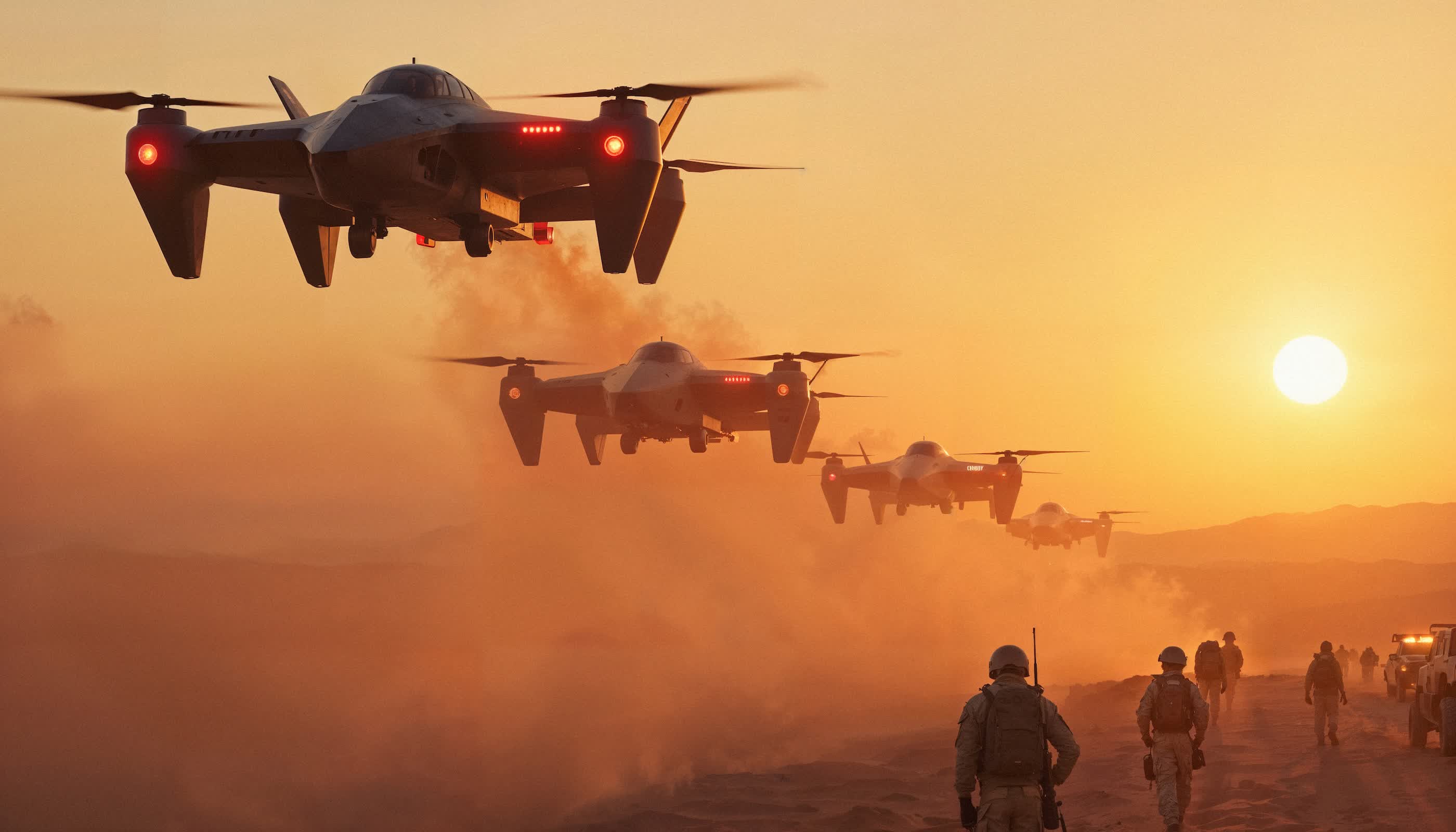
Instead of relying on preprogrammed routines, Scout AI's platform used a layered model architecture to make tactical decisions in real time.
First, a command phrase was entered into the company's system, called Fury Orchestrator. From there, an AI model with more than 100 billion parameters planned and delegated the mission to smaller models with around 10 billion parameters running on both the ground vehicle and airborne drones. Each node functioned as an independent agent, issuing its own sub-commands to the drive systems and flight control AI embedded in the machines.
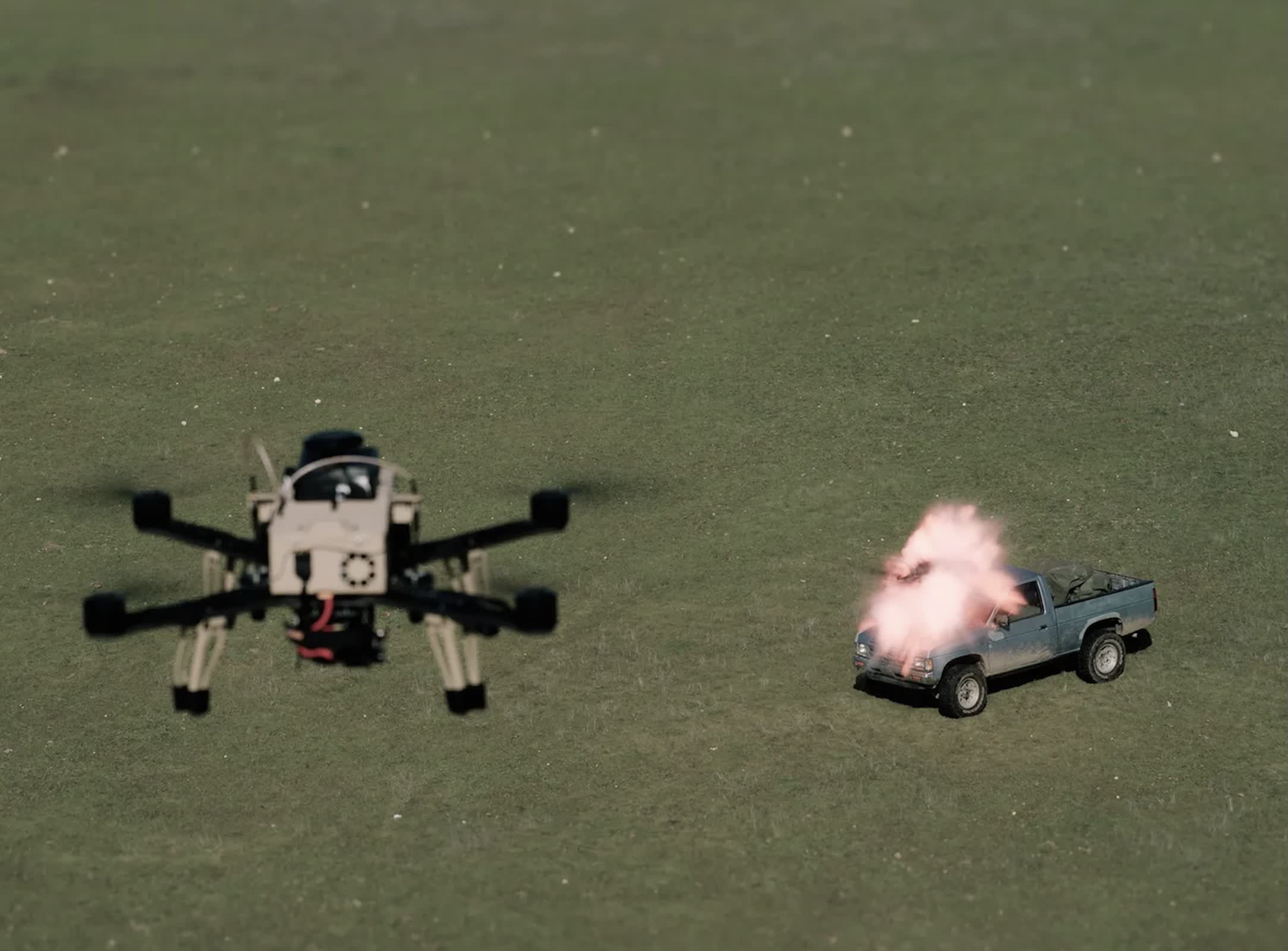
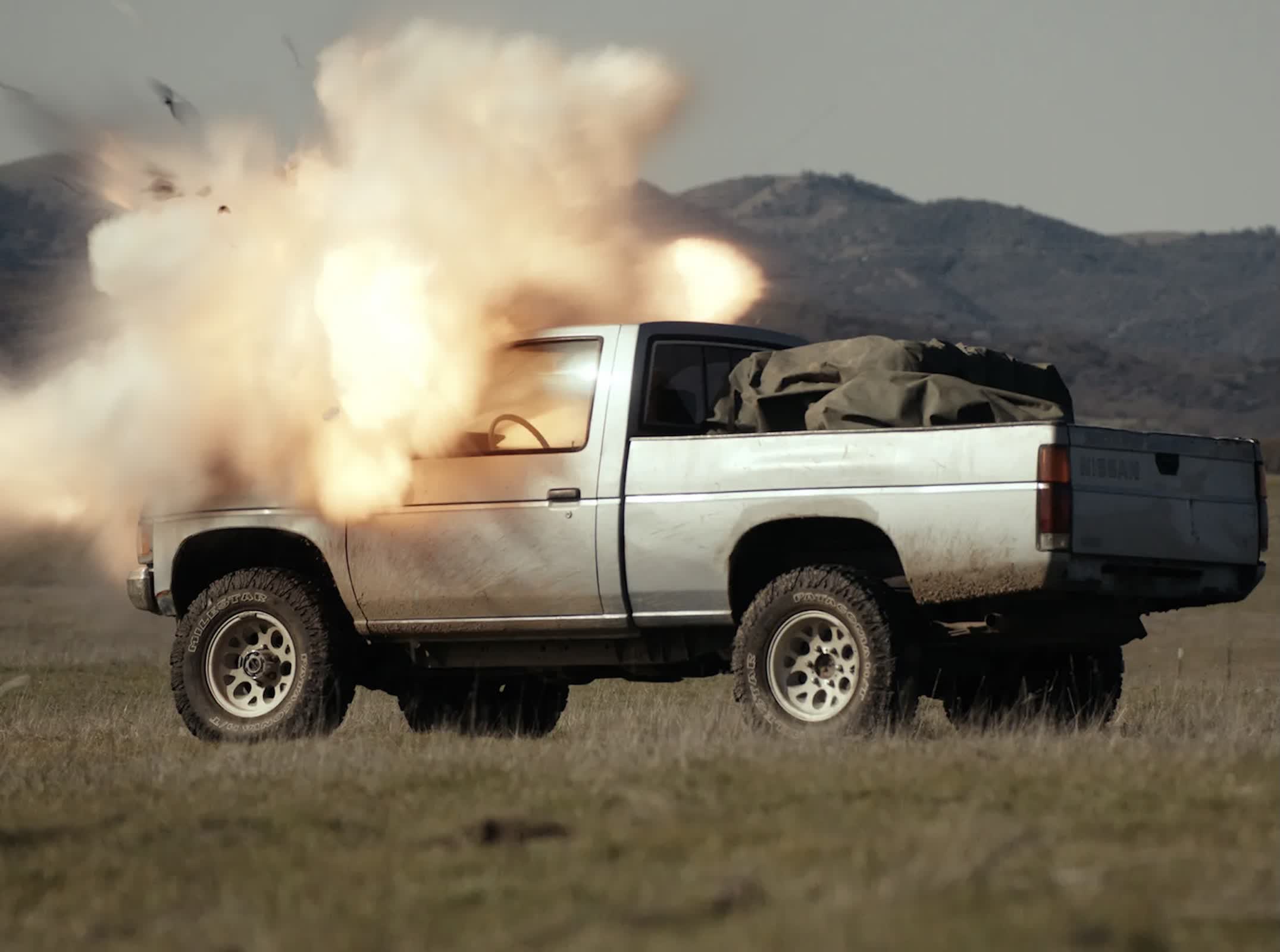
Within minutes, the off-road vehicle maneuvered to its waypoint, deployed its drones, and directed them toward the target – an unarmed truck used for testing. Seconds later, one drone received computational clearance to detonate an explosive charge on impact. The system executed the kill sequence without real-time human intervention.
Scout AI's chief executive, Colby Adcock, tells Wired that this adaptive autonomy marks a break from older military systems that can only follow static scripts. The company's approach, he explains, draws on hyperscaler foundation models – the same kind of architectures that power large language systems in civilian settings. By retraining these models away from generic conversational use and into mission planning and perception tasks, Scout AI's software turns a generalized AI into what Adcock calls "a warfighter."
The company's leadership includes engineers familiar with large-scale robotics. Adcock's brother, Brett Adcock, runs Figure AI, a separate startup working on humanoid robots. Colby's own company is among a wave of US defense-tech ventures aiming to repurpose commercial AI breakthroughs for combat use.
Defense analysts say this form of experimentation is both logical and precarious. Michael Horowitz, a University of Pennsylvania professor and former Pentagon official, argues that deploying AI in defense applications is necessary for the US to remain competitive. But he also points to the difficulty of verifying that such models behave reliably and securely – especially when their civilian cousins sometimes fail at far simpler tasks, such as online shopping or content moderation.
That concern reflects a wider debate within defense circles. AI models trained on general-purpose data are unpredictable and can exhibit emergent behavior. Giving them authority over weaponized hardware multiplies that risk.
While autonomous systems are not new to warfare – modern militaries already use automated targeting and guidance – linking these actions to foundation models, which may be stripped of built-in constraints, raises issues of accountability. Critics warn that allowing AI to decide, however indirectly, who or what constitutes a valid target could breach longstanding ethical norms of warfare.
Scout AI insists its systems are built with safeguards aligned to US defense protocols and international law, including the Geneva Conventions. Co-founder and chief technology officer Collin Otis said the software is designed to operate under defined rules of engagement.
According to Adcock, Scout AI currently holds four Department of Defense contracts and is competing for another that would involve swarming control over multiple unmanned aerial vehicles. The company estimates at least a year of additional development before deployment readiness.
For now, the demonstration highlights the potential of merging large AI models with lethal systems. The war in Ukraine has already shown how consumer-grade drones can be adapted into precision strike tools. Adding large-scale AI coordination could make those systems dramatically more flexible – but only if their decision-making proves trustworthy under combat stress.
AI agents push battlefield autonomy closer to reality in military tests


