AI data centers are delaying Texas housing projects by hiring away electricians

midian182

Posts: 11,708   +177
Staff member
A hot potato: The AI data center gold rush is now colliding with one of Texas' other major problems: a shortage of homes. Builders say projects are taking up to two months longer to complete because data center operators are hiring away the electricians needed to wire new houses, duplexes, and apartments.

According to The Texas Tribune, Abilene builder Gene Lantrip has seen his construction schedules slide since work began on the massive Stargate AI campus nearby.

The 4 million-square-foot project, backed by OpenAI, Crusoe, and Oracle, is part of a wave of facilities spreading across Texas, which already has more than 300 data centers in operation and around 100 more in the pipeline.
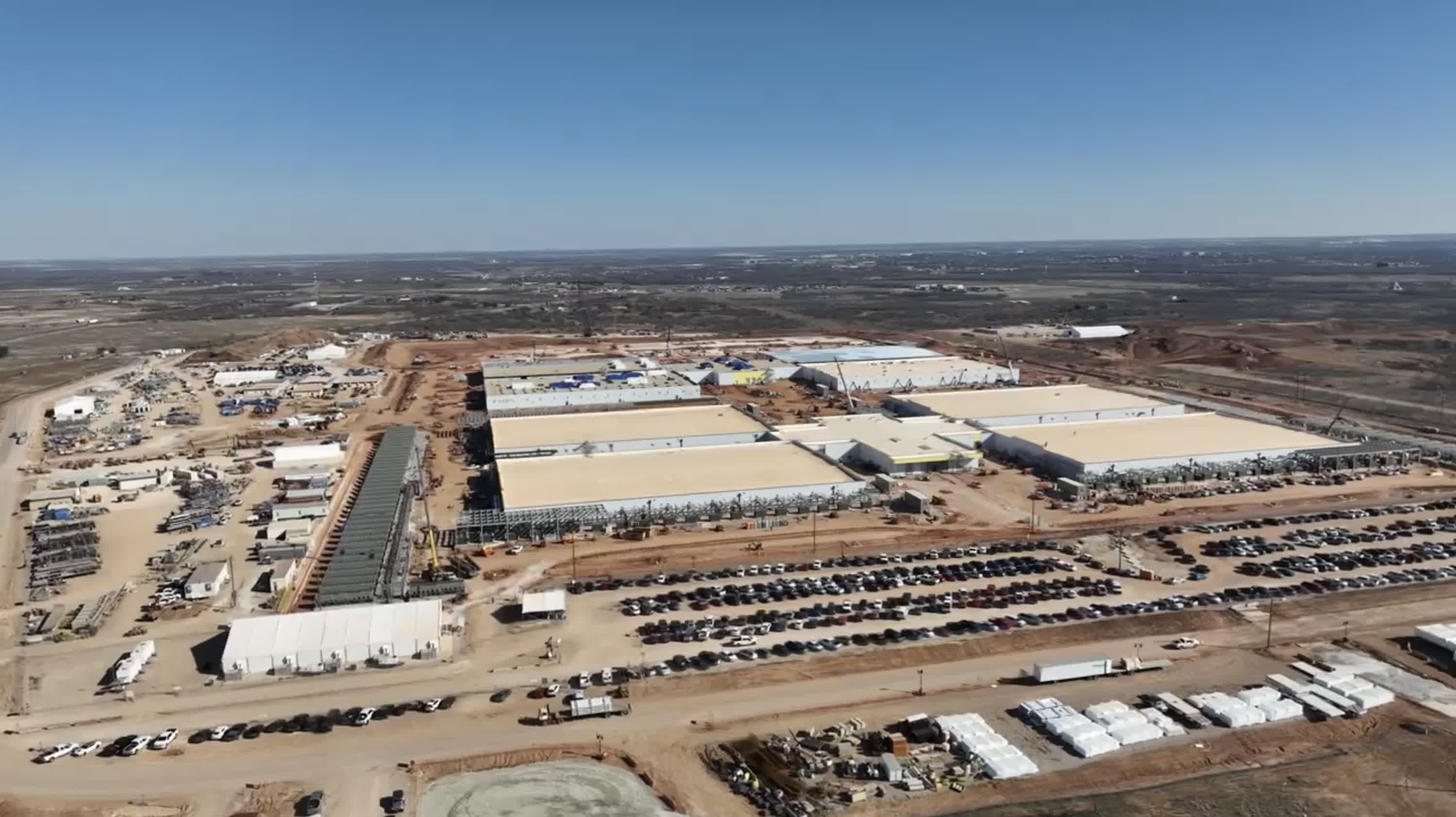
The problem is not that electricians are choosing data centers out of their love of AI; these jobs simply pay more.

Scotty Wristen, owner of WE Electric in Abilene, told the Tribune he can afford to pay workers around $20 an hour. Data center jobs, on the other hand, can offer $35 an hour, plus overtime and per diem benefits. That's a 75% premium, which is difficult for smaller contractors to match.

It's easy to see why the workers are moving. Electrical work can account for 45% to 70% of a data center's entire construction budget, according to the International Brotherhood of Electrical Workers.

These facilities require enormous amounts of power to be distributed safely through buildings packed with power-hungry servers, cooling systems, backup equipment, and networking hardware. A house, unfortunately for builders, cannot compete with an AI campus on margins.

The timing could hardly be worse for Texas. The state has added more than 2.6 million residents since 2020, creating heavy demand for new housing.

At the same time, the electrician workforce is aging. Around 20,000 electricians leave the trade nationwide each year, and one in three is between 50 and 70 years old. Texas has roughly 71,000 employed electricians, but new workers require years of apprenticeship and hands-on experience before they can become licensed.

State officials are trying to ease the squeeze by loosening license-transfer rules. Since November, Texas has made it easier for electricians from Iowa, Alabama, and Arkansas to transfer their licenses, and training programs are expanding. That won't help builders who need homes finished today, of course.

The situation adds another item to the growing list of complaints about AI data centers. Communities have already pushed back over electricity demand, water use, noise, tax breaks, and relatively few permanent jobs.

Permalink to story:

 
Sooner or later the homebuilders will realize that $20/hr for an electrician isn't enough, and they'll raise their rate to be more competitive. It might cost them $1500-3000 more to build a home, but they'll pass that cost on to the consumer. It's maybe 0.4-2% of the total price of the house.
 
We've only been screaming for 30+ years that the skilled trades didnt have enough people and that the problem was only going to get worse.

Well now you have worse.

Even with Gen Z shifting towards skilled trades and away from college, there's just not enough of them to offset the retirements.
 
Good for electricians, good for Texas ..
Places with sane policies have a shortage of everything. They need more professionals, because businesses are pouring in and building stuff. They need more homes because along with businesses, lots of people are pouring in because of the many opportunities.

Compare that with the places where the Luddites are banning datacenters and harassing everyone who tries to manufacture something. It's so ironic that the Luddites practically 100% overlap with the so-called 'progressives', although all the policies they are pushing are totally regressive.
 
Well there is plenty of housing, there is no shortage. If corporations would stop buying up neighborhoods and delisting properties to artificially raise the rent we would be fine. We also need every new apartment building calling itself "luxury" just because it has a room with a treadmill in it calls a gym that Noone uses and charging $3500/m for a 2 bedroom. They built a ton of those in Pittsburgh about 10 years ago and they're mostly empty
 
Well there is plenty of housing, there is no shortage. If corporations would stop buying up neighborhoods and delisting properties to artificially raise the rent we would be fine. We also need every new apartment building calling itself "luxury" just because it has a room with a treadmill in it calls a gym that Noone uses and charging $3500/m for a 2 bedroom. They built a ton of those in Pittsburgh about 10 years ago and they're mostly empty
I'm not an expert by any means, but all that seems totally irrational.
Why would you build a property and keep it 'mostly empty' for 10 years, meanwhile paying taxes, maintenance and stuff, just to raise the rent of the small part that gets rented?
Not to mention that a 'mostly empty' neighborhood feels abandoned and is not attractive, which means you can't raise prices much.
What's the economic logic, because I don't see any.
 
I'm not an expert by any means, but all that seems totally irrational.
Why would you build a property and keep it 'mostly empty' for 10 years, meanwhile paying taxes, maintenance and stuff, just to raise the rent of the small part that gets rented?
Not to mention that a 'mostly empty' neighborhood feels abandoned and is not attractive, which means you can't raise prices much.
What's the economic logic, because I don't see any.
Lower the supply so you can artificially increase demand. Also, there is a tax exemption that allows you to write off investment properties that aren't making money. I bought my first house in 2010 in a Pittsburgh neighborhood called Brentwood for $35,000 cash. It was a common starter neighborhood. The people who own property is public record, you can look it up. Brentwood is now 3/4 empty and owned by 3 different companies. And this is just my town, you should look at what's going on in Atlanta where a single corporate landlord owns over 17,000 properties. They are being forced to sell them under Trumps new law limiting corporate landlords to 3500 properties and the prices in Atlanta have already dropped 20% in the last 3 months.

The housing shortage is a lie just like AI layoffs are a lie.
 
Lower the supply so you can artificially increase demand. Also, there is a tax exemption that allows you to write off investment properties that aren't making money. I bought my first house in 2010 in a Pittsburgh neighborhood called Brentwood for $35,000 cash. It was a common starter neighborhood. The people who own property is public record, you can look it up. Brentwood is now 3/4 empty and owned by 3 different companies. And this is just my town, you should look at what's going on in Atlanta where a single corporate landlord owns over 17,000 properties. They are being forced to sell them under Trumps new law limiting corporate landlords to 3500 properties and the prices in Atlanta have already dropped 20% in the last 3 months.

The housing shortage is a lie just like AI layoffs are a lie.
OK but I still don't get it.
Say I build 100 apartments, and keep 75 of them empty, to get a higher rent for the remaining 25. How is that rational?
If I cut the rent by half, I'll get way more money, providing enough people are OK with this drastically reduced price. If you see a flaw in that logic, explain where exactly it is.
And remember I'm not the only one offering apartments for rent.
 
OK but I still don't get it.
Say I build 100 apartments, and keep 75 of them empty, to get a higher rent for the remaining 25. How is that rational?
If I cut the rent by half, I'll get way more money, providing enough people are OK with this drastically reduced price. If you see a flaw in that logic, explain where exactly it is.
And remember I'm not the only one offering apartments for rent.
You inflate the cost and then you can leverage the inflated cost to get a loan against. Also, debt isn't taxable and when you get a loan against an asset you get stupid low interest rates, like 0.5%.

Buy, inflate, mortgage, repeat.
 
You inflate the cost and then you can leverage the inflated cost to get a loan against. Also, debt isn't taxable and when you get a loan against an asset you get stupid low interest rates, like 0.5%.

Buy, inflate, mortgage, repeat.
That doesn't work.
Why would you get a loan? What would you do with it, build more apartments to keep them empty?
You have to return the loan with an interest, it's not just free money handed to you. Getting a loan is idi0tic if you don't do something profitable with the money, the interest just piles up.
None of this makes sense.
 
That doesn't work.
Why would you get a loan? What would you do with it, build more apartments to keep them empty?
You have to return the loan with an interest, it's not just free money handed to you. Getting a loan is idi0tic if you don't do something profitable with the money, the interest just piles up.
None of this makes sense.
Debt is not taxable. The tax savings is worth more than the interest on the loans when you are leveraging assets for low interest. And the appreciation on the assets exceeds the interest on the loan.
 
Debt is not taxable. The tax savings is worth more than the interest on the loans when you are leveraging assets for low interest. And the appreciation on the assets exceeds the interest on the loan.
Debt may not be taxable, but the interest piles up no matter what.
The appreciation on the assets is nowhere near guaranteed. Assets that stay idle & unused depreciate. Getting a loan to build more stuff that just stays there and gets old without anyone using it is loony.
 
Last edited:
Places with sane policies have a shortage of everything.

What you call 'sane policies' might also be described as bottom feeders leeching on each other as well as on the rest of the nation. Sure, it's pretty decent for big business. Getting worse and worse for actual working people though, with lowered life expectancy because of high crime and obesity rates along with the highest rate of people without health insurance in the entire US.

And then there's that much vaunted absence of state income tax, which is basically cover for one of the most regressive tax systems around. High sales tax and the highest property taxes in the country disproportionally shift the tax burden on lower earners over high income families. But hey at least they occasionally have electricity in their homes. Really, I'm unsure how any of this could be called 'sane'.
 
Debt may not be taxable, but the interest piles up no matter what.
The appreciation on the assets is nowhere near guaranteed. Assets that stay idle & unused depreciate. Getting a loan to build more stuff that just stays there and gets old without anyone using it is loony.


No they don't. Whether it's occupied or not, real estate is a very consistently appreciating asset. And these investment firms that are buying up SFHs are sitting on trillions of dollars in assets. They borrow (from each other) at insanely low interest rates, while controlling the supply of residences (therefore price) in America. When their units go unused, they can write it off against their taxes as a loss. There are a ton of tricks they can play in their favor here.

At the end of the day, fixing this is going to require a shift in tax policy, one which progressively increases tax penalties against owners of multiple residences, with additional, multiplicative penalties against businesses/Nested LLCs and foreign entities owning SFHs in the US. If LLCs and investors want to get in the rental business, their only means of not being penalized *should* be a proof of occupancy.
 
Back