70% of Americans don't want AI data centers near their home, that's more opposition than nuclear plants get

midian182

Posts: 11,726   +177
Staff member
A hot potato: It's no secret that people don't want data centers built near their homes, but the sheer magnitude of these feelings has been revealed in a survey. Seven out of ten Americans say they oppose the construction of these facilities in their communities, with the sites proving even less popular than local nuclear power plants.
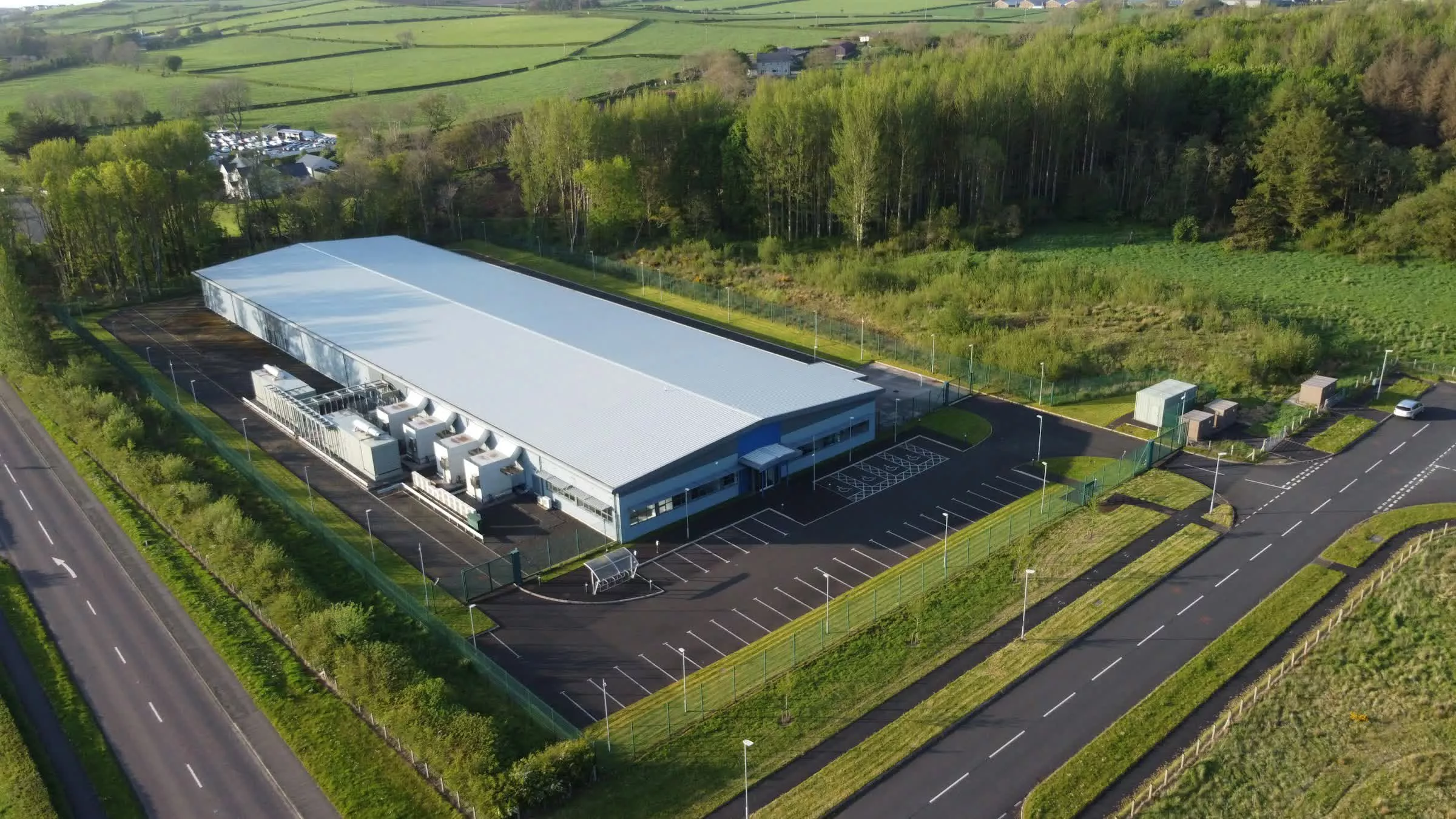
Given the huge number of negative stories about AI data centers, it's little wonder that people are against any being built near them.

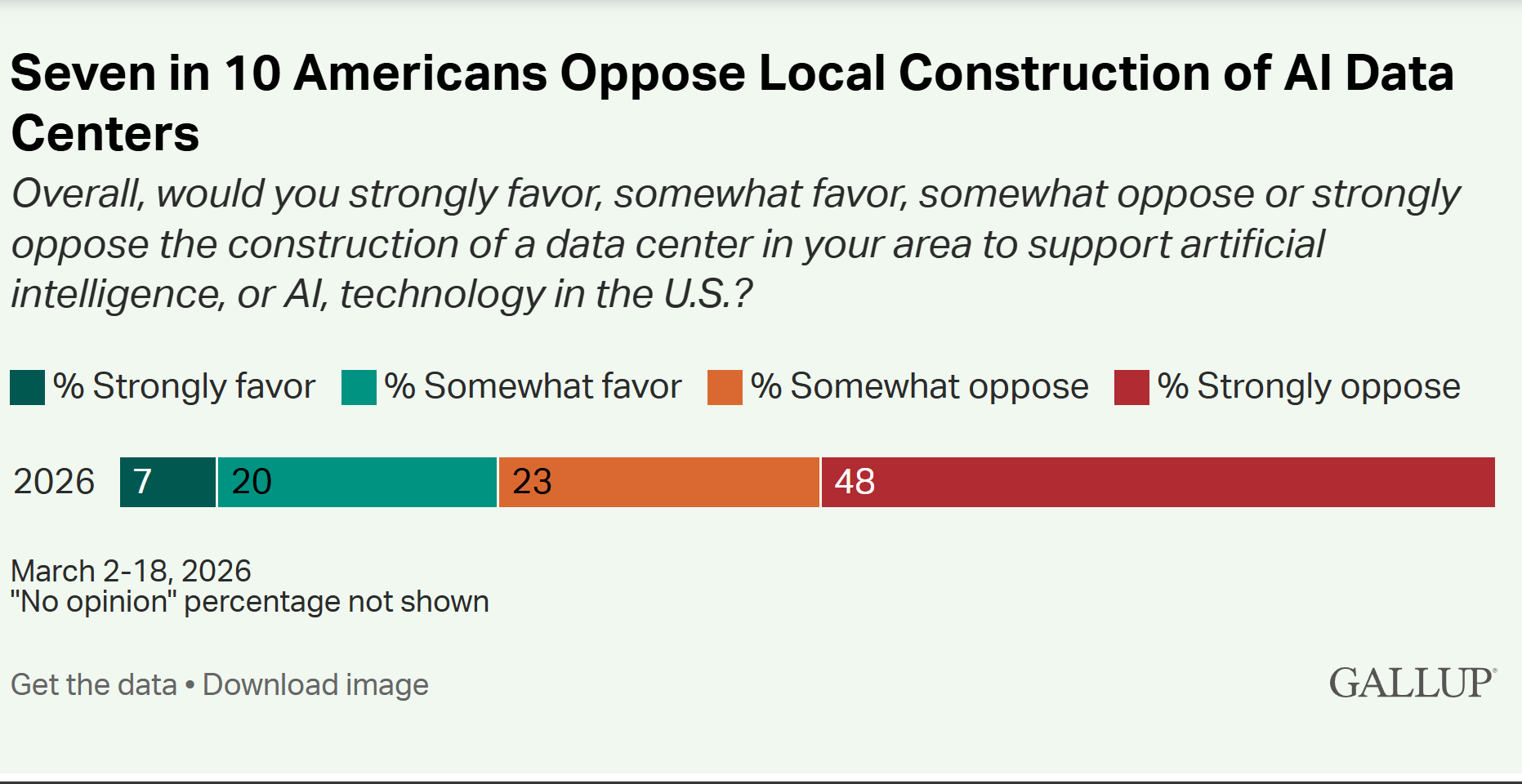
A new Gallup survey shows 70% of Americans oppose constructing data centers for artificial intelligence in their local area, including 48% who strongly oppose them. That's a significant jump from the 47% who opposed these projects in a separate late-2025 survey.
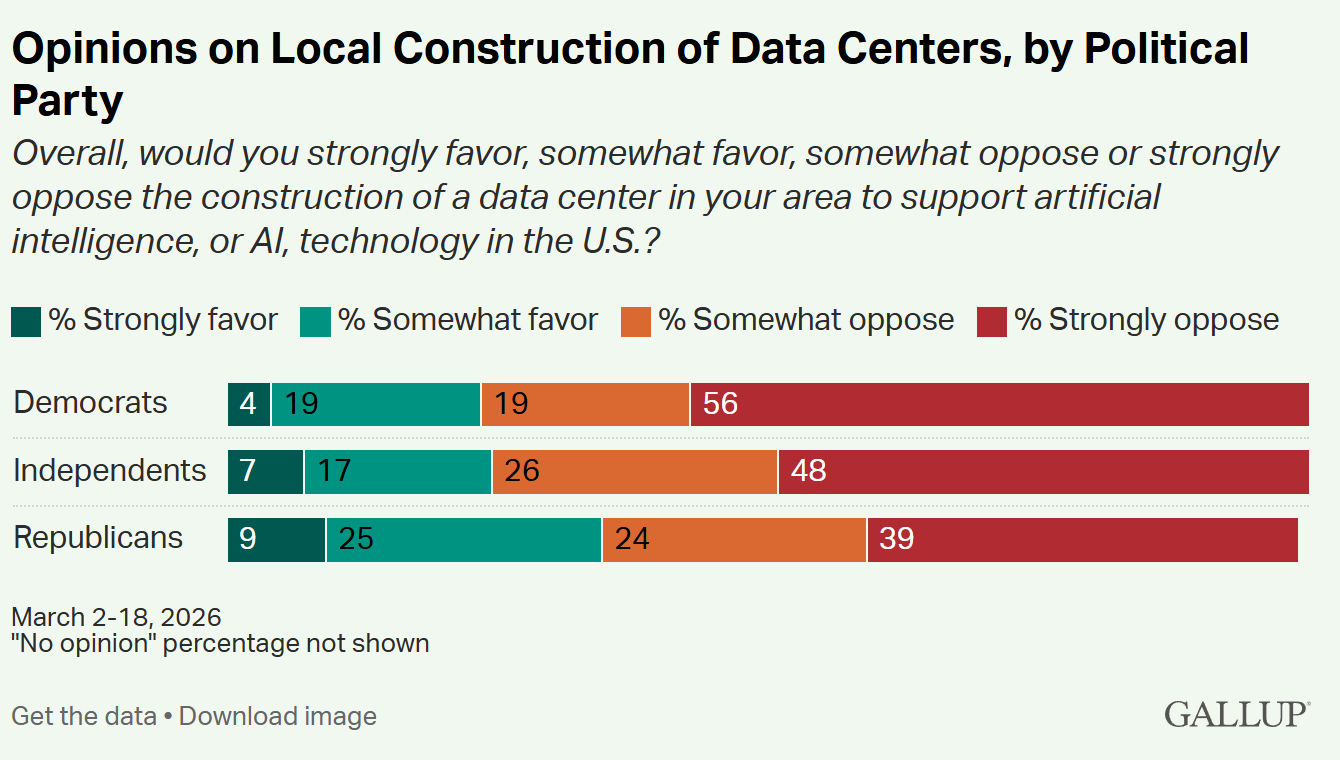
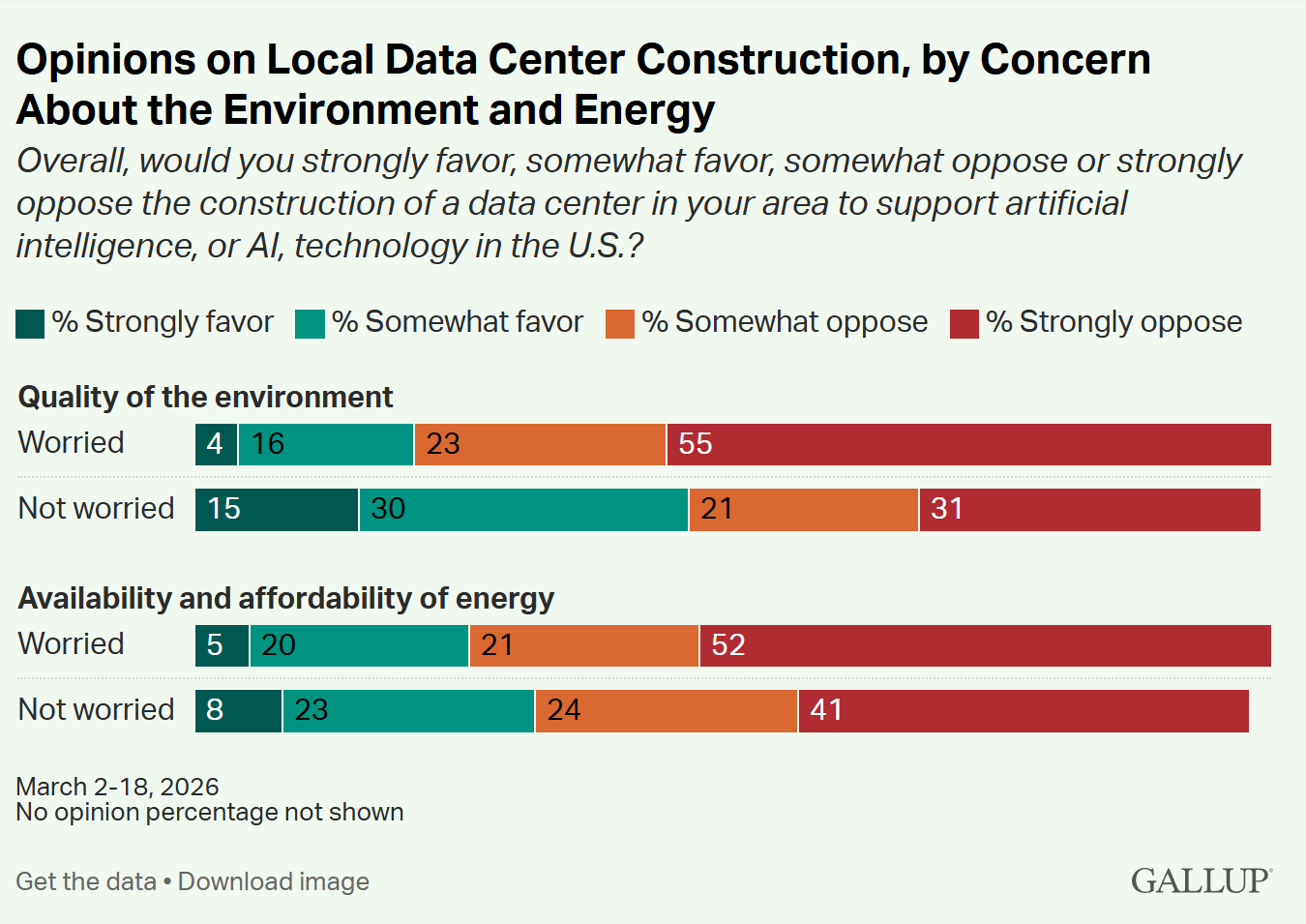
The most-mentioned reason Americans are pushing back against local data centers is the facilities' effect on resources, which was cited by half of opponents. Water and energy consumption scored highest in this section.

These concerns are unsurprising. There have been numerous reports of data centers affecting nearby water supplies. One of the most shocking was a report last year about an Amazon data center that was reportedly linked to rare cancers and miscarriages.

There was also the data center boom in Georgia that sparked water worries and resident backlash, similar concerns around facilities in Virginia, and the recent story of a Fayette County construction site that used 29 million gallons of water without a single bill – all while residents complained of low water pressure.

Other reasons include quality-of-life concerns, effects on costs, pollution, economic effects, and the fact many people just don't like AI – or are scared of it.
For the 27% of participants who favor local data centers, 66% said local economic benefits – job opportunities, specifically – were the biggest factor.

This lines up with findings from a similar survey in January, in which 40% of those surveyed said data centers are mostly bad for the environment and home energy costs, but they also acknowledged the benefits of creating local jobs.

The nuclear comparison is an eye-opener. Gallup found that 53% of Americans oppose a nuclear plant being built near them, well below the roughly seven in ten who oppose an AI data center. Opposition to nuclear plants has never reached the level seen for data centers since Gallup started asking the question in 2001 – the highest has been 63%.
Companies often promise tax revenue, construction work, and permanent jobs when seeking approval for AI data centers, but many residents see enormous, windowless facilities that swallow electricity and water while offering limited benefits once the building work is done.

The pushback is already slowing some projects through regulatory fights, packed public hearings, and local moratoriums. When nuclear plants are the more popular option, convincing communities to embrace AI data centers is going to be a tough sell.

Permalink to story:

 
I mean, who would’ve wanted to?

Even (non-existent) radiation is not so scary compared to angry mob that will torch those places to the ground.
 
I don't want one next door. There is a deinking plant 20 miles away and that's close enough. It's pretty clean and doesn't smell to bad. It's right on the Menominee River. If they want to put a data center there as well OK
 
I don't blame them...I wouldn't want those near my home either.
Mob mentality and open Ignorance is an ugly look.

Obviously people would rather live next to a nuclear power plant than an AI datacenter, because a power plant would mean cheap electricity benefiting residents,instead of a datacenter harming water and air quality, and causing subsonic noise.
Stop spreading disinformation. Datacenters do neither of these things ... except perhaps a little fan noise if you happen to live directly beside one -- and they're certainly far quieter than the average neighbor in most subdivisions.
 
Anther one of those articles .. what a huge surprise!
"enormous, windowless facilities that swallow electricity and water" 🤣

I wouldn't want any sort of industrial facility near my home, indeed. But I don't mind at all a datacenter say 20 miles outside the city limits. In fact, I'm all for it, as most people would. If someone took the effort to clarify what "in your area" meant, you'd see opposition sharply declining as the distance grows. The vast majority of datacenters are not inside residential areas, but most people interpret "in your area" as "in the immediate vicinity of your home". The question is extremely manipulative.

The energy prices are the only real concern here, and it's easily solvable if the red tape around datacenters generating the energy they need is removed - this may lead to lower, not higher energy prices. The real problem is over-regulation.
 

Datacenters do cause unwanted noise you wouldn't want to experience living anywhere near one, just because you cannot hear it or a dB meter doesn't pick it up doesn't mean subsonic noise doesn't exist.
And by the way, the issue is not enough regulation as we've seen cities take backroom deals to build datacenters regardless of representatives voting against it, or energy companies raising rates on the end consumer, even a utlility company shifting away from providing power to residents which will probably happen more as no regulations exists to keep it from happening.
 
And by the way, the issue is not enough regulation as we've seen cities take backroom deals to build datacenters regardless of representatives voting against it, or energy companies raising rates on the end consumer, even a utlility company shifting away from providing power to residents
The endless stream of disinformation continues. The story on this site about a "utility shifting from providing power to residents" was a planned move from 15 years ago, unrelated to datacenters. And while VA's Dominion Energy was hammered for raising electricity rates 24% "because of data centers", they themselves blamed the cost rise on many other factors, and my own utility -- which services exactly zero data centers -- raised rates 19% over the same time period.
 
Don't know the logic behind that though, I would love to have one close, as AI is the wave of the future and I cannot wait until it starts curing literally every single type of ailment from the common cold to cancer as it'll be able to simulate 100's of trillions of possibilities a day until it finds one that works. It'll allow the bypassing of animal testing, as it'll be "proven" enough just by what AI figures out that animal testing won't be needed, which will make people effin' ecstatic. I just don't understand the hate against AI, it literally is only going to get rid of the jobs that no one wants to do anyways and improve our lives in every other way as well.
 
Part of the PR problem is that data centers don’t have obvious local benefits. A factory says we make cars here. A stadium says we host events here. A data center mostly says this giant building is using enough power for a small town so somebody else’s chatbot can generate vacation emails.
 
When nuclear plants are the more popular option, convincing communities to embrace AI data centers is going to be a tough sell.
Fears over nuclear reactors are overblown, the result of fear mongering about the effects of runaway nuclear calamities, when the reactors' safeguards fail, over the last 50 years. I bet most Millennials and Gen Z don't even know why there is a distrust of nuclear. 3-Mile Island happened in the 70s, more than 45 years ago. At best, they are a multibillion dollar, 20-year-long investment with massive dividends―in the form of cheap electricity and minimal upkeep―for decades. At worst, they represent a localized "disaster zone".

Datacenters, on the other hand, couldn't be more relevant in the level of animosity they generate. While they generate temporary jobs, due to all the architecture, wiring and construction required to put them in place, there is basically no long-term upside to their existence. Where, during the Industrial Revolution, the goal of automation was "complementary amplification", now it is "antagonistic substitution": AI does not exist to make people's existing lives easier; that is simply the sales pitch, to get product in the door. The true goal of AI is to make people irrelevant, to prove that the human condition is an inefficiency that can be corrected, with the proper algorithmic or mechanical treatment.
 
Datacenters, on the other hand, couldn't be more relevant in the level of animosity ...there is basically no long-term upside to their existence.
You mean, besides the hundreds of millions of dollars of tax revenues they generate for local communities?
 
We humans are, at best, a 'contrary' bunch.

You can guarantee that 90% of the very folk who are loudly condemning these datacentres on the one hand, are the same folk happily consuming & making liberal use of their output on the other.

A truly paradoxical "contradiction in terms", methinks.....and proving - once again - what a dumb bunch of hicks humans really are. Some things NEVER change.

(*sigh...*)


Miq. 🤨
 
Last edited:
What exactly "makes electricity cheaper"? Please enlighten us.
Gee, I wonder why a facility that generates massive amounts of energy would make electricity cheaper. Hmmmmmm.....This is gonna require a good long thunk. Maybe some brain boosters!

Areas of the US with nuclear power have some of the lowest electricity rates in the country. Nuclear power, in the long run, is amazingly cheap and far cleaner then fossils with none of the up-down issues that solar and wind produce. It can also be scaled to ridiculous levels and built anywhere with enough water.
 
And just like the story from yesterday about the Lake Tahoe residents that will need to find a new power source because the power will be going to a data center.

Lake Tahoe looking for new power source
You're repeating disinformation. That story was false: the utility planned this alteration more than 15 years ago; it has nothing to do with "datacenters", but because CA regulators have made it uneconomic for NV power companies to serve tiny out-of-state communities.

Would LOVE to see some proof behind that flight of fancy. They don't even produce that kind of money for their owners...biggest bubble ever.
It's astonishing how little the anti-datacenter zealots know about their subject. A large datacenter generally pays about $10M a year in property taxes, such as Google's center in The Dalles, Oregon: $9.8M last year. And Google's datacenter in Pryor County OK is credited with increasing the county tax base from $80M to $1B , resulting in a 1200% increase in tax revenue, and transforming their poor hard-scratch school system into the best in the state:


Furthermore, I have zero idea why you denigrate the jobs resulting from these centers as 'temporary'. The entire construction industry is based on "temporary jobs", and when you add $1B in construction work (or in the case of Texas' latest $40B deal for 3 datacenters), it adds an enormous boost to the local economy. Furthermore, a large datacenter generally employs 100+ people in permanent jobs: jobs with salaries far exceeding the local average where they're built.
 
Last edited:
I think it is a fact that data centers uses significant amount of power and water. They are not self sufficient. There is no disinformation on this. Microsoft admitted that they are limited by power to run all the hardware that they have purchased. So a resident will need to compete with big tech for limited resources, which they are almost always on the losing end. While I get it that having a data center may benefit by creating jobs, but it does not benefit everyone in the location equally, if any benefit at all. So will most people like the idea of a data center in their neighborhood? I doubt that.
 
You mean, besides the hundreds of millions of dollars of tax revenues they generate for local communities?
Companies get taxed on profits, not losses. Most AI companies are losing money due to rapid expansion and not getting enough revenue to keep their free cash flow healthy. So I am not sure what you said about "hundreds of millions of tax revenue they generate for local communities" is fact or just your opinion.
 
Back