Amazon demos Project Kuiper's high-speed satellite internet with 1.2 Gbps test

Skye Jacobs

Posts: 1,991   +58
Staff
Bottom line: Project Kuiper enters a market already dominated by Starlink, which has deployed thousands of satellites and built a customer base numbering in the millions, giving it a significant lead. Its demonstration of gigabit-class service shows its technology is capable of competing at the top end of performance, but large-scale rollout remains the critical test.
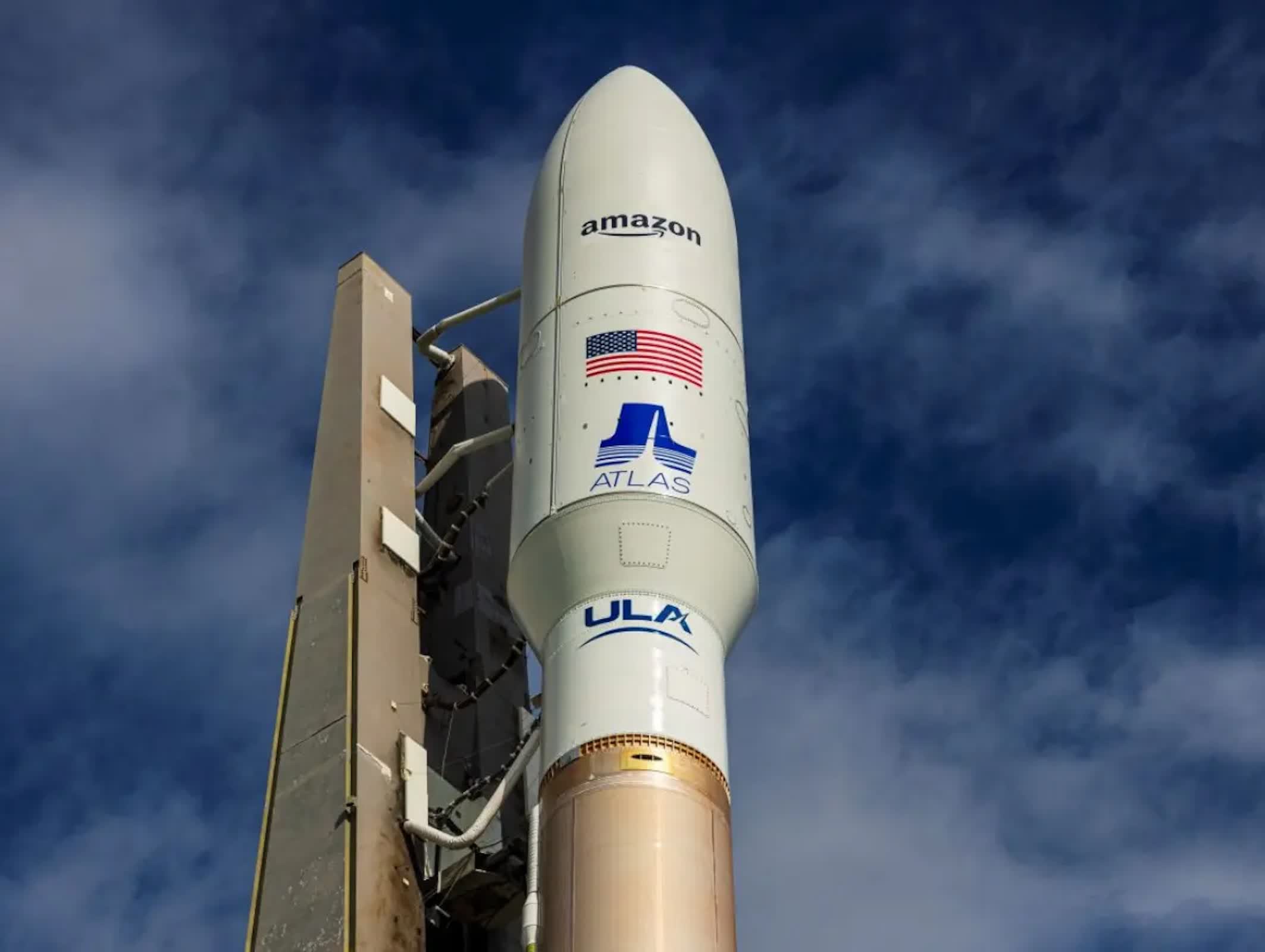
Amazon's bid to bring high-speed broadband from space took a step forward this week when Project Kuiper demonstrated internet speeds above 1.2 gigabits per second during a live test. The performance was achieved using the program's enterprise-grade customer terminal, which recorded a download rate of 1,289 megabits per second on Ookla's Speedtest platform.

Rajeev Badyal, the head of Project Kuiper, described the device as the first commercial phased array antenna capable of sustaining gigabit speeds from low Earth orbit. Amazon has billed the milestone as an early sign of what its satellite network is designed to deliver once it becomes widely available.

The test comes as Amazon accelerates deployment of satellites for the Kuiper constellation, a system that could eventually include around 3,200 spacecraft circling the Earth at low altitudes. More than 100 of those satellites have already reached orbit, with launch activity increasing steadily since the first production models were deployed in April 2025. Under FCC rules, Amazon must have approximately half of the total constellation – roughly 1,600 satellites – in space by mid-2026 to maintain its operating license.

Manufacturing has been established at a facility in Kirkland, Washington, which Amazon claims can produce multiple satellites per day once operating at full capacity. The company has also secured a diverse set of launch providers, including United Launch Alliance, Arianespace, Blue Origin, and SpaceX, its direct competitor in the satellite internet market.

Amazon plans to support Kuiper with three customer terminals, each designed for a different tier of service. The most compact model, measuring approximately seven inches across, is designed to deliver speeds of up to 100 megabits per second.

A standard-sized terminal, measuring less than 4.3 inches square, is expected to reach speeds of nearly 400 megabits per second. At the high end, the enterprise terminal demonstrated in the recent test is designed to provide up to one gigabit per second, with potential applications for businesses and institutions that require higher capacity.

The speeds shown in demonstrations reflect conditions where only a limited number of users share network bandwidth. Once tens of thousands of customers connect to the system simultaneously, overall performance will depend on how effectively Amazon manages satellite capacity and network load.
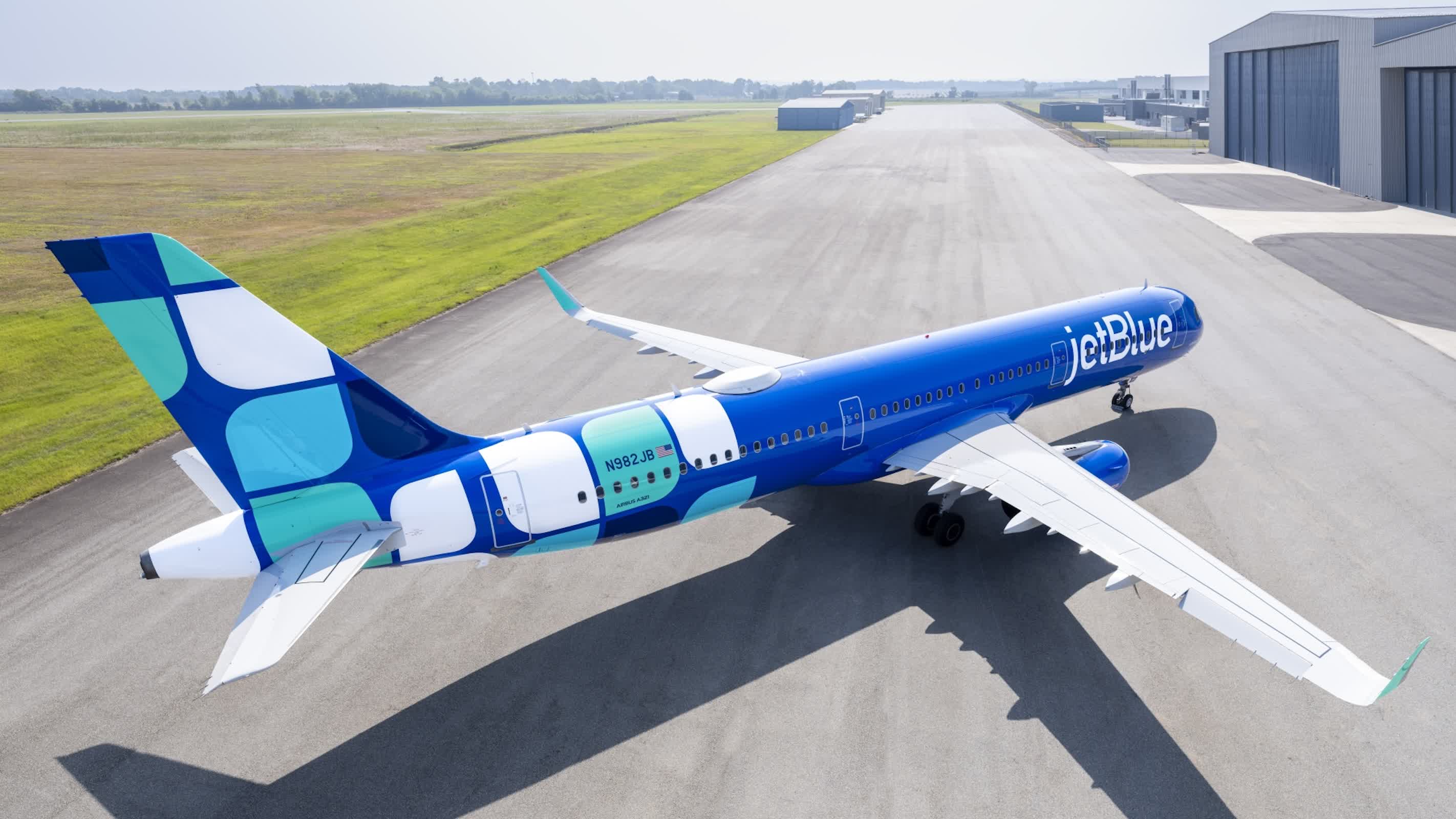
Commercial agreements are beginning to emerge as the constellation expands. JetBlue has announced it will equip its aircraft with Kuiper-based Wi-Fi starting in 2027, with plans to offer the service at no cost to passengers. In Australia, the government-owned operator NBN Co will utilize Kuiper to enhance rural satellite coverage, starting in 2026. Households are expected to receive speeds of up to 400 megabits per second, while enterprise accounts are anticipated to reach speeds of up to one gigabit per second.

In the United States, the project has garnered federal support for expanding broadband access into underserved areas. That includes Wyoming, where Kuiper service is expected to deliver at least 150 megabits per second to communities with limited access to high-speed internet.

Permalink to story:

 
Easier to launch stuff into space than it is to build any sort of infrastructure down here on Earth I guess.

I always figured 99% of rural communities could be served with a 5G cell tower for a fraction of the cost.

I heard the telecos have the local officials in their back pockets so getting any new infrastructure completion is a nightmare.
 
Easier to launch stuff into space than it is to build any sort of infrastructure down here on Earth I guess.

I always figured 99% of rural communities could be served with a 5G cell tower for a fraction of the cost.
Well.....you'd then have to run fiber to all those towers to feed that 5g, which would mean that the backbone is now in place to just run fiber (and the lack of said backbone is the major roadblock to fast internet in the first place). And 5g has terrible range, so you'd need a lot of towers. Those towers also need to be pointed in the right direction, anybody who has tried to have long conversations with someone commuting knows dead spots absolutely do exist and they can cover entire towns. The carriers are not going to build another whole expensive tower for your town of 1200 people, so you wind up boned.

Also, congestion is a real issue, if all your connectivity is going over cell towers those towers are gonna fill up fast. Every consumer, business, media stream, ece will bind up bandwidth quickly. The mm wave that makes 5g so fast and allows a huge number of devices also has super short range, like mm wave 5g for super congested areas measures its range in yards, not miles. The long range 5g is just 4g radio, with all the associated bandwidth restrictions.

They also wont work at all in any rural community with elevation to it, one badly placed hill and your whole town gets cut off. Ask me how I know this.

Starlink has been an absolute gamechanger in these communities.
 
Starlink has been an absolute gamechanger in these communities.
It’s not even Starlink per se, it’s just SpaceX’s launch costs. Starlink was just great foresight, and of course the right engineering. But Amazon and others can and will mass produce similar satellites. Once Starship’s development is finished, we’ll see even more affordable satellite internet phase in. I don’t think satellite internet will ever be as affordable as landlines in urban areas, but it should be pretty reasonable. The competition will only make it better.
 
Well.....you'd then have to run fiber to all those towers to feed that 5g, which would mean that the backbone is now in place to just run fiber (and the lack of said backbone is the major roadblock to fast internet in the first place). And 5g has terrible range, so you'd need a lot of towers. Those towers also need to be pointed in the right direction, anybody who has tried to have long conversations with someone commuting knows dead spots absolutely do exist and they can cover entire towns. The carriers are not going to build another whole expensive tower for your town of 1200 people, so you wind up boned.

Also, congestion is a real issue, if all your connectivity is going over cell towers those towers are gonna fill up fast. Every consumer, business, media stream, ece will bind up bandwidth quickly. The mm wave that makes 5g so fast and allows a huge number of devices also has super short range, like mm wave 5g for super congested areas measures its range in yards, not miles. The long range 5g is just 4g radio, with all the associated bandwidth restrictions.

They also wont work at all in any rural community with elevation to it, one badly placed hill and your whole town gets cut off. Ask me how I know this.

Starlink has been an absolute gamechanger in these communities.

-Ok let me say the same thing a different way: these satellites need power/bandwidth/etc but in space.

Why not take the tech that goes on a satellite, and put it on a tall tower? Most low density flyover states are flat and wouldn't even have mountain/forests etc to block the signal.

Ultimately, Starlink et al are a solution to a red tape problem, they're not an actually pragmatic solution to the engineering problem.
 
Let's see how it works under load. Another good point would be to see if Amazon's sattelite can last longer. I bet each additional day they stay and work on the orbit over their designed period, they save the owners thousands of dollars.
 
-Ok let me say the same thing a different way: these satellites need power/bandwidth/etc but in space.

Why not take the tech that goes on a satellite, and put it on a tall tower?
Because unless that tower tall enough to be in low earth orbit, it would be useless.
Most low density flyover states are flat and wouldn't even have mountain/forests etc to block the signal.
This got a genuine laugh outta me. Tell me you've never been to the midwest without telling me you've been to the midwest.

You dont need a grove of overgown redwoods covering half the county to block the signal. Cell towers are technically line of sight. Anything that sits in line of sight can block the signal, and over long distance that can be a single story building, or a metal bridge in the right place. If what you are saying was true, deadspots would not exist in the midwest.
Ultimately, Starlink et al are a solution to a red tape problem, they're not an actually pragmatic solution to the engineering problem.
This is where you're wrong. 5g mm wave is totally useless in a rural setting, and the low bands that can support long distance are unable to carry the bandwidth needed to support even small communities (if they did work well, said communities would have switched by now). Building sufficient radio towers and their supporting infrastructure is economically infeasible, which is why the carriers have said as much and not done what you are proposing for a very long time now.

The least pragmatic solution is cell towers for covering large areas. Over such distances low earth orbit satellites are more economical and cover far larger areas. Starlink has proven to be viable, which is why it has been a revolution in rural communities where cell towers were insufficient (which is why Musk proposed the idea int he first place. Market opportunity).

And red tape...buddy, if you think local building regulations are annoying, let me introduce you to the red tape that is getting the government to approve you launching thousands of LEO satellites around the globe, and implementing a system to track all of them, make sure they dont hit each other, or anything else, and can de orbit properly, and dont interfere with airline or military communications. That's like running a marathon because walking down the street is too annoying.
 
Because unless that tower tall enough to be in low earth orbit, it would be useless.

This got a genuine laugh outta me. Tell me you've never been to the midwest without telling me you've been to the midwest.

You dont need a grove of overgown redwoods covering half the county to block the signal. Cell towers are technically line of sight. Anything that sits in line of sight can block the signal, and over long distance that can be a single story building, or a metal bridge in the right place. If what you are saying was true, deadspots would not exist in the midwest.

This is where you're wrong. 5g mm wave is totally useless in a rural setting, and the low bands that can support long distance are unable to carry the bandwidth needed to support even small communities (if they did work well, said communities would have switched by now). Building sufficient radio towers and their supporting infrastructure is economically infeasible, which is why the carriers have said as much and not done what you are proposing for a very long time now.

The least pragmatic solution is cell towers for covering large areas. Over such distances low earth orbit satellites are more economical and cover far larger areas. Starlink has proven to be viable, which is why it has been a revolution in rural communities where cell towers were insufficient (which is why Musk proposed the idea int he first place. Market opportunity).

And red tape...buddy, if you think local building regulations are annoying, let me introduce you to the red tape that is getting the government to approve you launching thousands of LEO satellites around the globe, and implementing a system to track all of them, make sure they dont hit each other, or anything else, and can de orbit properly, and dont interfere with airline or military communications. That's like running a marathon because walking down the street is too annoying.

-*Sigh* I'll answer all of this with another question: Can the low density rural population support Starlink et al with subs sans a government cheddar?
 
When was the last time a game adapted into a movie was good?
It is like they set their main goal to make it as bad as possible. I liked the 6 RE movies with Mila. It did not try to do one of those things perverted Hwood is into today, it was just dumb fun and zombies.
That is what game adaptations should be. And that is what could earn their makers money just like those 6 RE movies did. Instead, they prefer to make poison, movies so bad that you can't even watch them drunk.
 
Well.....you'd then have to run fiber to all those towers to feed that 5g, which would mean that the backbone is now in place to just run fiber (and the lack of said backbone is the major roadblock to fast internet in the first place). And 5g has terrible range, so you'd need a lot of towers. Those towers also need to be pointed in the right direction, anybody who has tried to have long conversations with someone commuting knows dead spots absolutely do exist and they can cover entire towns. The carriers are not going to build another whole expensive tower for your town of 1200 people, so you wind up boned.

Also, congestion is a real issue, if all your connectivity is going over cell towers those towers are gonna fill up fast. Every consumer, business, media stream, ece will bind up bandwidth quickly. The mm wave that makes 5g so fast and allows a huge number of devices also has super short range, like mm wave 5g for super congested areas measures its range in yards, not miles. The long range 5g is just 4g radio, with all the associated bandwidth restrictions.

They also wont work at all in any rural community with elevation to it, one badly placed hill and your whole town gets cut off. Ask me how I know this.

Starlink has been an absolute gamechanger in these communities.
I agree. Space solutions are more promising
 
As long as the price to the customer is right, I'm in a positive mood about LEO cellphone/internet. When I bought my current house in rural France pretty much my only requirement was that I would be able to get connected to broadband internet. The answer was Yes. I got connected, by copper land-based ordinary phone cable. Now there is a national push to get all the old networks replaced by Fibre. That means as soon as the fiber reaches an area, the old copper system will be ripped out. I asked what if Fiber doesn't arrive? They say I will have to get my internet via a cellphone. Although there is a tower just a few KM away, I am in the shadow of a hill. I will soon be unable to access the 'net unless I cough up the cash for Starlink. At least Amazon's new array may provide enough competition to force prices to the customer down enough to be affordable.
 
When was the last time a game adapted into a movie was good?
It is like they set their main goal to make it as bad as possible. I liked the 6 RE movies with Mila. It did not try to do one of those things perverted Hwood is into today, it was just dumb fun and zombies.
That is what game adaptations should be. And that is what could earn their makers money just like those 6 RE movies did. Instead, they prefer to make poison, movies so bad that you can't even watch them drunk.

Wrong article.
 
Back