
Bottom line: Project Kuiper enters a market already dominated by Starlink, which has deployed thousands of satellites and built a customer base numbering in the millions, giving it a significant lead. Its demonstration of gigabit-class service shows its technology is capable of competing at the top end of performance, but large-scale rollout remains the critical test.
Amazon's bid to bring high-speed broadband from space took a step forward this week when Project Kuiper demonstrated internet speeds above 1.2 gigabits per second during a live test. The performance was achieved using the program's enterprise-grade customer terminal, which recorded a download rate of 1,289 megabits per second on Ookla's Speedtest platform.
Rajeev Badyal, the head of Project Kuiper, described the device as the first commercial phased array antenna capable of sustaining gigabit speeds from low Earth orbit. Amazon has billed the milestone as an early sign of what its satellite network is designed to deliver once it becomes widely available.
The test comes as Amazon accelerates deployment of satellites for the Kuiper constellation, a system that could eventually include around 3,200 spacecraft circling the Earth at low altitudes. More than 100 of those satellites have already reached orbit, with launch activity increasing steadily since the first production models were deployed in April 2025. Under FCC rules, Amazon must have approximately half of the total constellation – roughly 1,600 satellites – in space by mid-2026 to maintain its operating license.
Manufacturing has been established at a facility in Kirkland, Washington, which Amazon claims can produce multiple satellites per day once operating at full capacity. The company has also secured a diverse set of launch providers, including United Launch Alliance, Arianespace, Blue Origin, and SpaceX, its direct competitor in the satellite internet market.
Amazon plans to support Kuiper with three customer terminals, each designed for a different tier of service. The most compact model, measuring approximately seven inches across, is designed to deliver speeds of up to 100 megabits per second.
A standard-sized terminal, measuring less than 4.3 inches square, is expected to reach speeds of nearly 400 megabits per second. At the high end, the enterprise terminal demonstrated in the recent test is designed to provide up to one gigabit per second, with potential applications for businesses and institutions that require higher capacity.
The speeds shown in demonstrations reflect conditions where only a limited number of users share network bandwidth. Once tens of thousands of customers connect to the system simultaneously, overall performance will depend on how effectively Amazon manages satellite capacity and network load.
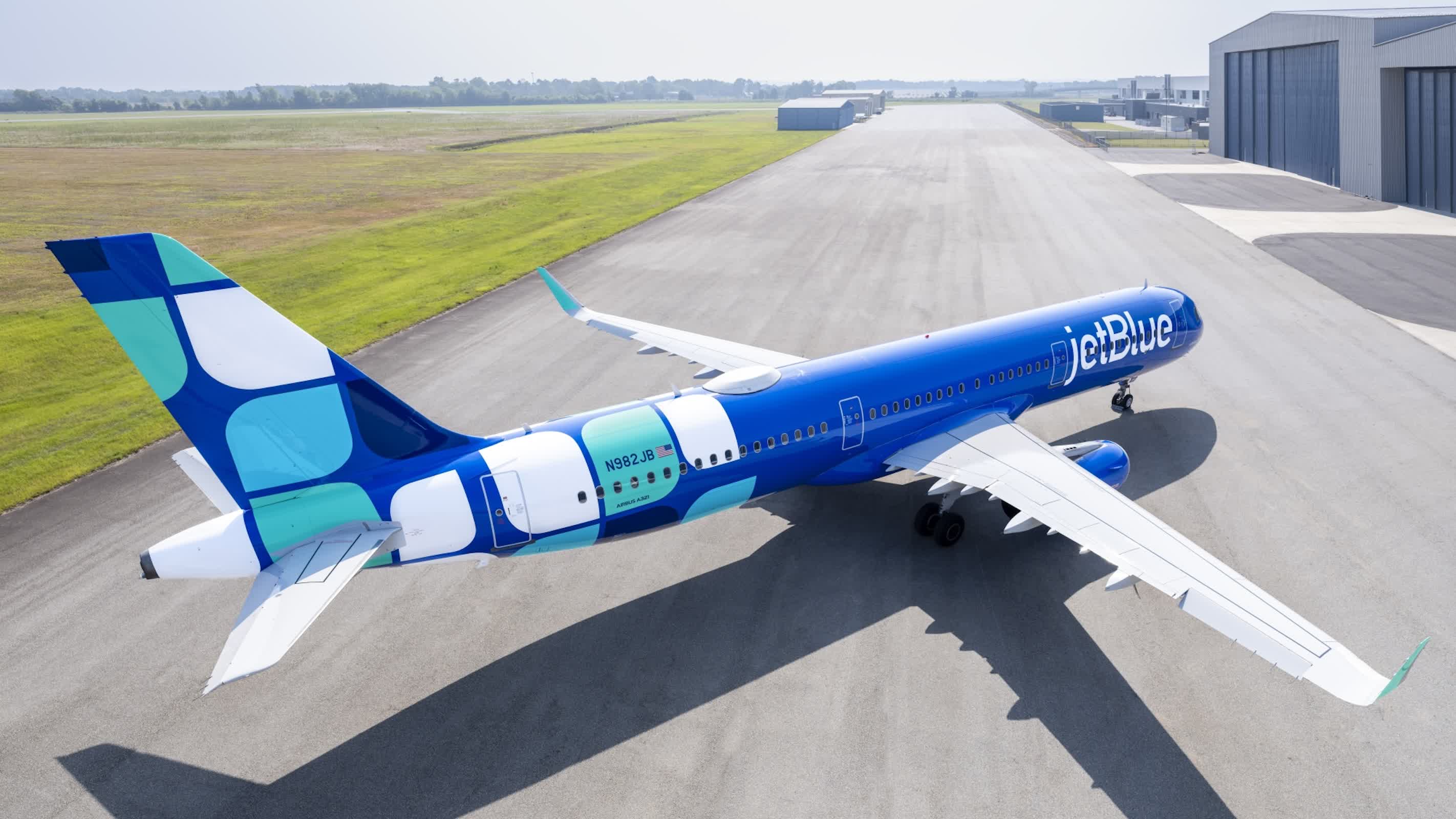
Commercial agreements are beginning to emerge as the constellation expands. JetBlue has announced it will equip its aircraft with Kuiper-based Wi-Fi starting in 2027, with plans to offer the service at no cost to passengers. In Australia, the government-owned operator NBN Co will utilize Kuiper to enhance rural satellite coverage, starting in 2026. Households are expected to receive speeds of up to 400 megabits per second, while enterprise accounts are anticipated to reach speeds of up to one gigabit per second.
In the United States, the project has garnered federal support for expanding broadband access into underserved areas. That includes Wyoming, where Kuiper service is expected to deliver at least 150 megabits per second to communities with limited access to high-speed internet.