Bottom line: AMD's Instinct accelerators and Epyc server processors pushed the company's third-quarter 2026 revenue to a record $13.4 billion, up 97% from a year earlier. The quarter showed how quickly AMD is becoming an AI infrastructure company, while the demand behind that shift is hurting the consumer hardware side of its business.
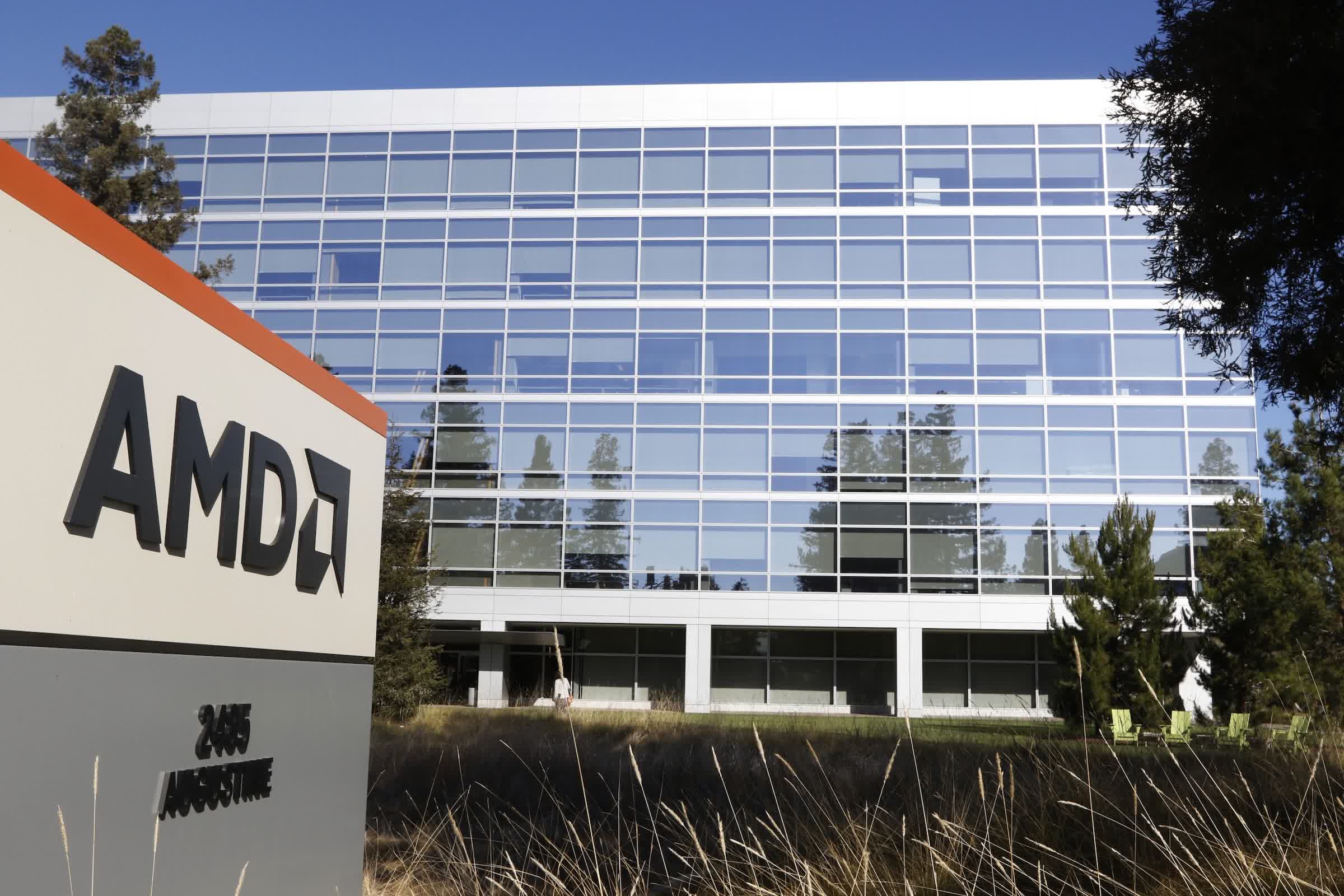
The data center segment, which includes both product lines, produced $8.5 billion of the total, or about 63% of net revenue. AMD expects to set another record next quarter with about $17 billion in revenue.
AMD's gaming revenue fell 40% from a year ago to $773 million, as AI data centers buy up memory and other components and push up prices on the PCs and consoles that use AMD chips.
CEO Lisa Su called the quarter "the largest and most profitable in our history" on Tuesday's earnings call. She said AMD expects revenue to "grow more than 80% in 2027," and added that "data center will be the largest contributor."
CFO Jean Hu went further when asked about the company's revenue mix. "Looking ahead of 2027, we actually think our data center business will be more than 80% of total company revenue," she said.
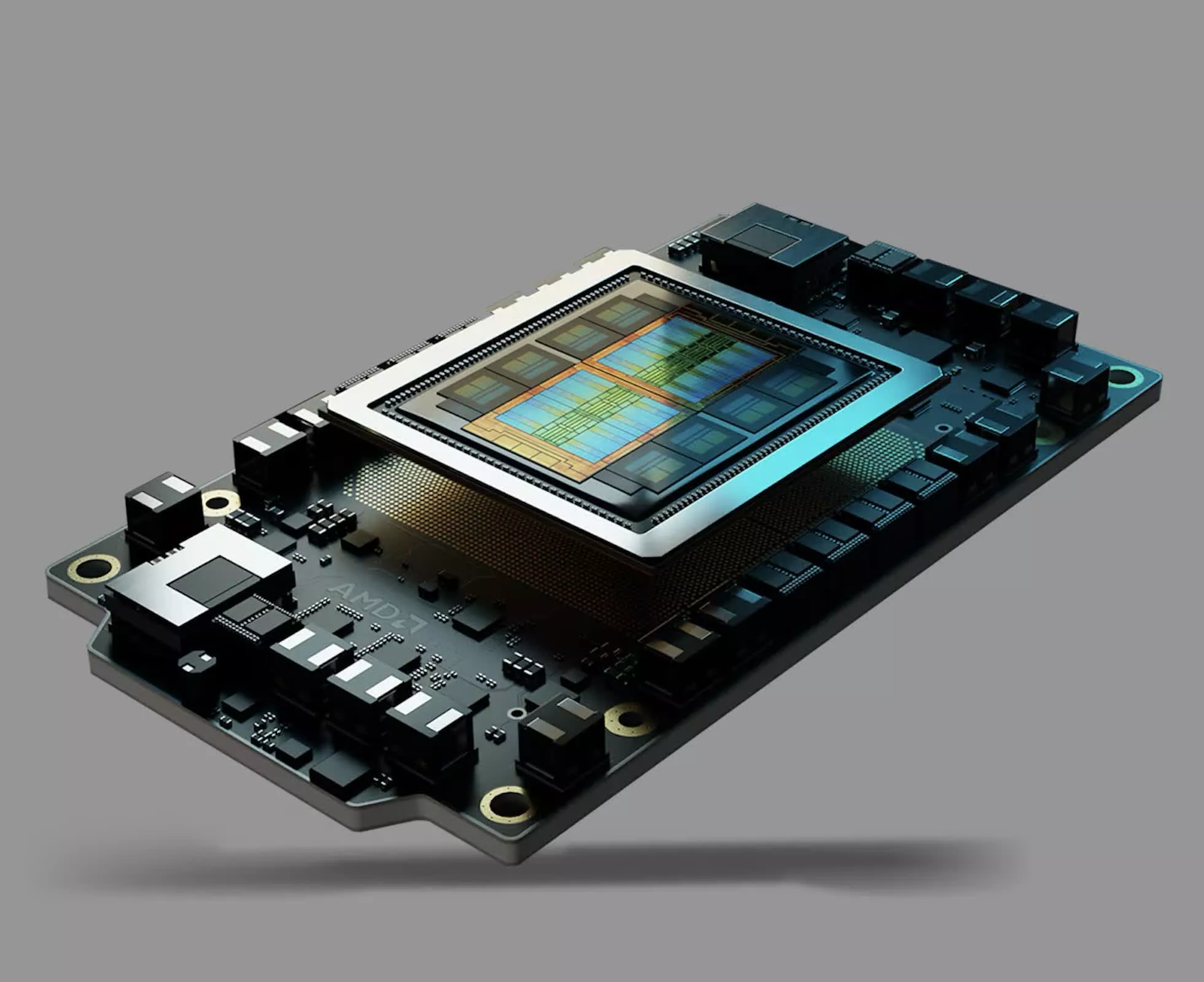
The numbers already point that way. AMD's total revenue rose $1.9 billion from the second quarter, and $1.8 billion of that came from its data center business. For the past couple of years, the company's overall growth has closely followed its server and accelerator sales.
AMD's combined Client and Gaming segment brought in $3.7 billion, down 8% from a year earlier. The Client business, which sells Ryzen processors, grew 7% to $2.9 billion. AMD said that growth came mainly from strong sales of Ryzen mobile processors for laptops and mini PCs. Its desktop processors and graphics cards, which have been hit by higher memory and component costs, did not drive the gain.
The gaming decline came from lower semi-custom and graphics revenue. Semi-custom covers the chips AMD designs for Sony's PlayStation 5 and Microsoft's Xbox Series X|S. It also includes the mobile systems-on-chip in handheld PCs such as Valve's Steam Deck, the Asus ROG Xbox Ally X and the Lenovo Legion Go 2. The graphics side includes desktop Radeon RX 9000 series GPUs. Prices for all of these products have risen sharply over the past year.
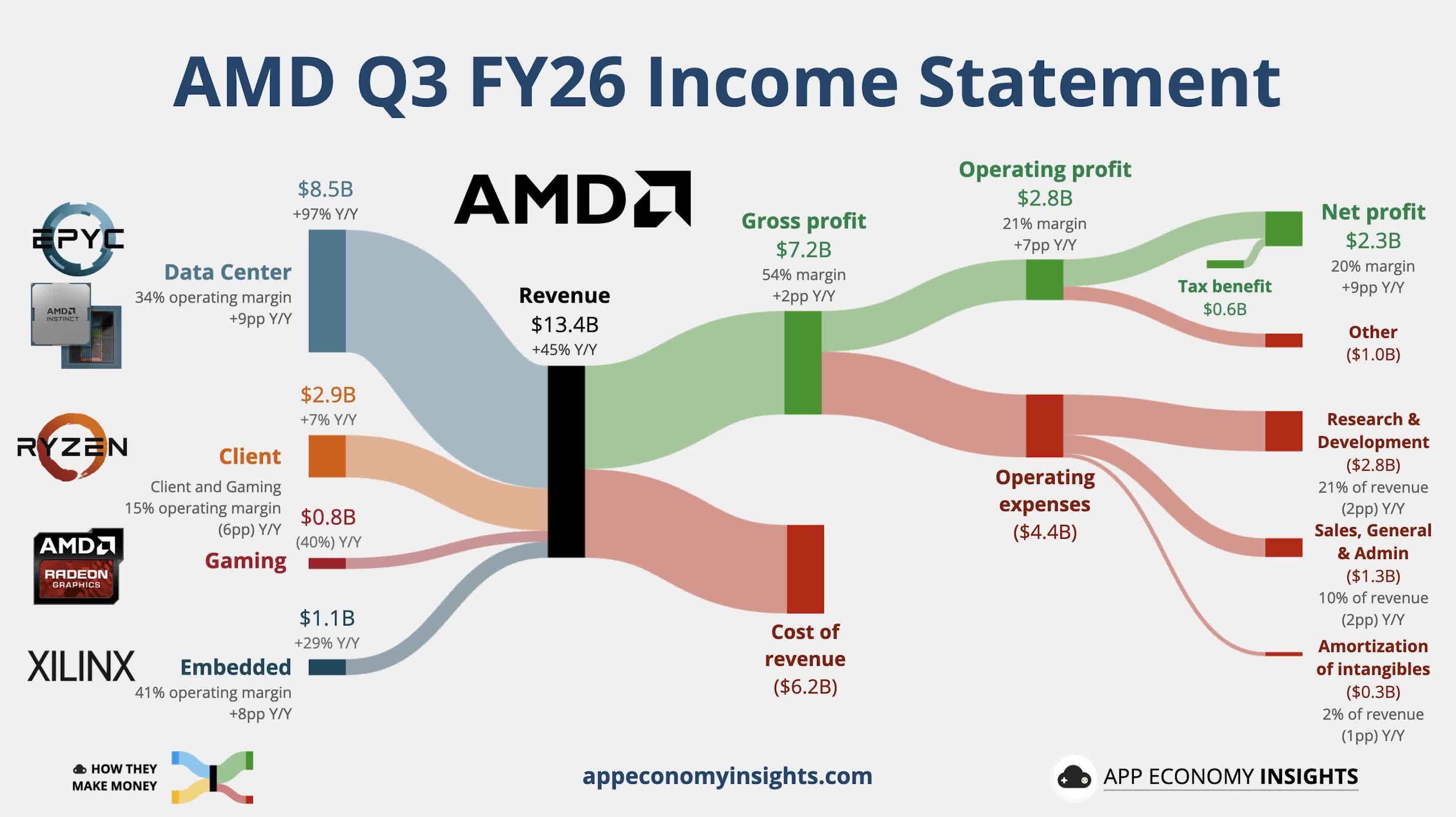
Credit: App Economy Insights
Su said the increases have slowed sales. "Our view is, this is one of those times – when, you know, component prices go up, it affects overall system pricing. One would expect the consumer markets to be more sensitive to that, and so we have seen a bit of a slowdown in the sell-through," she said.
AMD is not expecting conditions to improve soon. The company is planning for the 2027 PC market to "decline by a double-digit percentage." Su said, "We are planning with the current environment for a down year for 2027."
Other chipmakers expect the shortage to last as well. Intel has said it does not expect the memory shortage to improve next year. SK Hynix expects it to last until 2030.
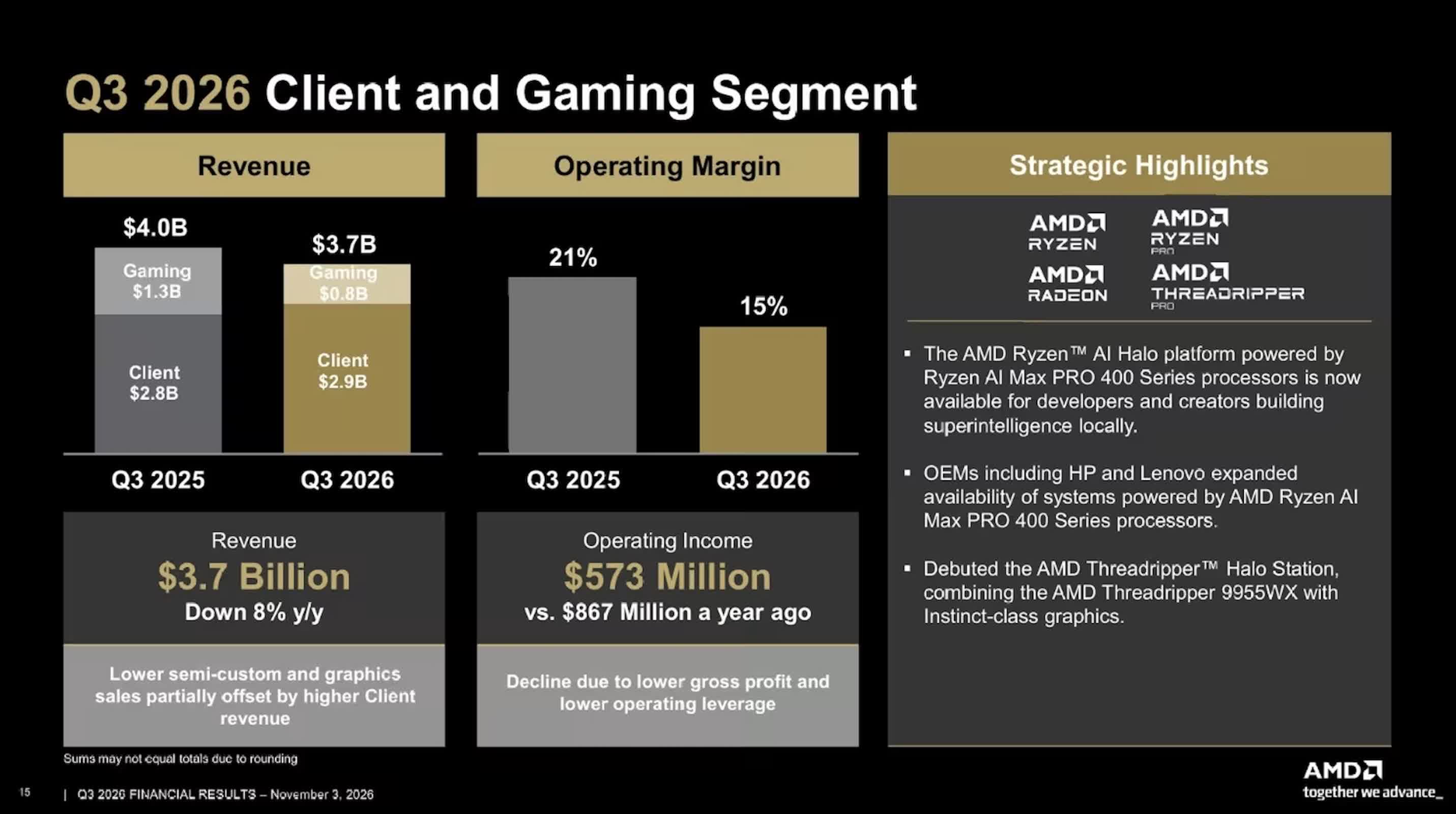
AMD still expects to beat the shrinking market. It is counting on its Ryzen roadmap, which appears to include consumer Zen 6 processors due next year, and a larger presence among commercial PC buyers.
One part of the graphics business is growing. The Radeon AI PRO Series, aimed at workstations and AI work, is growing strongly, and AMD expects that to continue. The cards are outperforming the rest of the GPU lineup.
If Hu's forecast holds, AMD's results will soon depend mostly on server and accelerator sales.
AMD posts record $13.4 billion revenue as AI boom fuels growth, but gaming sales are down 40%


