
What just happened? It seems that spending up to $145 billion in a year requires some extra fundraising, even when you're Meta. The Facebook parent plans to raise approximately $95 billion to support its AI infrastructure and superintelligence ambitions. The announcement comes just after Elon Musk warned that many smaller companies riding the same boom are heading for extinction.

Meta launched roughly $35 billion in offerings on Monday, comprising $22.5 billion in Class A common stock and $12.5 billion in securities representing mandatory convertible preferred stock.
Reuters reports that a separate $60 billion share-sale program would follow once its new nonvoting Class C shares begin trading, expected in early 2027.
The later program would sell shares into the market over time, and the company says no agreement has been signed. Its final timing, size and terms remain undetermined.
Data courtesy of App Economy Insights
Some familiar names are interested in purchasing some of the shares. Nvidia, AMD and Broadcom have indicated interest in buying up to $5 billion worth collectively. Meta shares rose 1.6% in premarket trading following the announcement.
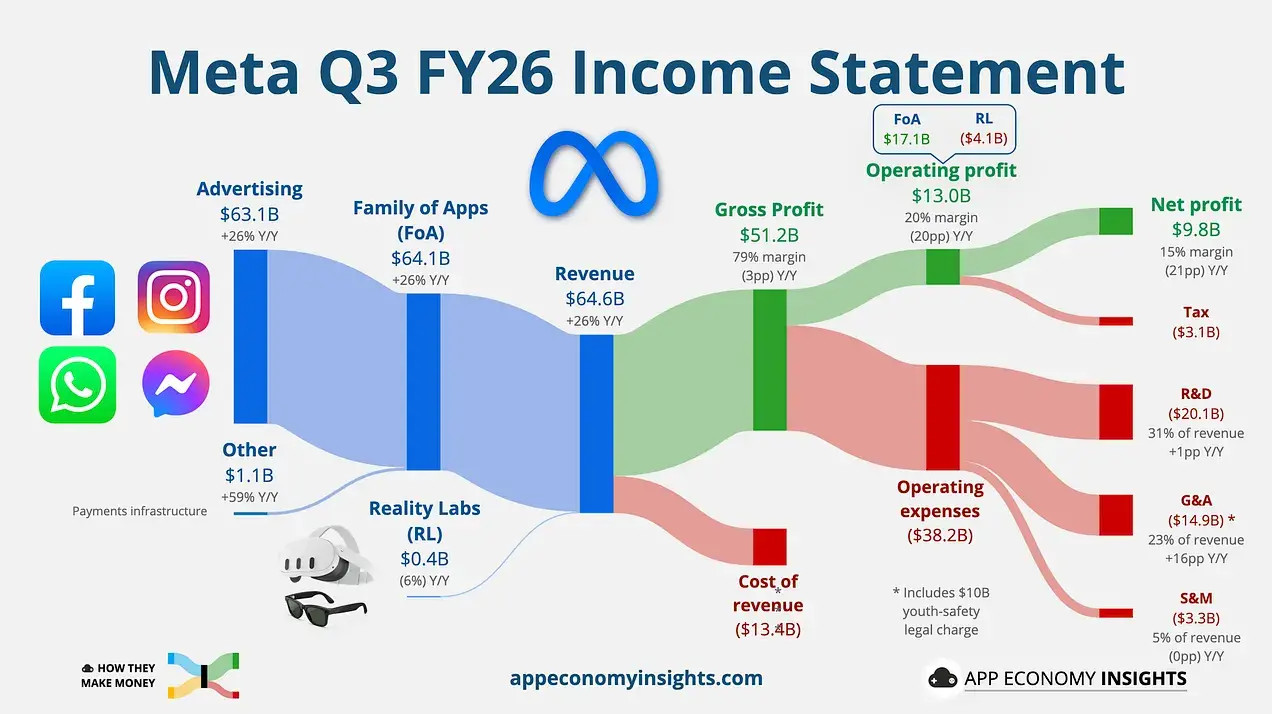
Investors were less enthusiastic about last week's earnings. Third-quarter revenue climbed 26% to $64.6 billion, beating expectations, but attention turned to negative free cash flow and a higher spending forecast. Meta now expects annual capital expenditure of $135 billion to $145 billion, raising the lower end by $5 billion.
It comes as little surprise to learn that the money will support Meta's AI infrastructure buildout. The company says it is building four superclusters with more than one gigawatt of capacity each and expects to nearly double its total infrastructure capacity in 2026. It plans to fund these investments through a mix of operating cash flow, debt, partnerships and equity.
The news comes just after Musk's warning about neocloud providers. Writing on X, he predicted "guppy-level death and consolidation" among the 200-plus companies renting computing capacity for AI, claiming lenders had largely stopped backing operators without substantial revenue elsewhere.
Musk also said SpaceX had secured $40 billion in debt for GPUs, although Bloomberg reported that the deal had yet to close. Established businesses, he argued, could still borrow while smaller specialists struggled.
Meanwhile, Citadel founder Ken Griffin warned last week that investors are "almost certainly" in an AI bubble, with businesses extracting uneven value from the technology. Meta's latest fundraising suggests the warnings haven't discouraged it from spending billions more on AI-related projects.
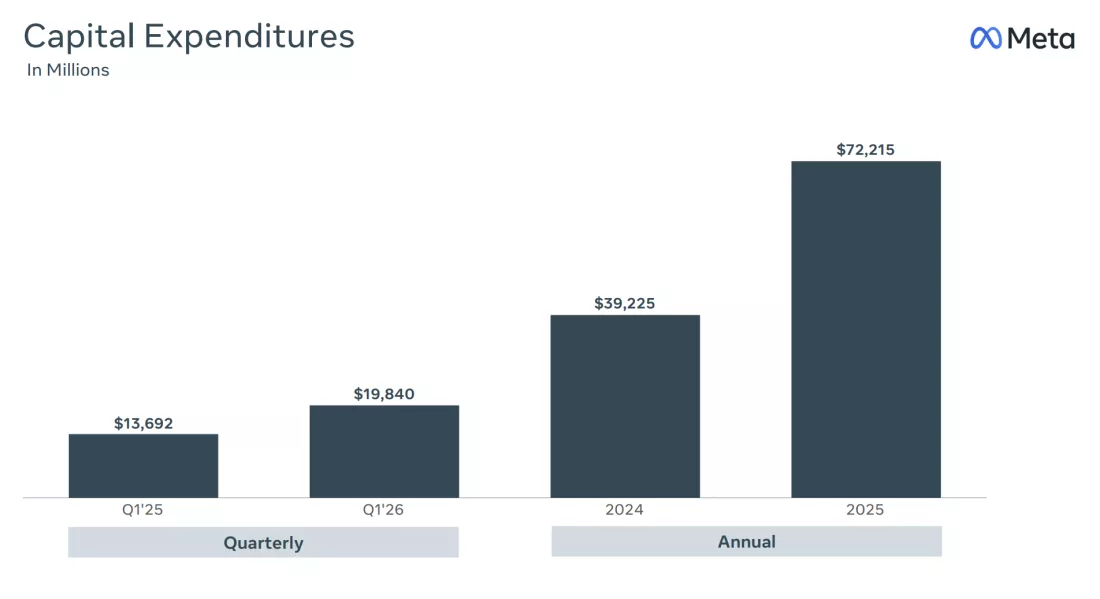
Meta's spending plans have been raising eyebrows for months. It was reported in April that the company had lifted its annual capex forecast by $10 billion, citing higher component and data center costs. If spending reaches $145 billion this year, it will exceed what Meta spent in 2024 and 2025 combined.
Meta plans $95 billion stock offering to fuel AI spending despite growing bubble fears


