AMD welcomes Nvidia to the local AI PC race, points to Gorgon Halo's 192GB memory advantage

Skye Jacobs

Posts: 2,030   +59
Staff
Winners & losers: Nvidia's latest move into AI-focused PCs sets up a more direct clash with AMD and underscores the growing importance chipmakers are placing on local AI performance. With the debut of RTX Spark at Computex 2026, Nvidia is betting that tightly integrated systems – pairing Arm CPUs, Blackwell GPUs, and large pools of unified memory – will define the next generation of high-end client devices.
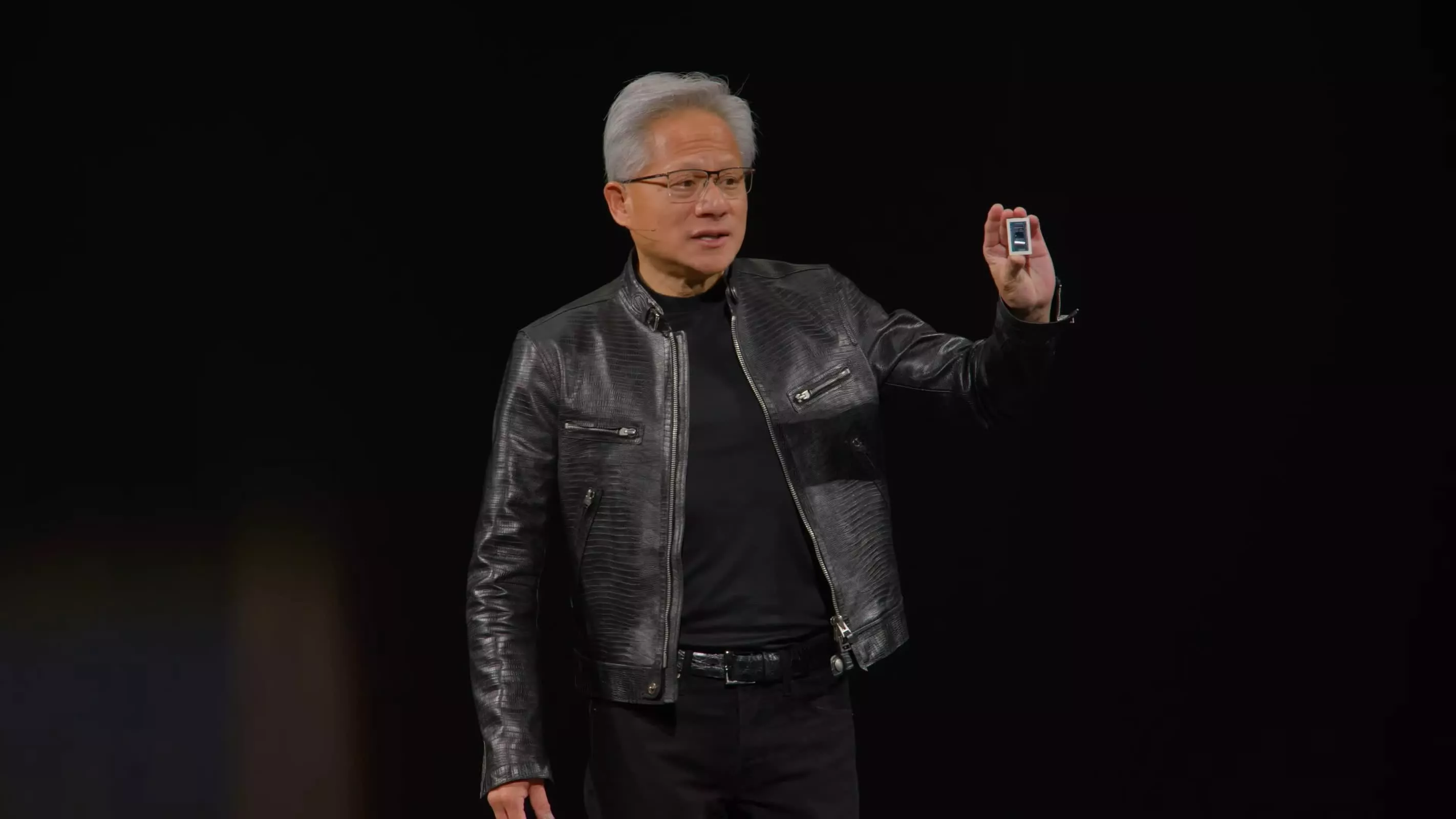
AMD, which has already been moving in that direction with its Strix Halo chips, does not appear rattled. If anything, the company's executives are portraying Nvidia's arrival as long overdue.

"I'm really excited that Nvidia has joined the game. You know, we were the only game in town for almost two years now, and the large local memory is becoming super critical in the agentic AI [workloads]," said Rahul Tikoo, senior vice president and general manager of AMD's client business. "I'm actually happy to see Nvidia join the race for these great products."

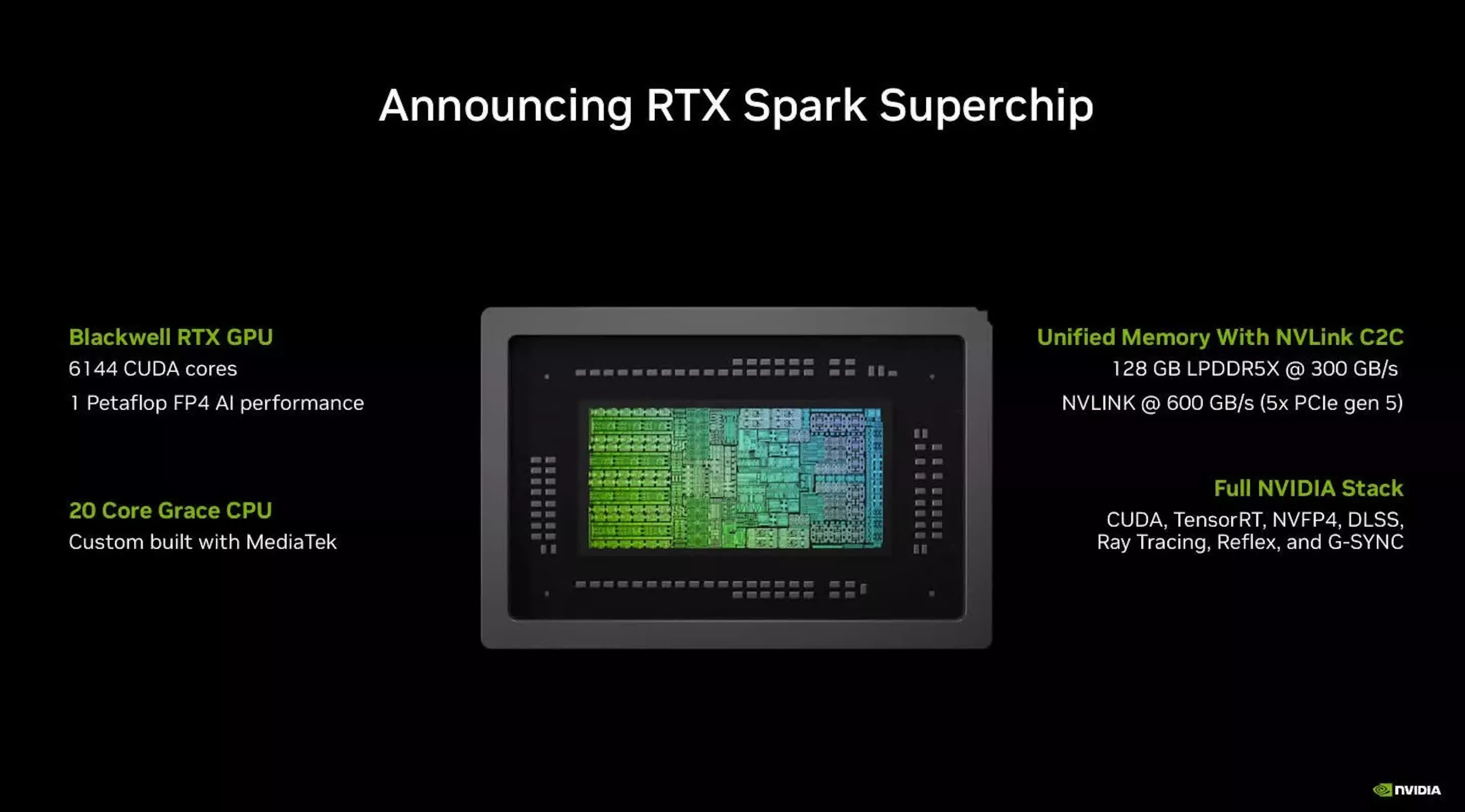
At the center of the competition is a new class of systems: machines designed to run increasingly complex AI workloads locally, with a much greater emphasis on memory capacity than traditional PCs. Nvidia's RTX Spark scales up to 128GB of unified memory, a figure AMD says it already matches with Strix Halo.

Tikoo pointed to those overlaps when comparing the two approaches. "I'm actually curious about what [Nvidia has] done, but when I look at their specs, their specs are 128 gigs of local memory. We've done it on Strix Halo. Their specs are a 20-core CPU. We have a 16-core / 32-thread CPU in here," he said. "So, if you just compare the specs, I don't see… now, Gorgon Halo, which is coming out in Q3, is going to be a better product."
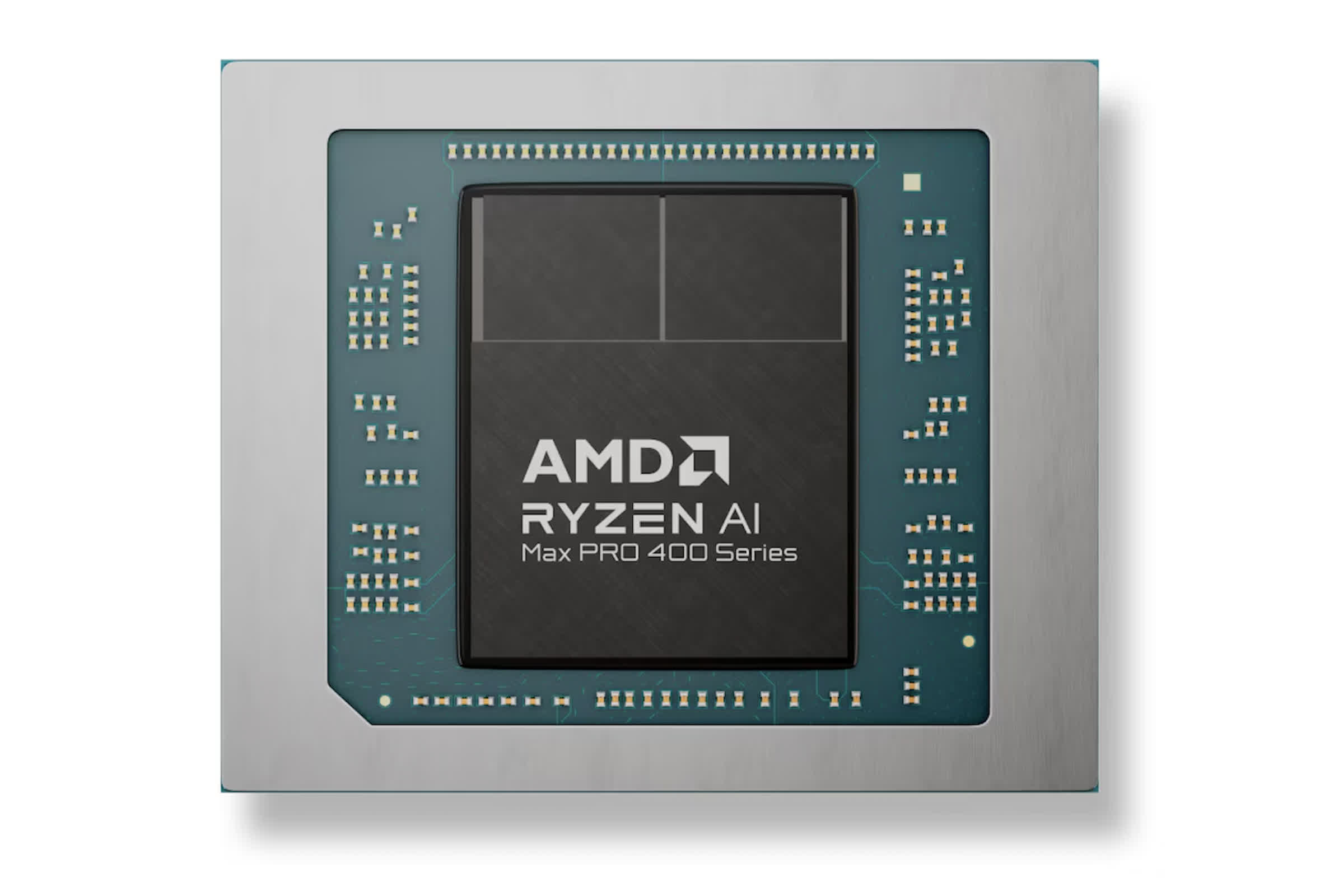
That next chip, Gorgon Halo, is expected to push memory even further, supporting up to 192GB of unified memory while retaining Zen 5 CPU cores and RDNA 3.5 graphics. For developers working with large language models or demanding agentic AI workloads, that additional headroom could prove valuable. Even so, raw specifications are only part of the equation, especially in a market where software ecosystems tend to lock users in.

That is where Nvidia has long held an advantage with CUDA, though AMD argues that the gap has narrowed. "If you asked me the same question like three years ago, I would be, yeah, that really matters. I think that matters less at this point," AMD chief software officer Andrej Zdravkovic told Tom's Hardware.

"Nvidia has created a phenomenal ecosystem around CUDA, and our advantage is that ROCm is, from a developer point of view, extremely easy to use… the shift from one to another is easy, and the only challenge is if your application ends up using some of the specific commands that Nvidia has and we don't, and the other way around."

Zdravkovic was less measured when discussing hardware choices for developers, adding, "At this point in time… I mean, you're just wrong if you don't get a Strix Halo notebook." The comment shows how aggressively AMD is trying to position its platform with developers, even as Nvidia expands its reach into the same space.
There's also a broader industry angle to Nvidia's move. Rather than simply dividing the market, the company's entry could help expand it. Tikoo suggested that having both AMD and Nvidia pursuing similar ideas could accelerate adoption across the industry. He said Nvidia's arrival helps legitimize the category and should speed its development, adding that competition between the two companies will build momentum not only in cloud infrastructure but also in bringing AI capabilities more fully to Windows PCs.

For now, however, these systems are likely to remain niche. Early RTX Spark configurations are expected to top out at 128GB of unified memory and carry price tags in the several-thousand-dollar range, putting them squarely in the hands of developers and advanced users. Lower-end configurations are planned, but they are unlikely to define the initial rollout.

Timing could make the competition more immediate. AMD says Gorgon Halo will arrive in the third quarter, while Nvidia is targeting a fall launch for RTX Spark. As those systems reach the market, the real test will be not just their hardware capabilities, but how effectively each company can translate that power into developer-friendly platforms for running AI workloads locally.

Permalink to story:

 
It's a good thing they used moderate language, because historically AMD trashtalking has not worked out in their favor.
"I'm actually happy to see Nvidia join the race for these great products."
I can imagine the outbreak of nervous sweat when that was said.

No company is happy to have another one to start fishing in the same pond. Certainly not when that company (according to the stockmarket) is the highest valued company in the world (and x7 the value of the one you work for).

---

imo AMD has been sleeping on this for far too long.
They made big statements about the "APU" sharing resources of a CPU and GPU quickly after buying out ATI. However, aside from console chips they did very little with that and at quite a basic level for a long time.
Then many many years later Apple silicon showed it's a good and practical idea (AMD still sleeping on it). So now Apple has done it already, Intel has caught up in the GPU department and is able to put up a fight, and NVIDIA has now entered the same market. AMD could/should have captured market share early on and kept that early lead.

Everyone's always applauding Lisa Su for saving AMD but imo she fell short there, and it was a few dedicated/passionate engineers that actually saved AMD by coming up with Zen. Jensen seems borderline crazy sometimes, but the direction he steered the company into so far has no doubt been successful.
 
It's rare to see such a divide between CEOs and the general public.
While most people are sick and tired of AI, these CEOs keep pushing this slop as if it's the second coming.
Because if THEY showed any skepticism over the AI, their multi trillion dollar bubble, larger then the 08 crash, would pop. They have to keep up the facade that the titanic is absolutely not sinking, the Iceberg API is a huge chance for growth in the welding sector!
It's a good thing they used moderate language, because historically AMD trashtalking has not worked out in their favor.

I can imagine the outbreak of nervous sweat when that was said.

No company is happy to have another one to start fishing in the same pond. Certainly not when that company (according to the stockmarket) is the highest valued company in the world (and x7 the value of the one you work for).

---

imo AMD has been sleeping on this for far too long.
They made big statements about the "APU" sharing resources of a CPU and GPU quickly after buying out ATI. However, aside from console chips they did very little with that and at quite a basic level for a long time.
Then many many years later Apple silicon showed it's a good and practical idea (AMD still sleeping on it). So now Apple has done it already, Intel has caught up in the GPU department and is able to put up a fight, and NVIDIA has now entered the same market. AMD could/should have captured market share early on and kept that early lead.

Everyone's always applauding Lisa Su for saving AMD but imo she fell short there, and it was a few dedicated/passionate engineers that actually saved AMD by coming up with Zen. Jensen seems borderline crazy sometimes, but the direction he steered the company into so far has no doubt been successful.
AMD has consistently disappointed. While they have made significant strides they have also slept on a lot of opportunity.

They still outperform the N1 chip so they have some advantage, but they need to get a move on. No more APUs using generation+ old tech. Gorgon point should have used rDNA4. We need to see 12 core CCDs. Waiting for the competition to catch up is a terrible idea.
 
Because if THEY showed any skepticism over the AI, their multi trillion dollar bubble, larger then the 08 crash, would pop. They have to keep up the facade that the titanic is absolutely not sinking, the Iceberg API is a huge chance for growth in the welding sector!

That is true, the moment just none of these CEOs show reluctance towards AI, this pyramid scheme falls over.

PS: The Titanic was not welded. It was riveted.
 
What they mean is, Nvidia is also stepping in this branch and AMD is starting to feel the heat.

Until this moment, Nvidia had no recent APU and now, with all the software, expertise, support, and a powerful APU, they can just eat AMD's lunch!

You know, I have TWO AMD APUs (one is Strix Halo) and you know...I have no FSR4, despite the hardware being capable of it. Not only that but AMD always lags behind.

This means: if Nvidia releases a decent APU for handheld and sub 2000€ laptops , it'll win easily my money.
 
AMD and NVidia haven't been really competing for years now. Just a nice cosy Duopoly from two members of the same family steadily ratcheting up prices and pretending. Now with Intel in part ownership (only under a regime as corrupt as the current one would the FTC allow this to go ahead) all pretence at competition has ceased.
 
I think once AI costs start skyrocketing, local AI is going to start to be a lot more appealing. Yes, it's nice that Gemini and Claude can spit out responses and do work very quickly and DATA center AI will always be faster than local AI, but if things aren't time sensitive and work related, it's really the way to go. Yeah, it can take 30 minutes or longer sometimes, but it's free. If you manage your work flow, you can setup the AI and go do something else while you wait for it to finish.
 
It's a good thing they used moderate language, because historically AMD trashtalking has not worked out in their favor.

I can imagine the outbreak of nervous sweat when that was said.

No company is happy to have another one to start fishing in the same pond. Certainly not when that company (according to the stockmarket) is the highest valued company in the world (and x7 the value of the one you work for).

---

imo AMD has been sleeping on this for far too long.
They made big statements about the "APU" sharing resources of a CPU and GPU quickly after buying out ATI. However, aside from console chips they did very little with that and at quite a basic level for a long time.
Then many many years later Apple silicon showed it's a good and practical idea (AMD still sleeping on it). So now Apple has done it already, Intel has caught up in the GPU department and is able to put up a fight, and NVIDIA has now entered the same market. AMD could/should have captured market share early on and kept that early lead.

Everyone's always applauding Lisa Su for saving AMD but imo she fell short there, and it was a few dedicated/passionate engineers that actually saved AMD by coming up with Zen. Jensen seems borderline crazy sometimes, but the direction he steered the company into so far has no doubt been successful.

AMD hasn't been sleeping. They just lacked the necessary resources (mostly monetary), software environment, and market-share (they were going up against CUDA which had an entrenched market position) to put into action.

A quick AI assisted search provides:

It would seem that when AMD announced HSA it was a way ahead of it's time and no one dared to implement it. Ironically, everyone is implementing it now.

Also, I'm pretty sure Dr. Su is the one who brought in those engineers for AMD.
 
Last edited:
AMD hasn't been sleeping. They just lacked the necessary resources (mostly monetary), software environment, and market-share (they were going up against CUDA which had an entrenched market position) to put into action.
AMD bought ATI all the way back in 2006.
That's before they made the mistake named Bulldozer (2011). They had money.
Zen success equals money (well, few years of paying off debts I imagine although companies seemingly can invest crazy amount of money as long as they can proof to investors that it might pay off)
Milking that crypto market with old RX 580 junk - more money.
COVID, even more money.
AI boom? Enough money to drop pretenses about caring about gamers.

A quick AI assisted search provides:

It would seem that when AMD announced HSA it was a way ahead of it's time and no one dared to implement it. Ironically, everyone is implementing it now.
Exactly why it annoys me so much. I read the news back in the day and knew it'd be a success formula. Then they did nothing with it for ages, they could have but didn't.
Even now that everyone else has jumped onboard they're still half-assing coupling new CPU tech with old GPU tech.
High time they pull their head out of their rear and start selling the best they can offer. Make the best product, sell for the highest margins, use that margin to keep the lead.

Also, I'm pretty sure Dr. Su is the one who brought in those engineers for AMD.
Hard to say how much of 'Zen' credit goes to Su without inside info.
Closest thing I've heard anything about is in this video where apparently Su's reponse to Zen was "It isn't really that exciting":
(Highly recommend video, hearing actual engineers rather than CEOs or marketing is so much more interesting. Definitely guys that had a big hand in preventing AMD from going under)
Now that AMD has more money than ever imo they should triple down on making a true 'APU'. Oh and hire Jim Keller again because I don't think there's a single situation ever where that has not worked out well.
 
AMD bought ATI all the way back in 2006.
That's before they made the mistake named Bulldozer (2011). They had money.
Zen success equals money (well, few years of paying off debts I imagine although companies seemingly can invest crazy amount of money as long as they can proof to investors that it might pay off)
Milking that crypto market with old RX 580 junk - more money.
COVID, even more money.
AI boom? Enough money to drop pretenses about caring about gamers.
AMD was still in a bad position in 2006, after Intel did backroom deals in the Pentium 4 era with companies like Dell, causing AMD to be unable to catch up to the Intel Core series. Bulldozer was a bad mistake, but assuming all AMD could come up with in their financial position after buying ATI, consoles and GPU's kept them afloat until Ryzen. Had AMD not bought ATI, they may not have survived.
And even with the AI boom, AMD seems to care more about gamers than Nvidia.
Exactly why it annoys me so much. I read the news back in the day and knew it'd be a success formula. Then they did nothing with it for ages, they could have but didn't.
Even now that everyone else has jumped onboard they're still half-assing coupling new CPU tech with old GPU tech.
High time they pull their head out of their rear and start selling the best they can offer. Make the best product, sell for the highest margins, use that margin to keep the lead.
AMD still doesn't have the marketshare, or mindshare to be selling high margin high priced products, the Halo APU's got tons of criticism for their price and soldered RAM, meanwhile the Nvidia ARM SoC's are getting lots of hype on their branding alone despite Windows on ARM being a mediocre experience.
Hard to say how much of 'Zen' credit goes to Su without inside info.
Closest thing I've heard anything about is in this video where apparently Su's reponse to Zen was "It isn't really that exciting":
I took the context of not being exciting as the reaction to the early prototype of Zen, according to their engineers the memory barely worked. The engineers did amazing work to bring AMD back from the edge of going bankrupt, and I really appreciate how AMD is open to letting their team discuss the development of Zen instead of showing a bunch of marketing nonsense.
 
AMD hasn't been sleeping. They just lacked the necessary resources (mostly monetary), software environment, and market-share (they were going up against CUDA which had an entrenched market position) to put into action.
ATI was working on OpenCL back in 2005. It launched when CUDA was still very new and didnt have market penetration yet. Their software environment sucks because AMD refuses to put in the effort nVidia does to integrate and build out their tech. This is not new, during the development of Saints Row III Volition devs complained on their dev blogs about how hard it was to get anything out of AMD, compared to their previous experience with nVidia' TWIMTBP program.

Since there is collective amnesia over AMD's ****-ups, here's a small list:

Overpaid by over $2.5 BILLION for ATI

Sat on K8 for years, got caught off guard with Conroe, rushed out K10 with it's L3 cache bug and faceplanted in both the performance and efficiency race. Spent a decade farting around trailing Intel while producing nothing of note. Lost the lucrative server market in the process.

Blew Billions on trying to build GloFo, pissing off TSMC in the process.

Refused to acknowledge they had a serious frame pacing issue....until nVidia released a tool showing how atrocious it was, with SLI rigs having better frame timing then single AMD cards. Suddenly they "acknowledged they had a problem".

Dropped driver support for Evergreen cards in a near unusable state, while competing nvidia cards got another 3+ years of support

The "overclockers dream" fury X

Stagnated relying on rebrandeon cards for years, finally released Polaris, couldnt beat their own 290x in benchmarks, refused to release big polaris, refused to admit their drivers will still hot garbage.

The entire SeaMicro acquisition.

I could go on. AMD's biggest OP is, and always has been, AMD. People meatshield this multi billion dollar corpo for some strange reason, when their behavior is what people accuse nVidia and Intel of doing.
 
Back