Bottom line: AMD is positioning the Ryzen 7 9850X3D as a small but targeted refinement of its Ryzen 9000 gaming stack, trading on higher clocks and a carefully chosen $499 price to squeeze more performance out of the same 8-core Zen 5 silicon that underpins the existing 9800X3D. Team Red has confirmed that the gaming chip will reach retail on January 29, and some major retailers are already listing it ahead of launch.
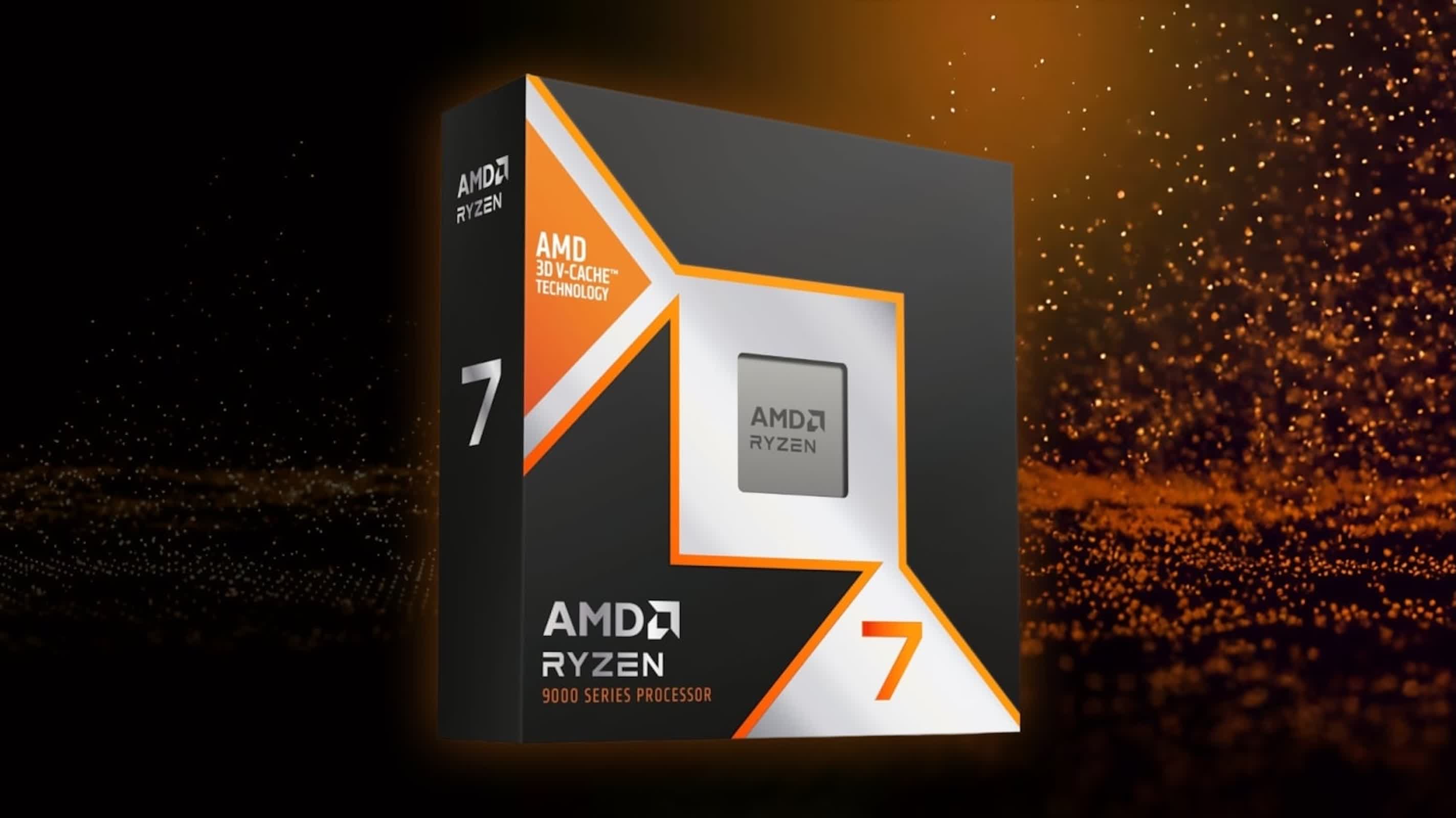
That price puts the new chip $20 above the original launch price of the Ryzen 7 9800X3D and roughly $30 higher than many current listings, leaving AMD with a modest premium for what it describes as a small uplift in frame rates rather than a generational jump.
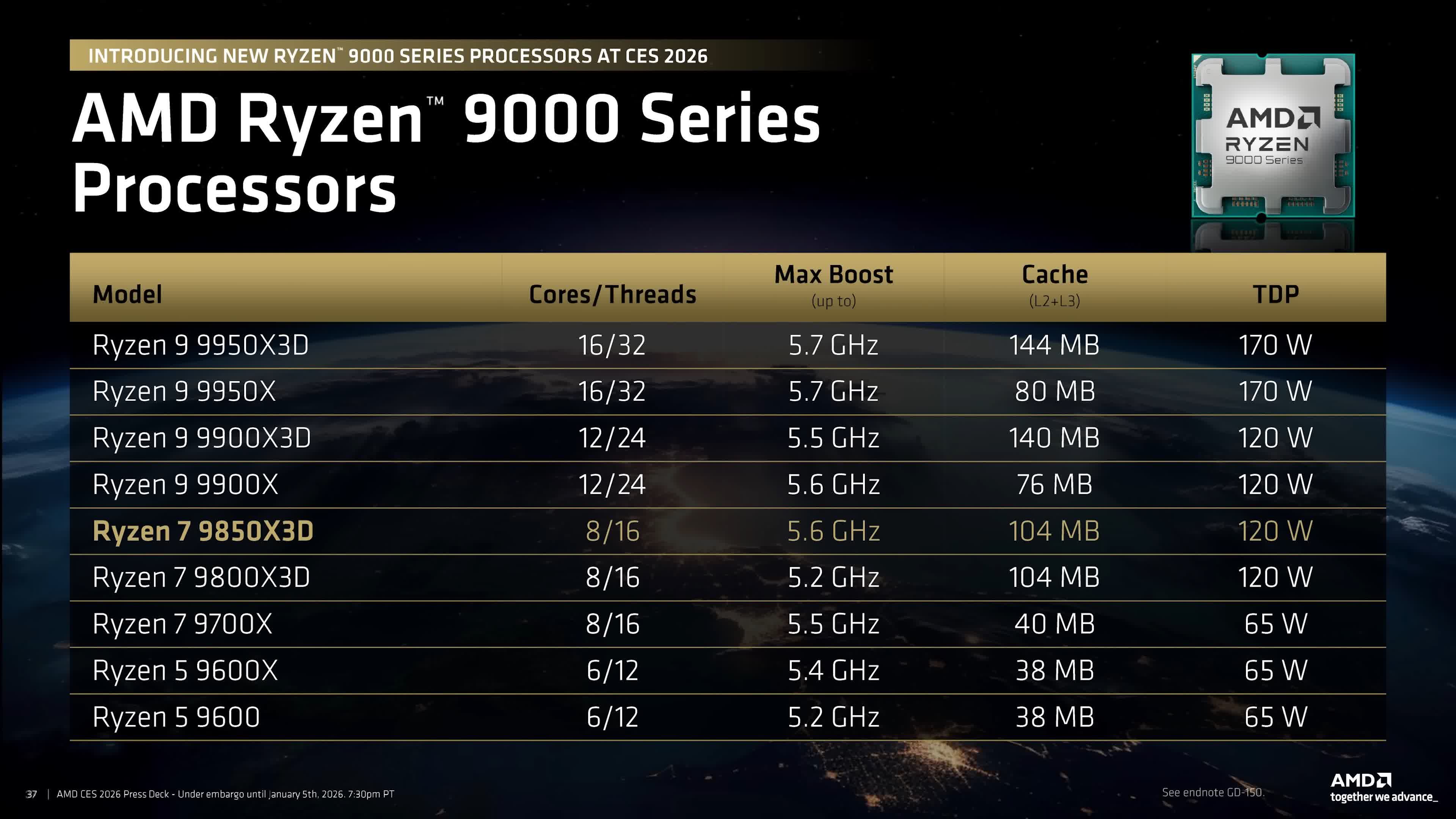
Within AMD's broader Ryzen 9000 Granite Ridge lineup, the 9850X3D slots beneath the flagship Ryzen 9 9950X3D and above the 8-core 9800X3D, sharing the same AM5 platform as non-X3D parts such as the Ryzen 7 9700X and Ryzen 5 9600X.
The company is clearly using the $499 price point to anchor its gaming-focused 8-core tier, leaving the more expensive 12- and 16-core 3D V-Cache models to serve mixed gaming and heavy-threaded workloads at higher TDPs and MSRPs.
Like the 9800X3D, the Ryzen 7 9850X3D is built around 8 Zen 5 cores and 16 threads, paired with a total of 104 MB of cache and a 120 W TDP, but it carries a higher boost clock.
The world's most advanced gaming processor just got faster.
– David McAfee (@McAfeeDavid_AMD) January 22, 2026
AMD Ryzen™ 7 9850X3D
Available Jan 29th | $499
Built for gamers who demand smooth, relentless performance when it matters most. pic.twitter.com/xtfH0lg7X2
AMD has raised the peak boost from 5.2 GHz on the 9800X3D to 5.6 GHz on the 9850X3D, a 400 MHz increase that comes entirely from binning and frequency tuning rather than any structural change to the core layout.
The chip uses AMD's second-generation 3D V-Cache packaging, stacking additional L3 cache on top of the compute die to feed latency-sensitive game engines and reduce DRAM accesses. AMD's material characterizes the 9850X3D as a higher-binned variant of the 9800X3D, and internal projections suggest a 3 to 8 percent bump in gaming performance at 1080p from the clock uplift alone, depending on the title.
Alongside clock speeds, AMD is emphasizing memory behavior as a practical advantage of the 9850X3D. The company says the second-generation 3D V-Cache design means "high-frequency memory is not required," and it has shared internal testing comparing DDR5-4800 to DDR5-6000 on this chip.
Across a sample of more than 30 games, AMD reports that the average frame-rate difference between the two memory speeds stayed below 1 percent. That claim is particularly relevant in the current market, where high-end DDR5 kits now carry a noticeable price premium.
AMD is positioning the 9850X3D as its new top gaming chip in the 8-core class, citing internal benchmarks that show the processor delivering, on average, 27 percent higher gaming performance than Intel's Core Ultra 9 285K at 1080p.
Against the Ryzen 7 9800X3D, the gains are much smaller, only a few percentage points at most, reflecting the fact that both parts share the same core count, cache configuration, and TDP.
As a result, AMD appears to be steering the 9850X3D toward two main audiences: first-time AM5 builders who want the highest-binned 8-core gaming part, and owners of older Ryzen or competing platforms who plan a full-system upgrade rather than a minor step from the 9800X3D.
For existing 9800X3D users, the extra frequency headroom and small FPS gains are unlikely to justify a $499 swap, but the new part does serve as a fresh reference point that could push street pricing of the 9800X3D down.


