
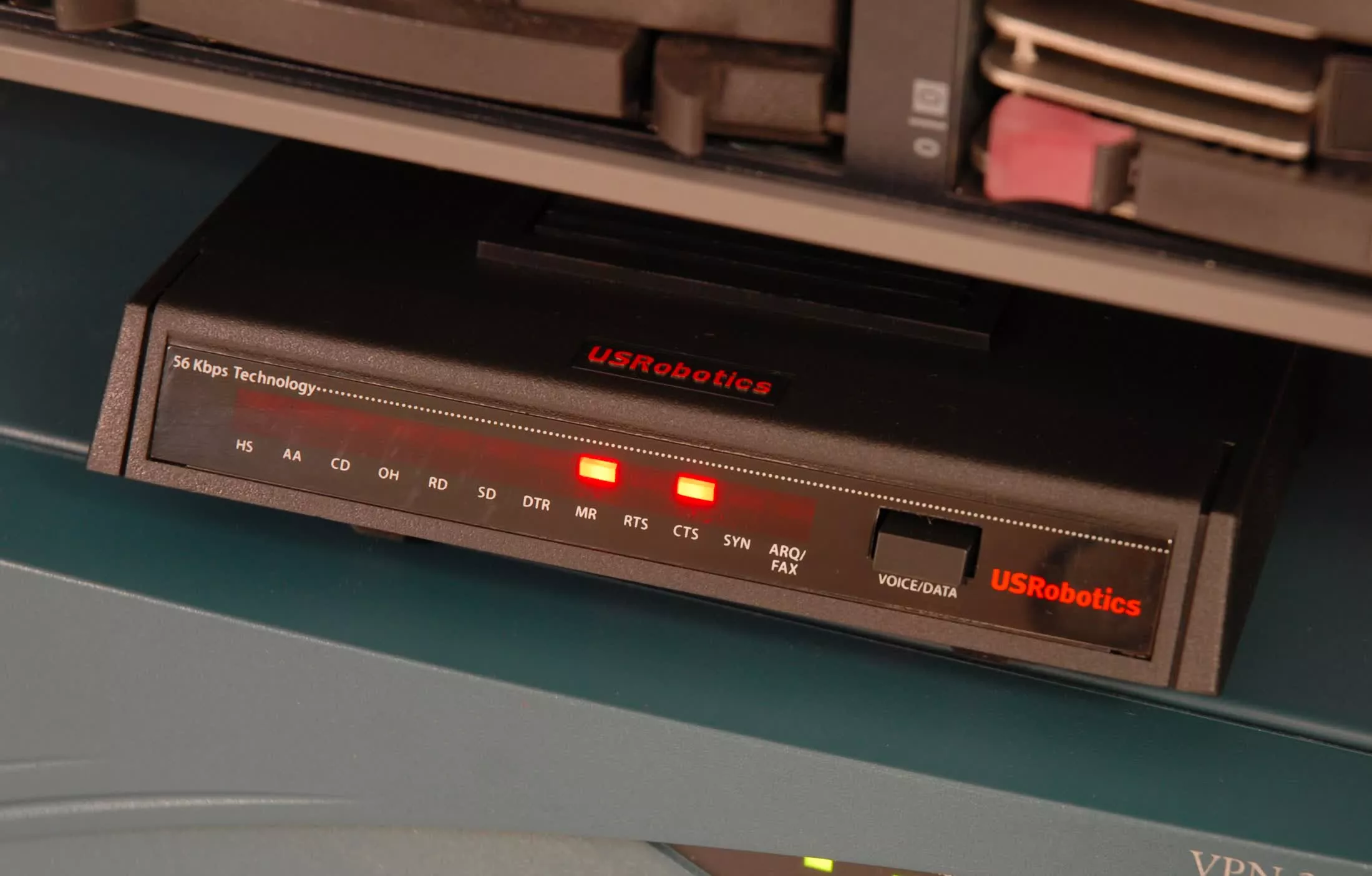
WTF?! An event will take place on September 30 that most people assume happened years ago: AOL will discontinue its dial-up internet service. If you're wondering just how many dial-up users are still out there, the answer is not many: the figure was "in the low thousands" as of 2021.
Despite the widespread adoption of broadband, there are still rural areas in the US where it is not yet available or very expensive. According to a recent FCC report, 23.3 percent of Americans in these rural areas and 27.7 percent of Americans in Tribal lands lack coverage from fixed terrestrial 25/3 Mbps broadband, as compared to only 1.5 percent of Americans in urban areas.
It's why AOL, now part of Yahoo!, still has customers on its Public Switched Telephone Network (PSTN)-based internet connectivity service, 34 years after it launched.
However, AOL has quietly announced that dial-up internet will no longer be available in its plans as of September 30. The company is also discontinuing the associated software – AOL Dialer and AOL Shield browser – which it says are optimized for older operating systems and dial-up internet connections.
AOL never went into detail why it had finally decided to kill off dial-up. The company only said that it routinely evaluates its products and had decided to end the legacy service.
The latest US government census data states that 265,331 people with an internet subscription rely on dial-up alone. The faster and generally better option for those in rural areas is satellite connectivity from the likes of Starlink. The same data shows that 8 million people use one of these Satellite Internet services.
Several programs and initiatives have launched since 2020 designed to help people transition from dial-up internet (or no access) to broadband. The Emergency Broadband Benefit launched in 2021, offering eligible households up to $50/month toward broadband service (and up to $75 for Tribal lands), plus a one-time device discount of up to $100. It was replaced by the Affordable Connectivity Program (ACP), which ran until 2024. There's also the Lifeline Broadband Extension, which was expanded in 2016 to include broadband service discounts for low-income households.
The US has also introduced infrastructure expansion and deployment programs, allocating billions to states to build out access to high-speed internet.
But despite these efforts, thousands of people still have to endure home connection speeds ranging from around 28kbs to 53kbs (0.028 Mbps to 0.056 Mbps). Those who are with AOL for their dial-up will soon have to move to another service. Luckily, there are still a few others, including NetZero, Juno, and DSL Extreme.


